Bacterial spot is one of the few common tomato and pepper troubles caused by bacteria rather than a fungus. Ordinary fungicides do not cure bacterial disease, and no spray cures an infected plant. Prevention starts with clean planting stock and careful watering, especially in warm, humid, rainy regions.
How to identify bacterial spot
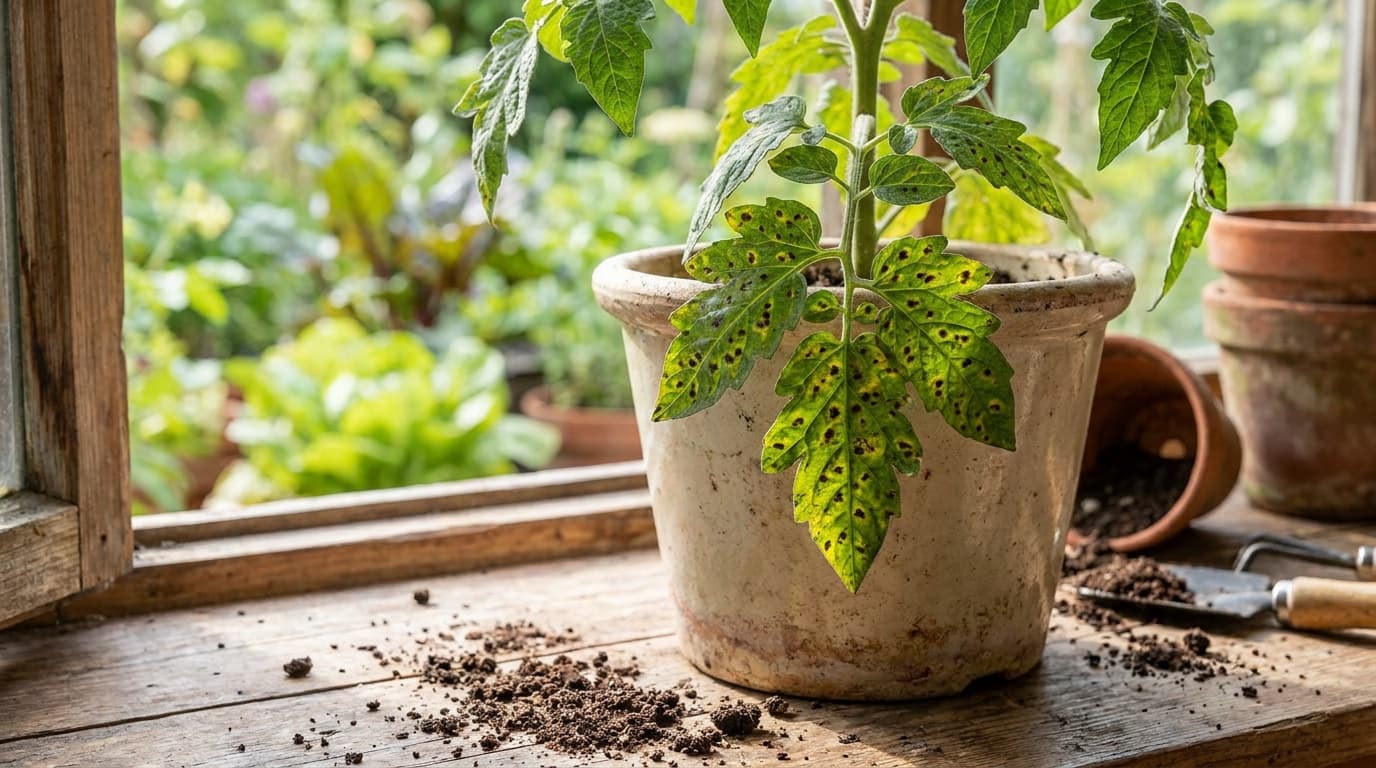
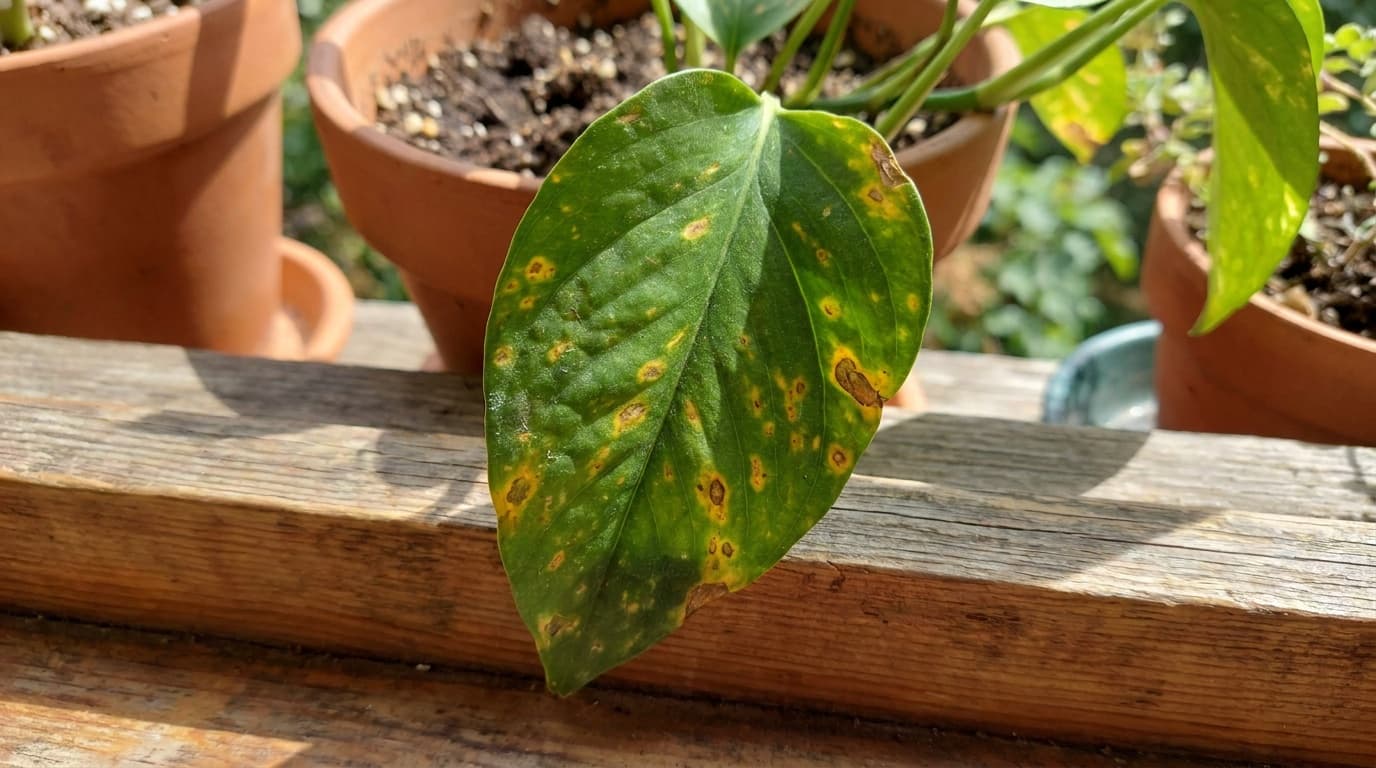
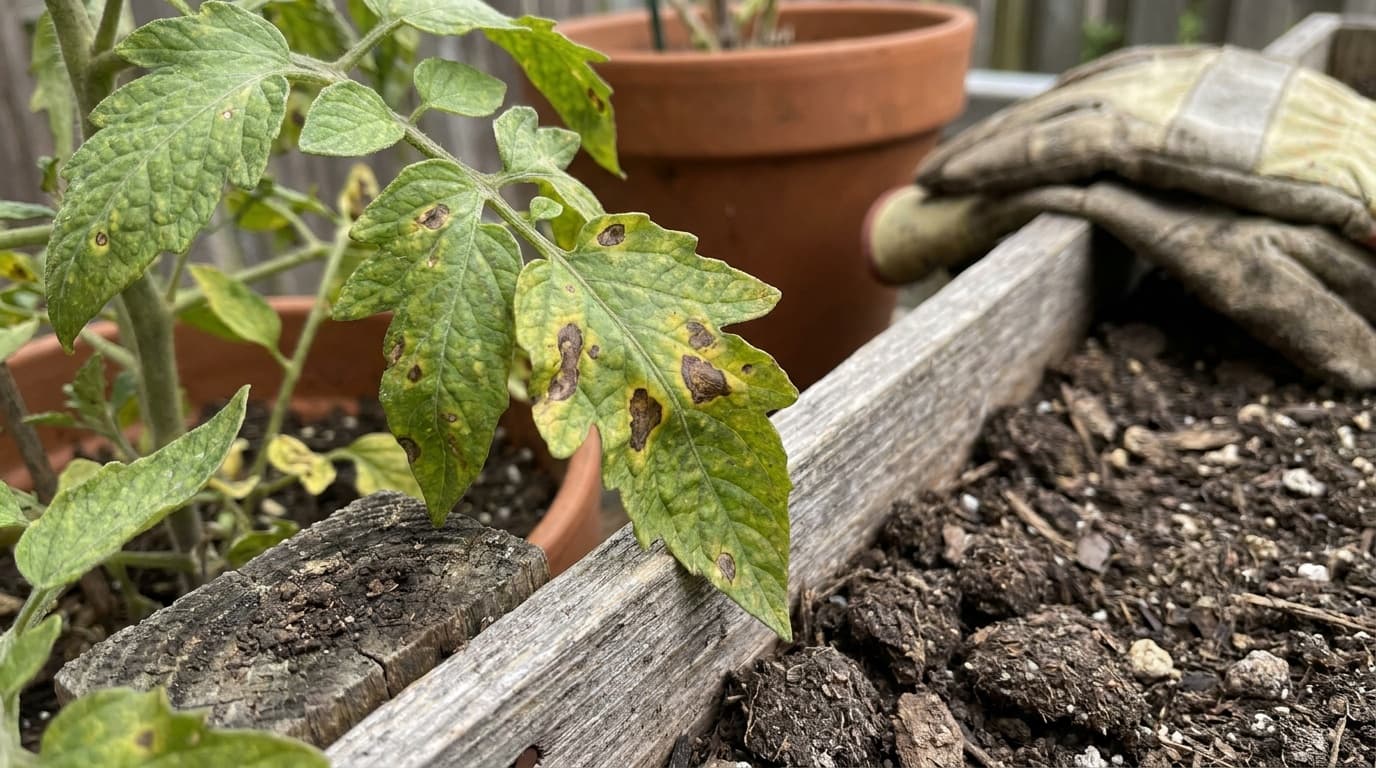
The signature is many small, dark, water-soaked spots that look greasy when wet, often with a yellow halo, plus scabby spots on the fruit.
The raised, scabby fruit spots are a strong identifier and separate bacterial spot from purely fungal leaf diseases like septoria leaf spot and early blight, which usually do not produce that scabby, corky fruit lesion. Bacterial spot is also distinct from bacterial wilt, which collapses the whole plant rather than spotting the leaves.
What causes bacterial spot
Bacterial spot is caused by Xanthomonas bacteria that arrive on infected seed or transplants, then survive on plant debris and in the soil between seasons. In warm, wet, humid weather they multiply fast and spread by splashing rain and overhead water, by tools, and by hands brushing wet foliage. The bacteria enter through natural pores and through tiny wounds from wind-blown sand, insects, or handling.
The conditions that favor it:
- Infected seed and transplants. This is the most common way the disease enters a garden. Clean stock is the first line of defense.
- Warm, wet, humid weather. Rainy, muggy summers drive outbreaks.
- Splashing water. Rain and overhead watering spread bacteria from plant to plant.
- Working among wet plants. Hands and tools carry bacteria through a planting when foliage is wet.
- Wounding. Wind-driven sand, insect feeding, and rough handling create entry points.
How to manage bacterial spot
Because there is no cure, management protects healthy tissue and limits spread. The mindset is sanitation and water discipline.
Slowing bacterial spot
Start clean
Water at the base
Stay out of wet plants
Remove infected leaves and debris
Rotate and clean up
The single most controllable factor in an existing garden is water: keeping foliage dry and never spreading bacteria by handling wet plants. A flat soaker hose along the base of the row waters the roots without wetting leaves and without the splash that broadcasts bacteria.
Some links on this page are affiliate links. As an Amazon Associate I earn from qualifying purchases.
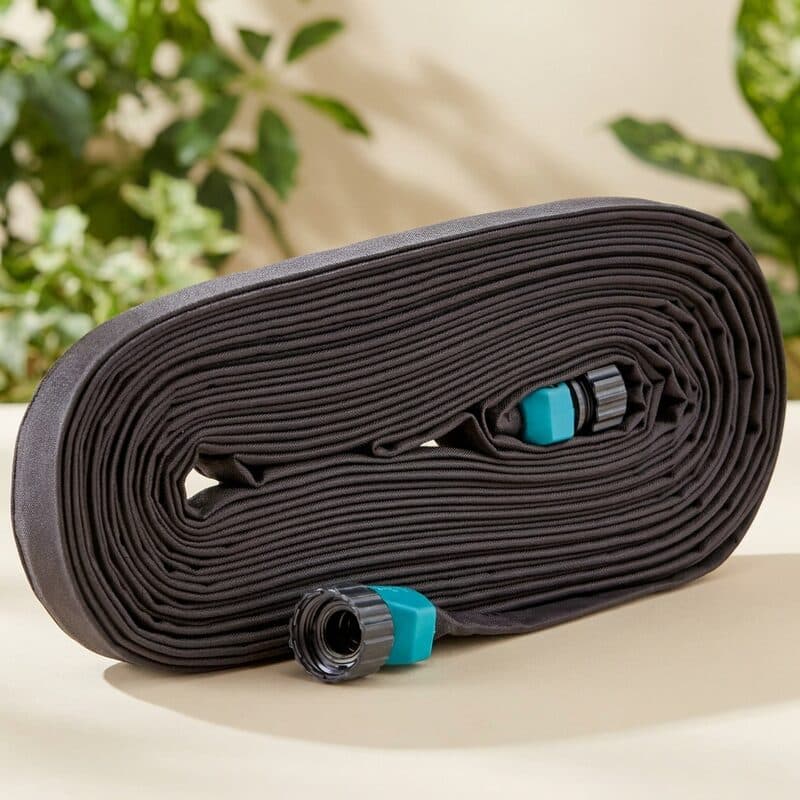
Dry-foliage watering
Gilmour Flat Weeper Soaker Hose
Best for: Row and border gardeners who want low-waste, root-zone watering on a budget.
Keep in mind: Even output drops over very long runs and on slopes
Amazon price as of the checked date, subject to change. The price on Amazon at checkout applies.
Full research
- Type
- Flat weeper soaker hose
- Lengths
- Available in multiple lengths
- Delivery
- Seeps along the full length
- Connection
- Standard hose faucet
Gilmour's flat weeper soaker hose seeps water along its length to deliver moisture at the root zone, lying flat along rows and borders.
This catalog-wide research score is separate from this guide's use-case ranking. How we research
Strengths
- Delivers water directly to the root zone with little waste
- Flat profile lies neatly along rows and borders
- Inexpensive and easy to route through a bed
Weaknesses
- Even output drops over very long runs and on slopes
- Should be drained and stored to avoid winter damage
Sprout Score breakdown
Best for
Row and border gardeners who want low-waste, root-zone watering on a budget.
Owner rating snapshot
Amazon · 49 reviews · 4.2 stars
Watering in the early morning on a timer lets any incidental moisture dry quickly, and a weather-aware timer skips a cycle after rain so you are never adding water on top of a soaked, vulnerable canopy.
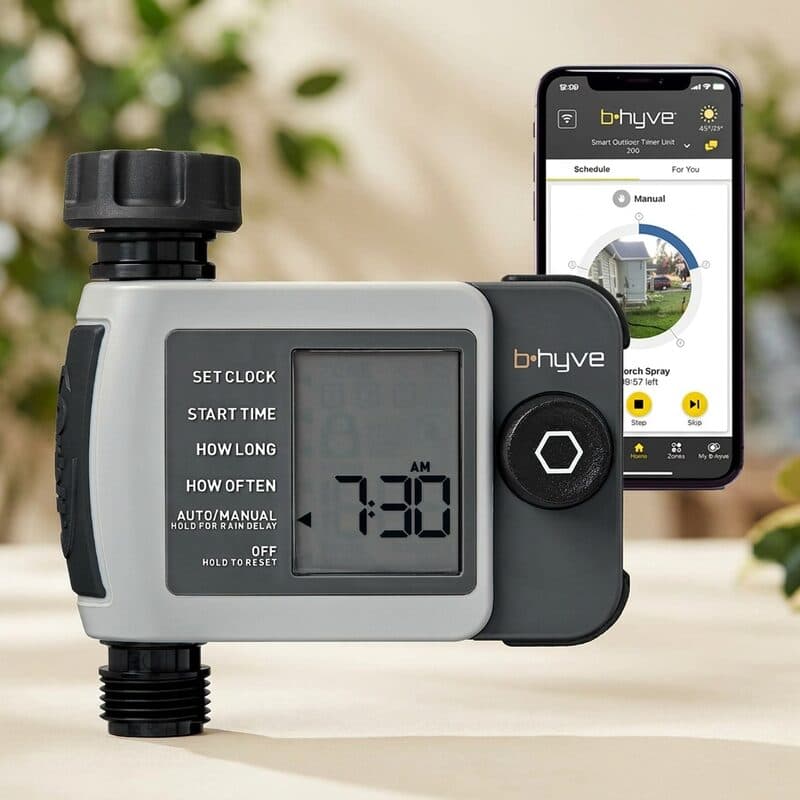
Morning, weather-aware
Orbit B-hyve Smart Hose Faucet Timer
Best for: Gardeners who want app control and weather-aware automatic watering.
Keep in mind: WiFi setup can be finicky at the faucet's signal range
Amazon price as of the checked date, subject to change. The price on Amazon at checkout applies.
Full research
- Connectivity
- WiFi and Bluetooth
- Scheduling
- App-based, weather-adjusting
- Zones
- Single outlet (multi-outlet models available)
- Power
- Battery powered
Orbit's B-hyve smart timer adds WiFi and Bluetooth control with weather-based scheduling, automating faucet watering from a phone app.
This catalog-wide research score is separate from this guide's use-case ranking. How we research
Strengths
- Weather-based scheduling skips watering after rain
- Controllable from a phone over WiFi or Bluetooth
- Flexible programs for multiple watering windows
Weaknesses
- WiFi setup can be finicky at the faucet's signal range
- Costs more than a basic mechanical dial timer
Sprout Score breakdown
Best for
Gardeners who want app control and weather-aware automatic watering.
Owner rating snapshot
Amazon · 17 reviews · 4.1 stars
If disease pressure is high and the season is wet, a copper-based product applied preventively can slow spread, but treat it as a supplement to sanitation, not a cure. Follow the label, and know that copper-tolerant strains exist.
How to prevent bacterial spot
- Start with certified disease-free seed and transplants. This prevents most introductions.
- Rotate tomatoes and peppers on a 2 to 3 year cycle.
- Water at the base and keep foliage dry.
- Never work among wet plants. Wait until the canopy is dry.
- Space generously so plants dry quickly after rain and dew.
- Disinfect tools between plants when pruning or staking.
- Clean up debris thoroughly at season's end.
- Time plantings well using the planting calendar so plants establish before the warm, wet weather that favors outbreaks.
Which plants get bacterial spot
Bacterial spot mainly affects tomato and pepper. Related nightshades like eggplant can be involved, and weedy nightshades nearby can harbor the bacteria, which is one more reason to weed and rotate. It does not spread to unrelated crops like lettuce or carrot, so rotating tomatoes and peppers into an unrelated bed breaks the cycle.
Is there a cure for bacterial spot on tomatoes?
No. Once a plant is infected there is no cure, because the bacteria are systemic in the affected tissue and ordinary fungicides do not touch bacteria. Copper-based sprays can slow spread under high disease pressure, but they do not heal infected leaves or fruit, and copper-tolerant strains exist. Management is preventive: clean seed and transplants, base watering, sanitation, and rotation.
How is bacterial spot different from early blight or Septoria?
Bacterial spot makes small, dark, water-soaked spots, often with yellow halos, and produces raised, scabby spots on the fruit. Early blight makes larger concentric target rings, and Septoria makes many small spots with pale centers and pinpoint black dots, and neither makes scabby fruit spots. Bacterial spot also will not respond to the fungicides used for those fungal diseases, since it is caused by bacteria.
Can you eat tomatoes and peppers with bacterial spot?
Yes. The fruit is safe to eat. Bacterial spot is a plant-health and quality problem, not a food-safety one. The scabby spots on fruit are cosmetic and can be cut away; the rest of the fruit is fine. Heavily blemished or cracked fruit may spoil faster, so use it promptly.
Why does working among wet plants spread bacterial spot?
The bacteria live in the water film on wet leaves and in the spots themselves. When you brush against, prune, or harvest wet plants, your hands and tools pick up bacteria from infected leaves and carry them to healthy plants, where the moisture helps them enter. Waiting until the foliage is fully dry is one of the simplest and most effective ways to limit spread.
Prevent bacterial spot with clean seed and transplants. Water at the base, avoid handling wet plants, rotate crop families, and remove infected debris. These steps reduce the chance of an incurable infection taking hold.