If your tomatoes are splitting just as they ripen, you have not done anything wrong with pests or feeding. You have a moisture-swing problem. The good news: it is one of the most fixable tomato issues, the affected fruit is still edible, and the solution also improves flavor and yield. Here is what is happening and how to stop it.
What growth cracks are, and how to identify them
Growth cracks come in two patterns, and both trace to the same cause:
- Concentric (radial) cracks: rings circling the stem end, like ripples. Most common after a sudden surge of water.
- Vertical (radial) cracks: splits running down the side from the stem. Often deeper, and more prone to letting in rot or insects.
The mechanism is simple. A ripening tomato is a balloon of water under a skin that can only stretch so fast. When the plant suddenly pulls up a lot of water, often after rain ends a dry stretch, the inside swells faster than the skin grows and it splits. Heat, big day-to-night temperature swings, and over-fertilizing late in the season all make it worse because they amplify how fast water moves into the fruit.
Do not confuse it with blossom end rot, which is a sunken dark patch on the bottom (a calcium and water issue), or with catfacing, the puckered scarring at the blossom end caused by cold during flowering. Growth cracks are clean splits in otherwise healthy fruit.
The fix: even out the water
You cannot control the rain, but you can keep the soil from swinging between bone-dry and saturated. Every step below is about smoothing that curve.
Stop the cracking
Mulch deeply
Water on a schedule
Water at the roots
Automate it
Harvest ahead of rain
Deliver water slowly and evenly
Overhead watering and hand-soaking tend to deliver water in bursts, which is exactly the swing you are trying to avoid. A flat soaker hose lies along the row and weeps water into the soil slowly, so it spreads evenly without the pooling that triggers a sudden uptake.
Some links on this page are affiliate links. As an Amazon Associate I earn from qualifying purchases.
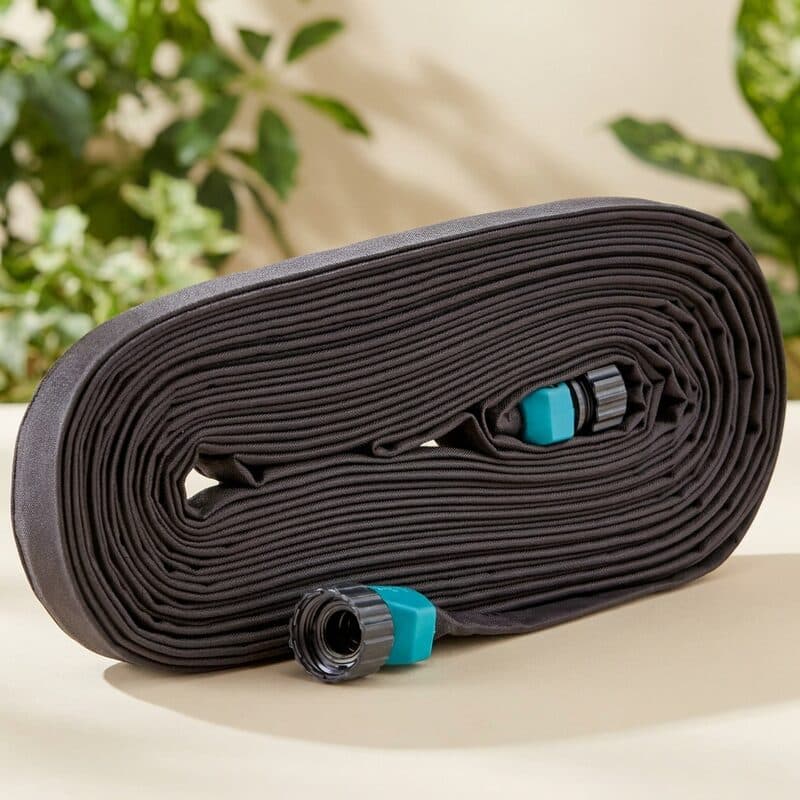
Even root watering
Gilmour Flat Weeper Soaker Hose
Best for: Row and border gardeners who want low-waste, root-zone watering on a budget.
Keep in mind: Even output drops over very long runs and on slopes
Amazon price as of the checked date, subject to change. The price on Amazon at checkout applies.
Full research
- Type
- Flat weeper soaker hose
- Lengths
- Available in multiple lengths
- Delivery
- Seeps along the full length
- Connection
- Standard hose faucet
Gilmour's flat weeper soaker hose seeps water along its length to deliver moisture at the root zone, lying flat along rows and borders.
This catalog-wide research score is separate from this guide's use-case ranking. How we research
Strengths
- Delivers water directly to the root zone with little waste
- Flat profile lies neatly along rows and borders
- Inexpensive and easy to route through a bed
Weaknesses
- Even output drops over very long runs and on slopes
- Should be drained and stored to avoid winter damage
Sprout Score breakdown
Best for
Row and border gardeners who want low-waste, root-zone watering on a budget.
Owner rating snapshot
Amazon · 49 reviews · 4.2 stars
Take the schedule off your shoulders
The failure point for most gardeners is not knowing what to do, it is doing it consistently for the whole season. A hose timer waters the same amount at the same time every day, which is the steadiness tomatoes want. Set it once and the dry-then-soaked cycle stops on its own.

Consistent schedule
Orbit B-hyve Smart Hose Faucet Timer
Best for: Gardeners who want app control and weather-aware automatic watering.
Keep in mind: WiFi setup can be finicky at the faucet's signal range
Amazon price as of the checked date, subject to change. The price on Amazon at checkout applies.
Full research
- Connectivity
- WiFi and Bluetooth
- Scheduling
- App-based, weather-adjusting
- Zones
- Single outlet (multi-outlet models available)
- Power
- Battery powered
Orbit's B-hyve smart timer adds WiFi and Bluetooth control with weather-based scheduling, automating faucet watering from a phone app.
This catalog-wide research score is separate from this guide's use-case ranking. How we research
Strengths
- Weather-based scheduling skips watering after rain
- Controllable from a phone over WiFi or Bluetooth
- Flexible programs for multiple watering windows
Weaknesses
- WiFi setup can be finicky at the faucet's signal range
- Costs more than a basic mechanical dial timer
Sprout Score breakdown
Best for
Gardeners who want app control and weather-aware automatic watering.
Owner rating snapshot
Amazon · 17 reviews · 4.1 stars
Choose less crack-prone varieties next season
Some of this is genetics. Thin-skinned heirlooms and big beefsteaks crack more easily than crack-resistant cultivars and most cherry types. If your garden gets unpredictable rain, lean toward varieties described as crack-resistant. See the tomato profile for variety notes and growing specifics, and check the planting calendar to time your transplants so fruit set lines up with steadier weather.
FAQ
Can I still eat tomatoes with growth cracks?
Yes. Growth cracks are a cosmetic and structural issue, not a disease, so the fruit is safe to eat. Pick split tomatoes promptly because the open crack can let in insects and rot, then use or cut away the damaged area first.
Why do my tomatoes crack after it rains?
A dry spell followed by heavy rain or a big soak lets the plant pull up water faster than the fruit skin can stretch, so it splits. The fix is to keep soil moisture even with mulch and consistent watering so a downpour is far less of a shock to near-ripe fruit.
How do I prevent tomatoes from cracking?
Keep soil moisture steady. Mulch deeply, water on a consistent schedule at the roots with a soaker hose, ideally on a timer, and harvest near-ripe fruit ahead of forecast storms. Choosing crack-resistant varieties next season helps too.
Is tomato cracking the same as blossom end rot?
No. Cracking is a clean split in the skin from rapid water uptake. Blossom end rot is a sunken dark patch on the bottom of the fruit tied to calcium movement and uneven watering. They share uneven watering as a contributing factor, which is why steady moisture helps both.
The throughline is steady water. Mulch, a slow soaker on a timer, and a little weather awareness will stop growth cracks without a single spray. For more on the crop itself, see the tomato growing profile, and if you are also seeing scarring at the blossom end, read up on catfacing.