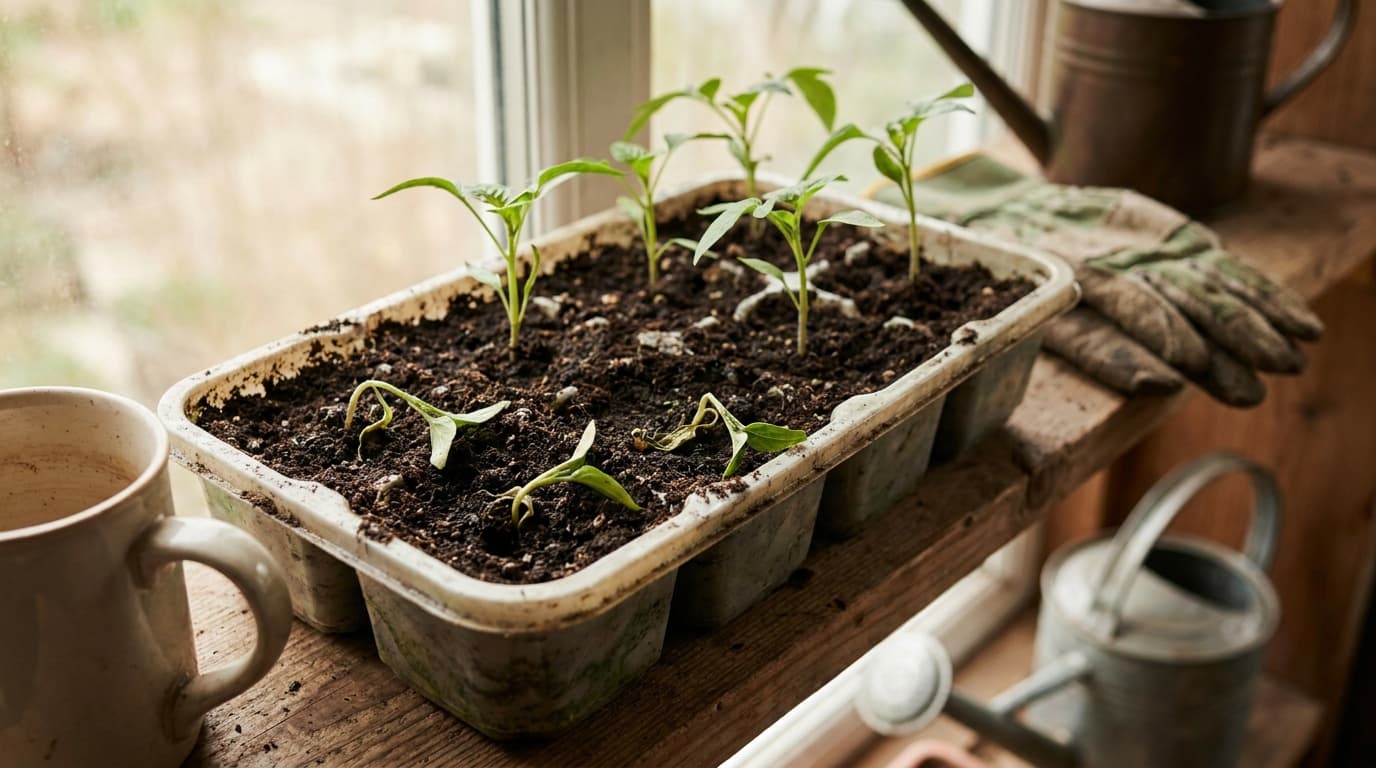
The classic cutworm sign is heartbreaking and instantly recognizable: a healthy seedling lying toppled beside its own stump, cleanly cut at the soil line, with no sign of who did it. The culprit curled up just below the surface a few inches away. Cutworms are a transplant-and-seedling problem almost entirely, which is good news, because that means the defense is cheap and the vulnerable window is short.
How to identify cutworms
Cutworms are the larvae of several night-flying moths. They are 1 to 2 inches long, smooth, and gray, brown, or dull green, and they curl into a tight C shape when you dig one up or disturb it. You will not see them feeding, because they work after dark and retreat underground at dawn.
Diagnose by the damage, not the insect:
They are not picky. Cutworms will fell young tomatoes, peppers, cabbage, broccoli, lettuce, and green beans, and just about any other tender transplant or emerging seedling.
What causes cutworm problems
Moths lay eggs in late summer and fall on weeds, grass, and crop debris. The larvae overwinter in the soil and become active in spring, exactly when you are setting out transplants. Beds newly converted from lawn or left weedy through winter are the highest risk, because that is where the eggs were laid.
How to stop cutworms
Cutworm defense, in order
Collar every transplant
Hand-pick after dark
Clear the shelter
Make a barrier ring
Treat persistent beds
A floating row cover does not stop cutworms already in the soil, since they come up from below, but it does block the egg-laying moths from reaching the bed in the first place. Used over a clean bed, it is a useful preventive layer for the next generation.
Some links on this page are affiliate links. As an Amazon Associate I earn from qualifying purchases.
Blocks egg-laying moths
Agribon AG-19 Floating Row Cover
Best for: Gardeners who want cheap frost protection and pest exclusion in one fabric.
Keep in mind: Lightweight fabric tears and wears over seasons
Amazon price as of the checked date, subject to change. The price on Amazon at checkout applies.
Full research
- Weight
- 0.55 oz per sq yd
- Frost protection
- Down to roughly 28F
- Light transmission
- About 85%
- Material
- Spun-bonded polypropylene
A lightweight spun-bonded row cover that drapes over crops to add a few degrees of frost protection while still letting in light and water. It doubles as a physical barrier against many insect pests.
This catalog-wide research score is separate from this guide's use-case ranking. How we research
Strengths
- Extends the growing season at both ends
- Excludes many pests without chemicals
- Passes most light and water so it can stay on
Weaknesses
- Lightweight fabric tears and wears over seasons
- Needs hoops or pins to stay put in wind
Sprout Score breakdown
Best for
Gardeners who want cheap frost protection and pest exclusion in one fabric.
How to prevent cutworms next season
- Cultivate new beds in fall to expose overwintering larvae and eggs to cold and birds.
- Keep beds weed-free and clear of grass through late summer when moths are laying.
- Delay planting into a freshly cleared lawn area, or expect heavy pressure and collar everything.
- Time transplants with your planting calendar so you can have collars ready for the exact week seedlings go out, and check your frost dates to avoid setting tender plants out earlier than needed.
FAQ
What is cutting my seedlings off at the base overnight?
Almost certainly cutworms, the soil-dwelling larvae of night-flying moths. They feed after dark and sever young stems at or just above the soil line, then hide an inch or two underground by day. Dig near a felled plant and you will usually find a fat, smooth caterpillar curled into a C shape.
How do cutworm collars work?
A collar is a simple tube of cardboard, paper, or metal placed around a seedling's stem, pushed about an inch into the soil and standing two inches above it. Cutworms wrap around a stem to feed, and the collar physically blocks them from reaching it. It is the most reliable home-garden defense because it protects the plant through its short vulnerable stage.
Will diatomaceous earth stop cutworms?
A ring of diatomaceous earth around a stem can deter cutworms as a barrier, but it works only while dry and loses effect after rain or watering. Treat it as a backup to physical collars rather than your main defense. Collars do not wash away and do not need replacing after every rain.
Do cutworms attack mature plants?
Rarely. Once a stem develops a tougher, woodier base, cutworms can no longer girdle it. The risk is concentrated in the first few weeks after transplanting or emergence. After that, you can remove the collars and the plant is essentially safe from cutworm damage.
Cutworms feel devastating because they strike overnight, but they are one of the most preventable pests in the garden. A stack of paper collars and a flashlight handle nearly all of them. For another seedling-stage threat, this time to the leaves, see flea beetles.