Damping off is the heartbreak of seed starting. One morning your tray is full of tidy green sprouts, and by the next they are lying flat, the stems pinched and brown right at the soil surface as if someone nipped them with tweezers. Sometimes a fuzzy white mold appears on the mix. It can also strike before emergence, rotting seeds so they never come up at all. It moves fast, it spreads across a tray, and there is no cure once a seedling goes down.
What damping off actually is
Damping off is not one organism but a group of soil-borne fungi and fungus-like pathogens (commonly Pythium, Rhizoctonia, and Fusarium) that thrive in cool, wet, stagnant conditions and attack tender young stems and roots. The pathogens are often already present; what triggers them is the environment. Tender seedlings, with their soft stems and shallow roots, are defenseless in exactly the conditions that favor the fungi.
The conditions that invite it are consistent across university extension guidance:
- Overwatering and soggy mix. Saturated soil with no air pockets is the single biggest trigger.
- Poor airflow. Still, humid air around the seedlings lets the fungi establish and spread.
- Cold, wet soil. Seeds that sit too long in cool, damp mix before germinating are far more likely to rot.
- Dirty containers or reused, unsterile mix. Old potting soil and unwashed trays can carry the pathogens from season to season.
- Sowing too densely. Crowded seedlings hold moisture against each other and choke off air movement.
How to prevent damping off
Because there is no cure, prevention is everything, and it is mostly about managing water, warmth, and air rather than buying a treatment.
Prevent it before it starts
Start clean
Use a mix that drains
Water less, water from below
Keep germinating seeds warm
Vent the dome
Move the air
Everything below is for preventing the next loss. No tray, dome, light, or heat mat can revive a seedling whose stem has already collapsed.
Warmth: get them up fast
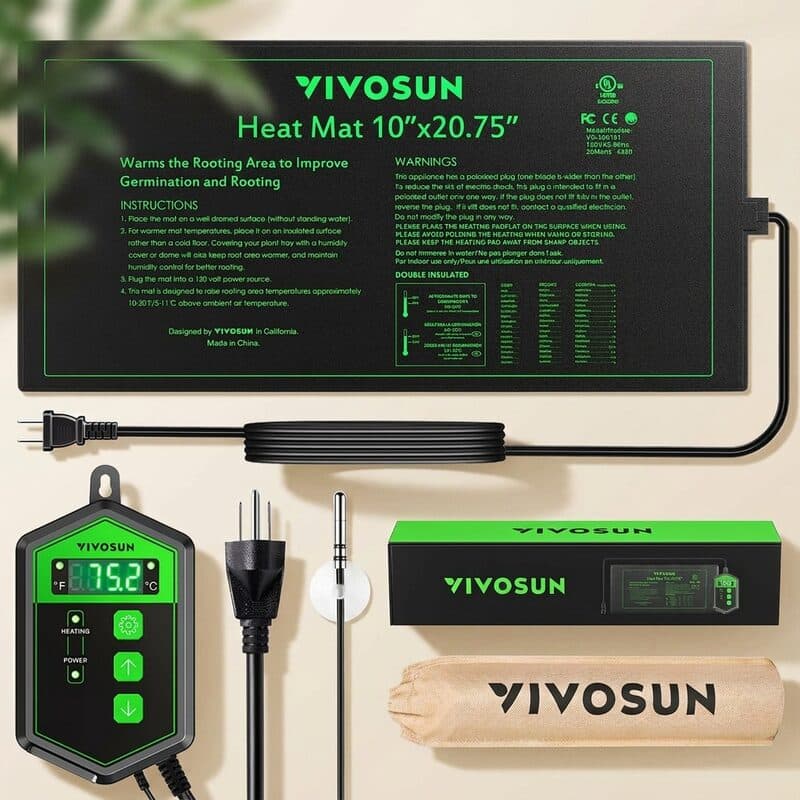
Seeds are most vulnerable between sowing and emergence. For crops that need warmer germination conditions, a seedling heat mat can shorten that window. Use a thermostat or check the mix temperature, then remove the mat after most seedlings emerge so it does not keep drying and heating the tray.
Some links on this page are affiliate links. As an Amazon Associate I earn from qualifying purchases.
Germination warmth
VIVOSUN Seedling Heat Mat (10 x 20.75 in)
Best for: Speeding germination of warm-season seeds like tomatoes and peppers.
Keep in mind: No thermostat included (pair with one)
Amazon price as of the checked date, subject to change. The price on Amazon at checkout applies.
Full research
- Size
- 10 x 20.75 in (fits a 1020 tray)
- Power
- 18W
- Construction
- Waterproof, MET-certified
- Warmth
- Raises root-zone temp ~10-20 F above ambient
A waterproof germination mat sized to fit a standard 1020 tray, warming the root zone to speed and improve seed germination. A cheap, high-impact upgrade.
This catalog-wide research score is separate from this guide's use-case ranking. How we research
Strengths
- Fits a standard 1020 tray exactly
- Noticeably faster, more even germination
- Inexpensive and waterproof
Weaknesses
- No thermostat included (pair with one)
- Long-term durability varies between units
Sprout Score breakdown
Best for
Speeding germination of warm-season seeds like tomatoes and peppers.
Owner rating snapshot
Amazon · 14 reviews · 4.5 stars
Drainage and clean trays
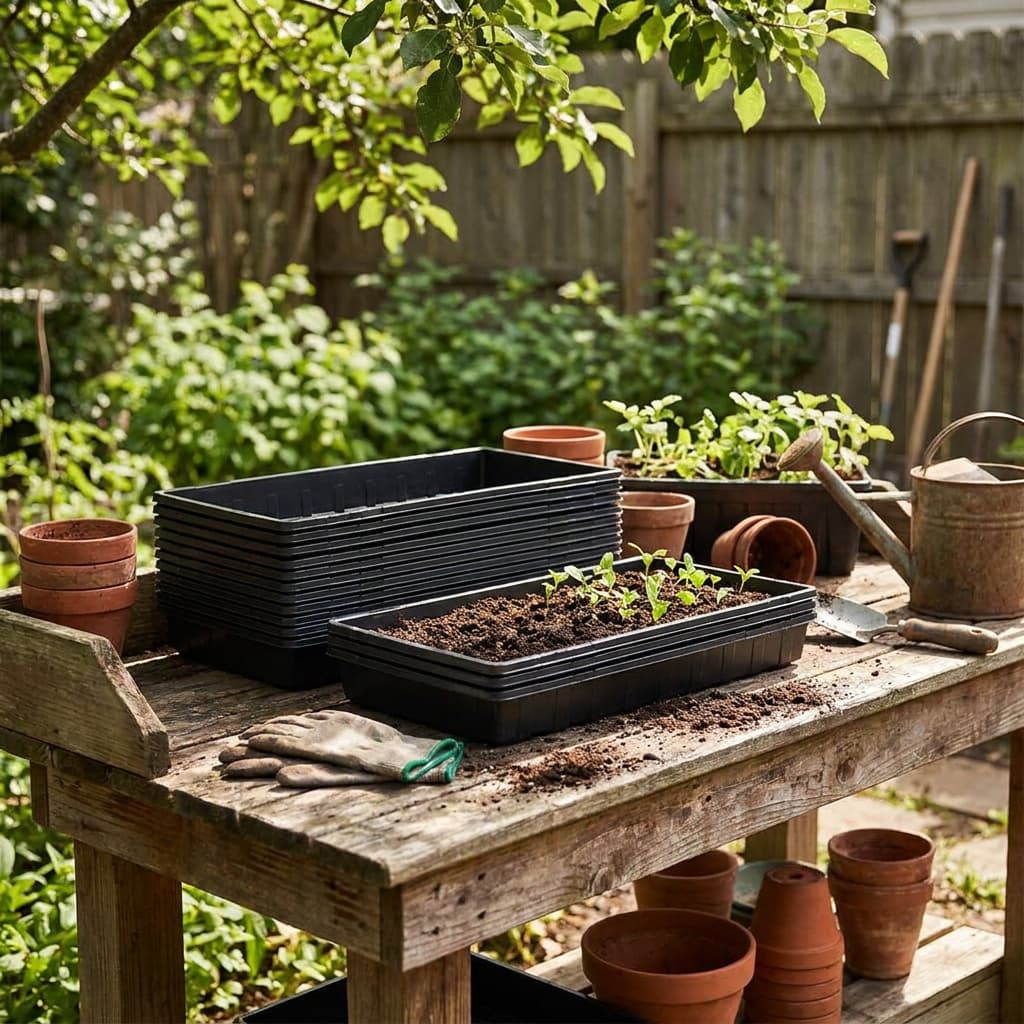
Reusing last year's flimsy, cracked trays is a classic way to reintroduce the pathogens and trap water. Heavy-duty trays you can actually scrub and reuse cleanly, paired with inserts that drain, take two damping-off triggers off the table at once.
Clean, durable, drains well
Bootstrap Farmer 1020 Trays (Heavy-Duty, No Holes)
Best for: Gardeners tired of replacing cracked trays every season.
Keep in mind: Much pricier upfront than disposable trays
Amazon price as of the checked date, subject to change. The price on Amazon at checkout applies.
Full research
- Footprint
- Standard 1020 (10 x 20 in)
- Material
- Thick BPA-free plastic, USA-made
- Drainage
- No-hole bottom tray (use as base or with inserts)
- Reusability
- Multi-season, dishwasher/heat-mat safe
Thick, USA-made 1020 trays built to survive many seasons rather than crack after one. The standard footprint pairs with any insert, dome, or heat mat.
This catalog-wide research score is separate from this guide's use-case ranking. How we research
Strengths
- Far more durable than standard nursery trays
- Standard 1020 size fits the whole ecosystem of inserts and domes
- Reusable for years, lowering long-term cost
Weaknesses
- Much pricier upfront than disposable trays
- No-hole base needs separate inserts for drainage
Sprout Score breakdown
Best for
Gardeners tired of replacing cracked trays every season.
Owner rating snapshot
Amazon · 21 reviews · 4.8 stars
Vent the humidity, do not trap it
A dome gets seeds up by holding moisture, but a sealed dome over emerged seedlings is a damping-off incubator. A vented dome lets you hold humidity for germination and then open the vents to dry the surface and move air as soon as sprouts appear.

Vent it after sprouting
VIVOSUN 6-Pack Seed Starter Trays with Humidity Domes
Best for: Gardeners starting several compact seed batches who want cells, base trays, and vented domes together.
Keep in mind: Thin plastic can crack with rough handling
Amazon price as of the checked date, subject to change. The price on Amazon at checkout applies.
Full research
- Quantity
- 6 complete tray sets
- Cells
- 12 cells per insert
- Vents
- Adjustable top vents for humidity control
- Material
- Clear plastic
Six compact 12-cell propagation trays with base trays and adjustable humidity domes. The complete sets retain germination moisture while keeping small seed batches organized.
This catalog-wide research score is separate from this guide's use-case ranking. How we research
Strengths
- Adjustable vents control humidity as seedlings mature
- Includes cell inserts, base trays, and domes
- Good value for several small seed batches
Weaknesses
- Thin plastic can crack with rough handling
- Smaller cells need timely potting-on
Sprout Score breakdown
Best for
Gardeners starting several compact seed batches who want cells, base trays, and vented domes together.
Light makes sturdy stems
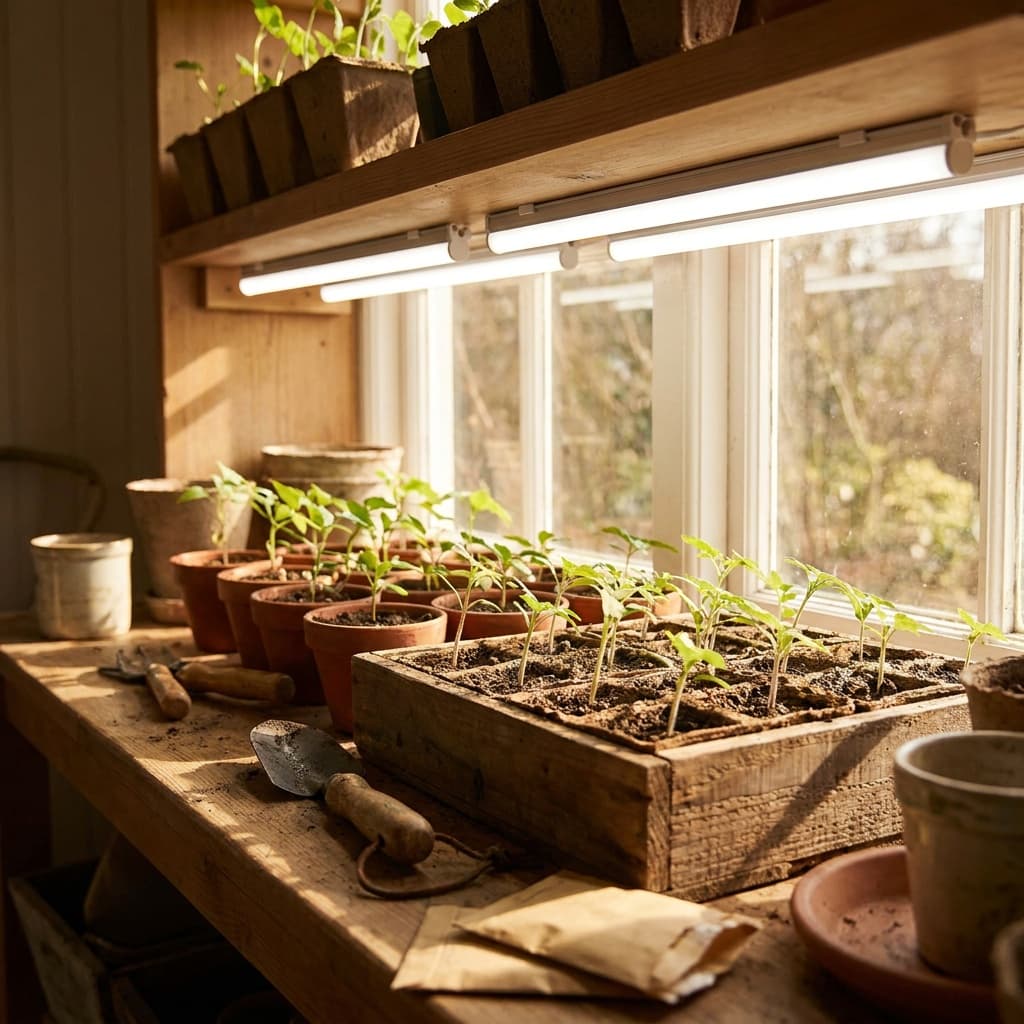
Weak, leggy seedlings stretching toward a dim window are more fragile and sit in stagnant air. Strong light from directly above, from something like the linkable Barrina T5 bars, keeps stems short and stocky, and a good light setup naturally pairs with the airflow that suppresses the fungi.
Strong overhead light
Barrina T5 LED Grow Light (4FT, 20W, 6-Pack)
Best for: Lighting a multi-shelf seed-starting rack on a tight budget.
Keep in mind: Lightweight mounting hardware and connectors
Amazon price as of the checked date, subject to change. The price on Amazon at checkout applies.
Full research
- Type
- T5 LED integrated bar (linkable)
- Length
- 4 ft per bar
- Spectrum
- Warm white (3000K)
- Power
- 20W per bar (2200 lm)
Linkable LED strip lights that bolt under a shelf to light a full tray of seedlings evenly. The default choice for budget seed-starting rigs.
This catalog-wide research score is separate from this guide's use-case ranking. How we research
Strengths
- Even coverage across long shelves
- Daisy-chain up to many bars from one outlet
- Very low cost per square foot of canopy
Weaknesses
- Lightweight mounting hardware and connectors
- No dimming or built-in timer
Sprout Score breakdown
Best for
Lighting a multi-shelf seed-starting rack on a tight budget.
Owner rating snapshot
Amazon · 269 reviews · 4.6 stars
Where this fits in starting seeds
Damping off is the most common thing that goes wrong indoors, so it is worth understanding the whole workflow it sits inside. Our full walkthrough on how to start seeds indoors covers timing, mix, light, and hardening off, with the moisture and airflow habits that keep damping off away built in from the start.
Can seedlings recover from damping off?
No. Once a seedling collapses at the soil line, the stem tissue is destroyed and it will not recover. Remove the affected seedlings and focus on protecting the rest of the tray by drying the surface, venting the dome, and increasing airflow.
What does damping off look like?
The classic sign is a seedling that suddenly topples over with a thin, pinched, water-soaked or brown spot right at the soil line, while the upper stem and leaves may still look green at first. You may also see fuzzy white mold on the mix, or seeds that rot before they ever emerge.
Does cinnamon prevent damping off?
Evidence for cinnamon in seed trays is limited, and it does not correct the conditions that cause damping off. Skip the pantry treatment and focus on clean trays, fresh mix, careful watering, the right germination temperature, and airflow.
Should I bottom-water seedlings to prevent damping off?
Yes, bottom-watering is one of the best habits for preventing damping off. Setting the tray in a shallow layer of water lets the mix wick up moisture from below while keeping the surface drier, which is exactly the condition the fungi dislike. Let the tray drain fully afterward so the mix is never waterlogged.
What to do now
Damping off feels like bad luck, but it is almost always an environment you can change. Start clean, keep the mix warm and well-drained, water sparingly from below, vent the dome, and move some air. Do that and your seedlings will stand up straight all the way to transplant day.