Downy mildew is often confused with powdery mildew because of the name, but it is a different organism that behaves almost oppositely. It is caused by water molds (oomycetes), not true fungi, and it depends on free water and high humidity to germinate and spread. It is aggressive: under cool, wet conditions, a healthy cucumber patch can go from a few spots to collapsed and yellow in under two weeks. Learning to spot it early is most of the battle, because once it is established there is no reversing it on infected tissue.
How to identify downy mildew
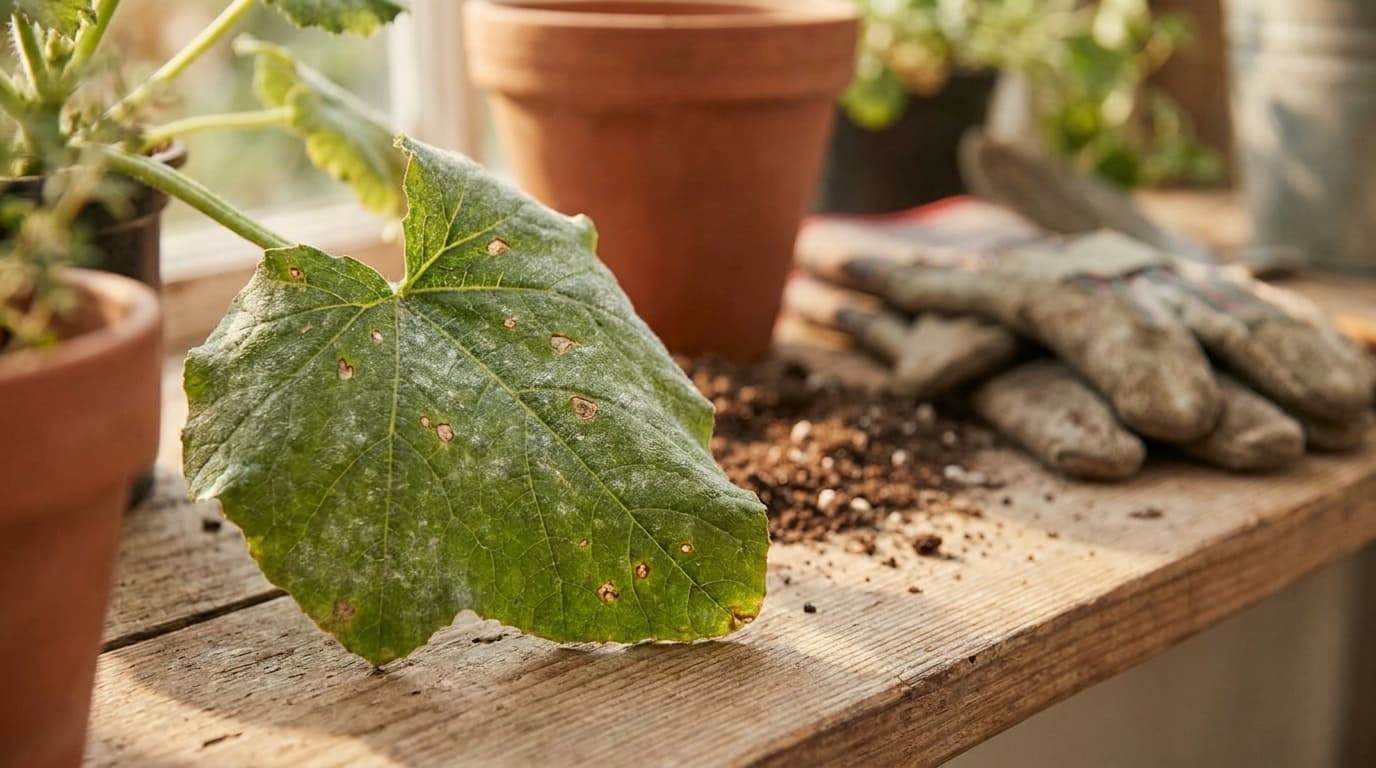
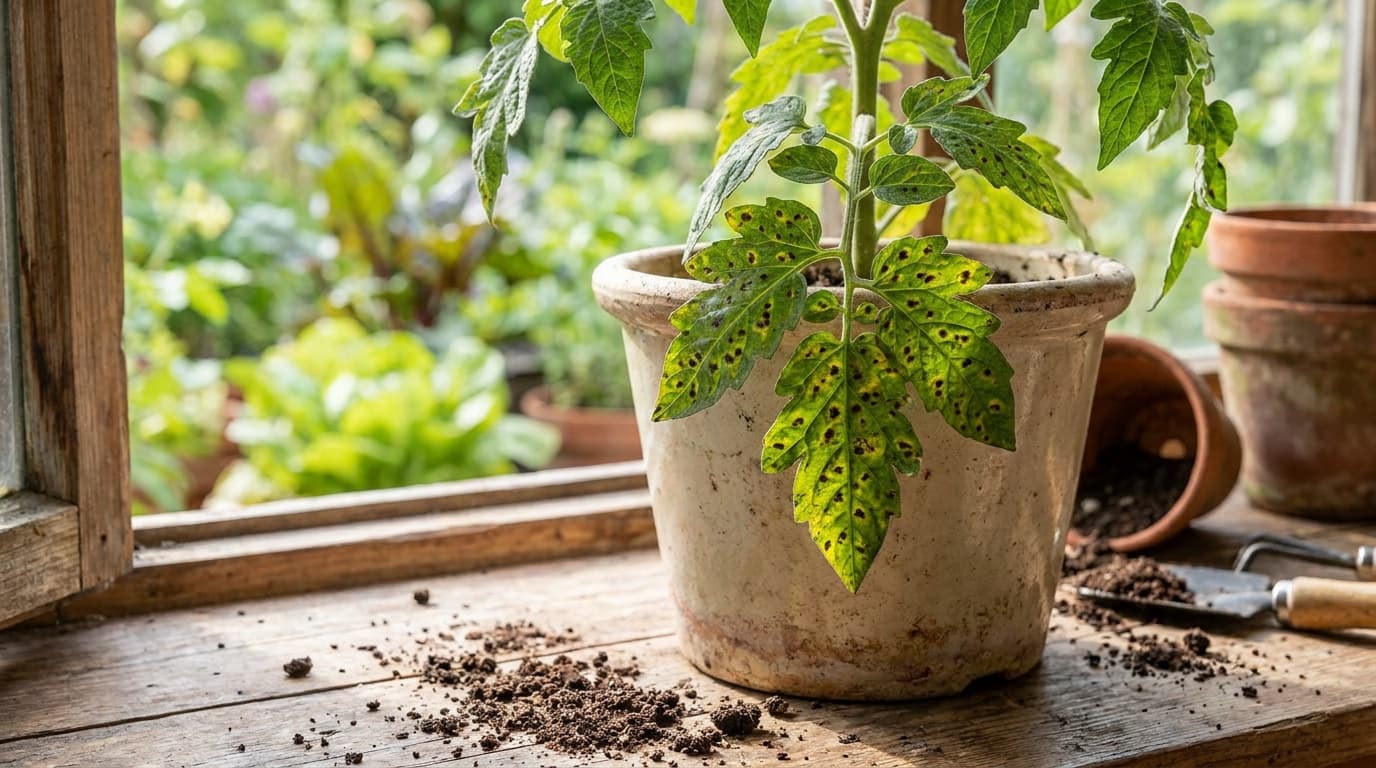
The tell is a two-sided pattern. On top, you see pale green or yellow patches that are often angular, because the spread is contained by the leaf veins, giving a blocky, mosaic look. Flip the leaf in humid weather and you find a downy gray, purplish, or olive fuzz, the spore growth, directly beneath those patches. As it advances, the patches brown, dry, and the leaf dies.
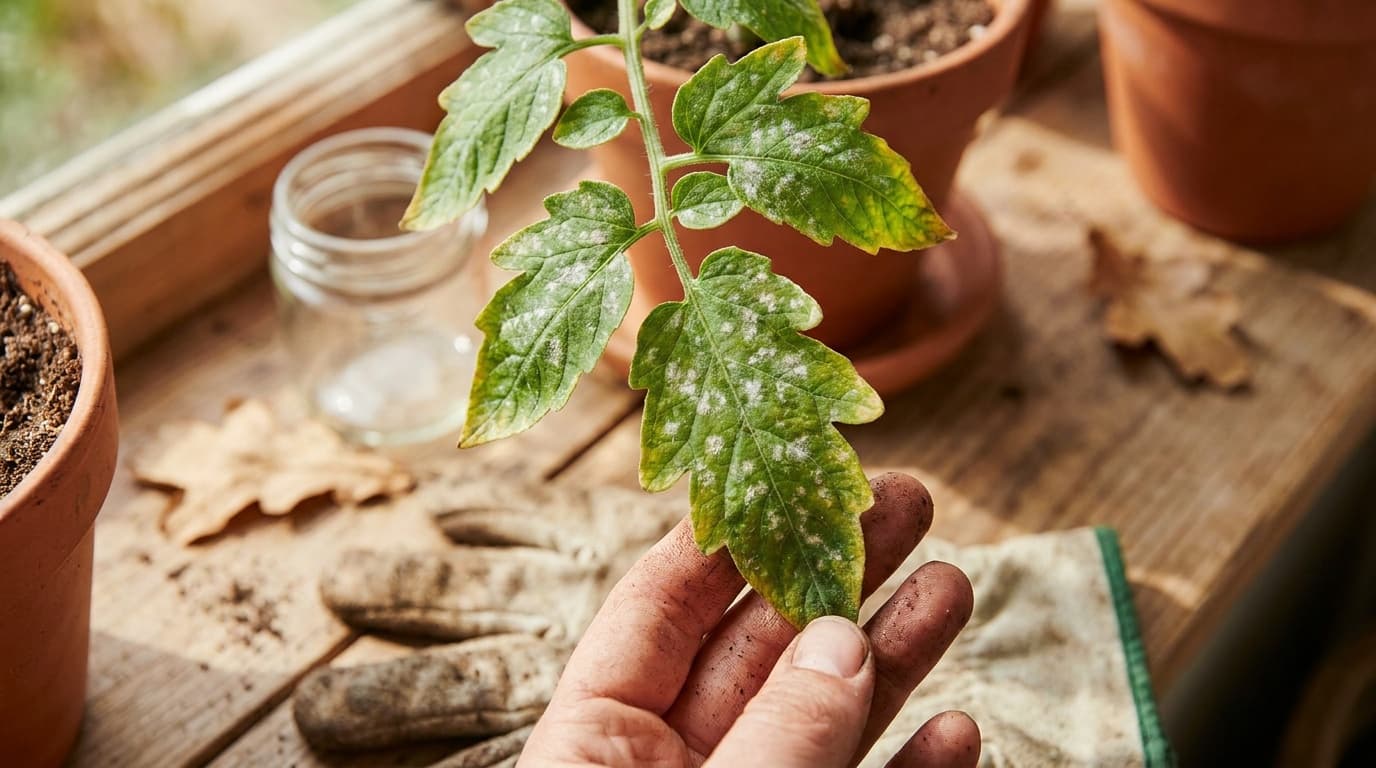
This is the key contrast with powdery mildew, which sits as a white powder on the upper surface and needs dry leaves. Downy mildew lives on the underside, looks gray to purple, and needs leaf wetness. If you are unsure which you have, see our powdery mildew guide and compare the underside.
What causes downy mildew
Downy mildew thrives in cool, wet, humid weather: long dews, frequent rain, overhead watering, and crowded canopies that stay damp. The spores travel on wind and splashing water, and many downy mildews (notably the one that hits cucurbits) overwinter in warmer regions and blow north on weather systems each season, arriving in a fairly predictable window.
The conditions that drive an outbreak:
- Wet foliage. Free water on the leaf is required for spores to germinate, so dew, rain, and overhead watering all feed it.
- Cool, humid weather. Mild temperatures with high humidity are ideal. It often follows a stretch of rainy, overcast days.
- Poor airflow. Crowded plantings keep leaves wet longer and trap humid air.
- Susceptible varieties. Many older cucumber and basil varieties have little resistance.
How to slow downy mildew
Because there is no cure for infected leaves, every step here is about protecting the healthy tissue and the next plantings.
Slowing downy mildew
Remove infected leaves
Keep foliage dry
Open up airflow
Pull badly hit plants
Plan resistant replants
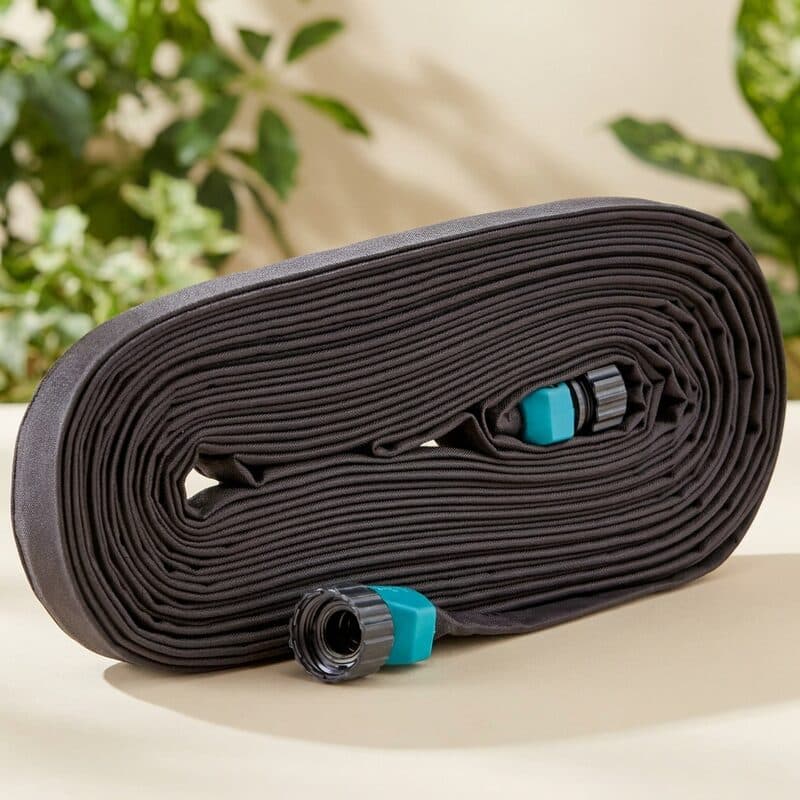
The biggest controllable factor is leaf wetness, and the cleanest way to manage it is to stop watering from above. A flat soaker hose laid along the base of the row puts water at the roots and leaves the foliage dry, which directly slows the water mold that downy mildew depends on.
Some links on this page are affiliate links. As an Amazon Associate I earn from qualifying purchases.
Water at the base
Gilmour Flat Weeper Soaker Hose
Best for: Row and border gardeners who want low-waste, root-zone watering on a budget.
Keep in mind: Even output drops over very long runs and on slopes
Amazon price as of the checked date, subject to change. The price on Amazon at checkout applies.
Full research
- Type
- Flat weeper soaker hose
- Lengths
- Available in multiple lengths
- Delivery
- Seeps along the full length
- Connection
- Standard hose faucet
Gilmour's flat weeper soaker hose seeps water along its length to deliver moisture at the root zone, lying flat along rows and borders.
This catalog-wide research score is separate from this guide's use-case ranking. How we research
Strengths
- Delivers water directly to the root zone with little waste
- Flat profile lies neatly along rows and borders
- Inexpensive and easy to route through a bed
Weaknesses
- Even output drops over very long runs and on slopes
- Should be drained and stored to avoid winter damage
Sprout Score breakdown
Best for
Row and border gardeners who want low-waste, root-zone watering on a budget.
Owner rating snapshot
Amazon · 49 reviews · 4.2 stars
Timing matters too. Watering early in the day, on a timer, means leaves are dry well before the cool, humid evenings when downy mildew spreads. A weather-aware timer skips watering after rain so you are not adding moisture the plant cannot shed before nightfall.

Dry-by-evening timing
Orbit B-hyve Smart Hose Faucet Timer
Best for: Gardeners who want app control and weather-aware automatic watering.
Keep in mind: WiFi setup can be finicky at the faucet's signal range
Amazon price as of the checked date, subject to change. The price on Amazon at checkout applies.
Full research
- Connectivity
- WiFi and Bluetooth
- Scheduling
- App-based, weather-adjusting
- Zones
- Single outlet (multi-outlet models available)
- Power
- Battery powered
Orbit's B-hyve smart timer adds WiFi and Bluetooth control with weather-based scheduling, automating faucet watering from a phone app.
This catalog-wide research score is separate from this guide's use-case ranking. How we research
Strengths
- Weather-based scheduling skips watering after rain
- Controllable from a phone over WiFi or Bluetooth
- Flexible programs for multiple watering windows
Weaknesses
- WiFi setup can be finicky at the faucet's signal range
- Costs more than a basic mechanical dial timer
Sprout Score breakdown
Best for
Gardeners who want app control and weather-aware automatic watering.
Owner rating snapshot
Amazon · 17 reviews · 4.1 stars
How to prevent downy mildew
- Choose resistant varieties. This is the single best lever for cucumber and basil especially, where resistant lines have changed the game.
- Space for airflow and trellis vines. Fast leaf drying is your friend.
- Water at the base, in the morning. Keep foliage dry through the cool, humid hours.
- Time fast crops to beat its arrival. Use the planting calendar to get cucumbers and squash producing earlier in the season, before downy mildew typically blows in.
- Clean up at season's end. Remove and discard infected plant debris.
Which plants get downy mildew
Downy mildew is host-specific, meaning each version attacks a particular group. The ones home growers meet most are cucurbit downy mildew on cucumber, zucchini, winter squash, pumpkin, watermelon, and cantaloupe; basil downy mildew on basil, which can wipe out a planting fast; and separate versions on lettuce, spinach, and brassicas like broccoli. Cucumber and basil tend to be hit hardest and fastest.
What is the difference between downy mildew and powdery mildew?
They are different organisms with opposite needs. Powdery mildew is a true fungus that sits as a white powder on the upper leaf surface and thrives on dry leaves in humid air. Downy mildew is a water mold that needs wet leaves, shows as angular yellow patches on top with gray or purple fuzz underneath, and spreads in cool, wet weather. Keeping leaves dry helps with downy mildew far more than with powdery.
Can you cure downy mildew?
There is no cure that reverses already-infected leaves. Management is about slowing the spread and protecting healthy tissue: remove infected leaves promptly, keep foliage dry, improve airflow, and replant with resistant varieties. On fast crops like cucumber, once it is established the realistic goal is to harvest what you can before the plant declines.
Why does my basil keep getting downy mildew?
Basil downy mildew spreads easily in humid weather and on susceptible varieties, and its spores travel on wind and water. If it recurs every year, switch to resistant basil varieties, give plants plenty of space and airflow, water at the base rather than overhead, and harvest often to keep the canopy open. Starting plants earlier so they mature before peak humidity also helps.
Is downy mildew harmful to humans?
No. Downy mildew is a plant pathogen and is not harmful to people. Produce from an infected plant is safe to eat after washing, though heavily diseased leaves of crops like basil and lettuce are unappetizing and best discarded. The concern is plant health and yield, not food safety.
Downy mildew spreads quickly in wet weather, and there is no cure after infection. Slow it by keeping leaves dry, giving plants more air, choosing resistant varieties, and timing fast crops to produce before the disease usually arrives.