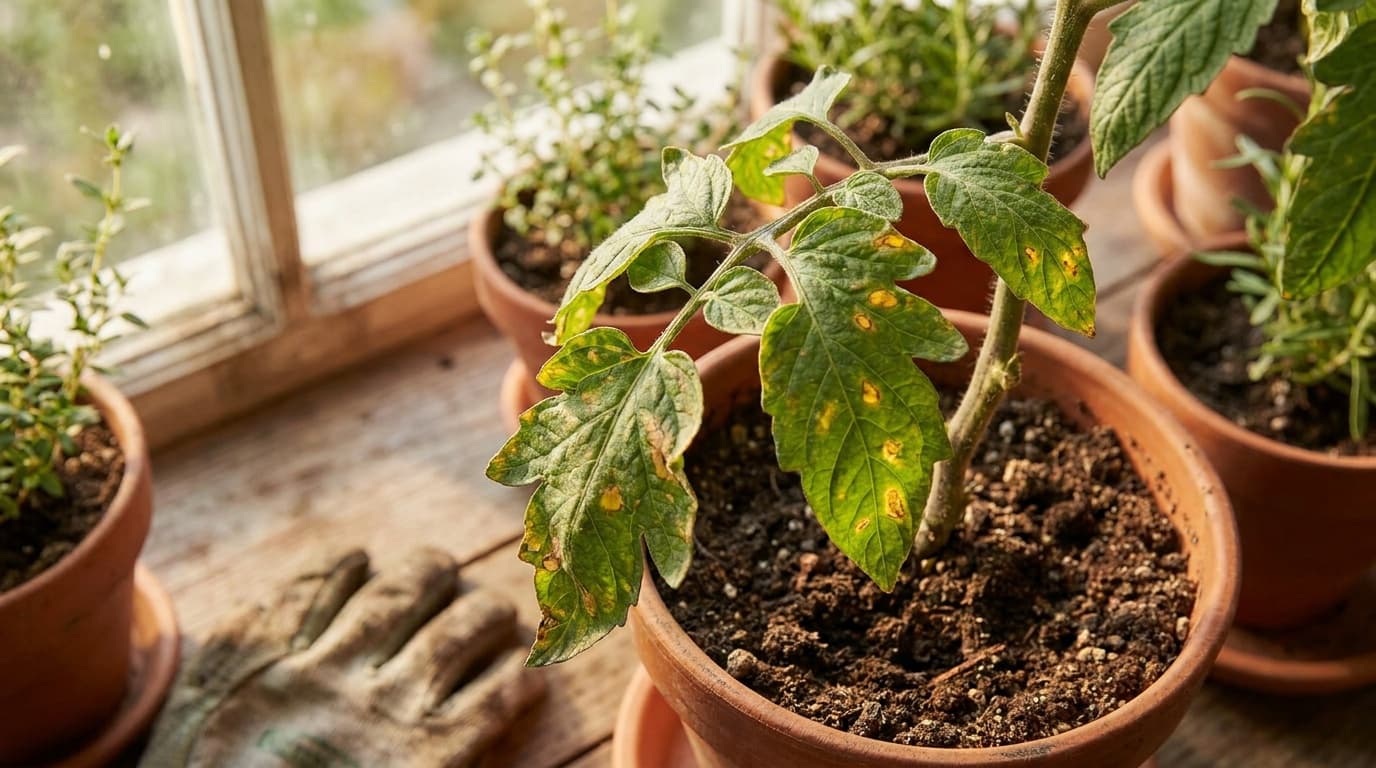
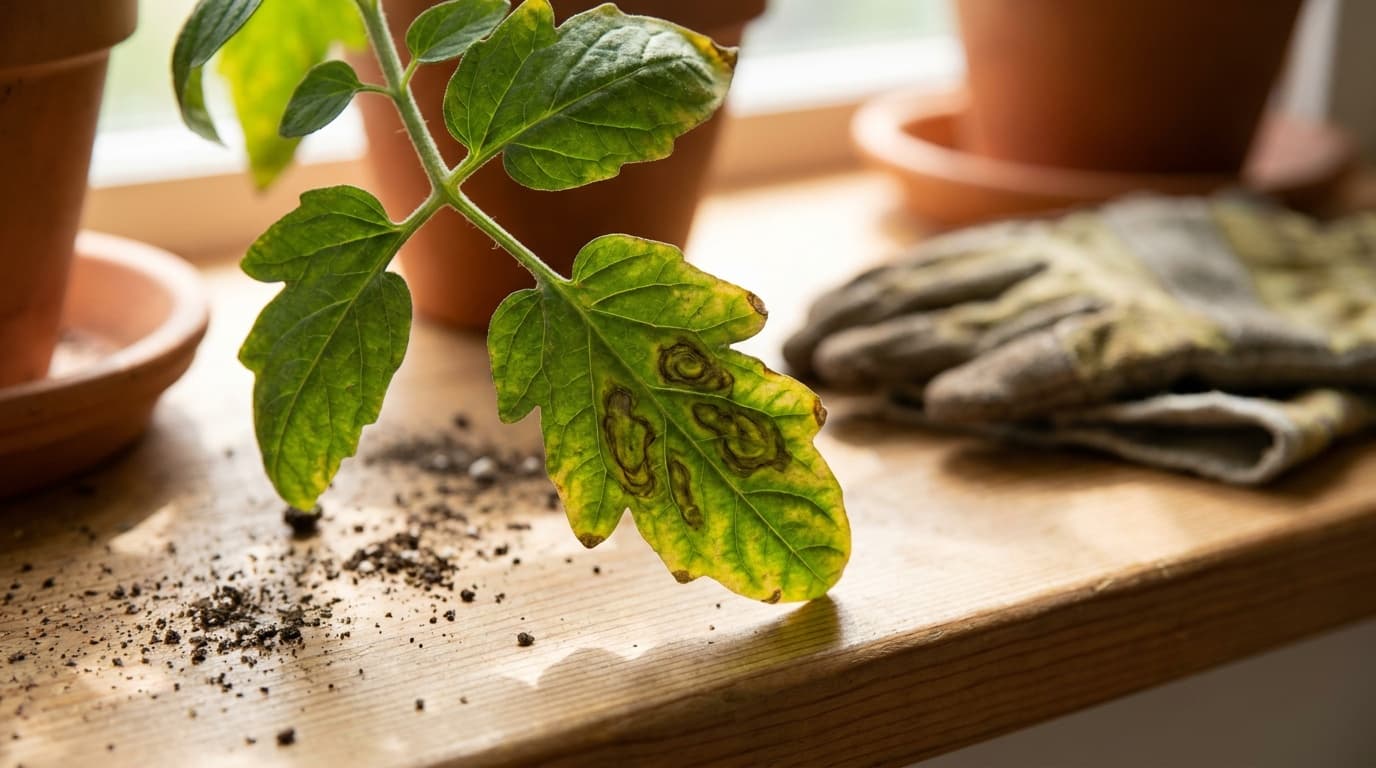
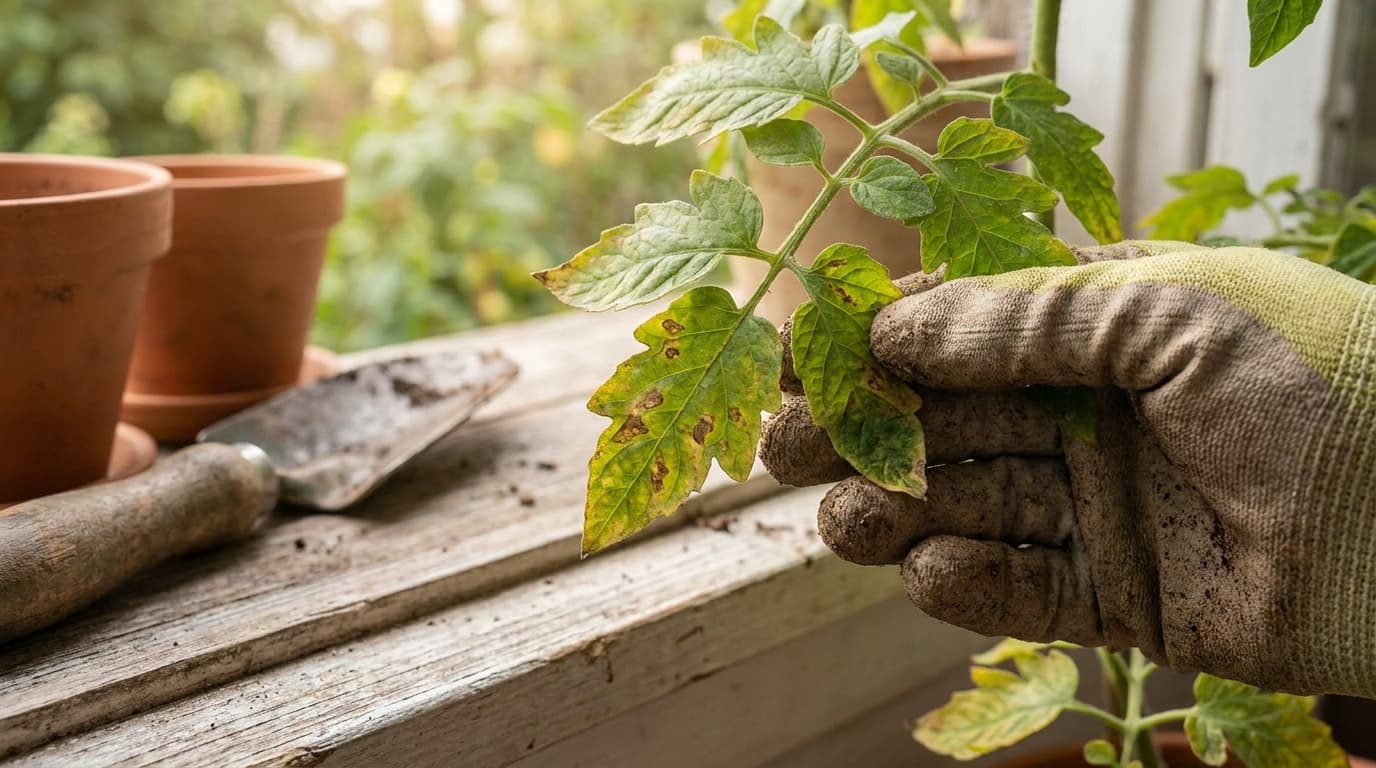
Powdery mildew starts as small white patches that can spread across a leaf, followed by yellowing and curling. It rarely kills a plant outright, but it weakens growth, reduces yields, and can make squash and cucumber leaves die early. Prevention depends on airflow, resistant varieties, and early treatment where the disease returns each year.
What causes powdery mildew
Powdery mildew is caused by a group of fungi, and the species that hits your squash is different from the one on your roses or your zucchini. What they share is a love of the same conditions: warm days, cool nights, high humidity around the leaf surface, and crowded growth that traps still, damp air. Critically, powdery mildew spores germinate on dry leaves and are actually inhibited by free water on the leaf, which sets it apart from most fungal diseases.
That distinction matters for how you fight it. The usual fungal advice, keep leaves dry, still helps because it discourages other diseases and because overhead watering knocks spores around, but the real levers for powdery mildew are airflow, sunlight, and crowding.
The conditions that invite it in:
- Crowding and poor airflow. Plants packed tightly, or grown against a fence with no air movement, hold humid air around the leaves and spread spores leaf to leaf.
- Shade. Powdery mildew fungi tolerate lower light than the plants they infect, so shaded leaves are the first to go.
- High humidity, dry leaves. Muggy air with no rain on the foliage is the ideal setting. Late summer often delivers exactly that.
- Excess nitrogen. Heavy feeding pushes soft, dense new growth that the fungus colonizes easily.
How to treat an active infection
Once you see white patches, act quickly, because powdery mildew spreads fast in the right weather. Affected leaves will not return to green, so the goal is to stop the spread and protect the new growth.
Treating powdery mildew
Remove infected leaves
Improve airflow now
Use a labeled treatment if needed
Reapply only as directed
Stop overfeeding
How to prevent powdery mildew
Prevention beats treatment by a wide margin here. Most of it is about how you space, site, and water your plants.
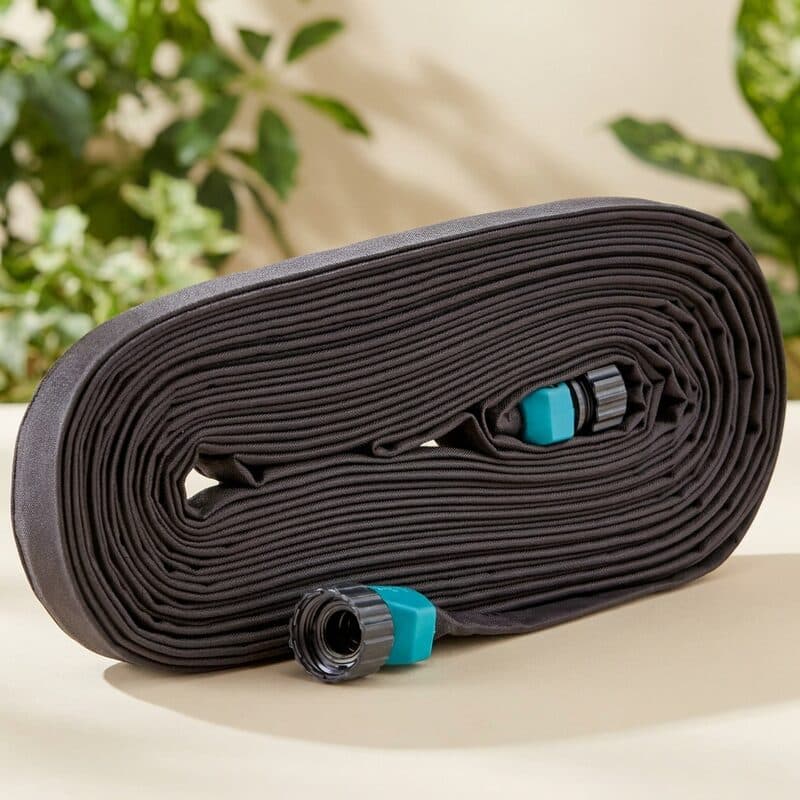
Watering at the base makes it easier to keep a crowded canopy from staying humid overnight and also avoids inviting other leaf diseases. A flat soaker hose laid along the row delivers water to the roots while you keep the foliage open and dry.
Some links on this page are affiliate links. As an Amazon Associate I earn from qualifying purchases.
Base watering for prevention
Gilmour Flat Weeper Soaker Hose
Best for: Row and border gardeners who want low-waste, root-zone watering on a budget.
Keep in mind: Even output drops over very long runs and on slopes
Amazon price as of the checked date, subject to change. The price on Amazon at checkout applies.
Full research
- Type
- Flat weeper soaker hose
- Lengths
- Available in multiple lengths
- Delivery
- Seeps along the full length
- Connection
- Standard hose faucet
Gilmour's flat weeper soaker hose seeps water along its length to deliver moisture at the root zone, lying flat along rows and borders.
This catalog-wide research score is separate from this guide's use-case ranking. How we research
Strengths
- Delivers water directly to the root zone with little waste
- Flat profile lies neatly along rows and borders
- Inexpensive and easy to route through a bed
Weaknesses
- Even output drops over very long runs and on slopes
- Should be drained and stored to avoid winter damage
Sprout Score breakdown
Best for
Row and border gardeners who want low-waste, root-zone watering on a budget.
Owner rating snapshot
Amazon · 49 reviews · 4.2 stars
Watering in the early morning, on a timer, means any incidental leaf moisture burns off by midday rather than lingering overnight. A weather-aware timer also skips watering after rain, so you are not adding humidity the plant does not need.

Consistent morning watering
Orbit B-hyve Smart Hose Faucet Timer
Best for: Gardeners who want app control and weather-aware automatic watering.
Keep in mind: WiFi setup can be finicky at the faucet's signal range
Amazon price as of the checked date, subject to change. The price on Amazon at checkout applies.
Full research
- Connectivity
- WiFi and Bluetooth
- Scheduling
- App-based, weather-adjusting
- Zones
- Single outlet (multi-outlet models available)
- Power
- Battery powered
Orbit's B-hyve smart timer adds WiFi and Bluetooth control with weather-based scheduling, automating faucet watering from a phone app.
This catalog-wide research score is separate from this guide's use-case ranking. How we research
Strengths
- Weather-based scheduling skips watering after rain
- Controllable from a phone over WiFi or Bluetooth
- Flexible programs for multiple watering windows
Weaknesses
- WiFi setup can be finicky at the faucet's signal range
- Costs more than a basic mechanical dial timer
Sprout Score breakdown
Best for
Gardeners who want app control and weather-aware automatic watering.
Owner rating snapshot
Amazon · 17 reviews · 4.1 stars
Beyond watering:
- Space for airflow. Give squash, cucumbers, and melons the full spacing on the seed packet. Crowding is the most common mistake.
- Pick resistant varieties. Many cucumber, zucchini, winter squash, and pumpkin cultivars are bred for powdery mildew resistance. This is the easiest win for next season.
- Plant in full sun. Sun-grown leaves resist infection far better than shaded ones.
- Clean up in fall. The fungus overwinters on debris, so clear out spent vines and infected leaves at season's end.
Powdery mildew tends to arrive in a predictable late-summer window, so use the planting calendar to time fast-maturing squash and cucumbers for an earlier harvest that beats the worst of the pressure.
Which plants get powdery mildew
It is most notorious on the cucurbits: cucumber, zucchini, winter squash, pumpkin, watermelon, and cantaloupe. It also hits tomato, peas, and many ornamentals and herbs. The squash family is where it does the most economic damage, killing leaves early and shrinking the harvest, so those crops are where resistant varieties and good spacing pay off most.
How do I get rid of powdery mildew naturally?
Start with the conditions: remove the worst-coated leaves, open up airflow by thinning and trellising, and stop high-nitrogen feeding. If the infection keeps spreading, choose a treatment whose label lists your crop and powdery mildew. Test a small section and follow its directions; spraying alone rarely wins once a plant is heavily coated.
Does powdery mildew need wet leaves to grow?
No, and this is what sets it apart from most fungal diseases. Powdery mildew spores germinate on dry leaf surfaces and are actually inhibited by free water sitting on the leaf. It thrives on high humidity in the air around crowded, shaded plants rather than on rain or dew. That is why airflow and spacing matter more than keeping leaves dry, though base watering still helps overall.
Can a plant recover from powdery mildew?
The leaves already coated white will not turn green again, but the plant itself usually recovers if you act early. Remove infected leaves, improve airflow, treat the new growth, and the plant can keep producing. Heavily infected squash and cucumber plants late in the season may simply be near the end of their useful life, in which case clearing them out protects the rest of the garden.
Is powdery mildew harmful to eat?
The fungus on the leaves is not toxic, and fruit from an infected plant is safe to eat after washing. Powdery mildew rarely grows on the fruit itself; it lives on the foliage. The real cost is to the plant's vigor and yield as infected leaves die back, not to your health.
For the closely related disease that does need wet leaves and behaves very differently, see our guide on downy mildew.
Powdery mildew is easiest to manage before it covers the canopy. Space plants well, water at the base, choose resistant varieties, and act when the first white patches appear.