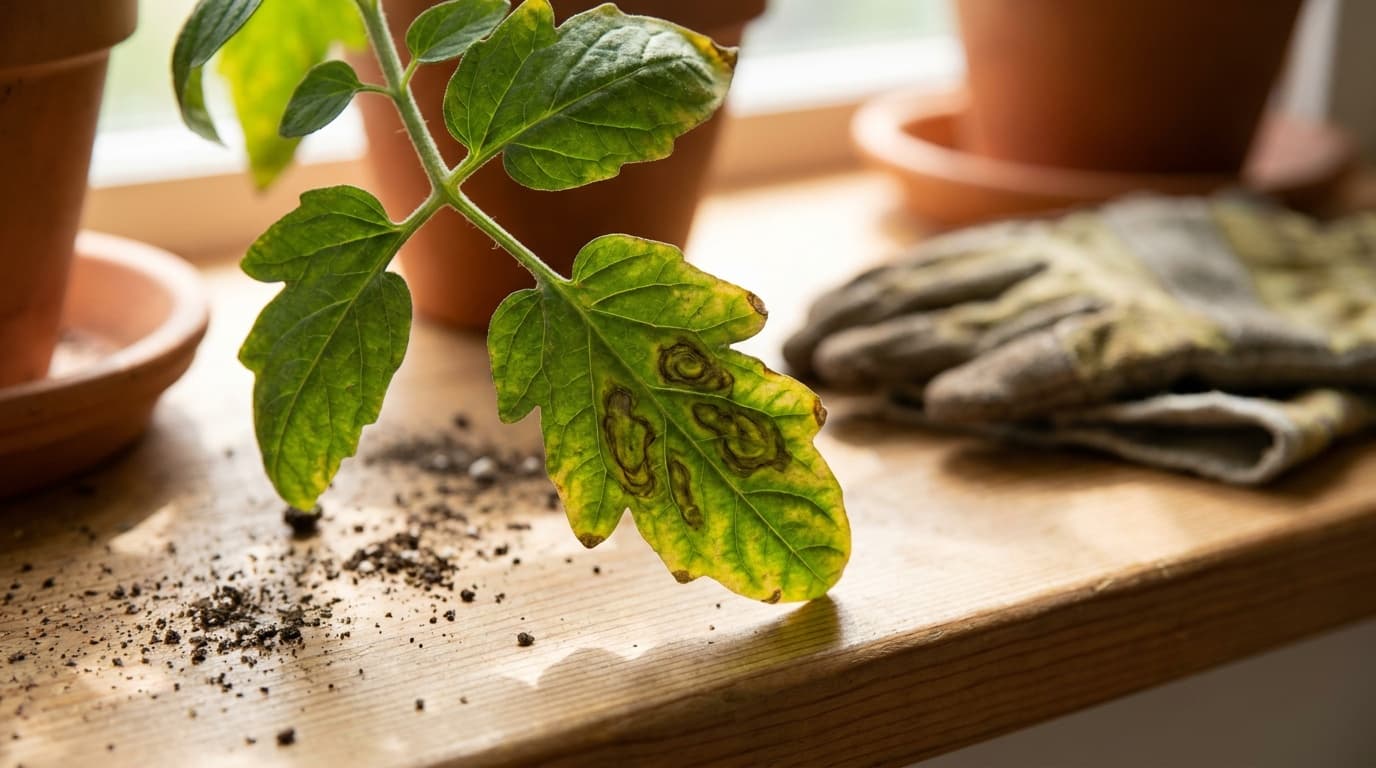
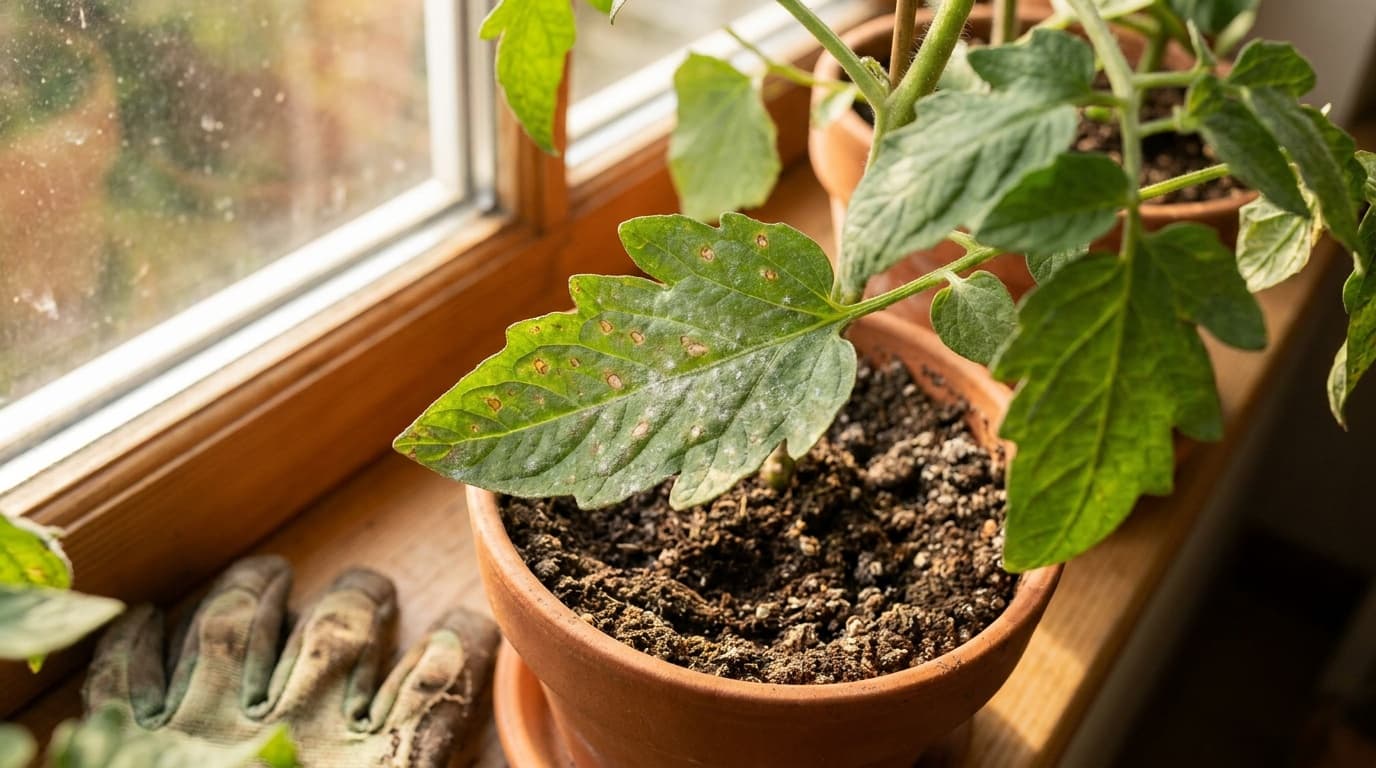
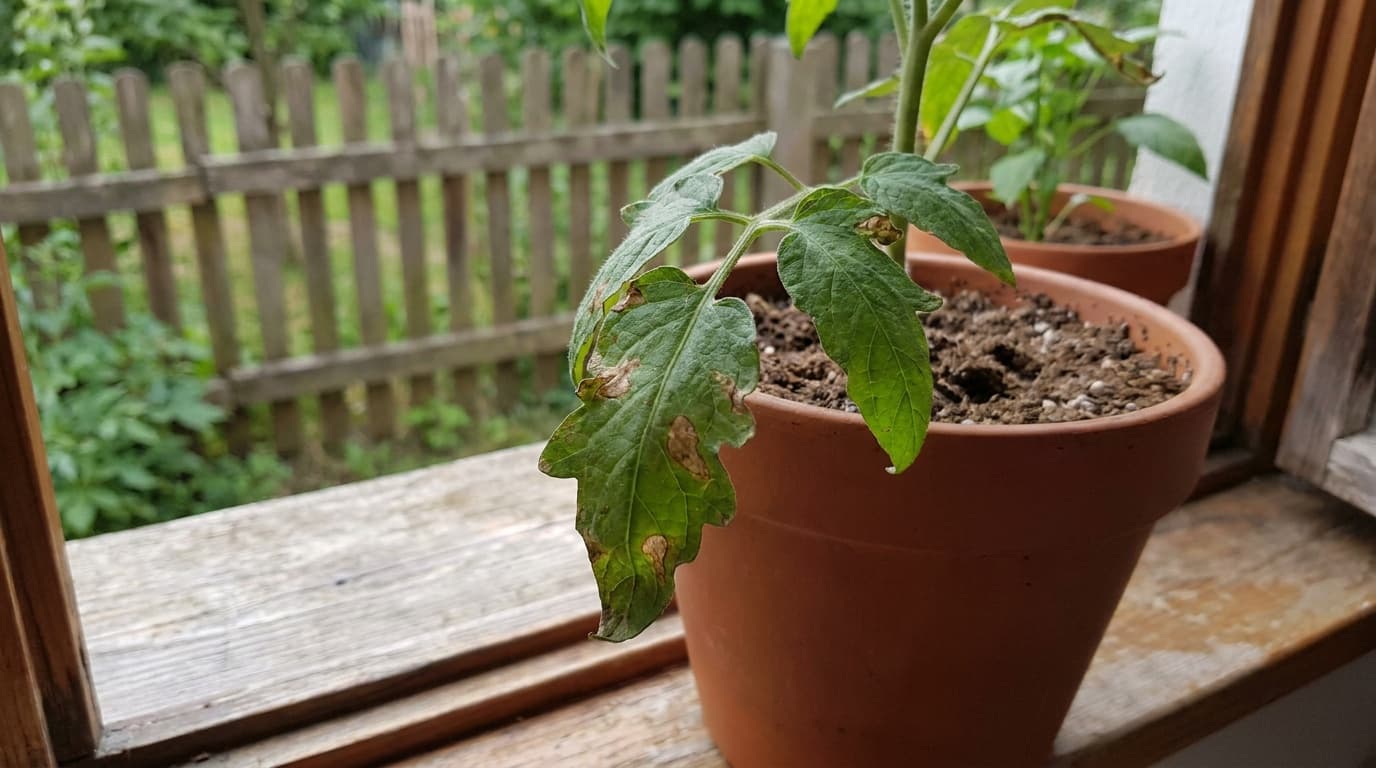
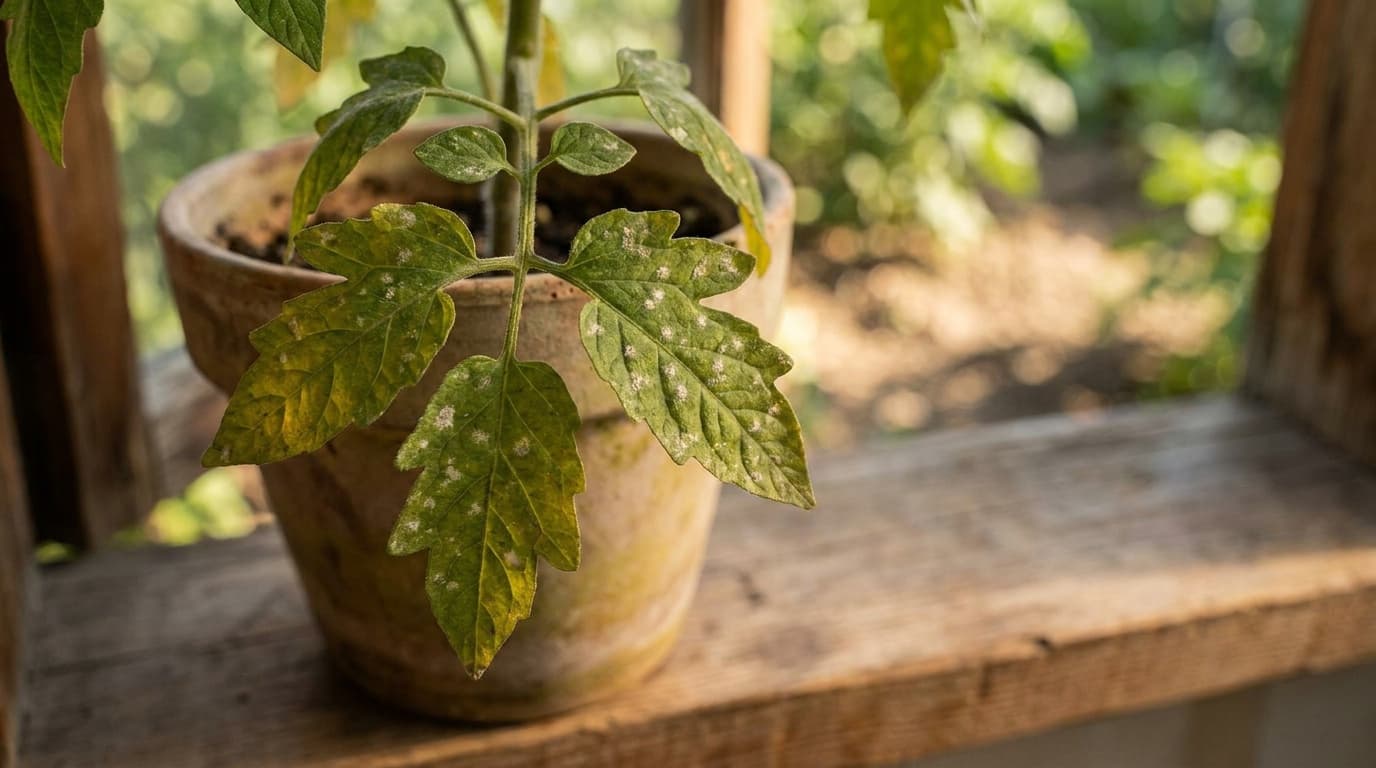
Gray mold, caused by the fungus Botrytis, is one of the most common and recognizable garden diseases. It announces itself with a soft, water-soaked decay followed by a velvety gray or grayish-brown fuzz of spores over the affected tissue. It is an opportunist: it colonizes dead petals, ripe and overripe fruit, frost-damaged or wounded tissue, and crowded lower leaves that stay wet, then spreads into healthy tissue from that beachhead. Cool, humid, still air is its ideal weather, which is why it flares in damp spells, dense plantings, and poorly ventilated greenhouses and tunnels.
How to identify the problem
The signature is the gray fuzz. Where other rots stay slimy or dry, botrytis develops that distinctive fuzzy gray spore layer, often releasing a puff of dust-like spores when disturbed. It typically starts on the most vulnerable tissue, faded flowers, a bruised fruit, a pinched stem, or a crowded, shaded lower leaf, then advances. On strawberries it turns ripening berries into fuzzy gray mush; on tomatoes it can cause stem cankers and fruit rot. Spotting the gray fuzz on decaying or wounded tissue is the clearest confirmation.
How to control it, step by step
The plan
Open up the canopy
Water at the base
Remove dead and infected tissue
Harvest promptly
Handle gently
Improve greenhouse ventilation
Base watering and airflow are the real controls
Botrytis is a disease of wet, still tissue, so the two changes that matter most are keeping the foliage and fruit dry and keeping air moving through the planting. Watering at the soil line rather than over the plant keeps the canopy dry and denies the fungus the moisture film it needs to germinate and spread.
Some links on this page are affiliate links. As an Amazon Associate I earn from qualifying purchases.
Keep foliage and fruit dry
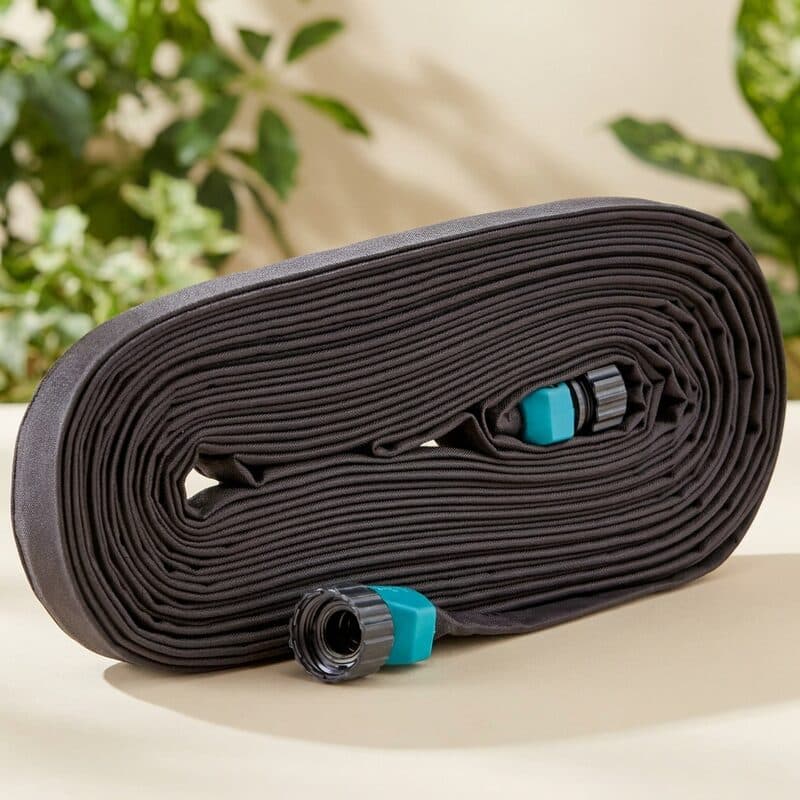
Gilmour Flat Weeper Soaker Hose
Best for: Row and border gardeners who want low-waste, root-zone watering on a budget.
Keep in mind: Even output drops over very long runs and on slopes
Amazon price as of the checked date, subject to change. The price on Amazon at checkout applies.
Full research
- Type
- Flat weeper soaker hose
- Lengths
- Available in multiple lengths
- Delivery
- Seeps along the full length
- Connection
- Standard hose faucet
Gilmour's flat weeper soaker hose seeps water along its length to deliver moisture at the root zone, lying flat along rows and borders.
This catalog-wide research score is separate from this guide's use-case ranking. How we research
Strengths
- Delivers water directly to the root zone with little waste
- Flat profile lies neatly along rows and borders
- Inexpensive and easy to route through a bed
Weaknesses
- Even output drops over very long runs and on slopes
- Should be drained and stored to avoid winter damage
Sprout Score breakdown
Best for
Row and border gardeners who want low-waste, root-zone watering on a budget.
Owner rating snapshot
Amazon · 49 reviews · 4.2 stars
A timer makes base watering consistent and lets you water early in the morning, so the soil surface gets the moisture and any splash dries well before the cool, humid evening hours when botrytis is most aggressive.

Water early, not at night
Orbit B-hyve Smart Hose Faucet Timer
Best for: Gardeners who want app control and weather-aware automatic watering.
Keep in mind: WiFi setup can be finicky at the faucet's signal range
Amazon price as of the checked date, subject to change. The price on Amazon at checkout applies.
Full research
- Connectivity
- WiFi and Bluetooth
- Scheduling
- App-based, weather-adjusting
- Zones
- Single outlet (multi-outlet models available)
- Power
- Battery powered
Orbit's B-hyve smart timer adds WiFi and Bluetooth control with weather-based scheduling, automating faucet watering from a phone app.
This catalog-wide research score is separate from this guide's use-case ranking. How we research
Strengths
- Weather-based scheduling skips watering after rain
- Controllable from a phone over WiFi or Bluetooth
- Flexible programs for multiple watering windows
Weaknesses
- WiFi setup can be finicky at the faucet's signal range
- Costs more than a basic mechanical dial timer
Sprout Score breakdown
Best for
Gardeners who want app control and weather-aware automatic watering.
Owner rating snapshot
Amazon · 17 reviews · 4.1 stars
Which plants are at risk, and how to plan
Gray mold has a very wide host range, but in the edible garden it hits soft fruit and dense, humid plantings hardest. Strawberries are a classic victim, with ripening berries turning to gray fuzz, and tomatoes, peppers, and lettuce all suffer in cool, damp, crowded conditions. Lettuce is especially prone where crowded heads trap moisture at the base.
Use the planting calendar for your ZIP to set proper spacing and timing from the start, so plants are not crowded into a humid mass during your coolest, dampest stretch. Good spacing decided up front prevents far more gray mold than any treatment applied once it appears.
What does gray mold look like?
Gray mold shows as a soft, water-soaked decay covered by a velvety gray or grayish-brown fuzz of spores, often puffing into a dust-like cloud when disturbed. It usually starts on the most vulnerable tissue, faded flowers, overripe fruit, wounds, or crowded lower leaves, then spreads into healthy tissue. The distinctive gray fuzz is what separates botrytis from slimier or drier rots.
How do I get rid of gray mold on plants?
You cannot reverse tissue that has already rotted, so control means changing conditions and removing inoculum. Open up the canopy for airflow, water at the base to keep foliage and fruit dry, remove faded flowers and rotting fruit promptly, harvest ripe fruit before it overripens, and handle plants gently to avoid wounds. Those cultural steps starve the fungus far more effectively than spraying.
Why does gray mold keep coming back on my strawberries?
Strawberries are a favorite host because ripening berries sit in humid, crowded foliage close to the soil, and any overripe or damaged berry becomes a launch point for spores. Improve airflow and spacing, keep the fruit dry by watering at the base, mulch to keep berries off wet soil, and pick ripe and damaged fruit promptly. Removing that vulnerable tissue is what breaks the cycle.
Does humidity cause gray mold?
High humidity, cool temperatures, and still air are the conditions botrytis thrives in, so yes, humidity is a major driver. The fungus needs moisture on the tissue surface to germinate and spread. Reducing humidity and leaf wetness through airflow, spacing, base watering, and, under cover, greenhouse ventilation is the core of preventing gray mold.
What to do now
Gray mold is a disease of damp, still air and dead or wounded tissue, so you control it by changing conditions rather than spraying. Open up the canopy for airflow, water at the base to keep foliage and fruit dry, remove faded flowers and rotting fruit, harvest promptly, and handle plants gently. Set your spacing with the planting calendar so plants never crowd into a humid mass, and botrytis loses the conditions it depends on.