Our recommendations
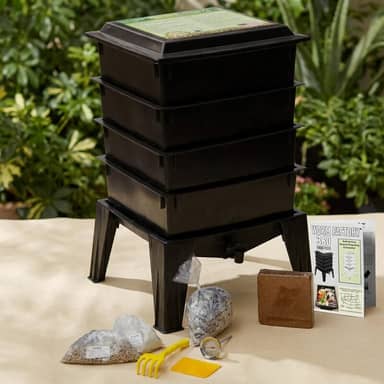
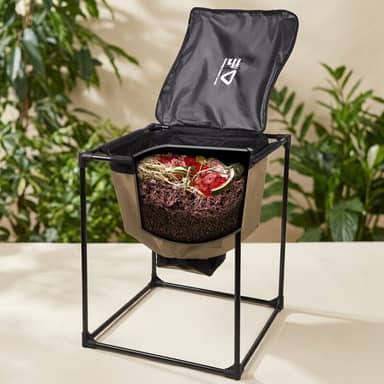
Vermicomposting uses red wiggler worms to turn fruit and vegetable scraps, coffee grounds, and shredded paper into castings. The castings are more concentrated in plant-available nutrients and beneficial microbes than ordinary compost. A balanced bin is compact, nearly odorless, and can keep working indoors through winter. Choose between these two bins based on how you want to collect the finished castings.
Stacking trays vs continuous-flow bag
Both of our picks exploit the same worm behavior: red wigglers move upward toward fresh food and leave finished castings behind. They just package it differently.
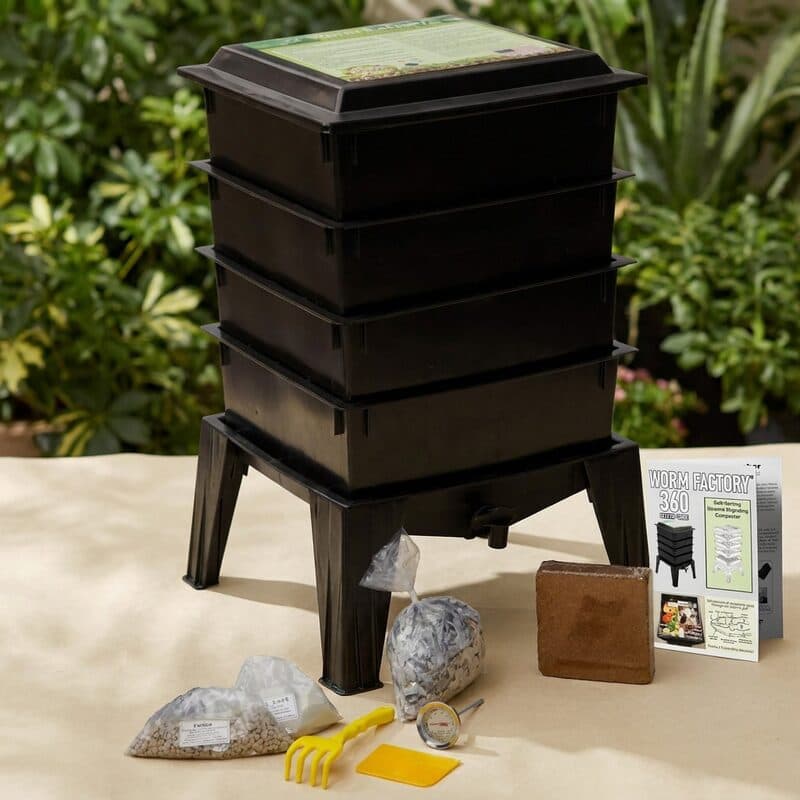
A stacking-tray system uses several shallow trays. You feed the top tray, the worms migrate up out of the lower trays as those run out of food, and you harvest the bottom tray of nearly worm-free castings, then rotate it back to the top. It is tidy and modular, and you can expand it by adding trays as the colony grows.
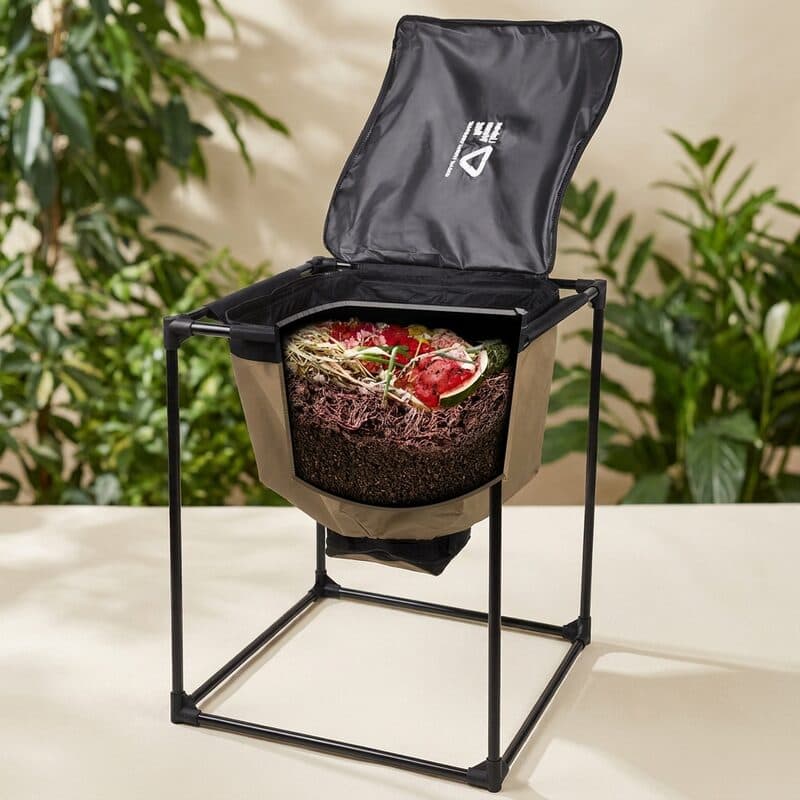
A continuous-flow bag is a single tall fabric bin. You feed from the top, the worms work and rise with the fresh food, and finished castings collect at the bottom where you harvest them through a zippered opening, with no trays to lift or rotate. The breathable fabric walls keep air moving so the bed is less likely to go soggy or overheat.
Best overall: Worm Factory 360
Editor's choice
Worm Factory 360 Worm Composter
Best for: Gardeners who want continuous worm castings without a backyard pile.
Keep in mind: Spigot fitting can leak if not sealed well
Amazon price as of the checked date, subject to change. The price on Amazon at checkout applies.
Full research
- Design
- Stacking tray (migration) system
- Included trays
- 4 (expandable to 8)
- Material
- Recycled plastic
- Liquid drainage
- Built-in spigot for leachate
A stacking-tray worm composter that turns kitchen scraps into castings indoors or out. Worms migrate up through trays as food is added, so finished castings collect at the bottom for easy harvest.
This catalog-wide research score is separate from this guide's use-case ranking. How we research
Strengths
- Tray migration makes harvesting castings clean
- Expandable from 4 to 8 trays as the colony grows
- Compact enough for a garage, balcony, or basement
Weaknesses
- Spigot fitting can leak if not sealed well
- Requires attention to moisture and feeding balance
Sprout Score breakdown
Best for
Gardeners who want continuous worm castings without a backyard pile.
Owner rating snapshot
Amazon · 18 reviews · 4.5 stars
The Worm Factory 360 Worm Composter is the worm bin we recommend first because it makes the hardest part, harvesting clean castings, almost effortless. Its stacking-tray design lets worms migrate up toward the fresh food you add on top, so the lower trays fill with finished castings you can lift out with very few worms in them. It ships with four trays and expands to eight as your colony grows, and the compact footprint fits a garage, basement, or balcony. A spigot drains off the liquid (leachate) that collects at the base.
The recurring caveat is that spigot: if it is not seated firmly it can drip, so check it on setup. As with any tray bin, keeping the moisture right (damp like a wrung-out sponge, not soggy) is the skill that takes a few weeks to dial in. Get that balance and it runs cleanly for years.
Best continuous-flow: Urban Worm Bag Version 2
Best continuous-flow
Urban Worm Bag Version 2
Best for: Vermicomposters who want a single large, well-aerated continuous-flow bin.
Keep in mind: No expandable trays like rigid systems
Amazon price as of the checked date, subject to change. The price on Amazon at checkout applies.
Full research
- Design
- Continuous-flow fabric bag
- Harvest
- Bottom zipper for finished castings
- Material
- Breathable fabric on a steel frame
- Airflow
- Full-fabric breathability prevents overheating
A continuous-flow worm bin made of breathable fabric on a steel frame. Feed from the top, harvest finished castings from a bottom zipper, and let the breathable walls keep the bed from overheating.
This catalog-wide research score is separate from this guide's use-case ranking. How we research
Strengths
- Breathable fabric prevents the bin from going anaerobic
- Bottom-harvest design keeps worms away from finished castings
- Sturdy steel frame with a large single working volume
Weaknesses
- No expandable trays like rigid systems
- Fabric and frame take up more floor space
Sprout Score breakdown
Best for
Vermicomposters who want a single large, well-aerated continuous-flow bin.
Owner rating snapshot
Amazon · 572 reviews · 4.4 stars
The Urban Worm Bag Version 2 takes the trays out of the equation. It is a breathable fabric bag on a sturdy steel frame: you feed from the top and harvest finished castings through a zipper at the bottom, while the fabric walls let air pass through so the bed stays aerated and is less prone to the sogginess and overheating that can hit a sealed plastic bin. Vermicomposters who dislike lifting and rotating rigid trays tend to strongly prefer this approach.
The trade-offs are footprint and price: the bag-and-frame takes up more floor space than a stack of trays, and it costs about the same as a multi-tray system without the same expandability. The fabric also lets some moisture evaporate, so in a dry home you may need to mist the bedding more often. For hands-off harvesting and reliable airflow, it is an excellent bin.
How to choose a worm composter
Harvest method. This is the main decision. Stacking trays give you modular, near-worm-free harvests but require lifting trays. A continuous-flow bag harvests from the bottom with no trays but takes more floor space. Pick the chore you would rather do.
Capacity for your household. A typical small household generates enough scraps for a four-tray bin or a single continuous-flow bag. A worm colony scales to its food supply, so do not overbuy; an underfed bin invites problems.
Moisture and airflow. This is what makes or breaks a worm bin. Fabric bins breathe and resist sogginess but dry out faster; plastic tray bins hold moisture well but can go anaerobic if overwatered. Either way, aim for bedding as damp as a wrung-out sponge.
Indoor vs garage. Both bins run indoors at room temperature and are nearly odorless when balanced, which is the whole appeal in winter. Red wigglers prefer roughly 55F to 80F, so a heated garage, basement, or closet all work.
What you can feed. Fruit and vegetable scraps, coffee grounds and filters, crushed eggshells, and shredded plain paper or cardboard are ideal. Avoid meat, dairy, oily food, and large amounts of citrus or onion, which cause odor and pests.
| Product | Price | Best for | Buy |
|---|---|---|---|
| Worm Factory 360 Worm Composter#1 · EDITOR'S CHOICE | Typical price range · $100-$150 | Gardeners who want continuous worm castings without a backyard pile. | Shop Amazon |
| Urban Worm Bag Version 2#2 · BEST CONTINUOUS-FLOW | Typical price range · $100-$150 | Vermicomposters who want a single large, well-aerated continuous-flow bin. | Shop Amazon |
What is the best worm composter for beginners?
A stacking-tray system like the Worm Factory 360 is the most beginner-friendly, because the trays make harvesting clean castings simple and the design guides you through the process. A continuous-flow bag is also approachable and forgiving on airflow. Either works well; the key is starting with the right worms and not overfeeding at first.
Do worm composters smell?
A balanced worm bin is nearly odorless and smells earthy, like a forest floor, not like garbage. Bad smells almost always mean a problem: too much wet food, not enough bedding, or feeding things worms should not eat like meat and dairy. Add dry bedding, cut back on feeding, and the smell clears up.
What worms do I use for a worm composter?
Red wigglers (Eisenia fetida) are the standard composting worm. They live near the surface, tolerate crowding, and process scraps quickly, which is exactly what a bin needs. Common garden earthworms and nightcrawlers burrow deep and do not thrive in a bin, so buy red wigglers specifically.
Can I keep a worm composter indoors in winter?
Yes, and that is one of the main reasons to have one. A worm bin runs at room temperature, is nearly odorless when balanced, and keeps producing castings through winter when an outdoor compost pile freezes. Keep it somewhere that stays roughly between 55F and 80F, like a basement, closet, or heated garage.
How long until a worm composter makes usable castings?
A new bin typically yields its first harvest of finished castings in about two to three months as the colony establishes and works through the bedding and scraps. After that, a tray bin produces a steady supply you can harvest from the bottom on a rolling basis. Patience early on pays off, since a rushed, overfed start sets the bin back.
A worm composter is the most space-efficient way to make premium soil amendment at home, and it keeps working in the months an outdoor pile cannot. Start with red wigglers, feed lightly, keep the bedding damp, and you will have a steady supply of castings for your seedlings and beds. For more composting options, see our guides to the best compost tumblers for sealed outdoor batches and the best compost bins for yard-waste volume.