Amending soil without testing is guessing with money. You can dump lime on soil that is already alkaline, pile on nutrients that are already high (which can lock out others), or chase a deficiency that was really a watering problem. A test turns "my plants look sad" into a specific, fixable number. This guide covers what to test, how to sample correctly, and which method is worth it for which job.
What a soil test actually tells you
Three things are worth measuring, and they answer different questions:
- pH: how acidic or alkaline the soil is. This is the single most important number, because pH controls whether nutrients are even available to roots. Most vegetables want roughly 6.0 to 7.0. Off-target pH can mimic a nutrient deficiency even when the nutrient is present.
- Nutrients: mainly phosphorus, potassium, calcium, magnesium, and sometimes nitrogen (nitrogen moves and changes fast, so single readings are less reliable). These tell you what to add and, just as usefully, what to stop adding.
- Texture: your sand/silt/clay split. This is permanent, but knowing it explains your drainage and watering behavior and guides how aggressively you build organic matter.
How to pull a sample correctly (this matters more than the method)
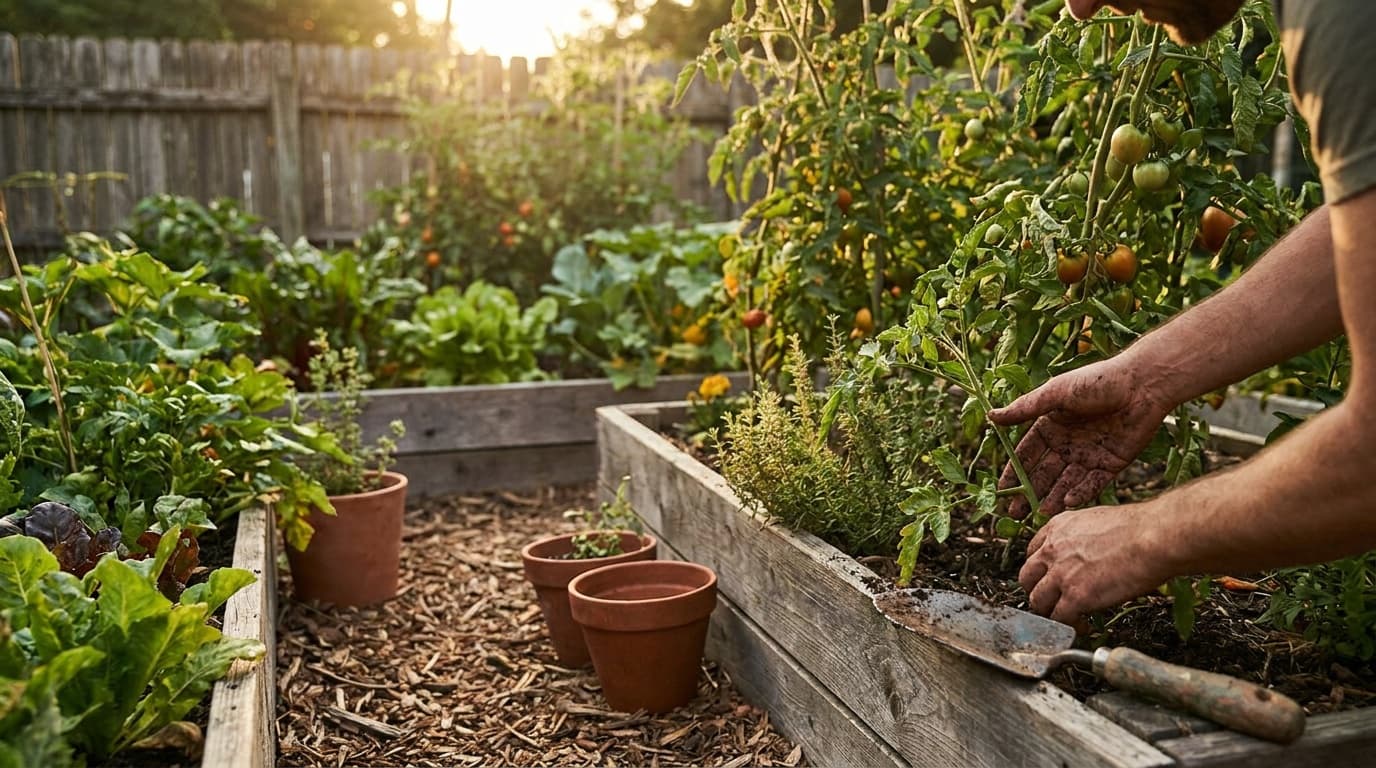
A test is only as good as the sample. One scoop from one spot can be wildly unrepresentative. Pull a composite:
Sampling the right way
Sample by area
Take 6 to 10 cores
Mix and dry
Subsample for the lab
Label and date
The three test methods, and when to use each
1. The jar test (free, for texture)
You only need to do this once. It reveals your sand/silt/clay ratio.
The soil texture jar test
Fill a jar
Shake hard
Read the layers
Interpret
2. A home pH and nutrient kit (cheap, for trend checks)
Inexpensive kits and digital pH meters are fine for tracking pH direction between lab tests and spotting big swings. They are not precise enough to fine-tune fertilizer rates, so use them as a quick check, not a prescription. Calibrate digital meters and take several readings across the bed.
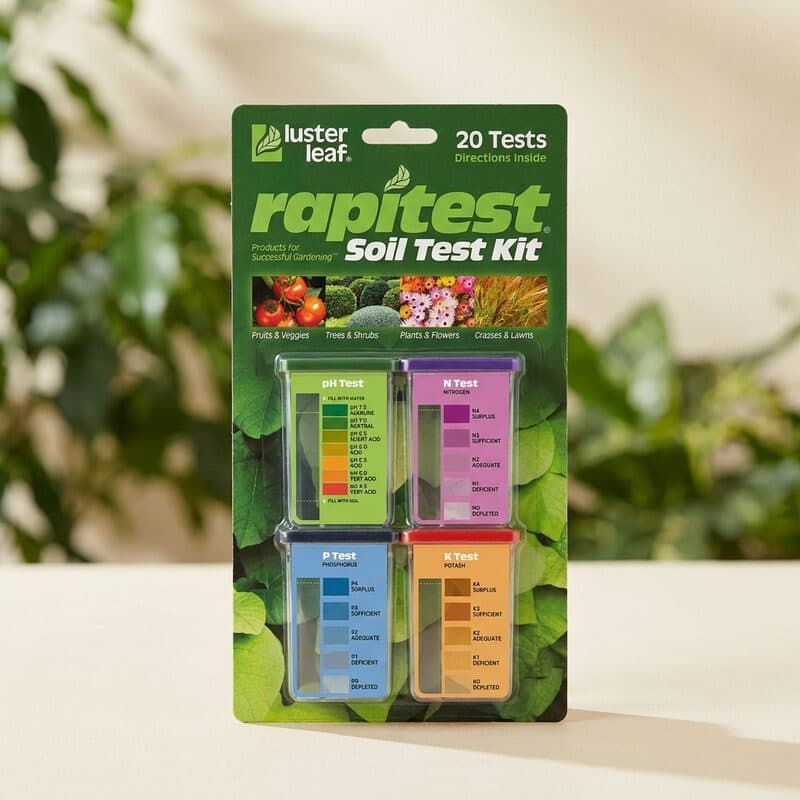
A capsule-style kit that reads pH plus nitrogen, phosphorus, and potassium is the common home choice for these in-between checks, giving you a quick directional read for a few dollars across many tests.
Some links on this page are affiliate links. As an Amazon Associate I earn from qualifying purchases.
Home soil test kit
Luster Leaf Rapitest Soil Test Kit (1601)
Best for: Home gardeners who want a fast, affordable picture of soil pH and basic NPK before planting or amending.
Keep in mind: Colorimetric accuracy is narrower than a lab analysis
Amazon price as of the checked date, subject to change. The price on Amazon at checkout applies.
Full research
- Tests included
- 40 total: 10 pH, 10 N, 10 P, 10 K
- Parameters
- pH, nitrogen, phosphorus, potassium
- Method
- Chemical capsule + color comparator
- Reference chart
- pH and NPK targets for 100+ plants
The Luster Leaf Rapitest 1601 is the go-to home soil test kit, using chemical capsules and a color comparator to measure pH, nitrogen, phosphorus, and potassium in minutes.
This catalog-wide research score is separate from this guide's use-case ranking. How we research
Strengths
- Tests four critical parameters in one kit at low cost
- Color comparator is easier to read than flat printed charts
- Results in minutes with no mailing or waiting
Weaknesses
- Colorimetric accuracy is narrower than a lab analysis
- Does not measure secondary nutrients or organic matter
Sprout Score breakdown
Best for
Home gardeners who want a fast, affordable picture of soil pH and basic NPK before planting or amending.
Owner rating snapshot
Amazon · 22 reviews · 4.1 stars
3. A lab test (the source of record)
For the numbers you actually act on, send a composite sample to a soil lab, often through your local Cooperative Extension office. You get calibrated pH, nutrient levels, organic matter percentage, and crop-specific recommendations: exactly how much lime or which nutrients to add for what you are growing. It is inexpensive and removes the guesswork. Do this every two to three years, or sooner if a bed is underperforming.
What to do with the results
Reading the numbers is only useful if it changes what you do next.
- pH off target: add lime to raise pH (make it less acidic) or elemental sulfur to lower it. Both work slowly, so apply in fall and retest before adding more. Follow the lab's quantity, do not eyeball it.
- A nutrient is low: add a targeted amendment or a balanced organic feed, not a blanket dose of everything. The lab tells you which one.
- A nutrient is high: stop adding it. Excess phosphorus, for example, can interfere with the uptake of other nutrients.
- Organic matter low: this is the common one, and the fix is not a quick amendment. It is the steady habit of adding compost and mulch covered in how to build healthy garden soil.
In practice, most home soil tests come back saying the same thing: pH is close, nutrients are adequate, and organic matter is low. That points you straight to compost as the highest-value move, which is why testing and soil building are two halves of one job.
FAQ
How often should I test my garden soil?
Send a lab test every two to three years for the foundational numbers, and check pH with a home kit in between if a bed seems off. Test sooner when you take over a new garden, after correcting a problem, or before planting something with unusual pH needs like blueberries.
When is the best time of year to test soil?
Late summer or fall is ideal. Results then give you the dormant season to apply slow-acting amendments like lime or sulfur, which need months in the soil to shift pH before spring planting. Whatever you choose, test in the same season each cycle so results are comparable.
Are home soil test kits accurate?
Home kits are good for tracking pH direction and spotting large changes, but they are not precise enough to fine-tune fertilizer rates. Use them as a between-cycles check and rely on a lab test for the numbers you actually act on.
What is the ideal soil pH for vegetables?
Most vegetables do well in a slightly acidic to neutral range, roughly 6.0 to 7.0, where the widest set of nutrients stays available to roots. A few crops differ sharply (blueberries want acidic soil well below this), so check the needs of anything unusual before adjusting a whole bed.
Test first, amend second. Once you know your pH, your nutrient levels, and your texture, you can stop guessing and start building. The natural next step is how to build healthy garden soil, where the test results turn into a season-by-season plan.