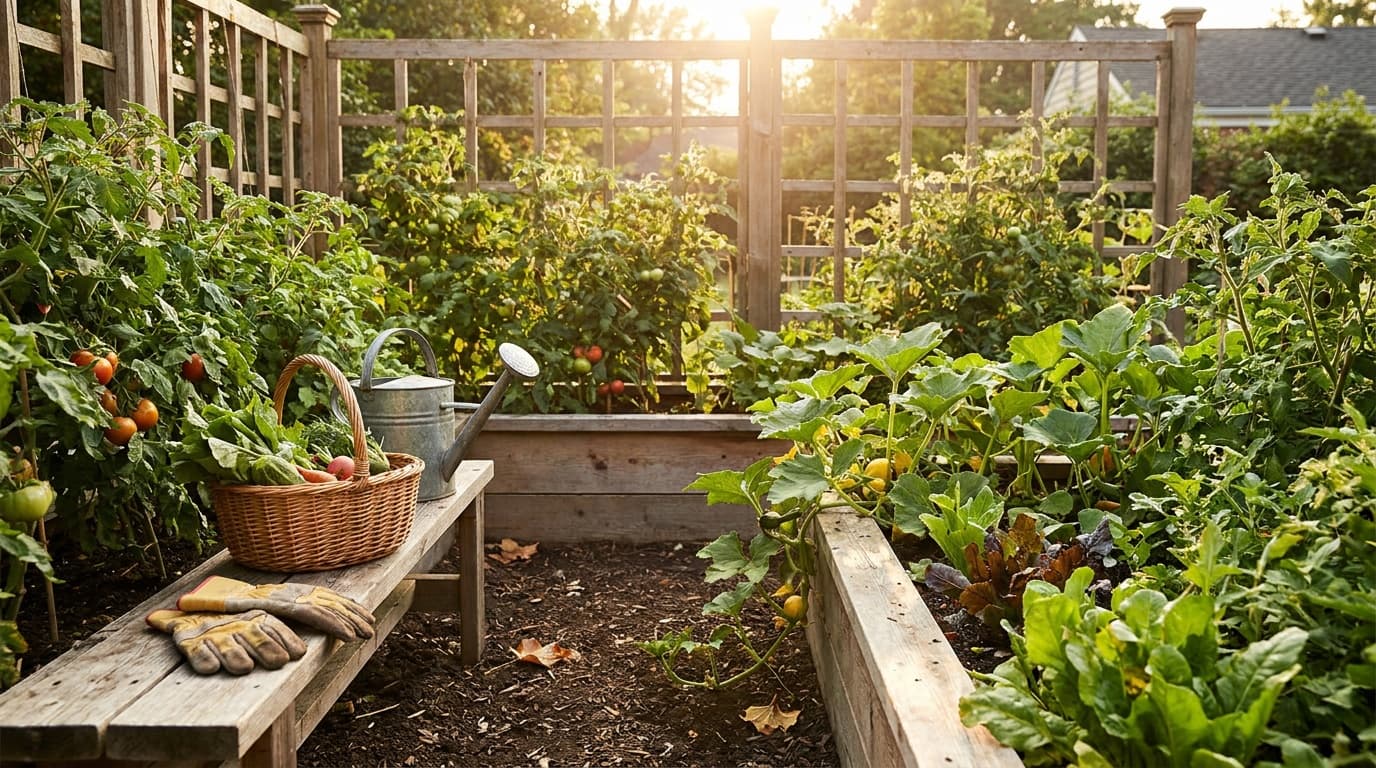
What no-dig actually means
No-dig (also called no-till) is exactly what it sounds like: you do not dig, fork, or rototill the soil. Instead of mixing amendments into the ground, you lay compost on the surface and let soil life pull it down. Earthworms, fungi, and roots build and maintain the structure that digging otherwise destroys and rebuilds each year.
The idea runs against decades of "double-dig your beds" advice, but the reasoning is straightforward. Soil is a living structure of channels, fungal networks, and aggregates. Digging breaks all of that apart, buries surface weed seeds at a depth where they sprout the moment you turn the soil, and speeds the loss of organic matter to the air. No-dig leaves the structure intact and feeds it from the top, the way soil is fed in nature.
How to start a no-dig bed
You can start a no-dig bed over lawn, weeds, or bare soil, in autumn or spring. The method is the same.
Building your first no-dig bed
Mark the bed, do not dig it
Smother with cardboard
Add compost on top
Plant straight away
Why beginners do well with no-dig
No-dig removes the two hardest parts of starting a garden: building soil and fighting weeds. There is no double-digging, no fighting compacted clay with a fork, and far less hand-weeding once the bed is established because you are not constantly bringing buried weed seeds to the surface.
It also forgives a lot. The compost layer drains and holds moisture well, so watering is less fussy, and the loose surface makes transplanting and harvesting easy. Because you never step on the growing area, the soil stays loose without any effort. That makes no-dig a natural fit for defined raised garden beds and for the bed layout in our guide to laying out a vegetable garden.
Maintaining a no-dig bed
No-dig maintenance is simple. Once a year, usually in autumn or late winter, spread about an inch of compost over the surface. This replaces most fertilizer and restores organic matter as it breaks down. Leave the compost on top for worms and roots to mix into the soil.
For heavy feeders like tomatoes or for poor starting compost, a balanced organic fertilizer scattered on the surface gives plants an extra boost without disturbing the soil.
Some links on this page are affiliate links. As an Amazon Associate I earn from qualifying purchases.
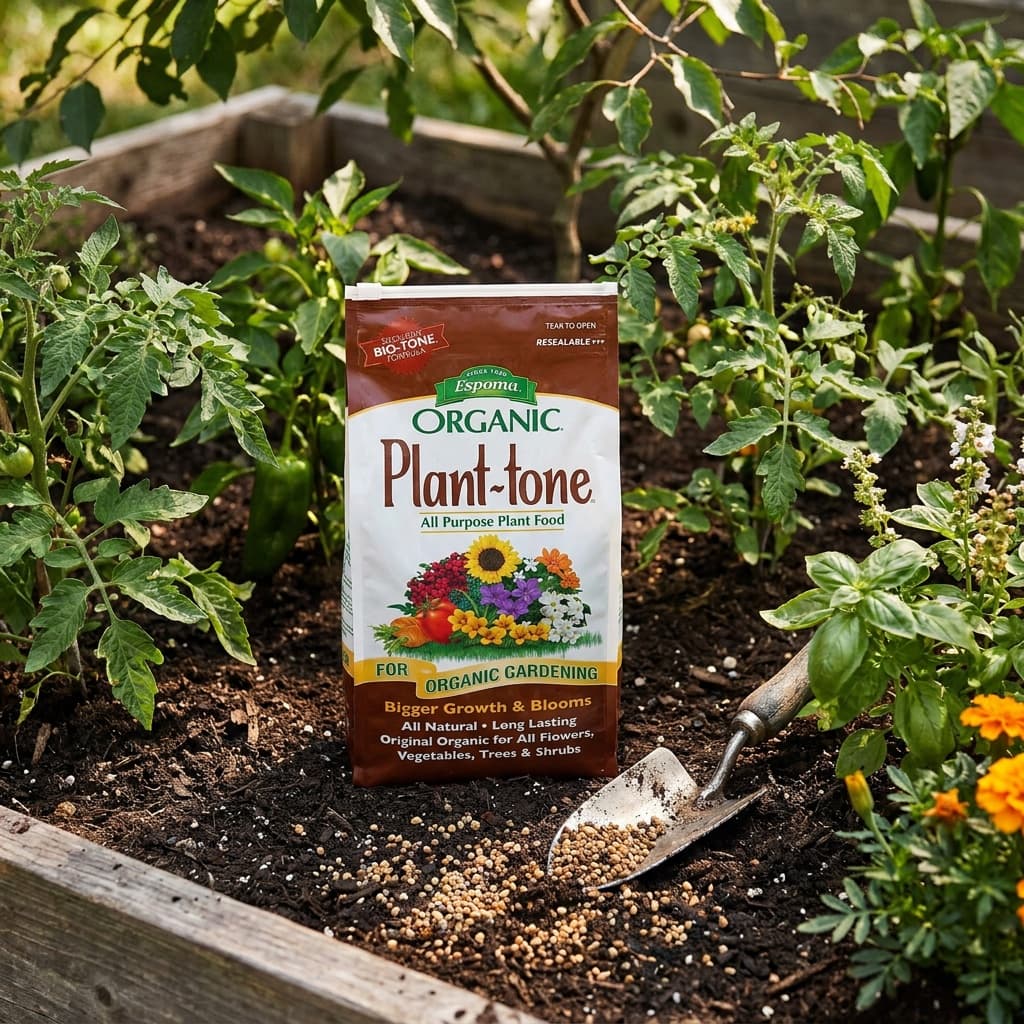
Optional top feed
Espoma Plant-tone Organic All-Purpose Fertilizer
Best for: Gardeners who want one safe, all-purpose organic feed for the whole garden.
Keep in mind: Granular organics have a noticeable earthy smell
Amazon price as of the checked date, subject to change. The price on Amazon at checkout applies.
Full research
- NPK
- 5-3-3
- Type
- Granular slow-release organic
- Microbes
- Bio-tone beneficial microbe blend
- Use
- All-purpose: vegetables, flowers, trees, shrubs
A slow-release granular organic fertilizer with a 5-3-3 NPK and the brand's Bio-tone microbe blend. An all-purpose feed for vegetables, flowers, trees, and shrubs that releases gradually over the season.
This catalog-wide research score is separate from this guide's use-case ranking. How we research
Strengths
- Gentle slow-release feeding that resists burning
- Bio-tone microbes support soil biology
- Truly all-purpose across the garden
Weaknesses
- Granular organics have a noticeable earthy smell
- Slower visible response than synthetic feeds
Sprout Score breakdown
Best for
Gardeners who want one safe, all-purpose organic feed for the whole garden.
Owner rating snapshot
Amazon · 15 reviews · 4.7 stars
Weeds that do appear pull out easily from the loose surface, and because you are not turning the soil, fewer new ones germinate each year. Mulch any bare soil between plants to keep it covered, which suppresses weeds further and holds moisture.
Sourcing enough compost
No-dig gardening uses a lot of compost. Topping every bed with an inch adds up, so plan the supply before you start. Bulk compost usually costs less than bags, and a home pile can cover part of your needs over time. Use finished compost without viable weed seeds so you do not import a new weed problem.
If you are also setting up the soil underneath a raised bed, our guide to the best soil mix for raised beds explains how a no-dig top-up fits with the bed's base mix.
Does no-dig gardening really work?
Yes, as a soil-management method. Extension guidance supports reduced disturbance for protecting soil structure, organic matter, water infiltration, and biological habitat. A UConn pumpkin trial found no-till matched conventional yield in one year and produced heavier fruit in the next, but that result is crop- and system-specific. Success in a home bed depends on suppressing the original weeds well and using good compost.
How do I start a no-dig garden over grass?
Mow or knock down the grass, lay overlapping plain cardboard across the whole area to block light, wet it, then spread 3 to 4 inches of compost on top and plant directly into the compost. The cardboard smothers the grass and breaks down over a few months while your crops grow above it.
How much compost do I need for no-dig?
To start a bed, plan on 3 to 4 inches of compost over the cardboard. After that, an annual top-up of about an inch maintains the bed. Across a whole garden this is a meaningful volume, so buying in bulk and composting at home both help keep the cost down.
Do I ever need to dig a no-dig bed?
Rarely. You may dig a planting hole for a tree or shrub, or break new ground once to remove large rocks or debris. For ordinary vegetable growing, leave the soil layers in place and let worms and roots maintain the structure.
No-dig trades a bit of compost up front for years of easier gardening. Smother the weeds, lay your compost, plant straight in, and top up once a year. The soil gets better on its own, and you spend your time harvesting instead of weeding and digging.