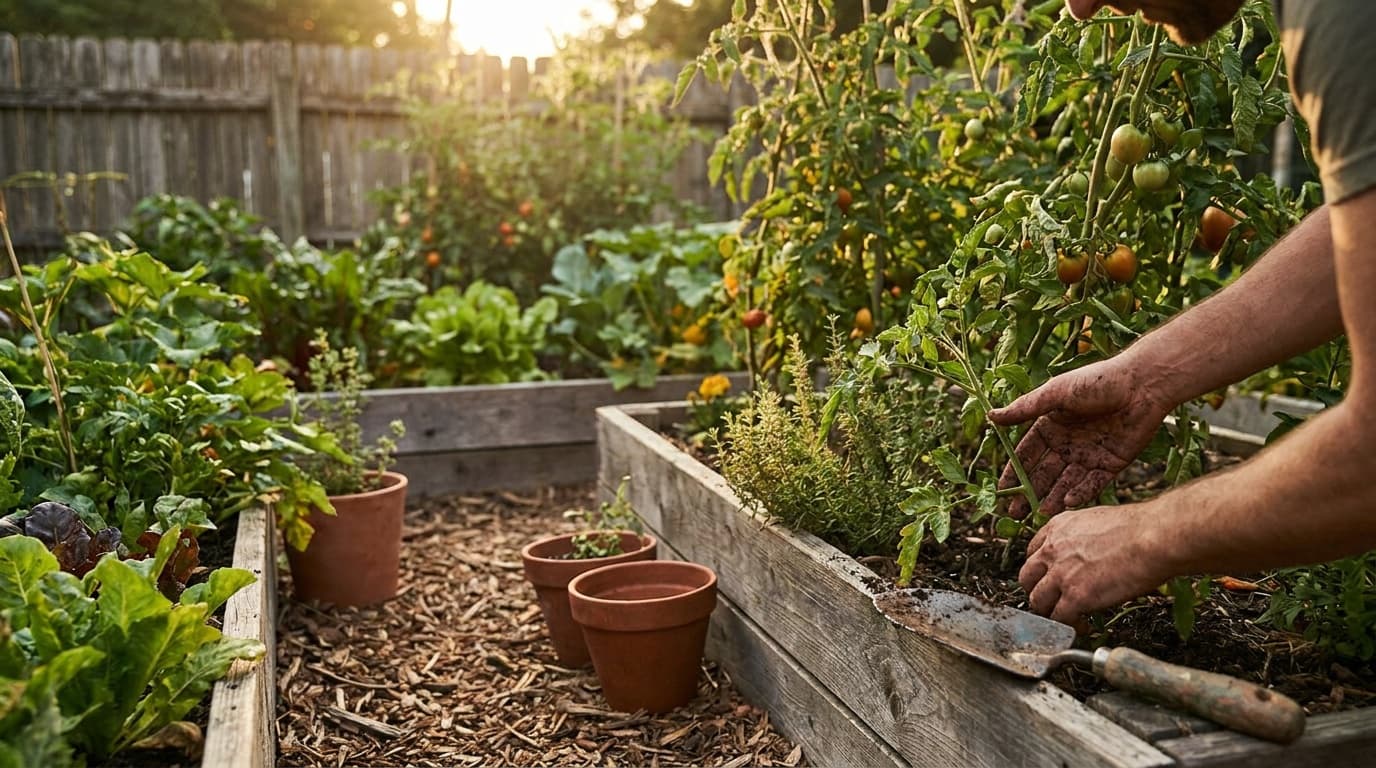
Mulch is the closest thing gardening has to a cheat code. A single afternoon spreading a few inches of straw or shredded leaves cuts your watering, suppresses most of your weeds, evens out soil temperature, and, with organic materials, slowly enriches the soil underneath. There is no other one-time task with that many simultaneous payoffs. The only ways to get it wrong are choosing the wrong material, applying it at the wrong time, or piling it against stems.
This guide covers all three: what mulch does, which kind to use where, and the right way and time to apply it.
What mulch actually does
Understanding the mechanisms tells you when it matters most.
The four jobs mulch does at once
Holds moisture
Blocks weeds
Moderates temperature
Builds soil (organic mulch)
That moisture and temperature buffering is also why mulch pairs so well with smart watering, see how much to water a vegetable garden. A mulched bed simply needs less water to stay evenly moist, which in turn helps prevent moisture-swing problems like blossom end rot.
The single most effective pairing is mulch over a soaker hose. Run the hose along the base of the row, then cover it with mulch: the hose delivers water straight to the roots and the mulch stops it evaporating, so almost none is wasted to the air. A flat soaker hose sits flush under mulch better than a round one.
Some links on this page are affiliate links. As an Amazon Associate I earn from qualifying purchases.
Gilmour
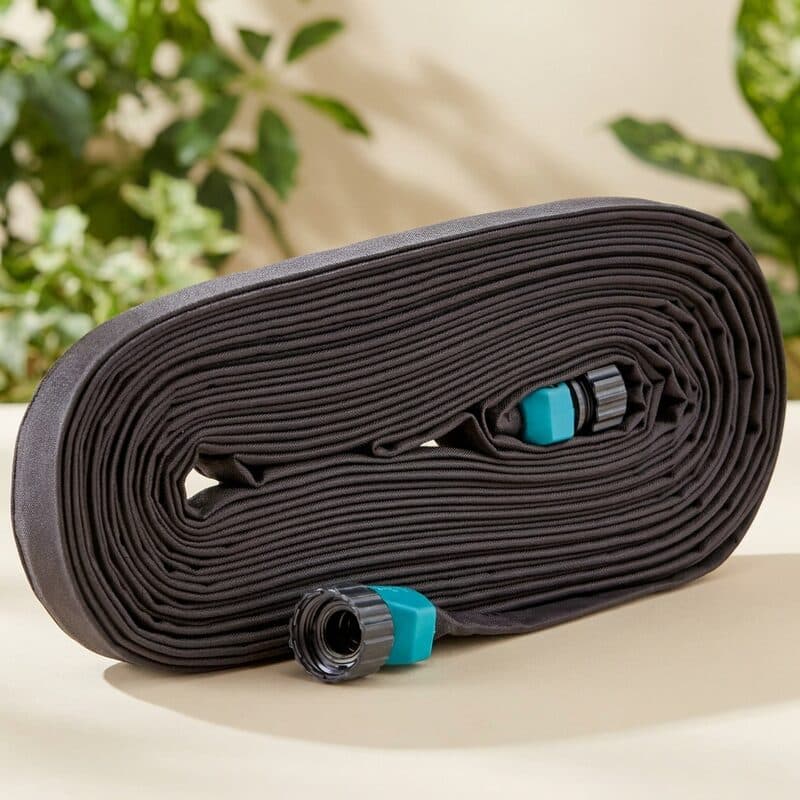
Gilmour Flat Weeper Soaker Hose
Best for: Row and border gardeners who want low-waste, root-zone watering on a budget.
Keep in mind: Even output drops over very long runs and on slopes
Amazon price as of the checked date, subject to change. The price on Amazon at checkout applies.
Full research
- Type
- Flat weeper soaker hose
- Lengths
- Available in multiple lengths
- Delivery
- Seeps along the full length
- Connection
- Standard hose faucet
Gilmour's flat weeper soaker hose seeps water along its length to deliver moisture at the root zone, lying flat along rows and borders.
This catalog-wide research score is separate from this guide's use-case ranking. How we research
Strengths
- Delivers water directly to the root zone with little waste
- Flat profile lies neatly along rows and borders
- Inexpensive and easy to route through a bed
Weaknesses
- Even output drops over very long runs and on slopes
- Should be drained and stored to avoid winter damage
Sprout Score breakdown
Best for
Row and border gardeners who want low-waste, root-zone watering on a budget.
Owner rating snapshot
Amazon · 49 reviews · 4.2 stars
Which mulch for which job
Match the material to the bed. For vegetable gardens, organic mulches are almost always the right call because they feed the soil; inorganic mulches suit paths and ornamental areas where you want permanence.
How deep, and the one rule about stems
Aim for 2 to 4 inches of organic mulch. Less than 2 inches provides limited weed and moisture control. Much more than 4 inches can keep soil too cool and wet. Use 2 to 3 inches in most vegetable beds, with more for coarse bark and less for fine compost.
The one mistake that turns mulch from helper to hazard: piling it against plant stems and trunks. Mulch held against a stem traps moisture there and invites rot and pests at the exact spot the plant is most vulnerable. Pull mulch back so there is a 1 to 2 inch gap of bare soil around each stem. (The "mulch volcano" piled against tree trunks is the classic version of this error.)
When to mulch: timing matters
Timing is where many gardeners stumble. Mulch insulates, which means it locks in whatever temperature the soil currently holds. Apply it too early in spring, over cold soil, and you keep the soil cold, slowing warm-season crops that are waiting for warmth.
The rule: in spring, wait until the soil has warmed and your warm-season crops are in and established before mulching them. For cool-season crops you can mulch earlier. Tie your spring timing to your planting dates, which you can pull from the planting calendar and frost dates tool by ZIP.
There are two other useful mulching moments:
- Summer: mulch heavily to fight heat and drought once everything is established and the soil is warm.
- Fall and winter: mulch over the root zones of perennials like strawberries, garlic plantings, asparagus, and rhubarb to protect them through cold. Garlic in particular is traditionally mulched right after fall planting.
Mulch and the pest balance
Mulch is mostly a friend to garden health, but be aware of one trade-off: damp organic mulch can shelter slugs. In a slug-prone, wet garden, keep mulch a little thinner and pull it back from the most vulnerable seedlings. The moisture and weed-suppression benefits almost always outweigh this, but it is worth knowing if slugs are already a problem in your beds.
What is the best mulch for a vegetable garden?
Straw (the grain byproduct, not hay), shredded leaves, and compost are the top choices for vegetable beds because they suppress weeds, hold moisture, and break down to feed the soil. Avoid wood chips and bark in annual vegetable beds, since they break down too slowly and complicate the yearly digging and replanting; save those for perennials, shrubs, and paths.
How thick should mulch be?
Apply 2 to 4 inches of organic mulch. Thinner than 2 inches lets weeds through and barely slows evaporation; thicker than 4 inches can keep soil too cold and wet and may smother roots. Two to three inches suits most vegetable beds. Always keep mulch pulled back 1 to 2 inches from plant stems to prevent rot.
When should I mulch my garden?
In spring, wait until the soil has warmed and warm-season crops are established, since mulching cold soil keeps it cold and slows growth. Mulch heavily in summer to conserve moisture and beat heat. In fall, mulch over the roots of perennials and fall-planted crops like garlic to protect them through winter. Match your spring timing to your local planting dates.
Does mulch attract bugs or pests?
Mulch can shelter slugs and some insects because it stays moist and dark underneath, particularly in wet, slug-prone gardens. In most gardens the benefits (moisture, weed control, soil health) far outweigh this. If slugs are already a problem, keep mulch a bit thinner and pull it back from young seedlings, which are the most vulnerable.
Mulch is the rare garden task that pays off in four directions at once for one afternoon of work. Use an organic material, lay it 2 to 4 inches deep, keep it off the stems, and time it to your soil temperature. To get the full watering benefit from a mulched bed, pair it with the deep-watering approach in how much to water a vegetable garden.