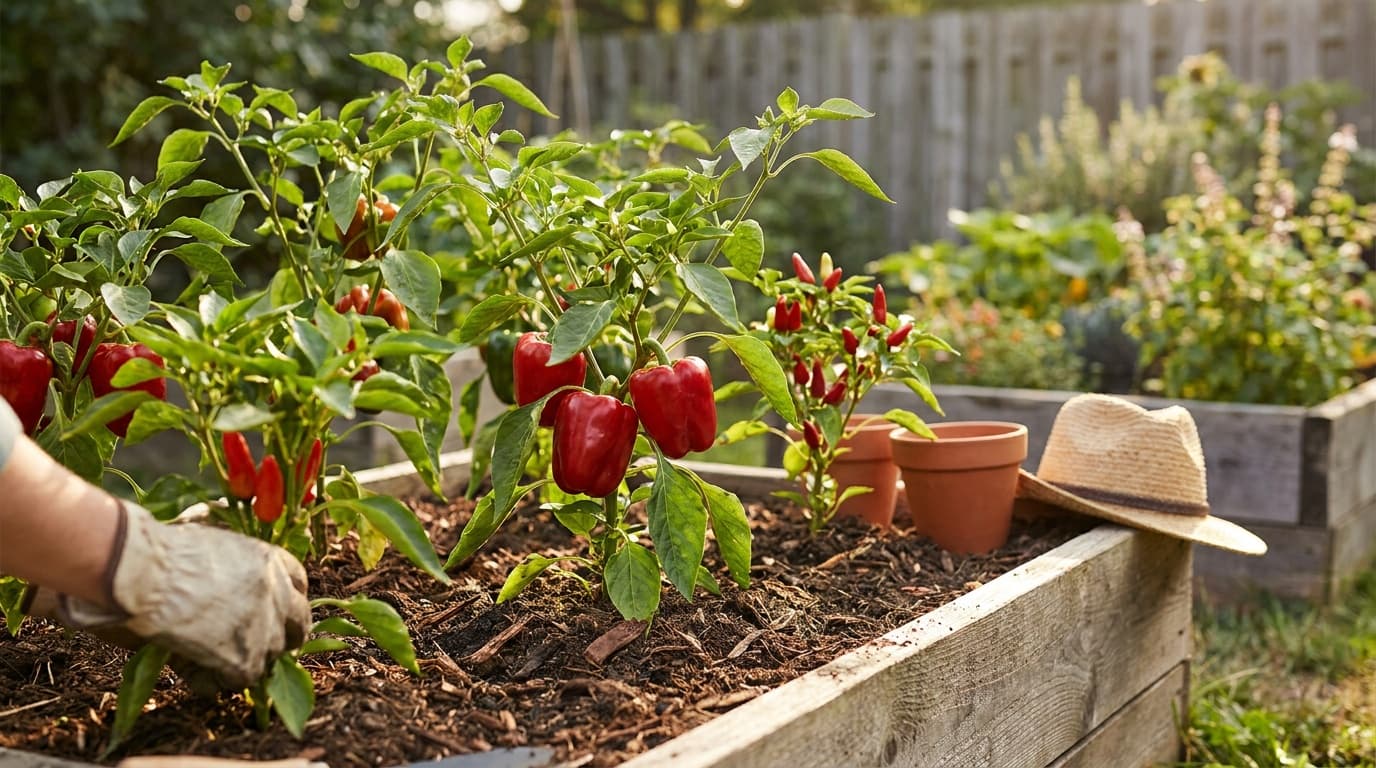
Pepper seedlings grow more slowly than tomatoes, but established plants are compact and manageable. The highest-value decisions are made early: maintain warmth during propagation, prevent stretched seedlings, and move a sturdy root ball rather than a stressed or root-bound transplant.
Start compact, sturdy transplants
Pepper seed benefits from bottom heat. Once seedlings emerge, remove the humidity cover and move them immediately under strong light. Keep the light close enough to prevent stretching without warming or bleaching the leaves. Thin crowded cells by snipping the weaker stem rather than pulling it through the shared root area.
Some links on this page are affiliate links. As an Amazon Associate I earn from qualifying purchases.
Faster pepper germination
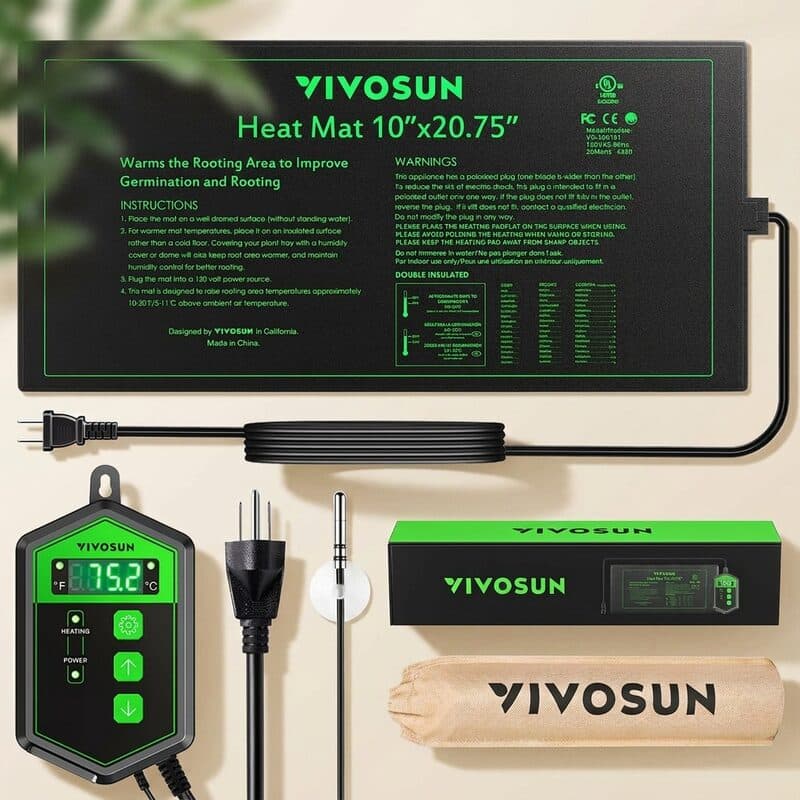
VIVOSUN Seedling Heat Mat (10 x 20.75 in)
Best for: Speeding germination of warm-season seeds like tomatoes and peppers.
Keep in mind: No thermostat included (pair with one)
Amazon price as of the checked date, subject to change. The price on Amazon at checkout applies.
Full research
- Size
- 10 x 20.75 in (fits a 1020 tray)
- Power
- 18W
- Construction
- Waterproof, MET-certified
- Warmth
- Raises root-zone temp ~10-20 F above ambient
A waterproof germination mat sized to fit a standard 1020 tray, warming the root zone to speed and improve seed germination. A cheap, high-impact upgrade.
This catalog-wide research score is separate from this guide's use-case ranking. How we research
Strengths
- Fits a standard 1020 tray exactly
- Noticeably faster, more even germination
- Inexpensive and waterproof
Weaknesses
- No thermostat included (pair with one)
- Long-term durability varies between units
Sprout Score breakdown
Best for
Speeding germination of warm-season seeds like tomatoes and peppers.
Owner rating snapshot
Amazon · 14 reviews · 4.5 stars
Pot up seedlings that begin to fill their cells rather than allowing roots to circle tightly. Before moving them into the garden, follow how to harden off seedlings, increasing outdoor exposure in small steps. The indoor seed-starting guide covers lighting, airflow, and potting-up technique.
Prepare peppers for the garden
Build a firm root ball
Harden gradually
Transplant gently
Check after planting
Build a stable plant
Bell peppers and other heavy-fruited types can split branches even though the plants remain fairly compact. Add a stake or small cage early, then tie only the main branches that carry weight. A wide, soft tie prevents abrasion and leaves room for the stem to thicken.
Avoid repeatedly growing peppers after tomatoes, eggplant, or potatoes in the same bed. These relatives share several disease and pest pathways. The crop rotation guide offers a practical way to track plant families.
Raised beds can help where native soil drains slowly. See raised bed gardening for beginners for improving structure without duplicating the crop facts stored in the profile.
Water and feed for steady fruiting
Check moisture beneath the surface and water the root area thoroughly when it begins to dry. Avoid a cycle of severe wilt followed by saturation. That pattern contributes to blossom end rot, while overhead irrigation can spread bacterial spot.
Mulch helps buffer rapid drying, but keep it clear of the main stem. During long wet periods, pull dense mulch back temporarily if the crown stays damp.
Feed according to the plant rather than a fixed calendar. A pale, slow plant in modest soil may need a balanced feed. A large, dark-green plant with few flowers usually needs less nitrogen. Once fruiting begins, follow the label on a fertilizer intended for fruiting vegetables.
Balanced feed for fruiting crops
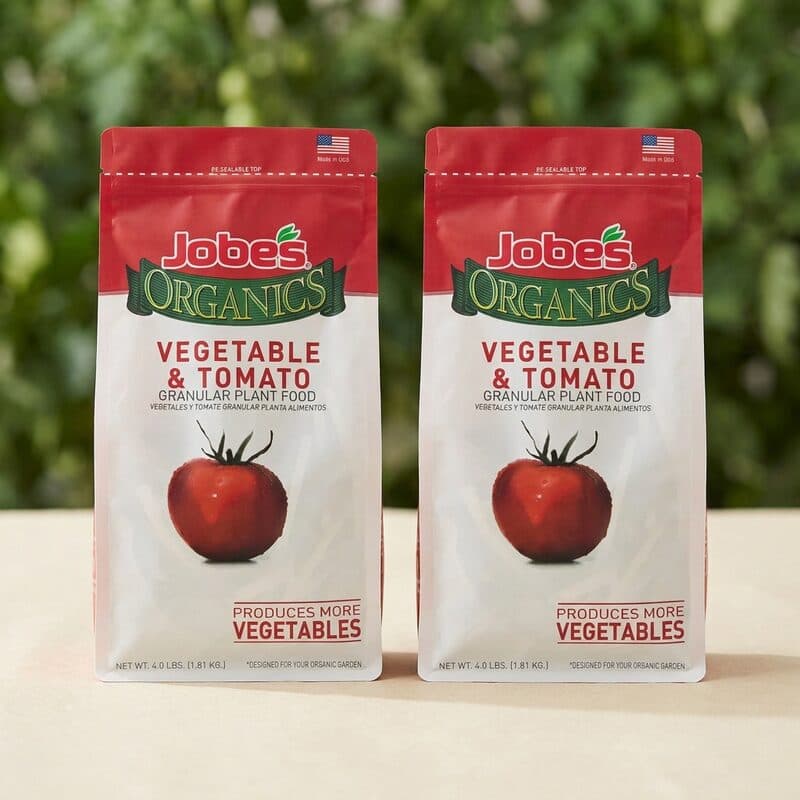
Jobe's Organics Vegetable & Tomato Granular Fertilizer
Best for: Budget-minded growers feeding tomatoes and vegetable beds organically.
Keep in mind: Strong odor that can attract animals
Amazon price as of the checked date, subject to change. The price on Amazon at checkout applies.
Full research
- NPK
- 2-5-3
- Type
- Granular organic
- Microbes
- Biozome beneficial microbe package
- Use
- Vegetables, tomatoes, and fruiting crops
An affordable certified-organic granular fertilizer formulated for vegetables and tomatoes, with a higher phosphorus ratio to support fruiting and the brand's Biozome microbe package.
This catalog-wide research score is separate from this guide's use-case ranking. How we research
Strengths
- Phosphorus-forward profile suits fruiting crops
- Very affordable certified-organic option
- Biozome microbes aid nutrient breakdown
Weaknesses
- Strong odor that can attract animals
- Best as a targeted feed rather than all-purpose
Sprout Score breakdown
Best for
Budget-minded growers feeding tomatoes and vegetable beds organically.
Owner rating snapshot
Amazon · 68 reviews · 4.6 stars
Diagnose fruit-set problems
Pepper flowers can drop during temperature stress, after a sharp moisture swing, or when the plant is producing excessive leafy growth. Check the whole plant before adding fertilizer. New green growth with no flowers points to a different correction than a wilted plant in dry soil.
- Blossom end rot produces a dark, sunken patch at the blossom end. Correct the moisture pattern rather than treating it as an infectious disease.
- Bacterial spot causes lesions on leaves and fruit and can strip the canopy. Keep irrigation off foliage and remove heavily affected debris.
- Sunscald follows loss of protective leaves or sudden exposure. Preserve sound foliage and provide temporary shade during extreme conditions.
- Aphids cluster on tender growth. Dislodge small colonies with water directed away from the rest of the plant, or use insecticidal soap according to its label.
Harvest for the flavor you want
Peppers can be picked once they reach a usable size and firm texture. Green fruit has a sharper flavor; fruit left to reach its final variety color usually develops more sweetness and a fuller flavor. Cut the stem with clean scissors or pruners while supporting the branch. Pulling can snap a productive fork.
Frequent picking encourages continued flowering. If a branch is overloaded, harvest some full-size fruit green rather than waiting for every pepper to color on the plant.
Grow peppers in containers
Compact pepper plants suit containers well. Choose a stable pot with free drainage, use potting mix instead of garden soil, and add a support before the canopy becomes heavy. Containers dry faster than beds, so check the root area frequently during hot or windy weather. See the container gardening guide for container and mix selection.
For a related crop with similar canopy and moisture concerns, see how to grow tomatoes. The companion planting guide covers broader bed planning.
Why is my pepper plant leafy but not flowering?
Excess nitrogen, low light, or temporary temperature stress can all delay flowering. Stop adding nitrogen, confirm the plant is not shaded, and give it time to resume growth after stressful weather. Judge the whole plant before changing several inputs at once.
Why are pepper flowers dropping?
Flower drop often follows a sharp weather or moisture change. Keep root moisture steady, avoid adding high-nitrogen fertilizer, and wait for the plant to resume setting fruit when conditions moderate.
Why do peppers develop dark patches on the blossom end?
This is commonly blossom end rot, a fruit-development disorder associated with uneven moisture and calcium movement. Rebuild a consistent watering routine and avoid unnecessary nitrogen rather than spraying for disease.
Should peppers be picked green or fully colored?
Both are valid. Pick green fruit for a firmer texture and sharper flavor, or leave sound fruit on the plant for its final variety color and fuller flavor. Cut rather than pull so productive branches remain intact.