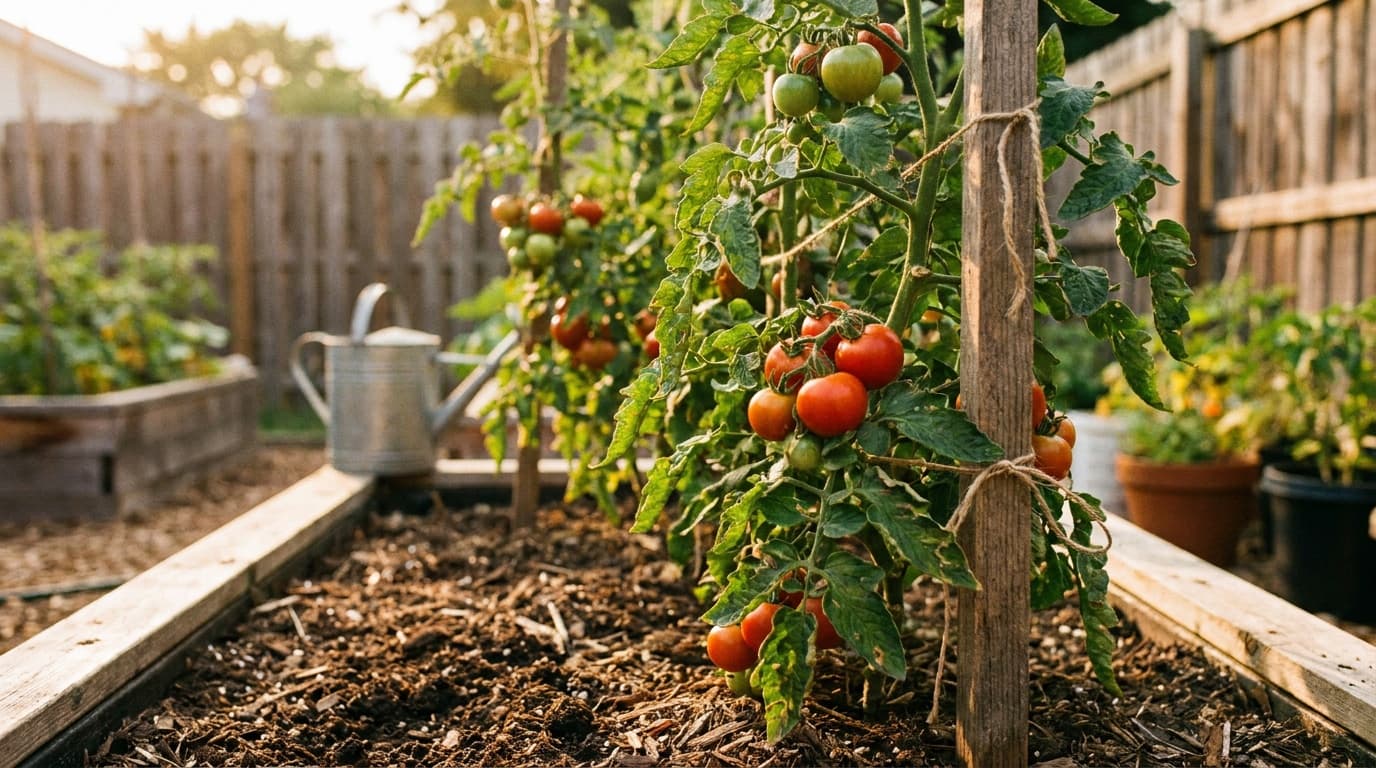
Tomatoes become much easier to manage when you decide how the plant will grow before it goes into the bed. The core work is structural: match the variety to the available support, build a watering routine that does not swing between dry and saturated, preserve airflow, and inspect the lower canopy often enough to catch trouble early.
Choose a growth habit and support it early
Indeterminate tomatoes keep extending their main stems and producing until the plant is stopped by weather or disease. They need a tall, rigid cage, a trellis, or disciplined staking. Determinate tomatoes form a more compact plant and tend to concentrate their crop, which makes them useful for containers, small beds, and preserving.
Set the support in place before the root system expands. Pushing a cage or stake into an established root area can damage roots, and trying to gather a sprawling plant later often breaks stems. Tie stems with soft loops that leave room for thickening, and check them as the plant grows.
Build a manageable tomato plant
Choose the habit
Set support first
Guide new growth
Open the lower canopy
If you are raising your own transplants, use how to start seeds indoors and how to harden off seedlings for the propagation process.
Establish roots without creating a wet stem
Tomatoes can form roots from a buried section of stem. Remove leaves that would sit below the soil surface, settle the root ball gently, and backfill without compacting the bed into a hard collar. Water the root area thoroughly after planting, then let the surface begin to dry before watering again.
Raised beds are useful where native soil stays wet or compacts easily. The raised bed gardening guide covers bed construction and soil structure without duplicating the tomato profile's reference values.
Manage moisture and fertility by plant response
Tomato roots do best with a steady wet-to-dry rhythm. Check below the mulch instead of judging by a dusty surface. Water at the base until the root area is thoroughly moistened, then wait until it begins to dry before repeating. Sudden swings are associated with blossom end rot and growth cracks.
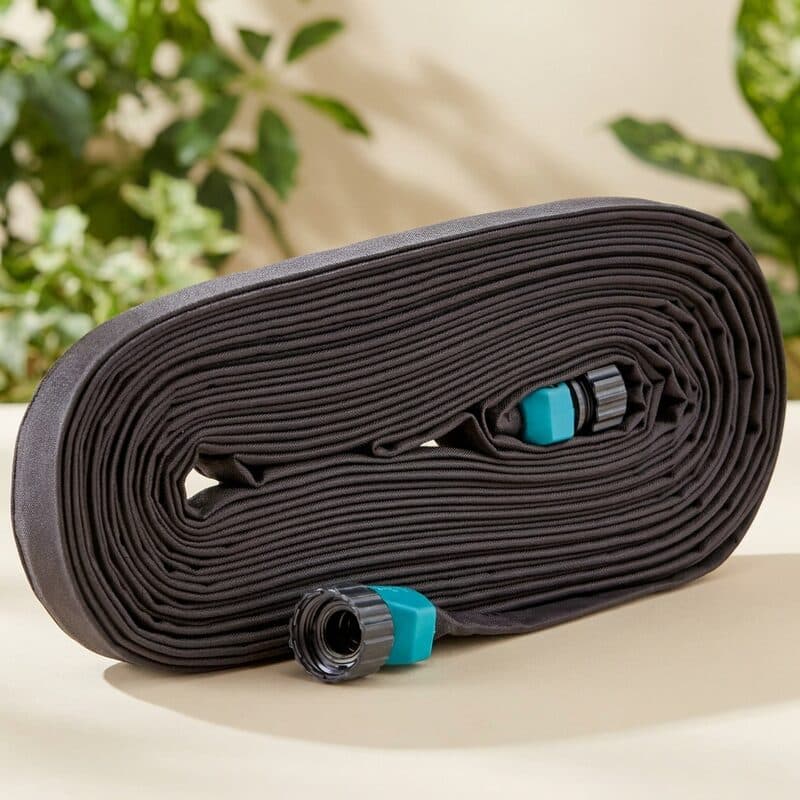
A soaker hose makes that routine easier and keeps splash off the foliage.
Some links on this page are affiliate links. As an Amazon Associate I earn from qualifying purchases.
Consistent root-zone watering
Gilmour Flat Weeper Soaker Hose
Best for: Row and border gardeners who want low-waste, root-zone watering on a budget.
Keep in mind: Even output drops over very long runs and on slopes
Amazon price as of the checked date, subject to change. The price on Amazon at checkout applies.
Full research
- Type
- Flat weeper soaker hose
- Lengths
- Available in multiple lengths
- Delivery
- Seeps along the full length
- Connection
- Standard hose faucet
Gilmour's flat weeper soaker hose seeps water along its length to deliver moisture at the root zone, lying flat along rows and borders.
This catalog-wide research score is separate from this guide's use-case ranking. How we research
Strengths
- Delivers water directly to the root zone with little waste
- Flat profile lies neatly along rows and borders
- Inexpensive and easy to route through a bed
Weaknesses
- Even output drops over very long runs and on slopes
- Should be drained and stored to avoid winter damage
Sprout Score breakdown
Best for
Row and border gardeners who want low-waste, root-zone watering on a budget.
Owner rating snapshot
Amazon · 49 reviews · 4.2 stars
Mulch after the soil has settled and leave a small open ring around the stem. The mulching guide explains how to suppress weeds and reduce soil splash without holding moisture against the crown.
Feed according to growth. Pale plants in modest soil may need a balanced feed, while lush plants with few flowers usually need less nitrogen rather than more fertilizer. Once fruiting is underway, use a product intended for fruiting vegetables and follow its label instead of adding repeated unmeasured doses.

Balanced tomato feed
Dr. Earth Home Grown Tomato, Vegetable & Herb Fertilizer
Best for: Organic growers feeding tomatoes, vegetables, and herbs through the season.
Keep in mind: Earthy organic smell on application
Amazon price as of the checked date, subject to change. The price on Amazon at checkout applies.
Full research
- NPK
- 4-6-3
- Type
- Granular organic
- Microbes
- Probiotic soil microbes + mycorrhizae
- Use
- Tomatoes, vegetables, and herbs
A hand-crafted organic fertilizer for tomatoes, vegetables, and herbs, fortified with probiotic soil microbes and mycorrhizae to support root and soil health on edible crops.
This catalog-wide research score is separate from this guide's use-case ranking. How we research
Strengths
- Probiotic microbes and mycorrhizae support soil life
- Balanced profile tuned for edible crops
- Non-GMO, OMRI-listed inputs
Weaknesses
- Earthy organic smell on application
- Granular feeds act more slowly than synthetics
Sprout Score breakdown
Best for
Organic growers feeding tomatoes, vegetables, and herbs through the season.
Owner rating snapshot
Amazon · 82 reviews · 4.6 stars
Scout from the soil upward
Start every inspection at the bottom of the plant. Lower foliage shows splash-borne disease first, while new growth reveals chewing pests and nutrient stress.
- Early blight often begins as dark, ringed lesions on older leaves. Remove affected foliage and reduce splash.
- Late blight can move quickly through wet foliage. Treat rapidly expanding, water-soaked damage as urgent.
- Septoria leaf spot produces many small spots on lower leaves. Remove badly affected leaves and improve access through the canopy.
- Tomato hornworm leaves stripped stems and conspicuous droppings. Follow the damaged branch until you find and remove the caterpillar.
- Sunscald appears where exposed fruit loses its leafy cover. Avoid stripping a healthy canopy around developing fruit.
Harvest by readiness, not size alone
A ripe tomato has developed the expected color for its variety, gives slightly under gentle pressure, and releases without force. Pick with the stem supported so a heavy cluster does not tear. Fruit that has begun coloring can finish indoors at room temperature, which is useful when cracking, pests, or severe weather threaten it.
Do not refrigerate freshly picked tomatoes unless preventing spoilage is more important than texture. Keep sound fruit out of direct sun and inspect it regularly.
Containers and crop neighbors
Compact and patio varieties are the easiest container tomatoes because the support and root area stay manageable. Use a stable container that will not tip under a loaded cage, keep drainage holes clear, and check moisture more often than you would in a bed. The container gardening guide covers container selection and potting mix.
Rotate tomatoes away from recent plantings of peppers, eggplant, and potatoes when possible because these relatives share several problems. For broader garden relationships, use the companion planting guide.
Should I prune tomato side shoots?
Prune selectively on indeterminate plants when you need better access, airflow, or a simpler trellis structure. Avoid removing so much foliage that fruit loses shade. Determinate tomatoes need little pruning because much of their crop forms on the compact growth you would be removing.
Why are the lower tomato leaves turning spotted and yellow?
Lower leaves are the first exposed to soil splash and several leaf diseases. Compare the pattern with early blight and septoria leaf spot, remove badly affected foliage, and keep future irrigation off the leaves.
Why does tomato fruit split after rain or irrigation?
The usual trigger is a rapid intake of moisture after the root area has been dry. Rebuild a steadier watering rhythm, mulch to reduce abrupt changes, and harvest nearly ripe fruit before a major wet period. See growth cracks for diagnosis.
How can I tell when a tomato is ready to pick?
Use the variety's mature color, a slight give under gentle pressure, and an easy release from the stem. Size alone is unreliable because varieties differ widely. Support the stem while picking so you do not tear the cluster.