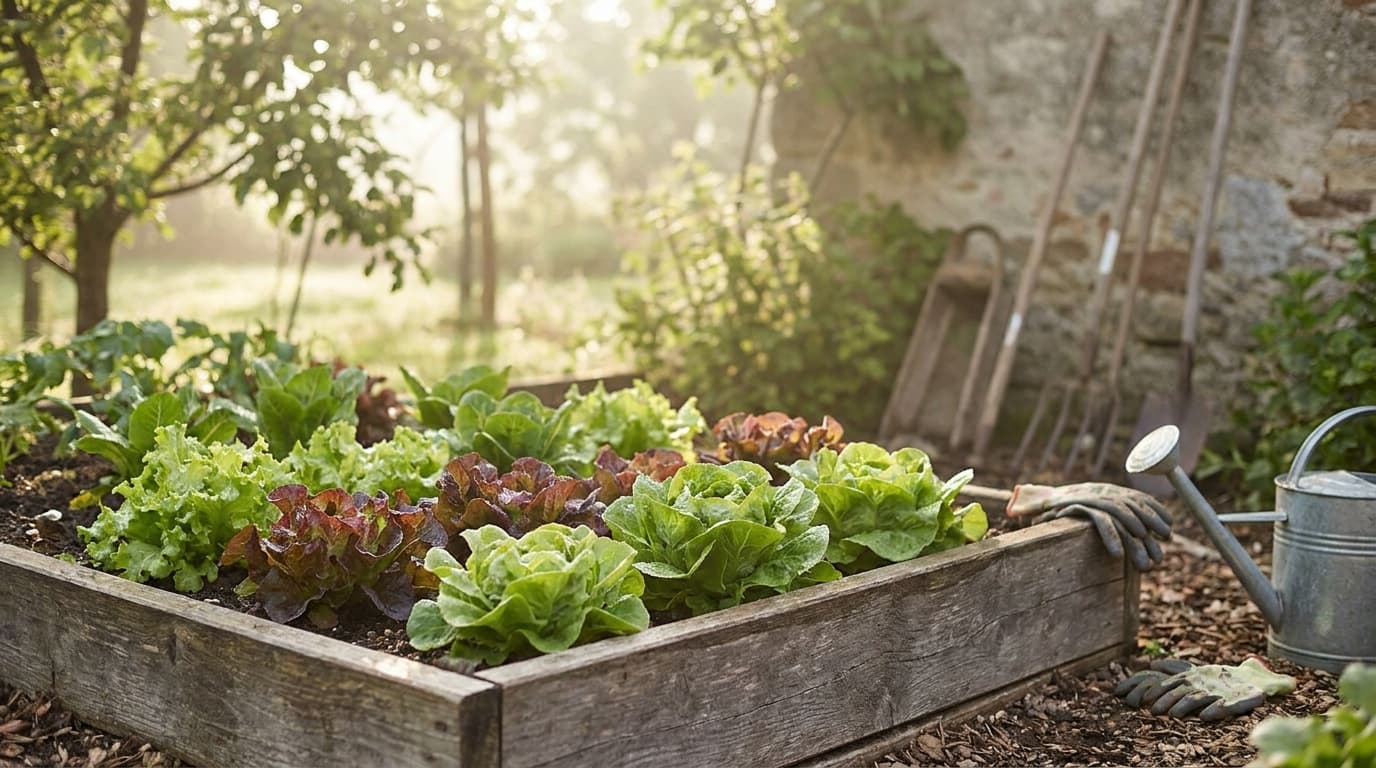
Lettuce is easy to germinate and easy to harvest badly. The common mistakes happen after emergence: seedlings remain crowded, the soil surface cycles between wet and dry, or a cut damages the crown that should have produced another flush. A useful lettuce guide therefore needs to explain bed management and harvest choices, not duplicate the crop table already attached to the plant.
Use the lettuce plant profile for exact local dates, bed layout, sowing depth, light and soil values, water rate, zone fit, and expected maturity. This guide focuses on establishing an even stand, maintaining leaf quality, and deciding how and when to cut.
Match the bed to the harvest
Loose-leaf lettuce, romaine, butterhead, and crisphead types need different harvest methods. Loose-leaf types suit repeated cutting and mixed salad beds. Harvest romaine and butterhead as formed heads. Crisphead types need especially consistent care and are less forgiving when conditions shift.
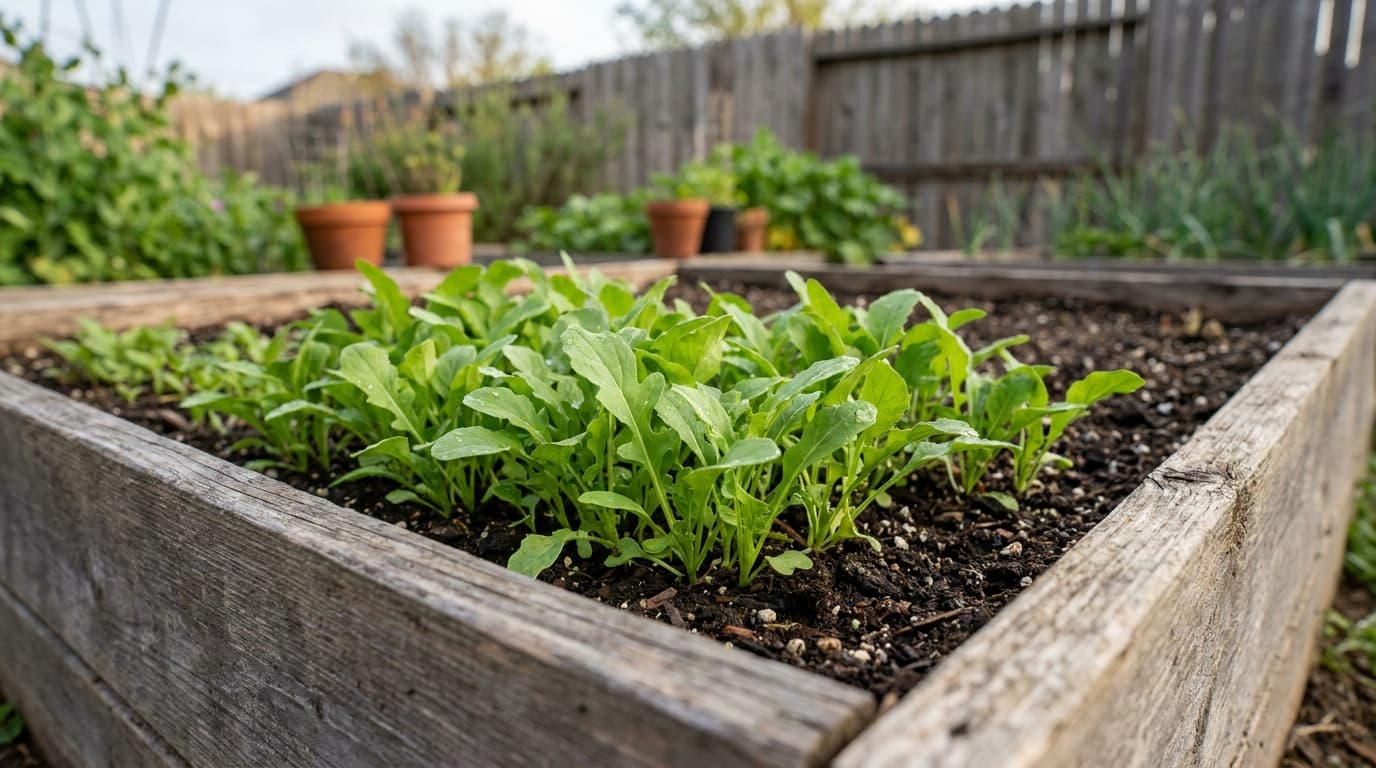
Decide whether the bed is for baby leaves, recurring outer-leaf harvests, or full heads. That decision determines how aggressively you thin and how long each plant must remain intact. Use the profile for the exact crop layout, then keep one harvest strategy within each section of the bed so plants develop evenly.
A raised bed can make the shallow root zone easier to manage, particularly where native soil crusts, drains poorly, or carries persistent weeds. Fill it with a loose mix that holds moisture without staying saturated.
Some links on this page are affiliate links. As an Amazon Associate I earn from qualifying purchases.

Great for salad greens
Greenes Fence Cedar Raised Garden Bed
Best for: Gardeners who want a natural, untreated wood bed and accept periodic replacement.
Keep in mind: Wood breaks down faster than metal over years
Amazon price as of the checked date, subject to change. The price on Amazon at checkout applies.
Full research
- Material
- Untreated cedar
- Assembly
- Dovetail interlocking boards
- Expandable
- Stackable and expandable
- Sourcing
- North American cedar
Greenes Fence makes the best-known cedar raised bed, using a no-hardware dovetail system that lets you stack tiers or expand the footprint. Untreated cedar is naturally rot-resistant but will gray and eventually break down outdoors.
This catalog-wide research score is separate from this guide's use-case ranking. How we research
Strengths
- Natural cedar look with no chemical treatment
- Dovetail boards assemble without tools
- Stackable and expandable design
Weaknesses
- Wood breaks down faster than metal over years
- Boards can warp or split in harsh climates
Sprout Score breakdown
Best for
Gardeners who want a natural, untreated wood bed and accept periodic replacement.
Create an even stand
Rake the surface smooth and remove coarse debris before sowing. Lettuce seed is small, so rough soil creates pockets where some seed dries while other seed is buried unevenly. Water with a gentle pattern that settles the surface without washing seed into clumps.
Once seedlings are easy to distinguish, thin by snipping unwanted plants at the soil line. Pulling a crowded seedling can lift the roots of its neighbor. Edible thinnings can go directly into a salad if they are clean and healthy.
Pelleted seed and seed tape can reduce bunching in a small bed. They do not change the crop's requirements, but they make individual seed placement easier and reduce the amount of later thinning.
Keep the canopy dry and the roots steady
Lettuce roots occupy the upper soil, so the surface condition matters. Check it frequently and irrigate before leaves lose firmness. Water at soil level in the morning when practical. Repeatedly wet foliage that stays damp encourages downy mildew and gray mold.
A light mulch between established plants can slow evaporation and prevent soil splash. Keep it away from the crowns. Dense, wet material pressed against leaf bases creates a sheltered place for slugs and rot.
Tipburn appears as brown, papery margins, often on inner leaves. It is related to the plant's inability to move enough calcium into rapidly expanding tissue, and uneven moisture can make the problem worse. Keep the root environment steady rather than adding calcium automatically. The tipburn guide explains how to distinguish the disorder from infectious damage.
Use fertilizer cautiously. Compost-amended soil often supplies a short lettuce crop well. If the whole stand is pale and slow while roots and drainage are healthy, a modest balanced feeding may help. Excess soft growth can reduce durability and does not solve heat-related decline.
Exclude leaf pests early
Leaf miners, aphids, slugs, and chewing insects can make an otherwise healthy crop unappealing. Floating row cover placed over a clean bed prevents adult leaf miners and other flying pests from reaching foliage. Secure the edges and inspect beneath it so an existing infestation is not protected along with the lettuce.
Season extender + pest barrier
Agribon AG-19 Floating Row Cover
Best for: Gardeners who want cheap frost protection and pest exclusion in one fabric.
Keep in mind: Lightweight fabric tears and wears over seasons
Amazon price as of the checked date, subject to change. The price on Amazon at checkout applies.
Full research
- Weight
- 0.55 oz per sq yd
- Frost protection
- Down to roughly 28F
- Light transmission
- About 85%
- Material
- Spun-bonded polypropylene
A lightweight spun-bonded row cover that drapes over crops to add a few degrees of frost protection while still letting in light and water. It doubles as a physical barrier against many insect pests.
This catalog-wide research score is separate from this guide's use-case ranking. How we research
Strengths
- Extends the growing season at both ends
- Excludes many pests without chemicals
- Passes most light and water so it can stay on
Weaknesses
- Lightweight fabric tears and wears over seasons
- Needs hoops or pins to stay put in wind
Sprout Score breakdown
Best for
Gardeners who want cheap frost protection and pest exclusion in one fabric.
Remove mined leaves before larvae complete their development, and use the leaf miner guide to recognize the tunnels. Knock small aphid colonies from leaf undersides with water. For slugs, clear wet debris near the crowns, inspect after dusk, and protect the bed without keeping the foliage continuously damp.
Choose a harvest method deliberately
Lettuce harvest methods
Outer-leaf picking
Cut and come again
Whole-head harvest
Thinning harvest
Harvest while leaves are crisp and before the center begins to stretch upward. Cool and wash them promptly. Wet leaves bruise easily during harvest, so let surface moisture dry before handling when possible.
Act decisively at bolting
Bolting begins when the central stem elongates and leaf arrangement changes. Flavor often becomes sharper as the plant redirects energy into flowering. More water, shade, or fertilizer cannot return a bolting plant to its earlier form.
Harvest immediately if the remaining leaves still suit your kitchen, then clear the plant before it sheds seed where you do not want it. Slow-bolting varieties and shade can sometimes extend useful quality, but the lettuce profile and planting calendar should guide the local crop window.
Why did my lettuce turn bitter?
Bitterness commonly accompanies bolting or other stress. Check for an elongating center, dry soil, root damage, or severe pest pressure. Harvest usable leaves promptly; once flowering growth begins, the plant will not return to its earlier leaf quality.
How do I cut lettuce so it grows again?
For loose-leaf types, cut the leaf mass above the crown and leave the central growing tissue intact. Resume ordinary moisture care and harvest the next flush while it is tender. A cut through the crown ends reliable regrowth.
What causes brown edges on lettuce leaves?
Brown inner margins may be tipburn, especially when growth has been rapid or root moisture has fluctuated. Keep moisture consistent, confirm that roots are healthy, and use the tipburn guide to rule out disease or physical damage.
How can I keep leaf miners out of lettuce?
Cover a clean bed before adult flies lay eggs, seal the fabric edges, and remove any mined leaves found during inspection. Row cover cannot undo larvae already feeding inside leaf tissue, so early exclusion matters.
Lettuce stays simple when the bed has a declared purpose. Build an even stand, protect a clean canopy, and harvest in a way that preserves or intentionally ends the crown. That clarity prevents most of the chaos in a mixed salad patch.