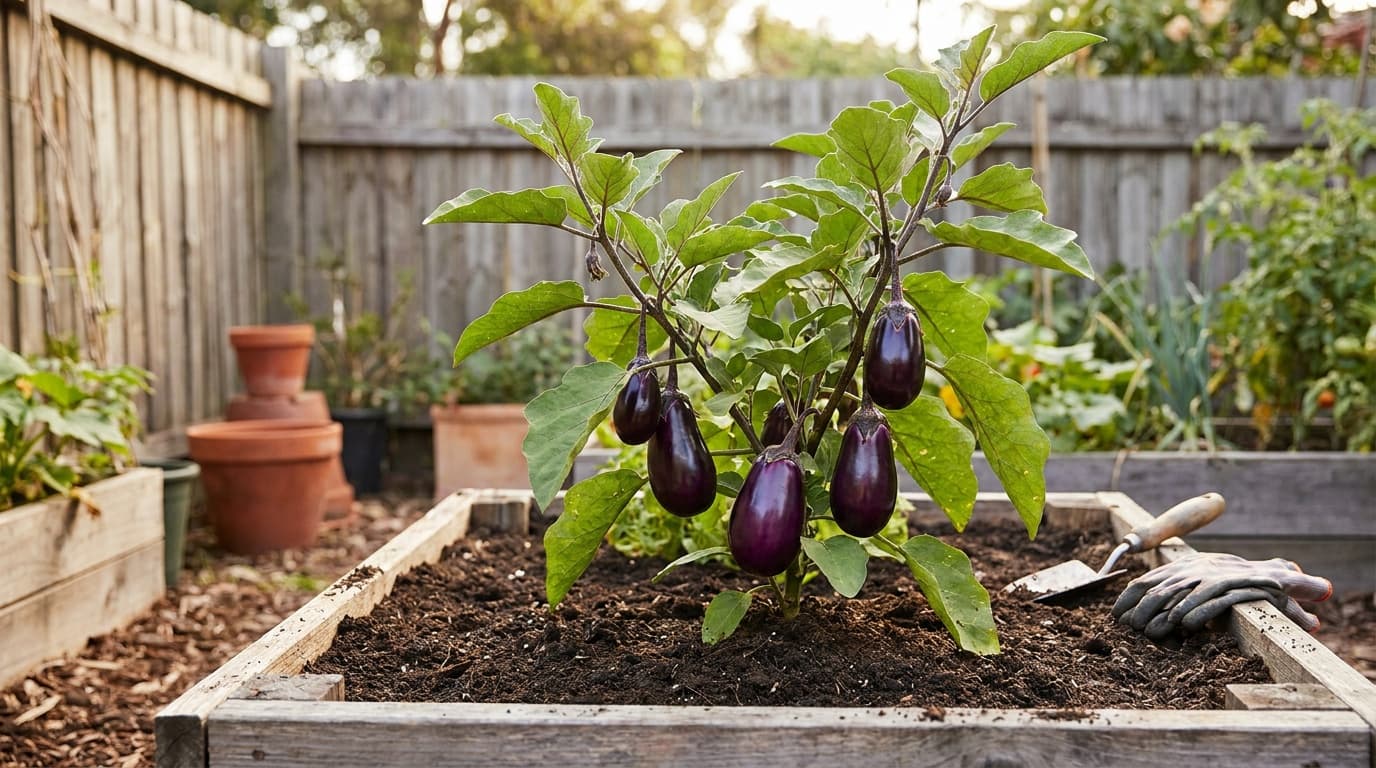
Eggplant shares a family with peppers and tomatoes, but its seedlings are slower and more sensitive to rough handling. The practical strategy is to raise a sturdy transplant, protect its first leaves, and avoid creating a huge leafy plant with excessive fertilizer.
Raise a transplant that will keep growing
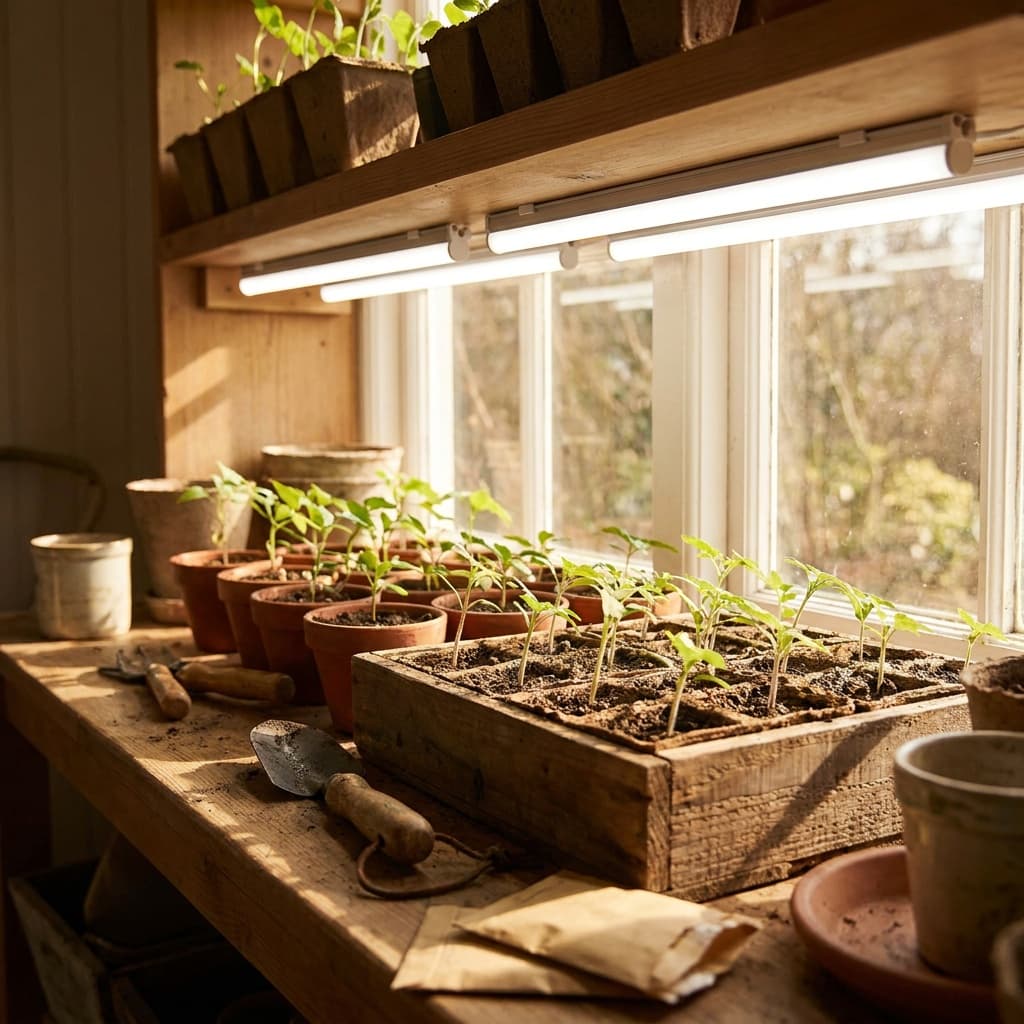
Eggplant seed responds well to bottom heat. After emergence, give seedlings strong light and gentle airflow so stems remain compact. Thin by cutting extras at the surface, and pot up before roots become tightly wound around the cell.
Some links on this page are affiliate links. As an Amazon Associate I earn from qualifying purchases.
Essential for germination
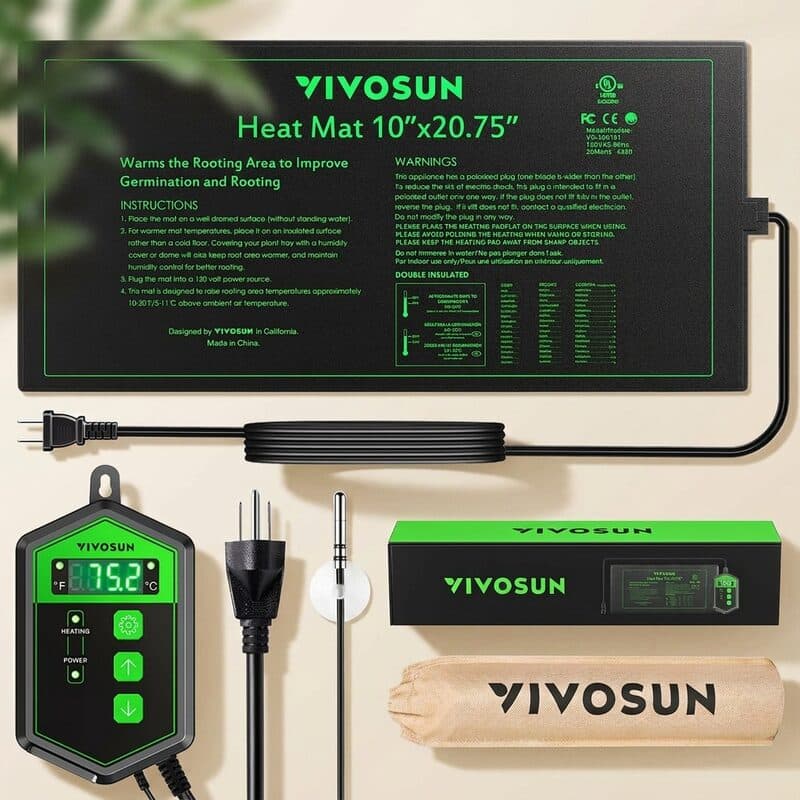
VIVOSUN Seedling Heat Mat (10 x 20.75 in)
Best for: Speeding germination of warm-season seeds like tomatoes and peppers.
Keep in mind: No thermostat included (pair with one)
Amazon price as of the checked date, subject to change. The price on Amazon at checkout applies.
Full research
- Size
- 10 x 20.75 in (fits a 1020 tray)
- Power
- 18W
- Construction
- Waterproof, MET-certified
- Warmth
- Raises root-zone temp ~10-20 F above ambient
A waterproof germination mat sized to fit a standard 1020 tray, warming the root zone to speed and improve seed germination. A cheap, high-impact upgrade.
This catalog-wide research score is separate from this guide's use-case ranking. How we research
Strengths
- Fits a standard 1020 tray exactly
- Noticeably faster, more even germination
- Inexpensive and waterproof
Weaknesses
- No thermostat included (pair with one)
- Long-term durability varies between units
Sprout Score breakdown
Best for
Speeding germination of warm-season seeds like tomatoes and peppers.
Owner rating snapshot
Amazon · 14 reviews · 4.5 stars
Strong seedling light
Barrina T5 LED Grow Light (4FT, 20W, 6-Pack)
Best for: Lighting a multi-shelf seed-starting rack on a tight budget.
Keep in mind: Lightweight mounting hardware and connectors
Amazon price as of the checked date, subject to change. The price on Amazon at checkout applies.
Full research
- Type
- T5 LED integrated bar (linkable)
- Length
- 4 ft per bar
- Spectrum
- Warm white (3000K)
- Power
- 20W per bar (2200 lm)
Linkable LED strip lights that bolt under a shelf to light a full tray of seedlings evenly. The default choice for budget seed-starting rigs.
This catalog-wide research score is separate from this guide's use-case ranking. How we research
Strengths
- Even coverage across long shelves
- Daisy-chain up to many bars from one outlet
- Very low cost per square foot of canopy
Weaknesses
- Lightweight mounting hardware and connectors
- No dimming or built-in timer
Sprout Score breakdown
Best for
Lighting a multi-shelf seed-starting rack on a tight budget.
Owner rating snapshot
Amazon · 269 reviews · 4.6 stars
The indoor seed-starting guide covers the full setup. Before transplanting, use how to harden off seedlings and extend the process when leaves show bleaching, curling, or persistent wilt.
Move eggplant without a growth check
Water before handling
Lift from below
Keep the original soil line
Shelter the first exposure
Prepare a loose, draining root area
Eggplant dislikes standing water. Loosen compacted soil, incorporate mature compost where structure is poor, and avoid creating a low pocket around the stem. In raised beds and containers, use a growing mix designed to drain freely rather than straight garden soil.
Container plants are easier to move and protect, but they dry quickly and become top-heavy. Choose a stable vessel, keep drainage holes open, and add a stake before branches carry fruit.
Container eggplant
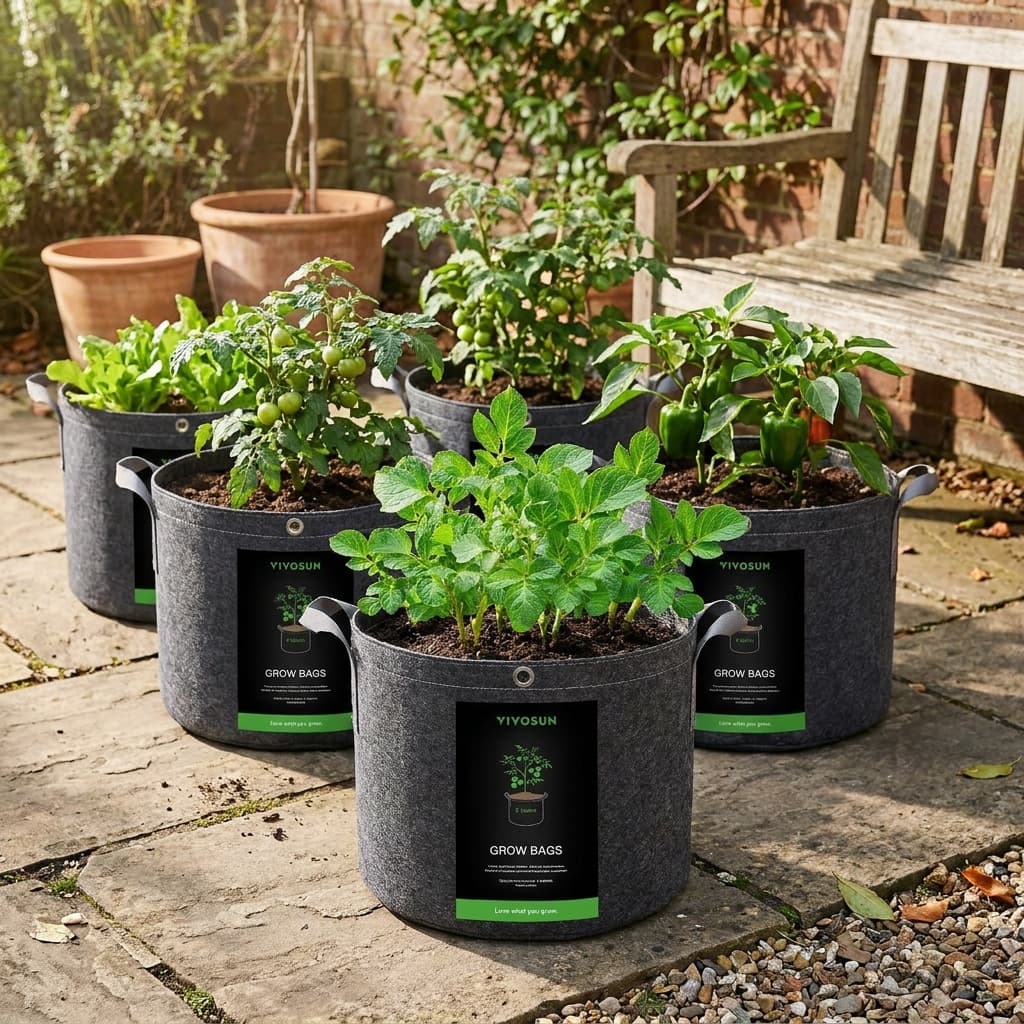
VIVOSUN 5-Gallon Fabric Grow Bags (5-Pack)
Best for: Container growers who want cheap, breathable bags for tomatoes, peppers, or potatoes.
Keep in mind: Dries out faster than rigid containers
Amazon price as of the checked date, subject to change. The price on Amazon at checkout applies.
Full research
- Material
- Nonwoven fabric
- Capacity
- 5 gal each
- Pack
- 5 bags
- Handles
- Reinforced carry handles
VIVOSUN's fabric grow bags are a hugely popular budget pick for container growing. The breathable fabric air-prunes roots, and a five-pack costs little, though the handles can loosen after heavy seasons.
This catalog-wide research score is separate from this guide's use-case ranking. How we research
Strengths
- Breathable fabric air-prunes roots
- Very low cost per bag in a multi-pack
- Fold flat for off-season storage
Weaknesses
- Dries out faster than rigid containers
- Handles can loosen over multiple seasons
Sprout Score breakdown
Best for
Container growers who want cheap, breathable bags for tomatoes, peppers, or potatoes.
Keep moisture and feeding moderate
Water deeply at the root area, then check below the surface before watering again. A consistent rhythm helps fruit develop evenly and reduces the conditions associated with blossom end rot. Mulch after the plant is established, leaving the crown open.
A soaker hose or drip line keeps foliage dry. If leaves stay wet or the root area remains saturated, pause and diagnose drainage before adding more water.
Start with a balanced amendment where soil needs it. Once flowering begins, feed only when leaf color and growth indicate a need. Excess nitrogen produces a large canopy at the expense of flowers and fruit.
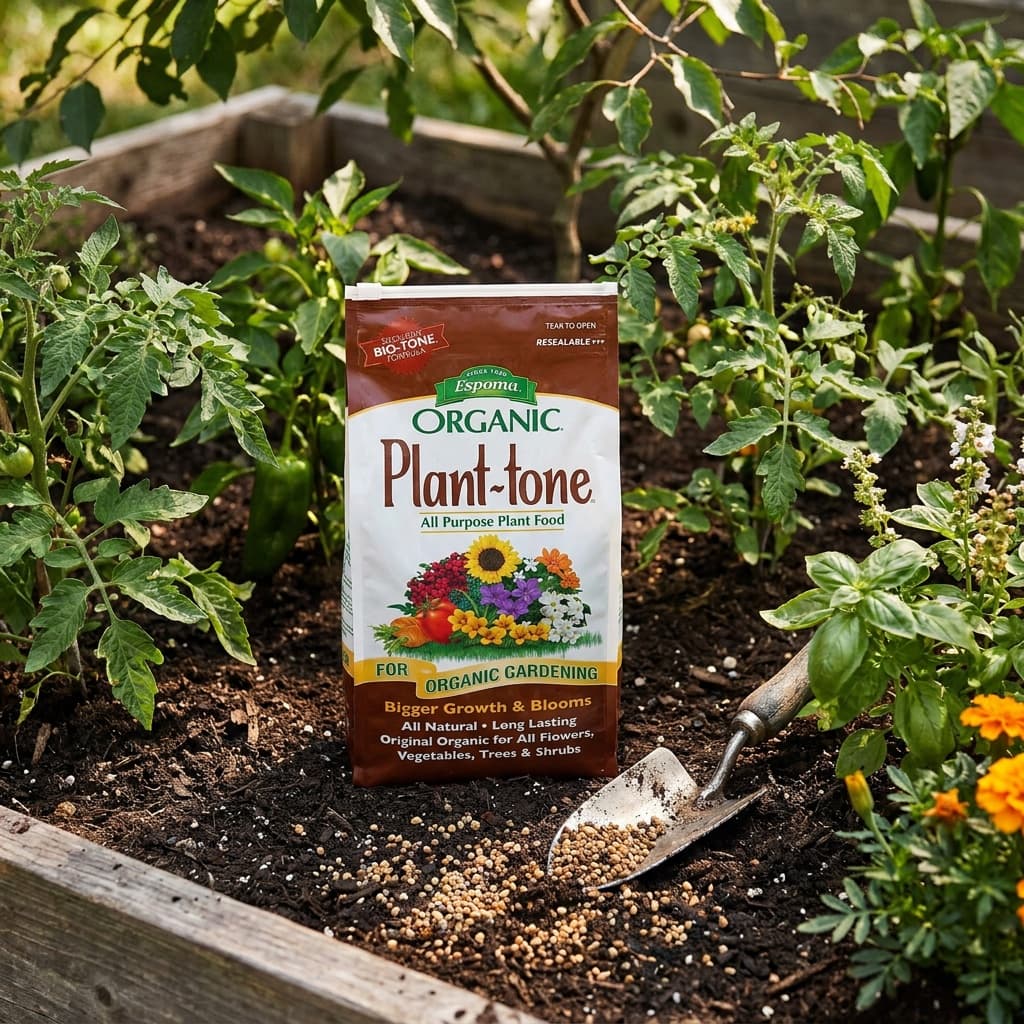
Sustained season feed
Espoma Plant-tone Organic All-Purpose Fertilizer
Best for: Gardeners who want one safe, all-purpose organic feed for the whole garden.
Keep in mind: Granular organics have a noticeable earthy smell
Amazon price as of the checked date, subject to change. The price on Amazon at checkout applies.
Full research
- NPK
- 5-3-3
- Type
- Granular slow-release organic
- Microbes
- Bio-tone beneficial microbe blend
- Use
- All-purpose: vegetables, flowers, trees, shrubs
A slow-release granular organic fertilizer with a 5-3-3 NPK and the brand's Bio-tone microbe blend. An all-purpose feed for vegetables, flowers, trees, and shrubs that releases gradually over the season.
This catalog-wide research score is separate from this guide's use-case ranking. How we research
Strengths
- Gentle slow-release feeding that resists burning
- Bio-tone microbes support soil biology
- Truly all-purpose across the garden
Weaknesses
- Granular organics have a noticeable earthy smell
- Slower visible response than synthetic feeds
Sprout Score breakdown
Best for
Gardeners who want one safe, all-purpose organic feed for the whole garden.
Owner rating snapshot
Amazon · 15 reviews · 4.7 stars
Support pollination without overhandling flowers
Eggplant flowers are self-fertile. Wind and insect vibration help release pollen, so a single plant can set fruit. If flowers open but repeatedly drop during otherwise stable conditions, gently tap the support or flowering branch in the morning and protect the plant from avoidable stress. Do not spray open flowers or strip leaves around them.
Protect young foliage first
Early pest pressure can stall a small plant before it builds enough leaf area to compensate.
- Flea beetles leave many small holes in young leaves. Exclude them with lightweight cover while plants establish.
- Colorado potato beetles and their larvae can remove foliage quickly. Inspect leaf undersides for eggs and handpick before populations build.
- Aphids gather on tender growth. Encourage beneficial insects and use insecticidal soap only as directed when pressure is heavy.
- Spider mites cause pale stippling and fine webbing. Confirm the pest under leaf surfaces before treating.
- Verticillium wilt causes persistent wilt and uneven yellowing. Rotate eggplant away from related crops and remove severely affected plants.
Harvest before the skin turns dull
Fruit is usually best while the skin is glossy, the color is fully developed, and the flesh gives slightly but springs back under gentle pressure. A dull finish, hard seeds, and flesh that holds an indentation indicate an overmature fruit.
Cut with pruners and leave a short piece of stem attached. Eggplant stems and calyxes can be prickly, so support the fruit from below and wear gloves if needed. Frequent harvest encourages continued flowering.
Rotate and plan the bed
Avoid following eggplant with tomatoes, peppers, or potatoes in the same bed when possible. The crop rotation guide explains how to track related crops. For broader plant relationships, see the companion planting guide, and use watering vegetable gardens to refine irrigation technique.
Why is my eggplant flowering but not setting fruit?
Check for recent weather stress, severe moisture swings, or excessive nitrogen-driven leaf growth. A single plant can set fruit, so another eggplant is not required. Gentle vibration of open flowers can help release pollen when insect activity is low.
Can eggplant grow well in a container?
Yes. Use a stable container with free drainage, a quality potting mix, and early support. Check moisture often because a fruiting plant can dry quickly, but do not leave the root area saturated.
What causes tiny holes throughout eggplant leaves?
That pattern usually points to flea beetles. Protect young plants with lightweight cover, inspect regularly, and prioritize new growth. Established plants can often tolerate moderate cosmetic feeding.
How do I keep eggplant from becoming bitter and seedy?
Harvest while the skin is glossy and the fruit still springs back under gentle pressure. Dull skin and firm, developed seeds signal that the fruit has stayed on the plant too long.
See also: how to grow peppers, how to start seeds indoors, companion planting guide, watering vegetable gardens, eggplant plant profile.