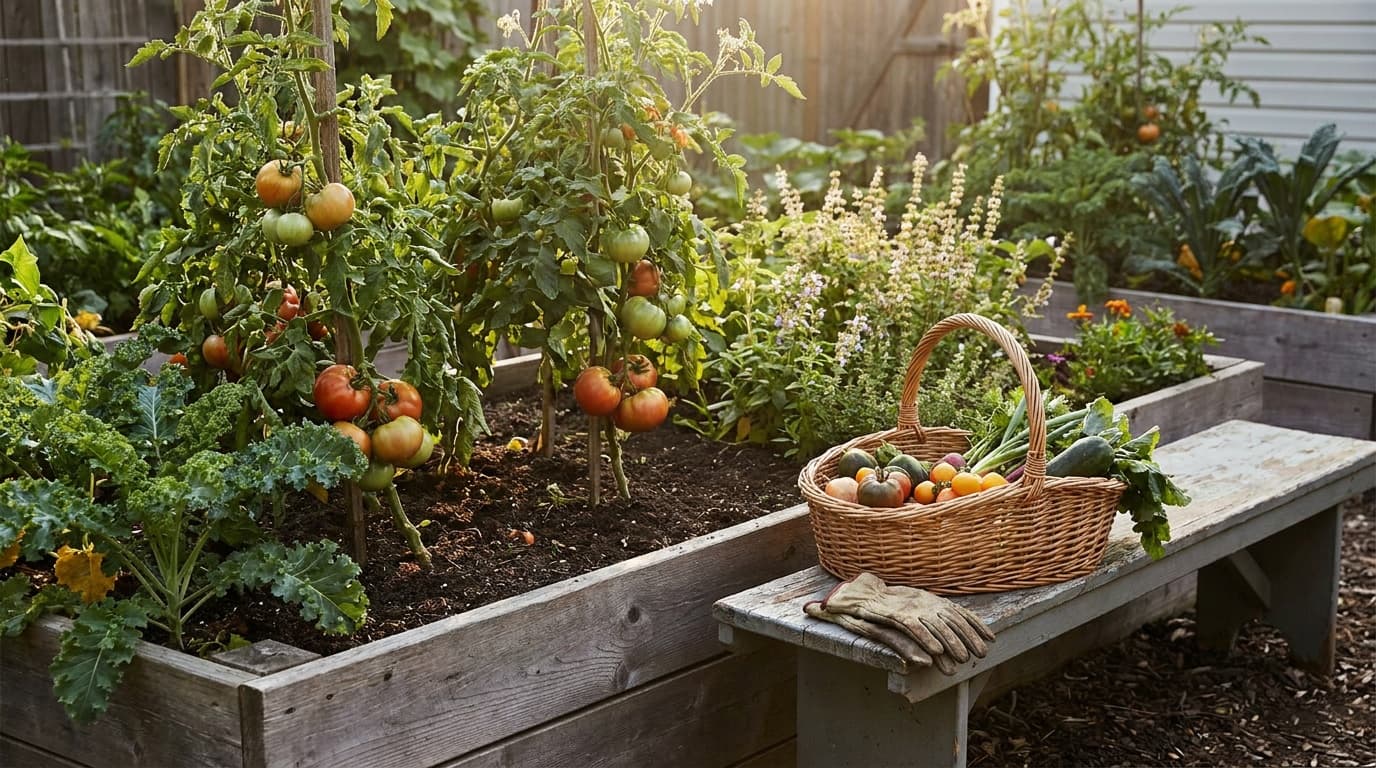
A first vegetable garden fails for boring reasons, not dramatic ones. Not enough sun. Too big to weed. Seeds in the ground three weeks too early, killed by a late frost. Crops packed so tight nothing sized up. None of those are gardening talent problems. They are sequencing problems, and the sequence is short.
Here is the whole thing in order: find sun, choose a method, build one bed, get the soil right, pick a few crops, and plant on the right date. Do those six in that order and you will harvest something this season.
Step 1: find your sun before anything else
Most vegetables need at least 6 hours of direct sun per day, and fruiting crops like tomatoes and peppers want 8 or more. This is the single constraint that decides everything else, so settle it first.
Watch your yard for a day. Note where the sun actually lands at 9am, noon, and 4pm, not where you assume it does. A spot that looks bright in the morning can sit in tree shade all afternoon. If your sunniest area is a patio, that is fine, you will grow in containers (see container gardening for beginners).
Step 2: choose a method that matches your soil and budget
You have three realistic options, and the right one depends mostly on what your existing ground is like.
Pick your growing method
In-ground rows
Raised beds
Containers and grow bags
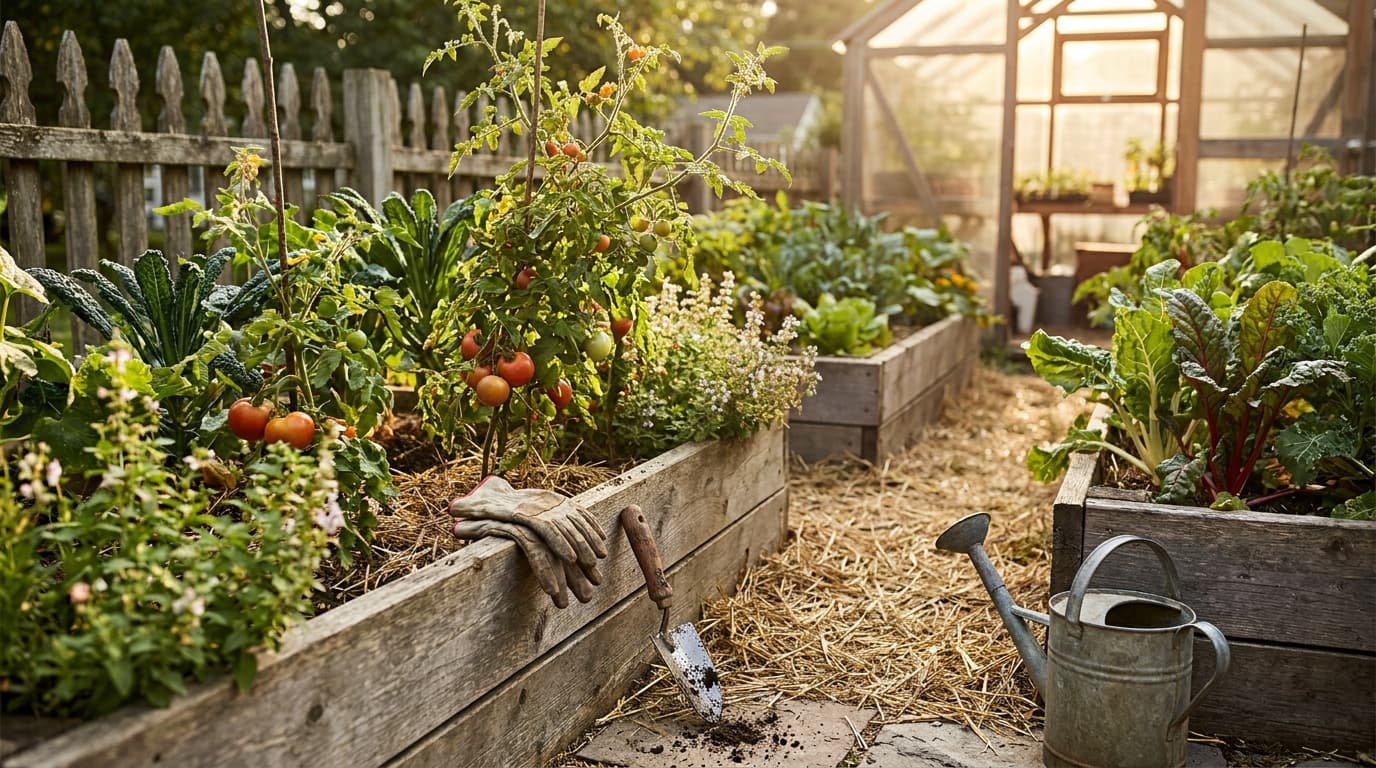
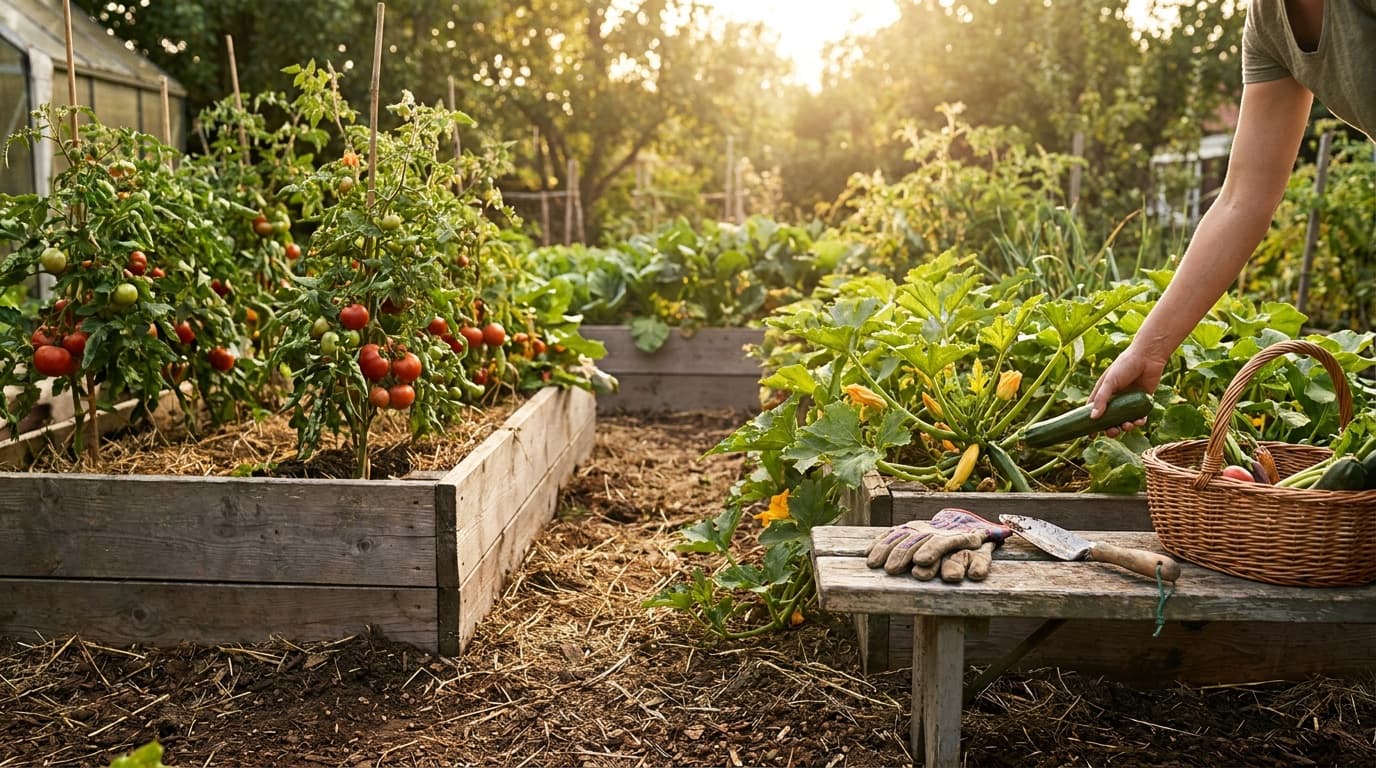
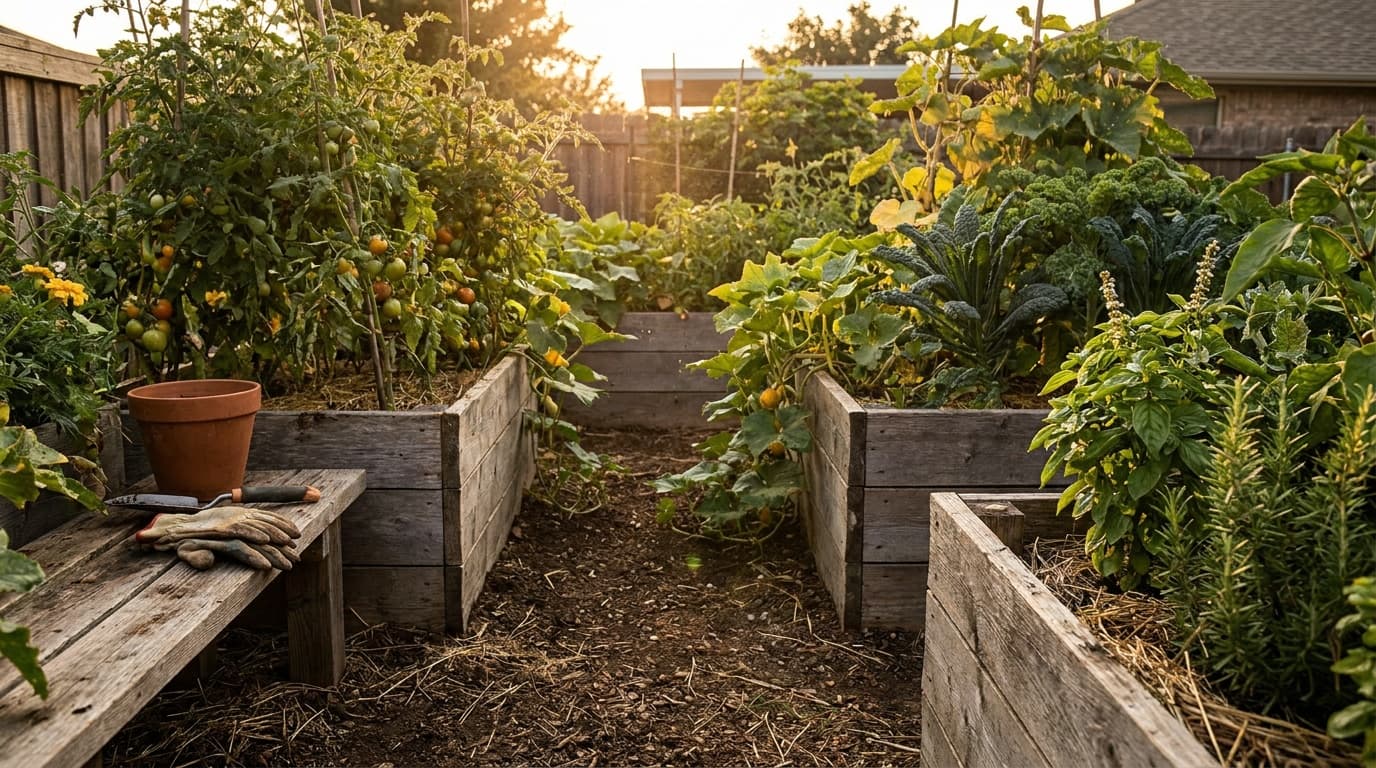
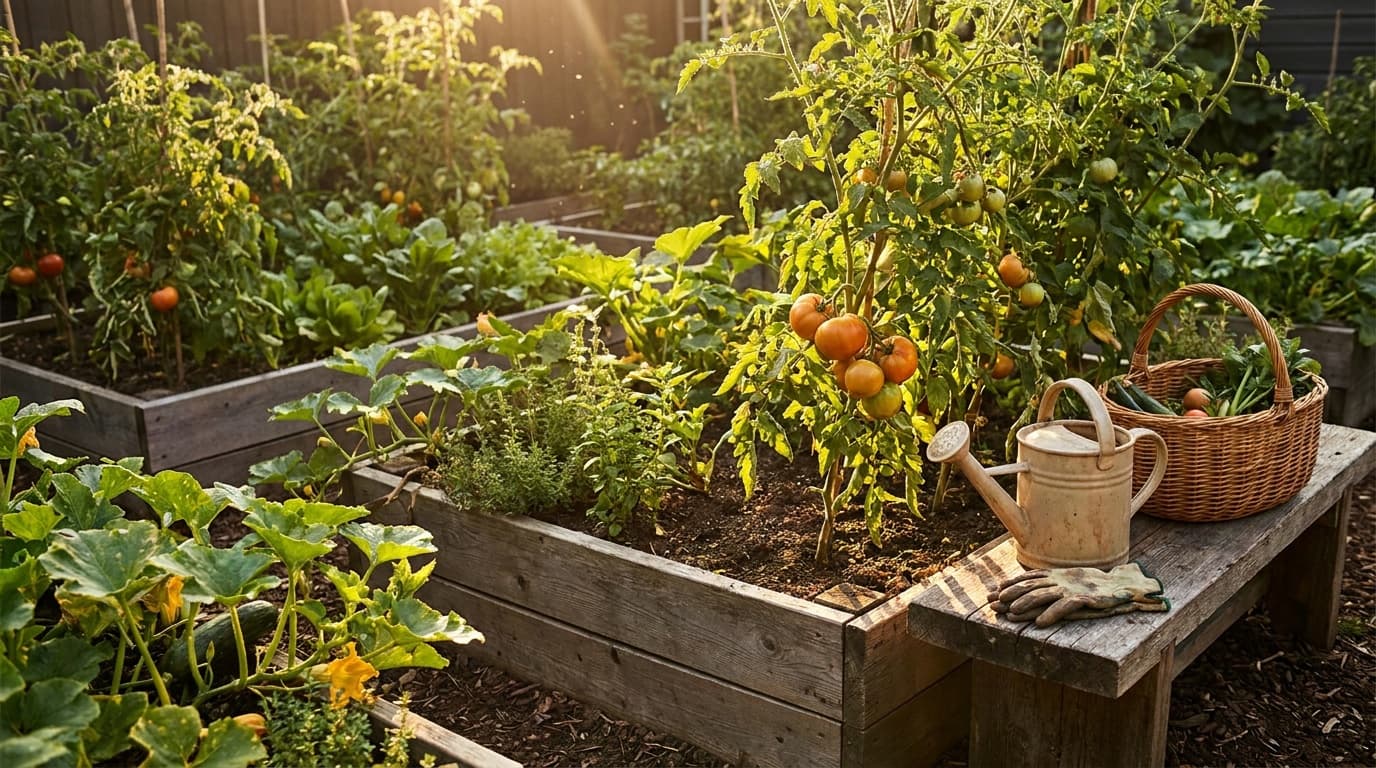
If your ground is heavy clay, full of rocks, or you simply want a clean start, a raised bed is the path of least resistance. A single bed around 4 feet wide (so you can reach the middle from either side) by 8 feet long is the classic starter size.
Some links on this page are affiliate links. As an Amazon Associate I earn from qualifying purchases.
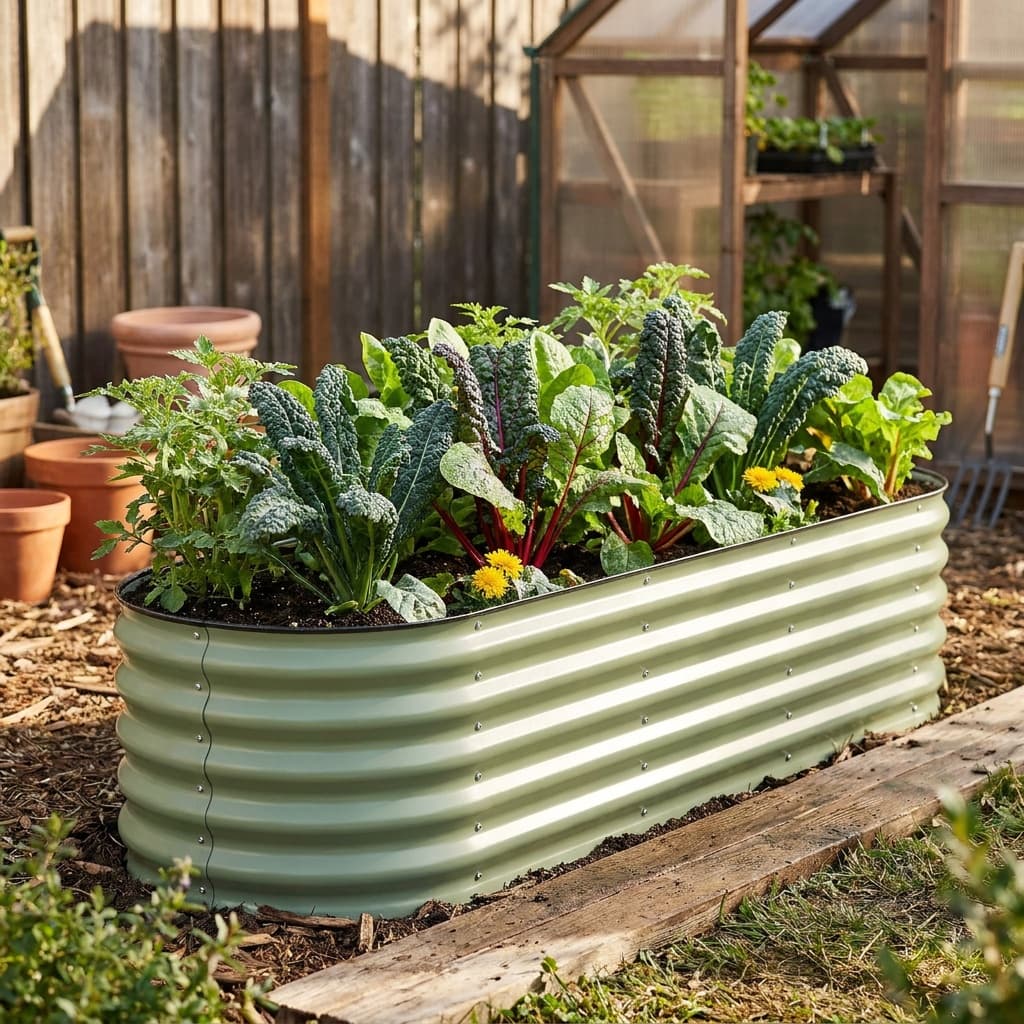
Easy starter bed
Vego Garden 17 in Tall (9-in-1) Modular Metal Raised Bed
Best for: Home gardeners who want a long-lasting, good-looking bed that can be reshaped to fit the yard.
Keep in mind: Costs more than basic galvanized or wood beds
Amazon price as of the checked date, subject to change. The price on Amazon at checkout applies.
Full research
- Material
- Aluzinc-coated steel
- Height
- 17 in
- Configuration
- 9-in-1 modular panels
- Gauge
- 0.8 mm Aluzinc steel
Vego's flagship modular metal bed is the category benchmark for home gardeners. The interlocking panels let one kit become several bed shapes, and the Aluzinc coating resists rust far longer than bare galvanized steel.
This catalog-wide research score is separate from this guide's use-case ranking. How we research
Strengths
- Reconfigurable into multiple shapes from one kit
- Aluzinc coating resists rust and corrosion
- Tool-light assembly with rounded safety edges
Weaknesses
- Costs more than basic galvanized or wood beds
- Metal heats up in full sun in hot climates
Sprout Score breakdown
Best for
Home gardeners who want a long-lasting, good-looking bed that can be reshaped to fit the yard.
Owner rating snapshot
Amazon · 16 reviews · 4.8 stars
We chose this on the strength of its metal construction (it will not rot like untreated wood) and a 17 inch height that gives roots room without forcing you to fill a huge volume. If you would rather compare options first, our best raised garden beds guide breaks down materials, heights, and sizes.
Step 3: get the soil right (this is where the harvest comes from)
Plants eat from the soil, so this is not the step to cheap out on. For a raised bed, fill it with a blend of roughly 60 percent quality topsoil or garden soil and 40 percent finished compost. For containers, do not use garden soil at all, it compacts into a brick. Use a real potting mix.
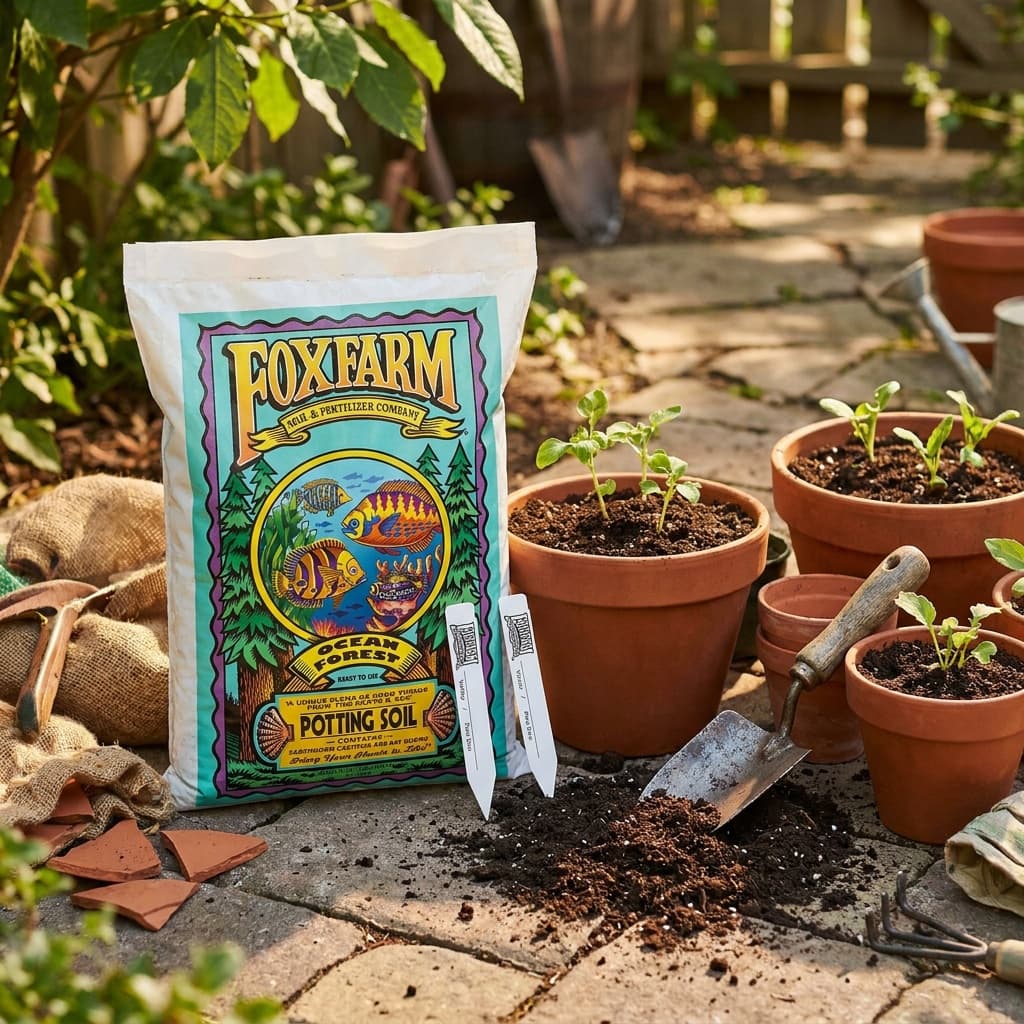
For containers
FoxFarm Ocean Forest Potting Soil
Best for: Container and raised-bed growers who want a rich, ready-to-plant mix.
Keep in mind: Can be too hot for tender seedlings without dilution
Amazon price as of the checked date, subject to change. The price on Amazon at checkout applies.
Full research
- Volume
- 1.5 cu ft
- Type
- Ready-to-use potting soil
- Key ingredients
- Aged forest products, sphagnum peat, earthworm castings, bat guano
- pH
- Adjusted to 6.3 to 6.8
A nutrient-dense, ready-to-use potting soil blended with earthworm castings, bat guano, and fish and crab meal. Its pH is pre-adjusted so nutrients stay available, making it a go-to for containers and transplants.
This catalog-wide research score is separate from this guide's use-case ranking. How we research
Strengths
- Rich, nutrient-dense blend that feeds early growth
- pH pre-adjusted to a plant-friendly range
- Drains well while holding moisture
Weaknesses
- Can be too hot for tender seedlings without dilution
- Premium price per bag
Sprout Score breakdown
Best for
Container and raised-bed growers who want a rich, ready-to-plant mix.
Owner rating snapshot
Amazon · 101 reviews · 4.7 stars
Ocean Forest is a ready-to-plant mix with compost and aged forest products already blended in, which is why it shows up so often in beginner container setups. For a full rundown of mixes and how to read a bag, see our best organic potting soil guide.
Step 4: pick a few crops, not a catalog
The instinct is to grow everything. Resist it. Five crops you eat regularly will teach you more and frustrate you less than fifteen you chose because the seed packet looked nice.
A reliable beginner mix:
Tomatoes and peppers are usually bought as transplants (small plants) your first year, which skips the trickiest part. Lettuce, beans, carrots, and radishes go in as seed directly in the bed.
Step 5: plant on the right date, not the warm weekend
This is the step that ruins more first gardens than any pest. The first warm Saturday in spring feels like planting day, but a late frost will kill tender transplants overnight.
Every crop has a planting window tied to your average last spring frost (for warm crops) or counted backward from your first fall frost (for cool crops). You do not have to memorize any of this.
- Look up your dates with the frost dates tool.
- Get crop-by-crop sow and transplant dates from the planting calendar by entering your ZIP code.
Warm crops (tomato, pepper, beans) wait until after the last frost and warm soil. Cool crops (lettuce, spinach, peas, radish) can go in weeks earlier and actually prefer the cooler weather.
Step 6: space it so things can grow
Crowding is the second silent killer. Plants packed too close compete for light, water, and air, and the poor airflow invites disease like powdery mildew. Seed packets list spacing for a reason.
Run your bed dimensions and crop list through the spacing calculator to see exactly how many of each will fit. It is almost always fewer than you expect, and that is the point.
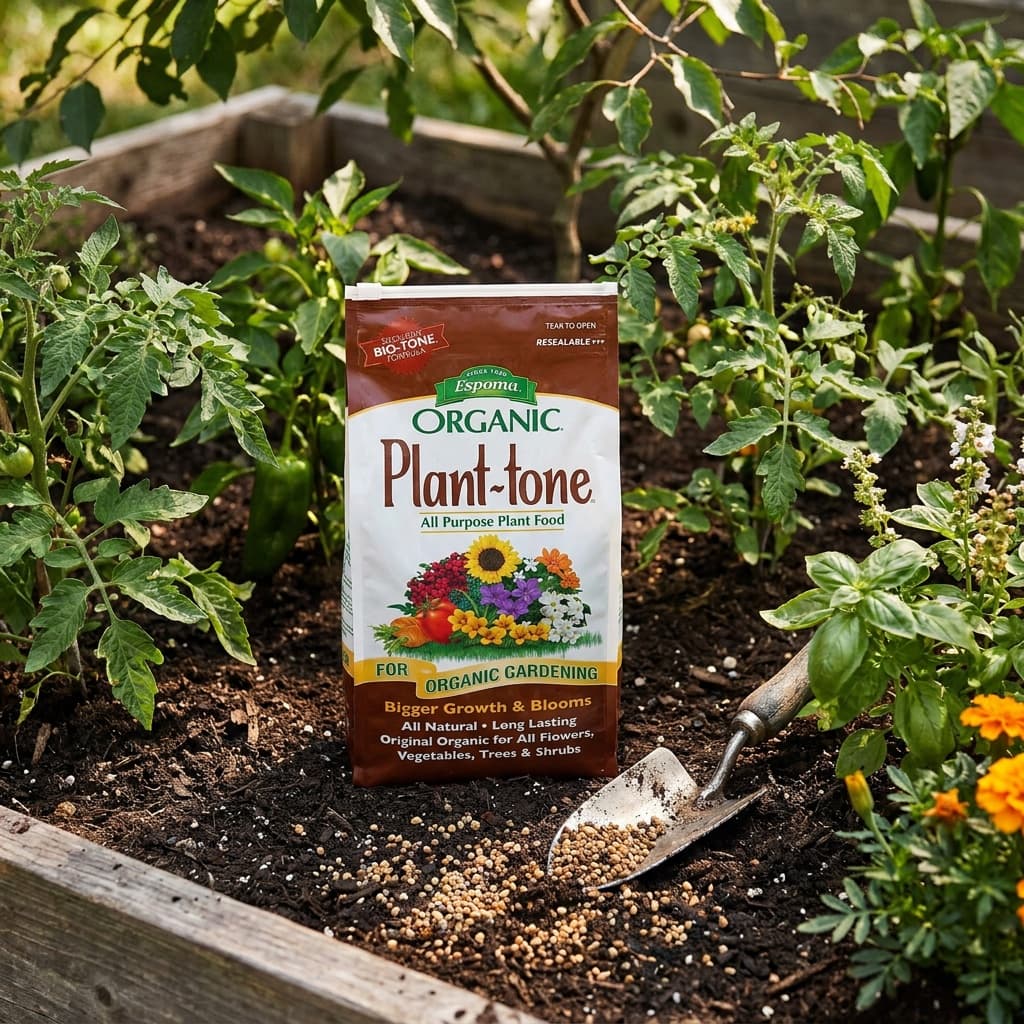
All-purpose feed
Espoma Plant-tone Organic All-Purpose Fertilizer
Best for: Gardeners who want one safe, all-purpose organic feed for the whole garden.
Keep in mind: Granular organics have a noticeable earthy smell
Amazon price as of the checked date, subject to change. The price on Amazon at checkout applies.
Full research
- NPK
- 5-3-3
- Type
- Granular slow-release organic
- Microbes
- Bio-tone beneficial microbe blend
- Use
- All-purpose: vegetables, flowers, trees, shrubs
A slow-release granular organic fertilizer with a 5-3-3 NPK and the brand's Bio-tone microbe blend. An all-purpose feed for vegetables, flowers, trees, and shrubs that releases gradually over the season.
This catalog-wide research score is separate from this guide's use-case ranking. How we research
Strengths
- Gentle slow-release feeding that resists burning
- Bio-tone microbes support soil biology
- Truly all-purpose across the garden
Weaknesses
- Granular organics have a noticeable earthy smell
- Slower visible response than synthetic feeds
Sprout Score breakdown
Best for
Gardeners who want one safe, all-purpose organic feed for the whole garden.
Owner rating snapshot
Amazon · 15 reviews · 4.7 stars
Plant-tone is a slow-release, all-purpose organic fertilizer that suits a mixed beginner bed without you having to juggle separate products. Compare it against other blends in our best organic fertilizers guide.
Then: water, weed, watch
Once it is in the ground, the job is steady, not heroic. Water deeply and less often rather than a little every day, which trains roots to go deep. Pull weeds while they are small. Walk the bed every couple of days and look closely, because catching a pest or a leaf spot early is the difference between a nuisance and a wipeout. Our guide on how much to water a vegetable garden covers the depth-and-frequency rhythm in detail.
How big should my first vegetable garden be?
Start with a single bed of roughly 4 by 8 feet, or three to five containers. That is enough to grow real food without becoming a chore you abandon by July. You can always add a second bed next year once you know your rhythm. Most first-year gardens that get abandoned were simply too large to keep weeded and watered.
Should I start from seeds or buy plants?
For your first year, buy transplants (small plants) for the slow, finicky crops: tomatoes, peppers, and eggplant. Direct-sow the easy, fast crops from seed: lettuce, radishes, beans, carrots, and peas. This gives you early wins while skipping the part of seed starting that trips up beginners. You can move to growing everything from seed once you have a season under your belt.
When is the best time to start a vegetable garden?
The best planting time depends entirely on your location and the crop. Cool-season crops go in several weeks before your last spring frost; warm-season crops wait until after it. Rather than guessing, enter your ZIP code into our planting calendar for exact sow and transplant dates, and check your frost dates so you do not plant tender crops too early.
What vegetables are easiest for beginners?
Radishes (ready in about a month), bush green beans, leaf lettuce, and zucchini are the most forgiving and fast. For fruiting crops, cherry tomatoes and peppers bought as transplants are reliable. Avoid notoriously fussy crops like cauliflower or celery in year one.
Start with one good bed in full sun, the right soil, a handful of crops, and the correct planting date. Get those right and the rest is just attention. When you are ready to stretch the season, read succession planting for a longer harvest.