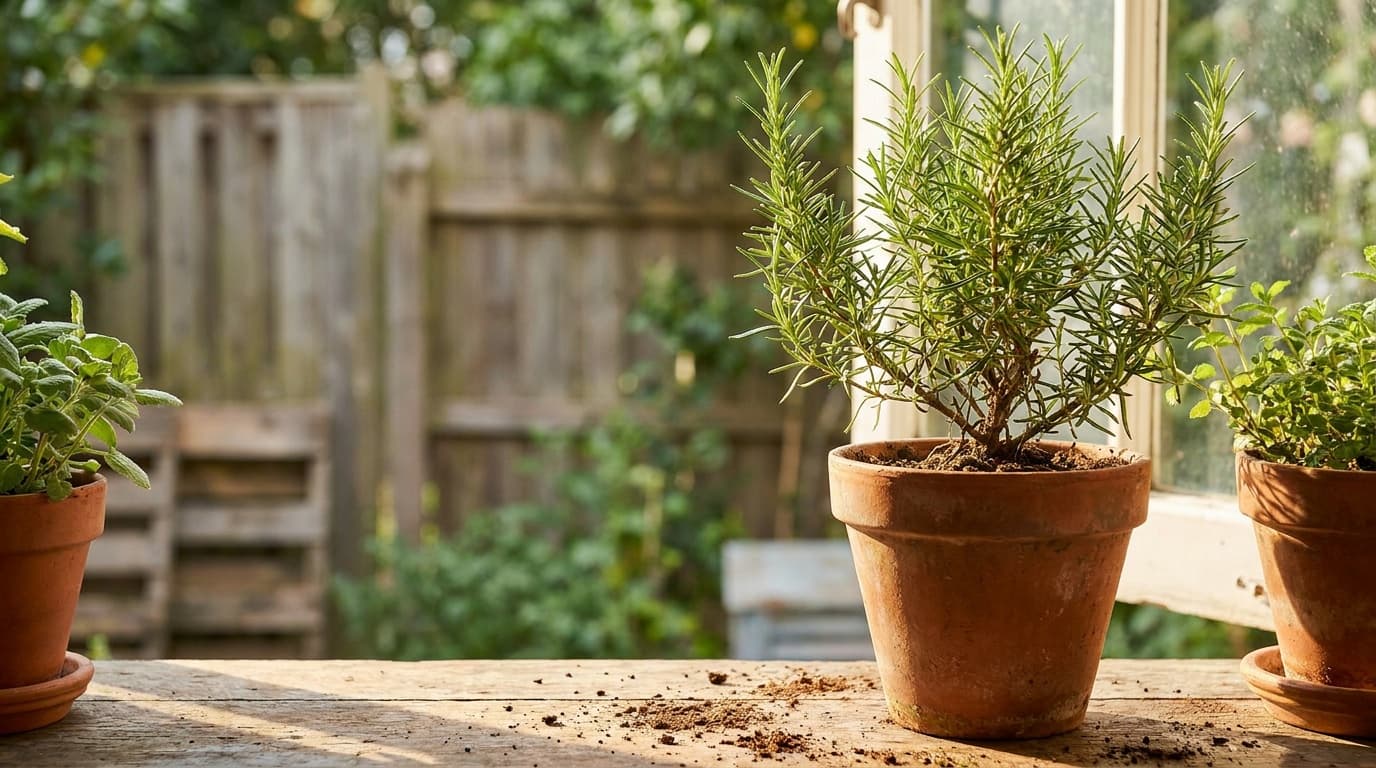
Rosemary does not need rich soil or frequent feeding. Give the roots air and let the mix begin to dry before watering again. The same approach works in a bed, a patio pot, or an indoor winter setup.
Begin with a plant or cutting
Rosemary is slow and uneven from seed, so a healthy nursery plant or rooted cutting is the practical starting point. Select growth with firm green leaves, no sticky residue, and no webbing at the stem joints.
To propagate, take a nonflowering stem tip, remove the lower leaves, and place the bare section into a moist, airy propagation mix. Keep humidity moderate and the mix barely moist until new growth and gentle resistance indicate roots have formed. Pot up without breaking the young root ball.
Root rosemary without rotting it
Choose active growth
Prepare the cutting
Use an airy medium
Check by resistance
Make drainage the first design decision
In the ground, avoid low pockets and compacted soil. In a container, use a pot with an open drainage hole and a coarse, free-draining mix. Never leave the pot sitting in runoff. A breathable container can help where humidity is high or watering tends to be generous.
Some links on this page are affiliate links. As an Amazon Associate I earn from qualifying purchases.
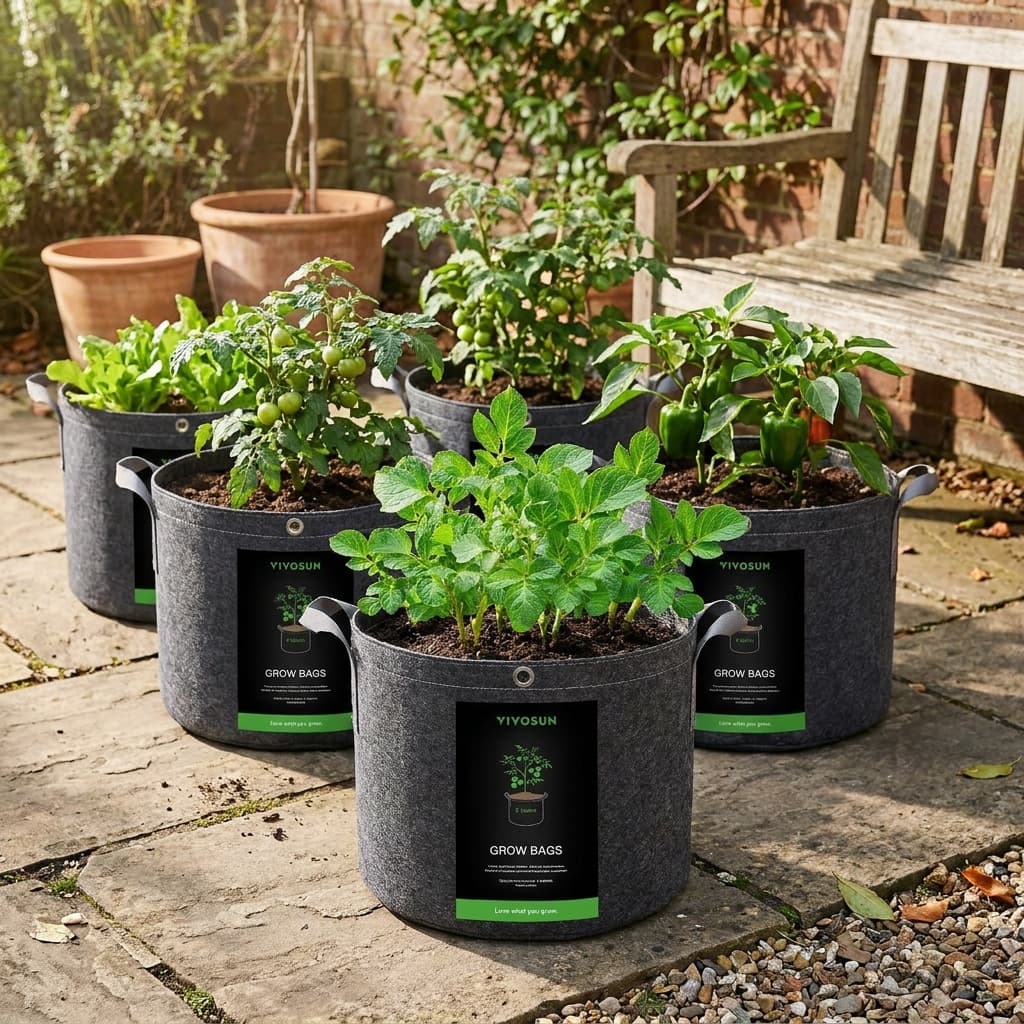
Excellent drainage for container rosemary
VIVOSUN 5-Gallon Fabric Grow Bags (5-Pack)
Best for: Container growers who want cheap, breathable bags for tomatoes, peppers, or potatoes.
Keep in mind: Dries out faster than rigid containers
Amazon price as of the checked date, subject to change. The price on Amazon at checkout applies.
Full research
- Material
- Nonwoven fabric
- Capacity
- 5 gal each
- Pack
- 5 bags
- Handles
- Reinforced carry handles
VIVOSUN's fabric grow bags are a hugely popular budget pick for container growing. The breathable fabric air-prunes roots, and a five-pack costs little, though the handles can loosen after heavy seasons.
This catalog-wide research score is separate from this guide's use-case ranking. How we research
Strengths
- Breathable fabric air-prunes roots
- Very low cost per bag in a multi-pack
- Fold flat for off-season storage
Weaknesses
- Dries out faster than rigid containers
- Handles can loosen over multiple seasons
Sprout Score breakdown
Best for
Container growers who want cheap, breathable bags for tomatoes, peppers, or potatoes.
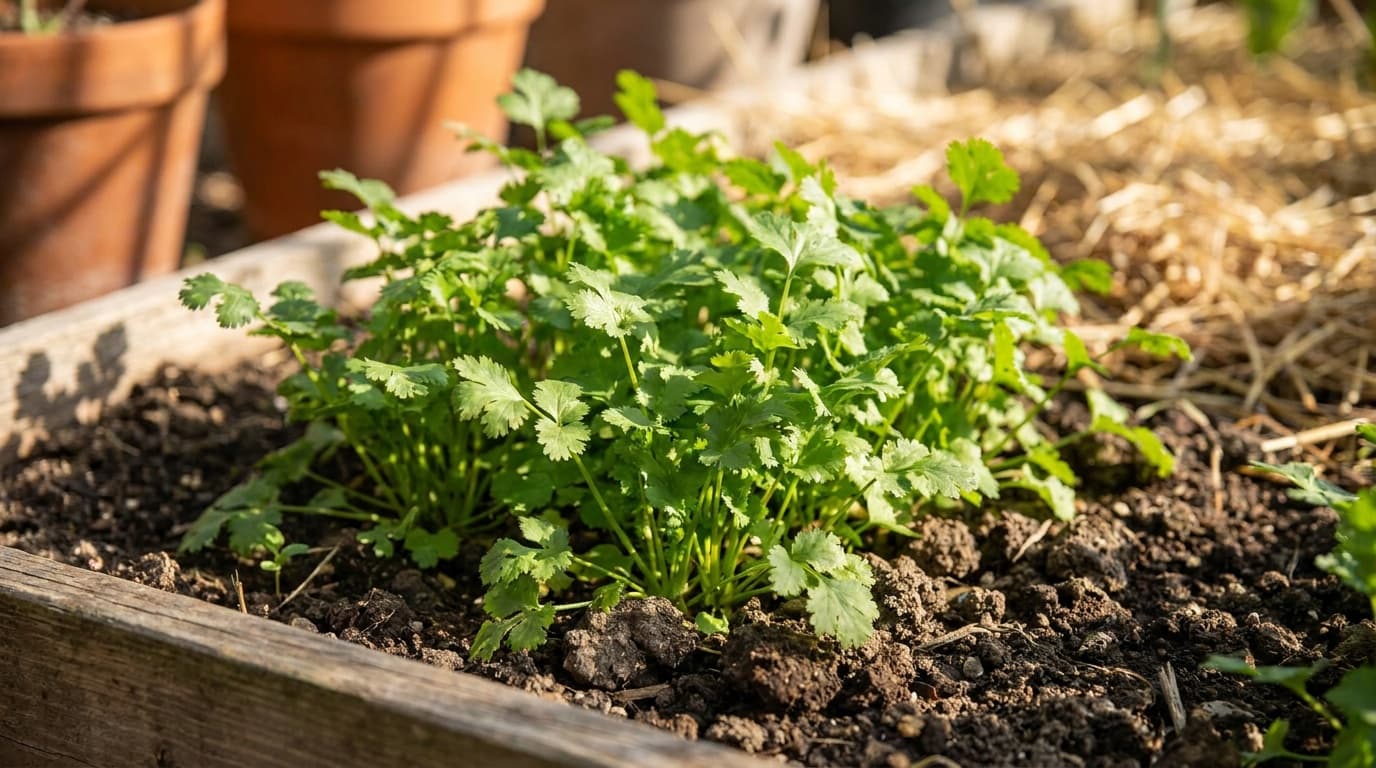
The container gardening guide covers mix structure and drainage. Keep rosemary separate from herbs that prefer persistently moist soil; sage and thyme are closer care companions than mint or parsley.
Water by root condition
Water thoroughly, allow excess to leave the container, then wait until the upper root area has begun to dry. A rosemary plant that stays wet may yellow, blacken near the base, or collapse while the soil still feels damp. Those are reasons to inspect drainage and root rot, not to add more water.
Feed sparingly. Soft, stretched growth is more vulnerable indoors and has weaker flavor than compact growth. Refresh exhausted container mix or use a diluted balanced feed only when growth and leaf color indicate a need.
Prune while green growth remains
Harvesting doubles as pruning. Cut leafy sprigs just above a branching point so the plant can respond with new side growth. Avoid cutting an entire branch back into leafless old wood, which may not resprout.
Remove dead and crossing stems with clean bypass pruners. Shape gradually over several harvests instead of shearing deeply in one pass.
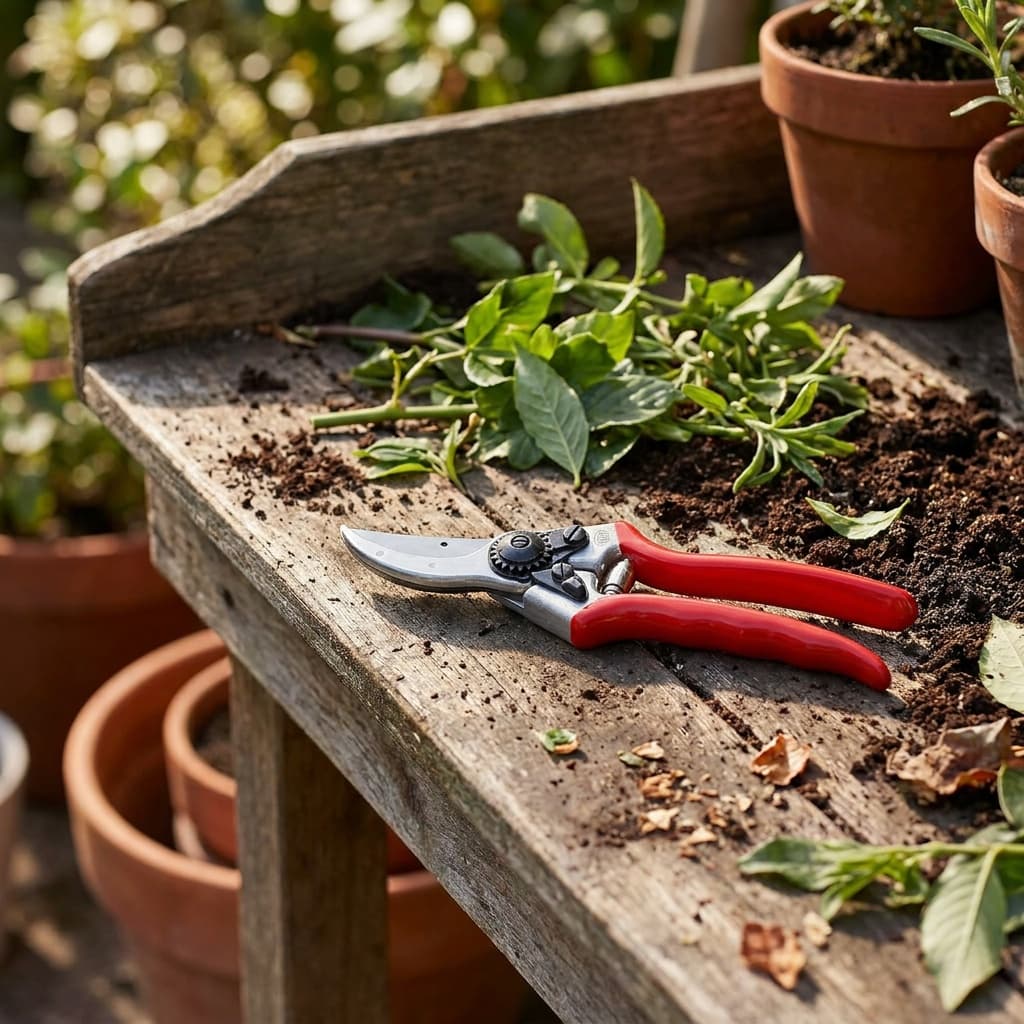
For woody-stem herbs
Felco F-2 Classic Bypass Pruner
Best for: Gardeners who want one pruner they can rebuild and keep for decades.
Keep in mind: One size fits average to larger hands; no compact body
Amazon price as of the checked date, subject to change. The price on Amazon at checkout applies.
Full research
- Type
- Bypass
- Cutting capacity
- Up to 1 in (25 mm)
- Handle
- Forged aluminum
- Blade
- Hardened steel, replaceable
The Felco F-2 is the long-standing reference bypass pruner, with forged handles and a fully replaceable parts system that keeps it cutting season after season.
This catalog-wide research score is separate from this guide's use-case ranking. How we research
Strengths
- Fully serviceable: blades, springs, and other parts are replaceable
- Precise bypass cut that protects living stems
- Backed by a long owner track record across decades of use
Weaknesses
- One size fits average to larger hands; no compact body
- Premium price relative to entry-level pruners
Sprout Score breakdown
Best for
Gardeners who want one pruner they can rebuild and keep for decades.
Owner rating snapshot
Amazon · 312 reviews · 4.8 stars
For a small harvest, use the tender tips. For drying, cut sound stems, bundle them loosely, and hang them where air can move around the leaves. Strip leaves only after they are fully dry.
Bring container plants indoors without shock
Inspect the plant before it enters the house. Rinse the foliage, clean the pot exterior, and check stem joints and leaf undersides for aphids or spider mites. Isolate it from other houseplants until you are confident it is clean.
Indoor rosemary prefers the brightest available position, cool air, and good circulation. Warm rooms with weak light create stretched growth and increase pest pressure. Rotate the pot for even exposure, but do not compensate for weak light by overfeeding or overwatering.
Troubleshoot from the base upward
- Root rot is the first suspect when a damp plant wilts or darkens at the crown.
- Powdery mildew can appear where air is stagnant and foliage stays damp.
- Aphids cluster on tender tips and can distort new leaves.
- Spider mites create pale stippling and fine webbing, especially in dry indoor air.
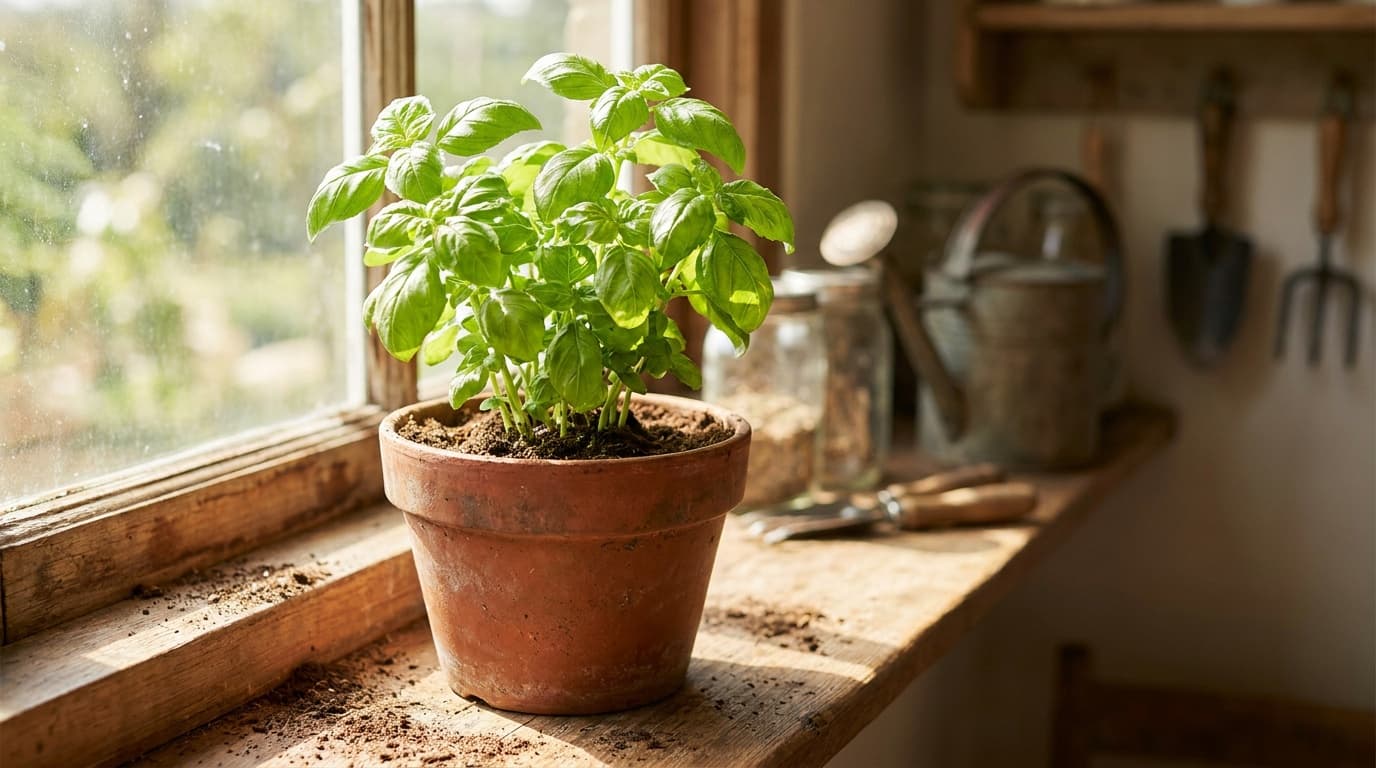
The companion planting guide can help place rosemary near crops with compatible care. Basil is useful in the kitchen but needs a different moisture routine.
Why is my rosemary turning brown even though the soil is damp?
Persistent dampness points toward poor drainage or root damage. Stop watering, empty any saucer, inspect the drainage hole, and check for dark or soft roots. The root rot guide covers recovery decisions.
How should I prune a woody rosemary plant?
Work only where branches still carry green leaves. Shorten selected stems above a leafy junction and spread the work across several sessions. Cutting deeply into bare old wood can leave permanent gaps.
Can rosemary live indoors long term?
It can, but the combination of weak light, warm still air, and wet roots makes indoor care demanding. Use the brightest available position, provide airflow, inspect for pests, and water according to root condition rather than a schedule.
What is the best way to harvest rosemary?
Snip healthy leafy tips above a branching point. Regular light harvests keep the plant compact and provide better regrowth than removing large old branches at once.