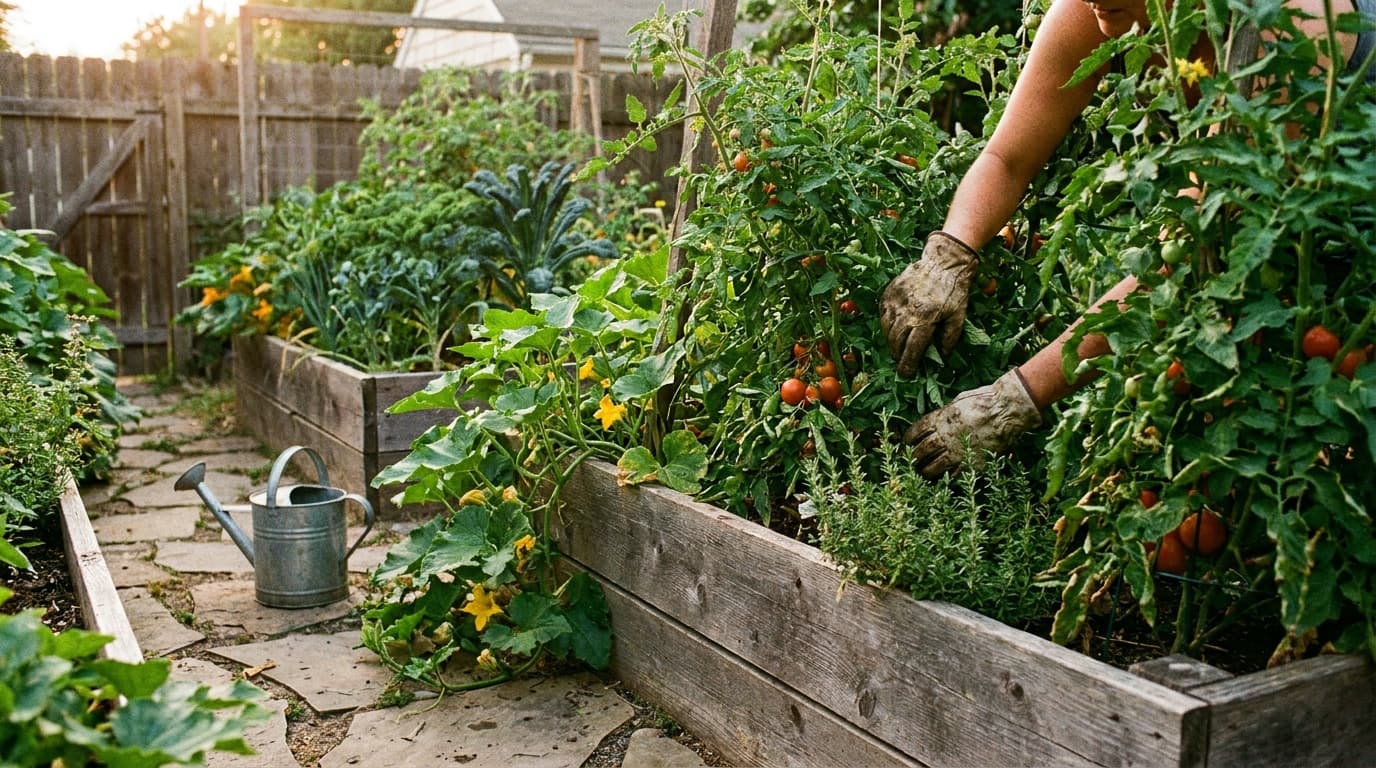
The mindset: prevention over reaction
The biggest difference between organic and conventional pest control is the order of operations. Conventional thinking reaches for a spray when it sees a bug. Organic thinking asks why the pest is there and removes the cause, then accepts a little damage as normal. A garden with zero pests is not the goal; a garden where pests never reach overwhelming numbers is.
This works because healthy, unstressed plants resist pests far better, and a garden full of beneficial insects keeps pest populations in check on its own. Most years, if you build that foundation, you barely touch a spray.
Step one: grow plants that resist pests
Pests target weak, stressed plants first. Most of your pest control happens before a single bug shows up, in how you grow.
Building pest resistance into the garden
Feed the soil
Space for airflow
Water at the base, in the morning
Rotate and diversify
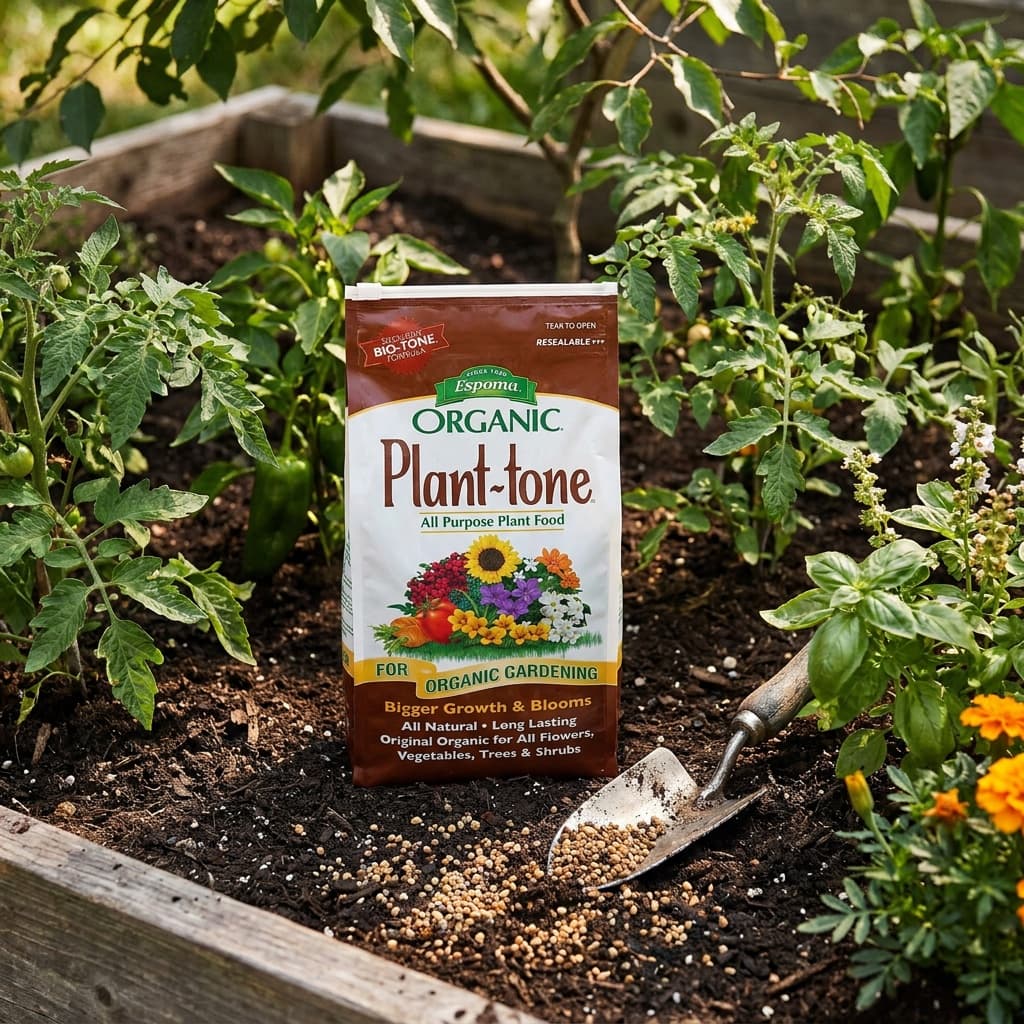
A balanced organic fertilizer is part of this foundation, since steady, moderate fertility grows resilient plants without the soft, sappy growth that heavy feeding produces and aphids love.
Some links on this page are affiliate links. As an Amazon Associate I earn from qualifying purchases.
Steady fertility
Espoma Plant-tone Organic All-Purpose Fertilizer
Best for: Gardeners who want one safe, all-purpose organic feed for the whole garden.
Keep in mind: Granular organics have a noticeable earthy smell
Amazon price as of the checked date, subject to change. The price on Amazon at checkout applies.
Full research
- NPK
- 5-3-3
- Type
- Granular slow-release organic
- Microbes
- Bio-tone beneficial microbe blend
- Use
- All-purpose: vegetables, flowers, trees, shrubs
A slow-release granular organic fertilizer with a 5-3-3 NPK and the brand's Bio-tone microbe blend. An all-purpose feed for vegetables, flowers, trees, and shrubs that releases gradually over the season.
This catalog-wide research score is separate from this guide's use-case ranking. How we research
Strengths
- Gentle slow-release feeding that resists burning
- Bio-tone microbes support soil biology
- Truly all-purpose across the garden
Weaknesses
- Granular organics have a noticeable earthy smell
- Slower visible response than synthetic feeds
Sprout Score breakdown
Best for
Gardeners who want one safe, all-purpose organic feed for the whole garden.
Owner rating snapshot
Amazon · 15 reviews · 4.7 stars
Step two: recruit beneficial insects
Your best pest-control workforce is free and already nearby. Ladybugs, lacewings, hoverflies, parasitic wasps, and ground beetles eat enormous numbers of pests, and the way to get them is to give them food and shelter.
Plant flowers among your vegetables, especially small-flowered umbellifers like dill, fennel, and cilantro, plus alyssum and yarrow, which feed adult beneficials with nectar. Then leave them be: a broad-spectrum spray, even an organic one, kills the beneficials along with the pests, which is exactly backward. This is the main reason organic growers keep sprays as a last resort.
Step three: barriers and hand-picking
Before any spray, physical control is the most reliable organic tool, and it harms nothing but the pest.
A floating row cover laid over a crop physically blocks flying pests from ever reaching it: cabbage moths, carrot rust fly, squash bugs, and flea beetles all bounce off it. It is the single most effective organic defense for vulnerable crops, with no spraying and no impact on beneficials.
Blocks flying pests
Agribon AG-19 Floating Row Cover
Best for: Gardeners who want cheap frost protection and pest exclusion in one fabric.
Keep in mind: Lightweight fabric tears and wears over seasons
Amazon price as of the checked date, subject to change. The price on Amazon at checkout applies.
Full research
- Weight
- 0.55 oz per sq yd
- Frost protection
- Down to roughly 28F
- Light transmission
- About 85%
- Material
- Spun-bonded polypropylene
A lightweight spun-bonded row cover that drapes over crops to add a few degrees of frost protection while still letting in light and water. It doubles as a physical barrier against many insect pests.
This catalog-wide research score is separate from this guide's use-case ranking. How we research
Strengths
- Extends the growing season at both ends
- Excludes many pests without chemicals
- Passes most light and water so it can stay on
Weaknesses
- Lightweight fabric tears and wears over seasons
- Needs hoops or pins to stay put in wind
Sprout Score breakdown
Best for
Gardeners who want cheap frost protection and pest exclusion in one fabric.
For larger pests, hand-picking works at garden scale. Pick off caterpillars, beetles, and slugs into soapy water, ideally in the evening or early morning when many are active. It feels slow, but a few minutes of patrol every couple of days keeps small infestations from becoming large ones. For slugs specifically, see our guide on slugs.
Step four: targeted sprays, as a last resort
Only when prevention, beneficials, and barriers have not been enough do you spray, and even then you target the specific pest rather than blanketing the garden.
The two gentlest effective options are insecticidal soap (for soft-bodied pests like aphids, mites, and whiteflies) and neem oil (for a broader range, plus some fungal issues). Both break down quickly and spare many beneficials if you spray precisely and in the evening when pollinators are not active. Spray only the affected plants, only where you see pests, and never blanket the whole garden. Misused, even organic sprays kill the allies you are counting on.
Note that pest control and disease control are different problems. If you see white powdery patches rather than insects, that is a fungal issue; our guide on powdery mildew covers it.
Putting it together
The whole system is a ladder you climb only as far as you need: healthy soil and plants at the bottom, then beneficials, then barriers and hand-picking, then targeted sprays at the very top. Most seasons you stay near the bottom rungs. Identify the pest before you act, because the right rung is different for aphids, caterpillars, and slugs. Time your plantings well with the planting calendar, since crops grown in their proper season are healthier and less pest-prone than those forced out of time.
What is the best organic pest control for vegetables?
There is no single best product, because the most effective approach is a ladder: healthy soil and plants first, then beneficial insects, then physical barriers like row covers and hand-picking, and targeted sprays such as insecticidal soap or neem only as a last resort. Prevention does most of the work; sprays handle the exceptions.
How do I get rid of garden pests without chemicals?
Start by removing the cause: feed the soil, space plants for airflow, and water at the base in the morning so plants are healthy and unstressed. Encourage beneficial insects with flowers, use row covers to block flying pests, and hand-pick larger pests. These handle most problems without any spray at all.
Is neem oil safe for an organic garden?
Neem is widely used in organic gardening and breaks down quickly, but it is not harmless to beneficial insects if sprayed carelessly. Use it as a last resort, spray only affected plants in the evening when pollinators are inactive, and test on a few leaves first since neem can scorch foliage in heat or strong sun.
Why should I attract beneficial insects instead of just spraying?
Beneficial insects like ladybugs, lacewings, and parasitic wasps eat pests continuously and for free, keeping populations low all season. Broad sprays, even organic ones, kill these allies along with the pests, which leaves the garden more vulnerable to the next outbreak. Protecting beneficials is why organic growers keep sprays as a last resort.
Organic pest control is mostly gardening done well: strong plants, living soil, room to breathe, and a welcome mat for beneficial insects. Climb the ladder only as far as a problem demands, identify the pest before you act, and you will spend far more time harvesting than spraying.