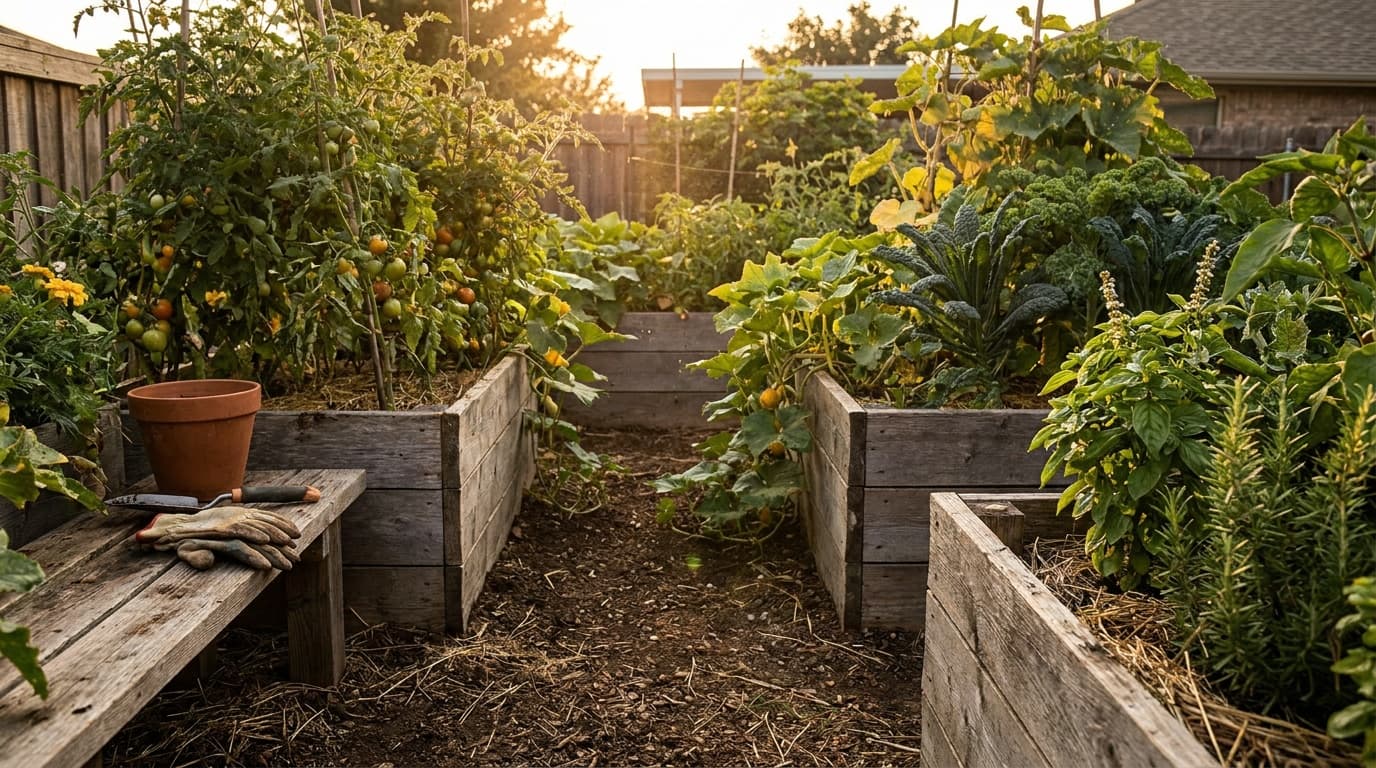
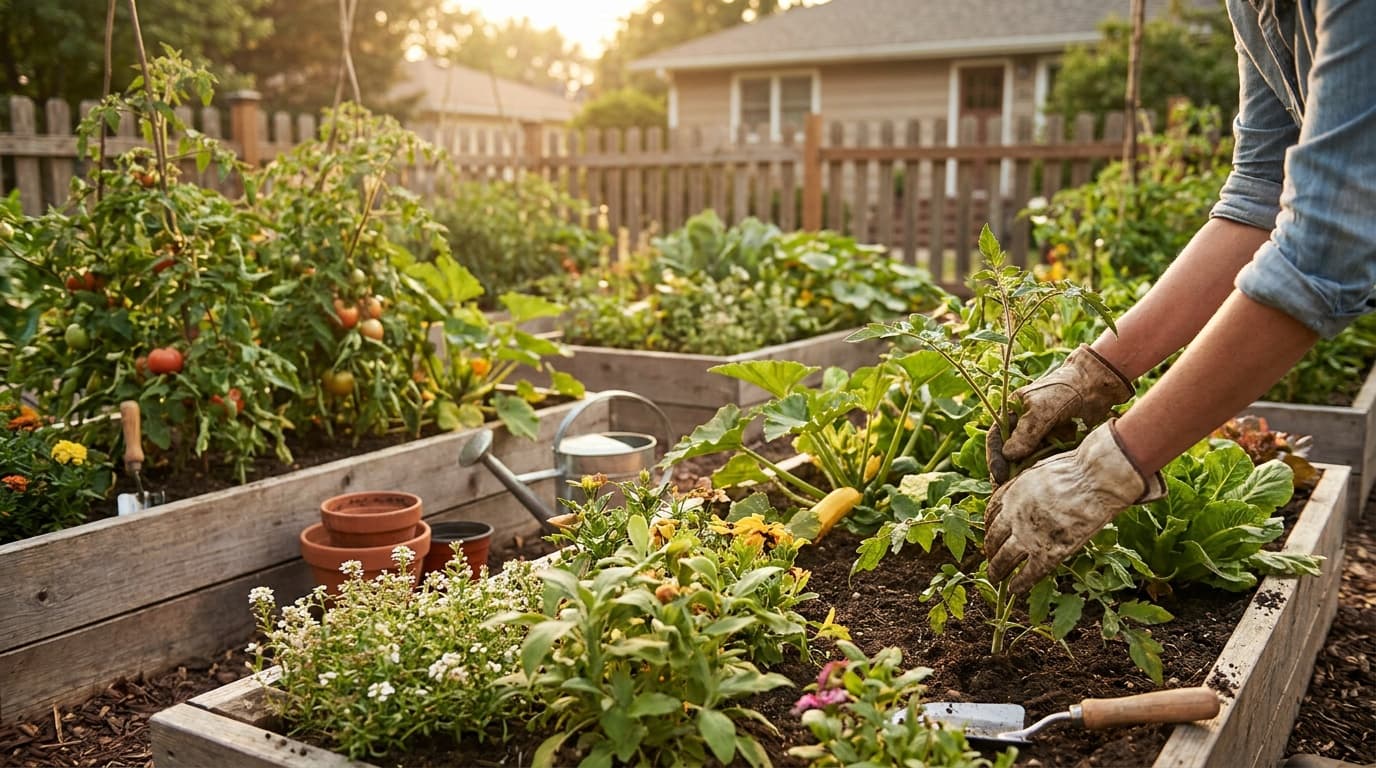
A little work at the end of the season pays off in spring. Many plant diseases spend the winter on dead plant material, so what you remove now is disease you do not fight next year. What you leave behind, done well, feeds the soil.
When to clean up
Start after the first killing frost, once tender crops like tomatoes, peppers, and squash are finished. University of New Hampshire Extension recommends removing annual vegetable plants from the garden then. Hardy crops such as kale, collards, and garlic can stay in place.
Remove diseased plants completely
Diseases like early blight and Septoria leaf spot on tomatoes survive the winter in the soil on crop debris. Pulling up and discarding every part of an infected plant reduces infection the next season. That matters most in small gardens where you cannot rotate crops far.
Keep diseased plants out of the home compost pile. Utah State University Extension notes that spent vegetable plants are fine to compost as long as they are not diseased. Throw infected material away instead.
Compost or leave the healthy plants
Healthy plant material is worth keeping. Add it to the compost pile, or leave the residue on the soil surface. University of Minnesota Extension notes that residue returns nutrients and organic matter to the soil, and that tilling harms soil structure over the long term, so skip turning it under.
If you compost, turn the pile regularly and keep a balanced mix of green and brown materials. Our comparison of compost tumblers, bins, and worm bins helps you choose a system if you are starting one.
Put fallen leaves to work
Leaves are free organic matter. Chop them into small pieces and they make a good mulch for vegetable, annual, and perennial beds, or rake them into the compost pile. Fall is also a good time to spread organic matter over the garden. Utah State University Extension lists grass clippings, raked leaves, compost, and manure as options to spread now so the bed is ready for spring. Our mulching guide covers the details.
Sow a cover crop on bare beds
A cover crop keeps bare soil planted over winter. For home gardens, University of Minnesota Extension suggests a mix of oats and peas. Sown in early fall, it grows through the fall and dies over the winter, usually leaving a bed that is easy to plant in spring.
If it is already too late to sow where you are, a layer of chopped leaves is a simpler way to cover the soil until spring.
Leave some shelter in the flower beds
Cleanup does not have to mean bare ground everywhere. In flower beds, University of Illinois Extension suggests leaving healthy stems and seed heads until spring. Black-eyed Susan, sedum, purple coneflower, Joe-Pye weed, and marigold seed heads can be an important food source for wildlife, and fallen leaves give insects a place to overwinter. If you do cut hollow stems back, bundle them and set them in an out-of-the-way spot. Remove diseased plants no matter where they grow.
Clean your tools and pots
Before you store everything
Clean and oil tools
Wash containers
Recycle old potting mix
Before you close the beds for winter
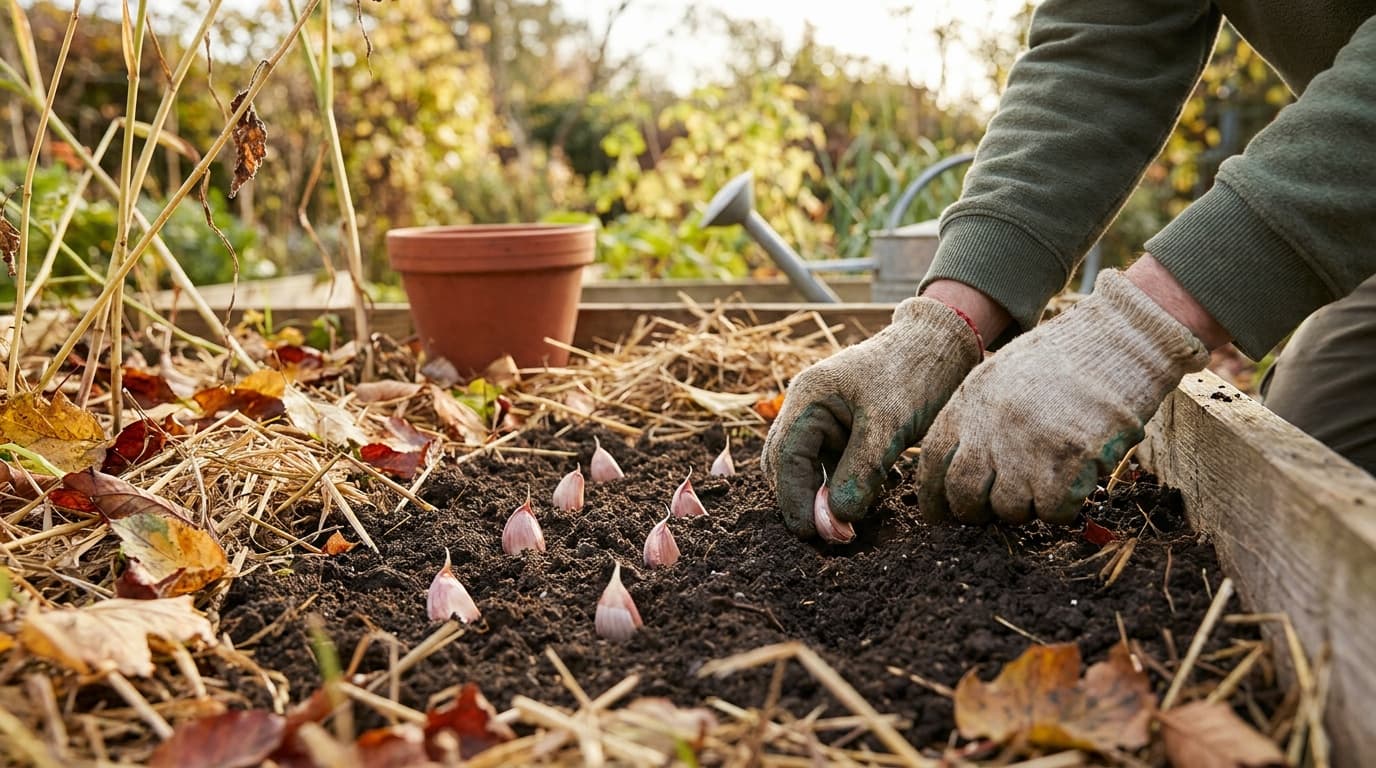
Fall is a good time to test soil, because slow-acting amendments like lime need months to work. Our soil testing guide walks through it. This is also the season to plant garlic and spring-flowering bulbs. If some crops are still producing, a cover can stretch the season a few more weeks.
Frequently asked questions
When should I clean up my vegetable garden in fall?
After the first killing frost has finished tender crops like tomatoes, peppers, and squash. Hardy crops like kale, collards, and garlic can stay in the bed.
Can I compost tomato plants?
Yes, if they are healthy. Tomato plants with diseases such as early blight or Septoria leaf spot should be removed and thrown away, not composted in a home pile, because those diseases survive the winter on plant debris.
Should I till my garden in the fall?
It is better not to. Tilling harms soil structure over the long term. Leave healthy residue on the surface or compost it, and cover bare soil with chopped leaves or a cover crop.
What is the easiest cover crop for a home garden?
A mix of oats and peas sown in early fall. It grows through the fall, dies over the winter, and usually leaves a bed that is easy to plant in spring.
A cleaner start next spring
Pull and discard diseased plants, compost or leave the healthy ones, and cover bare soil with chopped leaves or a cover crop. Clean the tools, wash the pots, and the garden is ready to rest.