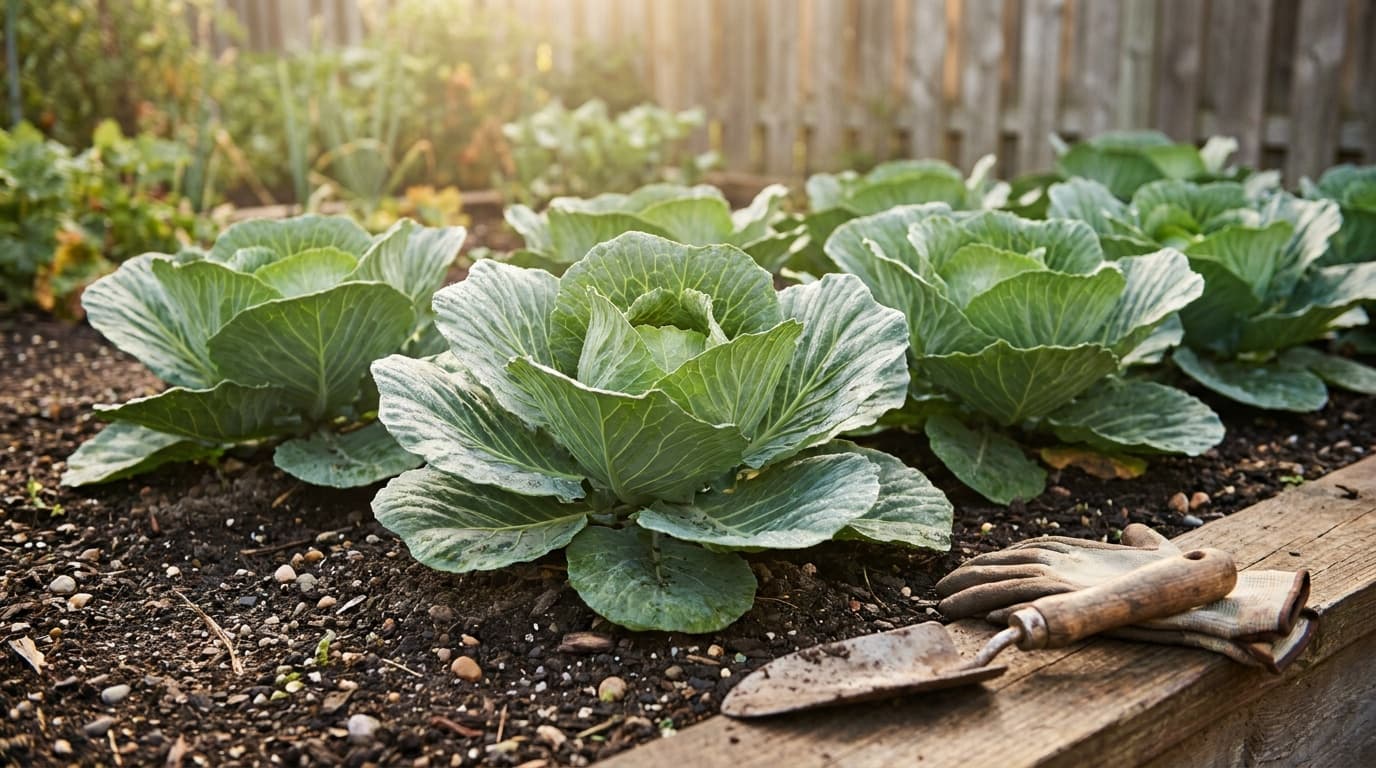
Cabbage is a storage organ wrapped in living leaves. The plant first builds a broad frame, then folds newer leaves inward until the head becomes dense. That makes the crop easy to read. Damage to the outer canopy slows the process, uneven moisture can crack a nearly finished head, and soft growth from excessive feeding can invite pests. Good cabbage care is mostly about keeping the plant balanced.
The cabbage plant profile owns exact local dates, bed layout, sowing depth, light and soil values, water rate, zone fit, and expected maturity. Use it for lookup answers, then use this guide for planting technique, head care, harvest, and troubleshooting.
Prepare for a large root and leaf system
Choose a bed with reliable drainage and enough fertility to support sustained leaf growth. Incorporate finished compost before planting and break up compacted areas. Avoid fresh manure or a heavy dose of quick fertilizer just before transplanting. Cabbage needs nutrition, but excess soft growth can make the canopy harder to keep clean and healthy.
Rotate away from other brassicas. Cabbage shares clubroot, root maggots, caterpillars, and several foliar diseases with broccoli, cauliflower, kale, collards, turnips, and Brussels sprouts. Moving only cabbage while placing another family member in the old bed defeats the purpose. Plan the family rotation with the crop rotation guide.
Water transplant cells before handling. Ease each root plug out intact, loosen only roots that circle heavily, and set the plant into firm contact with the surrounding soil. Water the root zone after planting to close hidden air pockets. If wind is strong, protect new transplants until they anchor rather than burying weak stems under loose soil.
Exclude pests before the head closes
Floating row cover is most valuable before damage begins. Lay it over the planted bed, leave room for the canopy to expand, and seal every edge. This blocks egg-laying moths and flies from reaching the crop while leaves are tender.
Some links on this page are affiliate links. As an Amazon Associate I earn from qualifying purchases.
Brassica protection
Agribon AG-19 Floating Row Cover
Best for: Gardeners who want cheap frost protection and pest exclusion in one fabric.
Keep in mind: Lightweight fabric tears and wears over seasons
Amazon price as of the checked date, subject to change. The price on Amazon at checkout applies.
Full research
- Weight
- 0.55 oz per sq yd
- Frost protection
- Down to roughly 28F
- Light transmission
- About 85%
- Material
- Spun-bonded polypropylene
A lightweight spun-bonded row cover that drapes over crops to add a few degrees of frost protection while still letting in light and water. It doubles as a physical barrier against many insect pests.
This catalog-wide research score is separate from this guide's use-case ranking. How we research
Strengths
- Extends the growing season at both ends
- Excludes many pests without chemicals
- Passes most light and water so it can stay on
Weaknesses
- Lightweight fabric tears and wears over seasons
- Needs hoops or pins to stay put in wind
Sprout Score breakdown
Best for
Gardeners who want cheap frost protection and pest exclusion in one fabric.
Inspect beneath the cover regularly. Cabbage worms and loopers hide along leaf veins and on undersides. Remove eggs and small caterpillars while they are easy to find. Once feeding reaches the inner folds, damaged tissue and frass can be trapped inside the developing head.
For confirmed caterpillars, follow the imported cabbage worm and cabbage looper guides. Wilting transplants with damaged roots may indicate cabbage maggots. Exclusion and rotation are more reliable than trying to rescue a badly tunneled root system.
Keep head filling steady
As leaves begin folding inward, check soil moisture consistently. Water before the bed dries hard, then allow excess water to drain. Alternating a dry root zone with a sudden soaking encourages a firm head to expand faster than its outer leaves can stretch.
Mulch can reduce these swings and limit weeds. Keep mulch away from the stem and avoid deep cultivation around established plants. Damaged surface roots reduce the plant's ability to regulate water just when the head is filling.
Feed only when the plant provides a reason. Evenly colored leaves and active growth indicate adequate fertility. General paling with sound roots and drainage may justify a modest balanced side-dressing. Do not use a large nitrogen application to push a nearly finished head. It can create tender growth without solving the original issue.
Prevent and respond to splitting
Head splitting happens when the inner leaves expand rapidly after the outer wrapper leaves have become tight. A sharp moisture increase is a common trigger. The best prevention is consistent root-zone care and timely harvest.
If a mature head is firm but harvest must wait briefly, a controlled root check can slow further expansion. Grasp the head and rotate it slightly in the soil to break a portion of the fine roots, or cut into the root zone on one side with a spade. This is a holding technique, not routine care, and the cabbage should still be harvested soon.
Once a head splits, cut it. The opening admits water, insects, and decay organisms. A split head can still be useful after damaged tissue is removed, but it will not store like an intact one.
Harvest for the way you will use it
Press the head gently from the sides. A ready cabbage feels dense and resists compression. A loose head needs more development unless stress or damage is forcing an early harvest. Cut the stem beneath the head with a clean knife and leave the outer wrapper leaves around it for handling protection.
For immediate cooking, minor cosmetic damage is easy to trim. For storage, choose sound, intact heads and handle them carefully. Bruises and cuts become starting points for decay. Remove field heat promptly and keep harvested heads clean and dry.
If the stump remains healthy after the main head is cut, small secondary heads may form from leaf joints. They will not replace the main crop, but they can provide a useful follow-up harvest. Leave the stump only when disease is absent and the bed is not needed for the next crop.
Diagnose the whole plant
Cabbage field checks
Head remains loose
Head is splitting
Outer leaves have holes
Plant wilts despite moist soil
Leaf edges turn brown
For swollen roots and recurring wilt, see clubroot. For brown margins on inner leaves, consult tipburn. Remove heavily diseased residues rather than leaving them in a brassica bed.
Why did my cabbage head split?
The inner leaves expanded faster than the tight outer leaves could stretch, often after a dry period ended with heavy rain or irrigation. Harvest the split head promptly and keep future crops more even through the final filling stage.
Why is my cabbage making leaves but no firm head?
First decide whether the inner leaves are still folding and growing. Root damage, transplant stress, severe pest feeding, and a broad nutrient deficiency can delay filling. Correct the active stress and avoid using a heavy fertilizer dose as a catch-all response.
How can I keep caterpillars out of a cabbage head?
Use floating row cover before moths reach the crop, keep the edges sealed, and inspect beneath it. Remove eggs and young caterpillars before the leaves close tightly. Established feeding inside the head is much harder to manage cleanly.
How can I tell that a cabbage head is ready?
Use touch. A ready head feels dense and firm when pressed gently from the sides. Harvest before wrapper leaves crack or the head begins opening, especially if moisture conditions are changing.
The cabbage workflow is simple but unforgiving of delay: establish roots carefully, preserve the canopy, smooth out moisture changes, and cut as soon as the head is firm. That sequence produces better heads than trying to force the crop at the end.