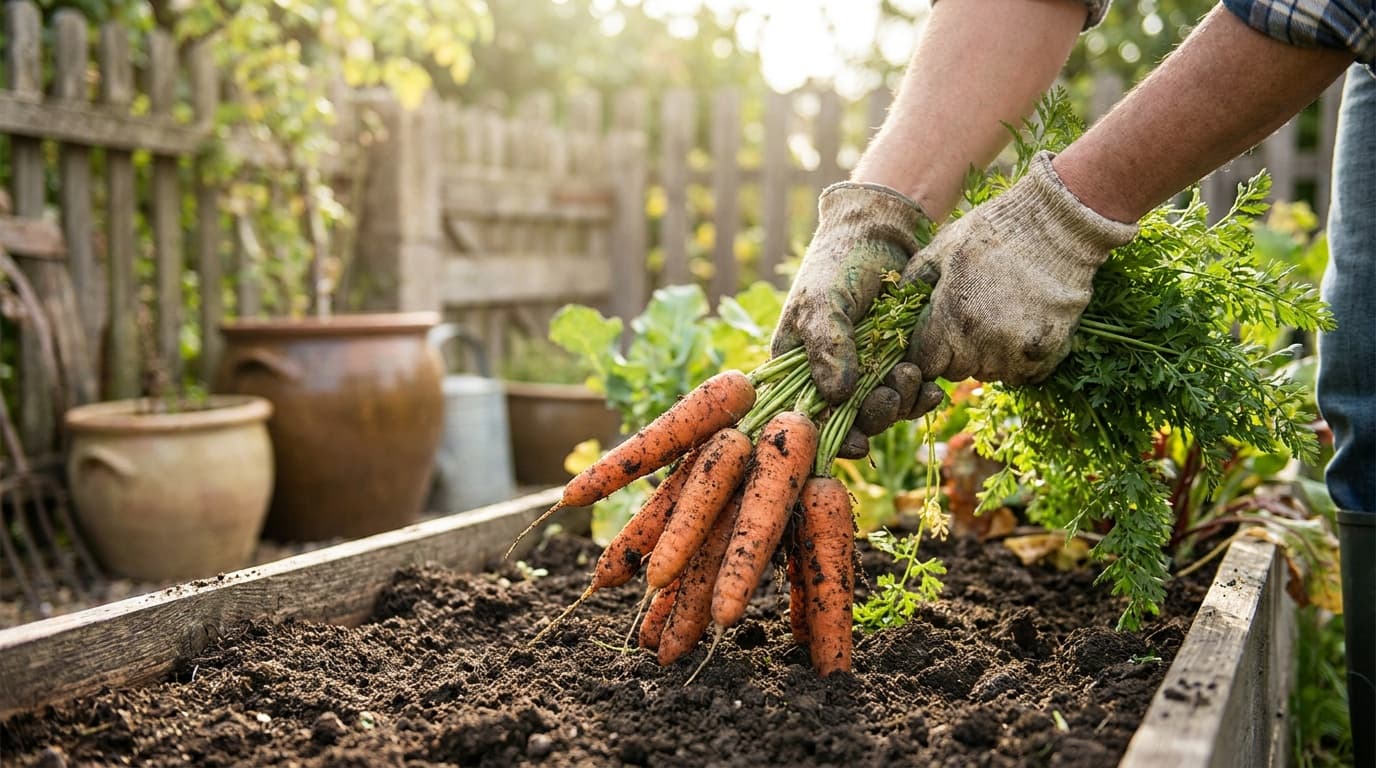
The edible carrot is the plant's record of every obstacle it met underground. A stone can split the growing tip, compacted soil can shorten it, and disturbed seedlings can twist the root before it begins to swell. Once that damage happens, top growth may look normal while the root cannot be repaired. The best carrot technique therefore happens before and just after sowing.
Use the carrot plant profile for exact local dates, bed layout, sowing depth, light and soil values, water rate, zone fit, and expected maturity. This guide covers soil preparation, germination management, thinning, harvest, and diagnosis.
Build an unobstructed root path
Loosen the bed thoroughly and remove stones, woody fragments, dense clods, and undecomposed material. Rake the surface fine enough for small seed to make consistent contact. Finished compost can improve structure, but fresh manure and unfinished amendments may encourage branching and irregular roots.
Heavy clay can grow carrots when it is well prepared, though shorter, broader varieties are often easier to manage in dense ground. Where the native soil remains rocky or compacted, a raised bed filled with a loose, draining mix gives the crop a more predictable root path.
Some links on this page are affiliate links. As an Amazon Associate I earn from qualifying purchases.
Deep enough for carrots
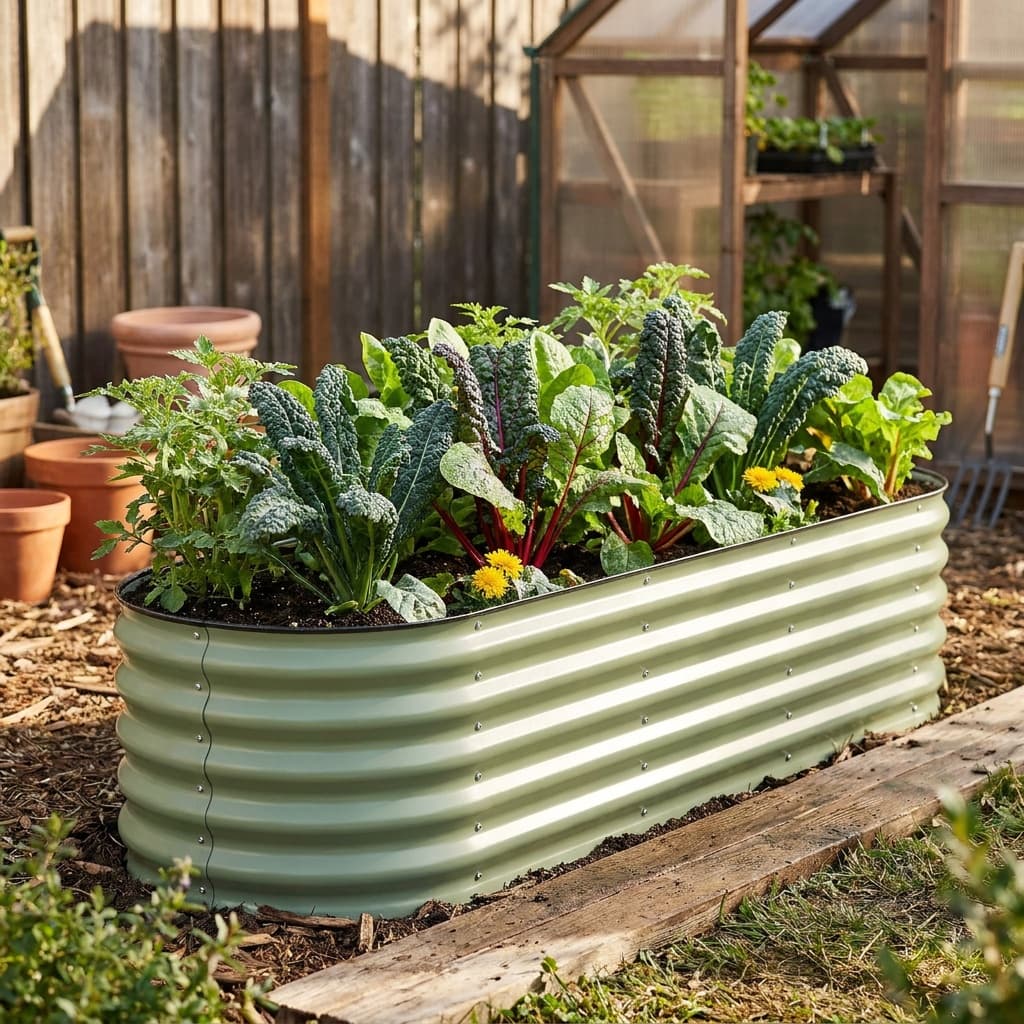
Vego Garden 17 in Tall (9-in-1) Modular Metal Raised Bed
Best for: Home gardeners who want a long-lasting, good-looking bed that can be reshaped to fit the yard.
Keep in mind: Costs more than basic galvanized or wood beds
Amazon price as of the checked date, subject to change. The price on Amazon at checkout applies.
Full research
- Material
- Aluzinc-coated steel
- Height
- 17 in
- Configuration
- 9-in-1 modular panels
- Gauge
- 0.8 mm Aluzinc steel
Vego's flagship modular metal bed is the category benchmark for home gardeners. The interlocking panels let one kit become several bed shapes, and the Aluzinc coating resists rust far longer than bare galvanized steel.
This catalog-wide research score is separate from this guide's use-case ranking. How we research
Strengths
- Reconfigurable into multiple shapes from one kit
- Aluzinc coating resists rust and corrosion
- Tool-light assembly with rounded safety edges
Weaknesses
- Costs more than basic galvanized or wood beds
- Metal heats up in full sun in hot climates
Sprout Score breakdown
Best for
Home gardeners who want a long-lasting, good-looking bed that can be reshaped to fit the yard.
Owner rating snapshot
Amazon · 16 reviews · 4.8 stars
Do not overfeed the bed. Excess nitrogen can produce a lush canopy without improving the root. Start with balanced soil preparation and let leaf color, root checks, and soil testing guide any later adjustment.
Sow directly and protect the surface
Carrots should be sown where they will finish. Transplanting bends or breaks the taproot and commonly produces forked or distorted roots. Place seed as evenly as practical, press the surface gently, and water with a fine pattern that does not wash seed into low spots.
The seedbed must remain evenly moist through emergence. A dry surface interrupts germination, while forceful watering can create a crust that seedlings struggle to penetrate. Check the row itself rather than assuming nearby damp soil represents the seeded surface.
In a bed that dries rapidly, a temporary breathable cover can reduce evaporation. Burlap laid loosely over the row is one option. Some gardeners use a board as a short-term moisture shield. Whatever the material, inspect beneath it frequently and remove it as soon as seedlings appear so emerging leaves receive light and air.
Thin without pulling the crop sideways
Tiny seed makes oversowing common. Once seedlings are established, choose the strongest plants and snip extras at the soil line. Pulling can tug nearby roots, bend their taproots, and disturb the smooth soil path you prepared.
Use the exact bed layout from the plant profile and finish thinning decisively. A crowded row can carry a healthy green canopy while producing small or intertwined roots below. Remove thinnings from the bed so cut foliage does not trap moisture against the survivors.
Pelleted seed and seed tape can make initial placement easier in a small bed. They do not remove the need to inspect the stand, but they can reduce clumps and the amount of thinning required.
Maintain roots without forcing tops
After emergence, shift from surface protection to steady root-zone care. Irrigate before the bed dries hard, and let excess water drain. A dry period followed by a soaking can contribute to cracking and poor texture.
Mulch between established rows can reduce surface crusting, conserve moisture, and suppress weeds. Keep mulch away from the crowns so shoulders remain visible and the bed is easy to inspect.
If leaves are evenly colored and growing steadily, avoid automatic feeding. Broad paling with healthy roots may justify a modest balanced side-dressing. Hairy or highly branched roots can reflect stress, obstructions, or excessive fertility, so more fertilizer is not a universal correction.
For irrigation principles across different soil types, see watering vegetable gardens. The exact carrot rate remains in the plant profile.
Diagnose roots by their shape
Carrot field checks
Forked or branched roots
Cracked roots
Small roots beneath large tops
Tunnels or feeding scars
Hairy, knotted roots
Yellowed, distorted tops combined with hairy, bitter roots may indicate aster yellows. Remove affected plants rather than composting them and focus on controlling the leafhopper vector around future crops.
Harvest without snapping roots
Brush soil from the shoulder of a representative carrot and compare its form with the variety description. Pull a sample and taste it before harvesting the whole bed. A useful root should be firm, dense, and free of serious cracking or pest damage.
If soil is firm, loosen it beside the row with a garden fork before lifting. Insert the fork far enough away that the tines do not spear the roots, lever the soil gently, and pull by the leaf bases only after resistance releases. Do not force a dry, compacted bed.
Remove tops promptly after harvest so foliage does not continue drawing moisture from the roots. Cool and clean the crop without bruising it. Sort damaged roots for immediate use and reserve sound roots for storage.
Make containers serve the root
Carrots can grow in containers when the mix is loose, stone-free, and well drained. Choose a vessel that fits the root form named on the seed packet and does not dry so quickly that germination becomes a constant rescue. The container gardening guide covers drainage and mix selection; the carrot profile supplies the crop values.
Shorter or round-rooted varieties can be easier in a compact vessel. Whatever the type, fill the container without large chunks, sow directly, and thin with the same care used in an in-ground bed.
Why are my carrots forked?
The growing tip likely met an obstacle or was disturbed early. Stones, compacted clods, unfinished organic material, rough thinning, and transplanting can all redirect the taproot. Improve the seedbed before the next crop because an existing fork cannot be corrected.
Why did my carrot row emerge unevenly?
The surface may have dried, crusted, washed out, or been disturbed during the slow emergence phase. Prepare a finer surface, water gently, mark the row, and use a temporary cover only if you can inspect it consistently.
How can I thin carrots without damaging the roots I keep?
Snip unwanted seedlings at the soil line instead of pulling them. Finish the task while plants are small, remove the cut tops, and avoid cultivating deeply beside the selected row afterward.
How do I pull carrots without breaking them?
Loosen firm soil beside the row with a garden fork, taking care not to spear the roots. Lift only after the soil releases. Pulling straight against compacted ground is what causes many otherwise sound carrots to snap.
Carrots become reliable when the underground path is treated as the main product. Prepare it carefully, keep the seeded surface alive, thin without disturbance, and loosen the bed before harvest.