Skip to content
Sprout Authority
Growing GuidesGrowing guide

How to grow rhubarb

Rhubarb is a cold-hardy perennial that returns every spring for 20+ years. Plant crowns 3-4 feet apart, skip the first-year harvest, never eat the leaves, and it practically takes care of itself.

By Joel KellyUpdated Jun 13, 20268 min readResearch backed
How to grow rhubarb

Some links on this page are affiliate links. As an Amazon Associate I earn from qualifying purchases.

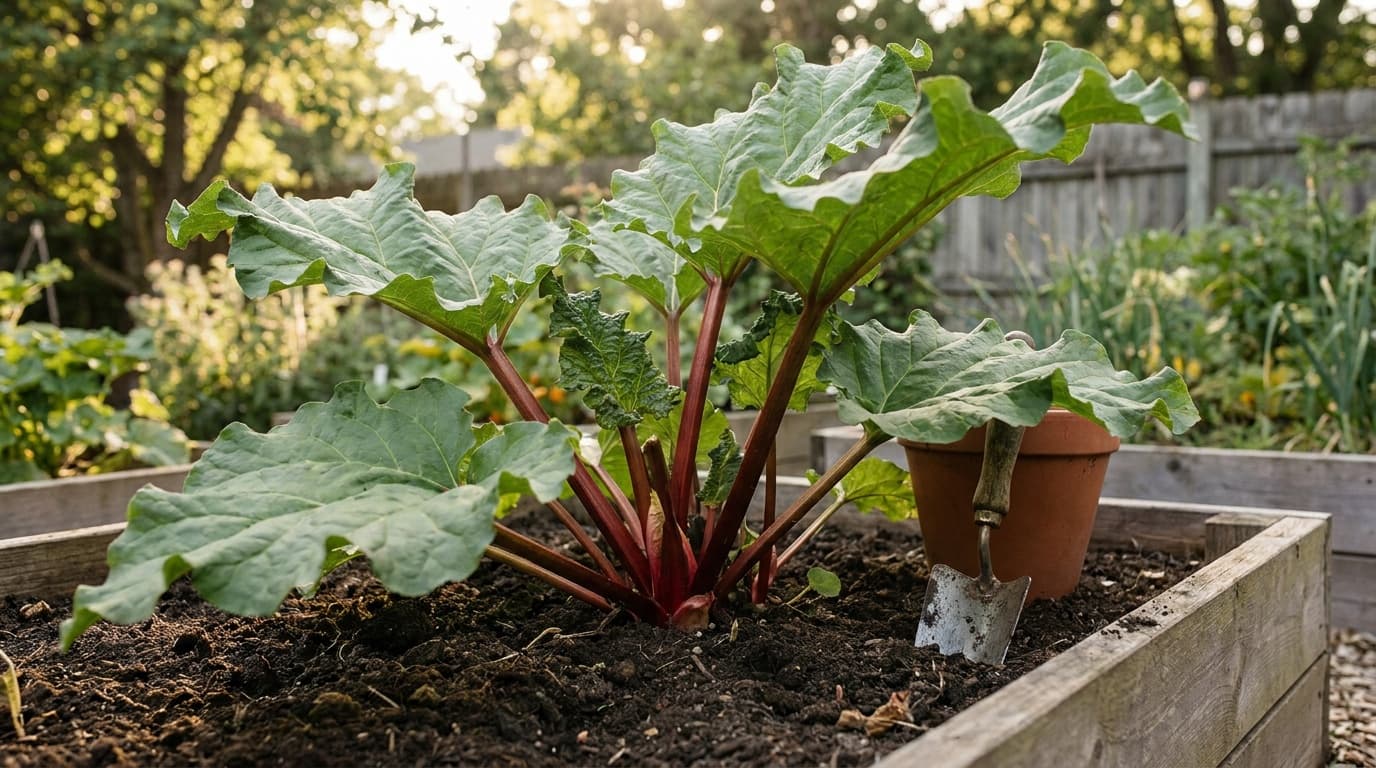
Rhubarb occupies a uniquely useful corner of the edible garden: it is a perennial that asks for almost no annual effort, it tolerates cold winters that would kill most fruit crops, and it is one of the first edible plants to produce in spring. Once a crown establishes, it can be productive for 20 years or more with minimal intervention. The main points to understand before you plant are its cold requirement, the patience required in the first year, and the toxicity of the leaves. Get those right and rhubarb becomes one of the most reliable plants in your garden.

Understanding rhubarb's cold requirement

Rhubarb is a temperate perennial, not a tropical one. It thrives in USDA hardiness zones 3 through 7, and does best where winters reliably bring sustained cold. The dormancy period triggered by cold temperatures is what drives the explosive spring growth and thick stalk production that make rhubarb so productive.

This means rhubarb is a poor fit for zones 8 and warmer, where winters are too mild to satisfy the dormancy requirement. In those climates, plants may persist but often produce thin, weak stalks. In zones 3 through 6, rhubarb is essentially indestructible.

Zones 3-7
Best performance, reliable dormancy
Zone 8
Marginal; may produce weakly
Zones 9-10
Not recommended

Check your zone and spring timing on our planting calendar before choosing a permanent planting site.

Site selection and soil

Sunlight: Rhubarb prefers full sun (at least 6 hours per day) but tolerates partial shade, especially in hotter climates where afternoon shade can prevent stress. In zones 3-5, full sun is always better.

Drainage: Well-drained soil is non-negotiable. Rhubarb crowns sitting in waterlogged soil develop root rot quickly, and a rotted crown cannot be saved. Avoid low-lying areas where water collects after heavy rain.

Soil fertility: Rhubarb grows best in fertile, loamy soil with good organic matter content. According to Ohio State Extension, work in generous amounts of compost or aged manure before planting. The plants are heavy feeders and a fertile starting point pays dividends for years.

Permanence: Choose your site carefully. Rhubarb is a permanent planting; you will not be rotating it or moving it. Give it a spot where it will not be shaded out by maturing trees or shrubs, and where its large leaves (which can span 18 to 24 inches) will not crowd out neighboring plants.

Planting rhubarb crowns

Always start rhubarb from crowns (divisions) rather than seed. Seed-grown rhubarb is variable, takes an extra year to establish, and rarely comes true to variety. Crowns are available at garden centers in early spring or from mail-order nurseries as dormant roots.

When to plant: Early spring is ideal, as soon as the soil can be worked, when crowns are still dormant or just beginning to leaf out. Fall planting after dormancy has set in also works, according to Minnesota Extension.

1

Prepare the site

Dig the planting area to 12 inches deep. Incorporate 3 to 4 inches of compost or well-rotted manure throughout. Rhubarb will occupy this spot for decades; the initial soil prep is worth doing well.

2

Set spacing

Position crowns 3 to 4 feet apart. Rhubarb is a large plant at maturity; tight spacing leads to competition and weak stalks. Rows should be 3 to 4 feet apart as well.

3

Plant at the right depth

Set the crown bud 2 inches below the soil surface. Deeper burial slows emergence; shallower than 1 inch risks frost heaving. Oregon State and Ohio State Extension both cite 1 to 2 inches as the target depth.

4

Firm and water

Firm the soil around the crown to eliminate air pockets, then water thoroughly. Keep soil consistently moist through the first growing season.

5

Mulch

Apply 2 to 3 inches of organic mulch around (not directly over) the crown. Mulch conserves moisture, moderates soil temperature, and reduces weed competition. Pull it back slightly in spring so the soil warms faster.

The patience rule: do not harvest year 1

This is the single most important thing to know about rhubarb timing: do not harvest any stalks during the first growing season. Newly planted crowns need all their foliage to fuel root establishment. Removing leaves too early sets back the plant significantly.

According to Ohio State Extension and Minnesota Extension, the schedule is:

  • Year 1: No harvest at all. Let the plant grow freely.
  • Year 2: A light harvest only, 1 to 2 weeks of picking, then stop.
  • Year 3 and beyond: Full harvest, up to 8 to 10 weeks per season.

The restraint in years 1 and 2 is what builds the large, productive root system that drives decades of harvest.

Watering and feeding

Established rhubarb is surprisingly drought-tolerant, but it produces thicker, more flavorful stalks with consistent moisture during the growing season. Water deeply during dry spells, especially in spring when stalks are actively growing.

Feed each spring with a balanced fertilizer or a generous top-dressing of compost. Rhubarb responds well to nitrogen, which drives the lush leaf and stalk growth. Scratch in a light application of a balanced granular fertilizer around the crown as growth begins, following label rates.

Every 5 to 10 years, when clumps become crowded and stalk quality declines, dig and divide the crowns in early spring while dormant. Cut each crown into sections, each with at least one or two bud eyes, and replant at the same depth. This rejuvenates the planting and lets you expand or share with other gardeners.

Removing flower stalks

Rhubarb occasionally sends up thick, branched flower stalks (called bolting). These should be removed promptly when they appear. Allowing rhubarb to flower and set seed diverts energy away from stalk production and can reduce yield. Cut flower stalks at the base as soon as you notice them.

Common problems

Root rot is the primary risk, almost always caused by poor drainage. Site selection prevents it; there is no effective treatment once established. Slugs occasionally feed on young stalks in cool, wet spring weather. A layer of sharp sand or diatomaceous earth around the crown can help. Aphids sometimes appear on young growth; a firm jet of water is usually sufficient.

Crown rot, a broader term for fungal and bacterial crown infections, is also linked to waterlogged conditions and physical damage to the crown. The same drainage precautions prevent it.

Harvesting

Harvest rhubarb in spring and early summer, from roughly the time stalks are large enough through late June or early July. Minnesota Extension recommends stopping harvest by the end of June in most northern climates; after that, allow the plant to rebuild its carbohydrate reserves for the following season.

To harvest, grasp a stalk near its base, give it a firm twist-and-pull, and it should detach cleanly. Some growers prefer to cut with a knife at the base. Remove the leaf immediately and discard it. Avoid pulling more than a third of the stalks at one time, which would stress the plant.

Rhubarb stalks range from deep red to green depending on variety; both colors are equally good to eat. Flavor is tart regardless of color. Red varieties like Canada Red and MacDonald are popular partly for visual appeal in recipes; Victoria is a widely planted green variety.

Can I harvest rhubarb in the first year?

No. Skip all harvesting in year 1 to let the crown establish a strong root system. In year 2, a short, light harvest of 1 to 2 weeks is fine. Full harvests begin in year 3 and continue for 8 to 10 weeks per season. Harvesting too early sets back the plant and reduces long-term productivity significantly.

Are rhubarb leaves poisonous?

Yes. Rhubarb leaves contain high concentrations of oxalic acid and should never be eaten by people or animals. Always remove and discard leaves before taking stalks inside. Only the stalks are edible.

Why does my rhubarb have thin, weak stalks?

The most common causes are: the plant is too young (year 1 or early year 2), the clump is overcrowded and needs dividing, the soil is low in fertility, or the climate is too warm (zones 8+) to provide sufficient dormancy. Adding compost each spring, dividing crowded clumps every 5-10 years, and confirming your zone is 3-7 address most thin-stalk problems.

When should I stop harvesting rhubarb?

Stop harvesting by late June or early July in most climates. After that, allow the plant to grow freely through summer and fall, building carbohydrate reserves in the root system for the following year. Never harvest more than a third of the stalks at once during the season.

Does rhubarb come back every year?

Yes. Rhubarb is a perennial that dies back to the ground each fall and re-emerges in spring. With reasonable care, a well-sited plant can be productive for 20 years or more. It is one of the most long-lived edible perennials in the home garden.

The bottom line

Rhubarb rewards patience and good siting above all else. Choose a well-drained spot in zones 3-7, plant crowns 3 to 4 feet apart at 2 inches deep, skip year 1 harvest entirely, and mulch well. From year 3 onward, it returns reliably each spring and asks almost nothing in return. The rhubarb plant profile has zone-specific timing, and our frost dates tool will help you time spring harvest and the fall cutoff for your location.

Get frost alerts for your ZIP

Join the list for your personalized planting reminders and first and last frost alerts, sent the week they matter.

Related Growing Guides