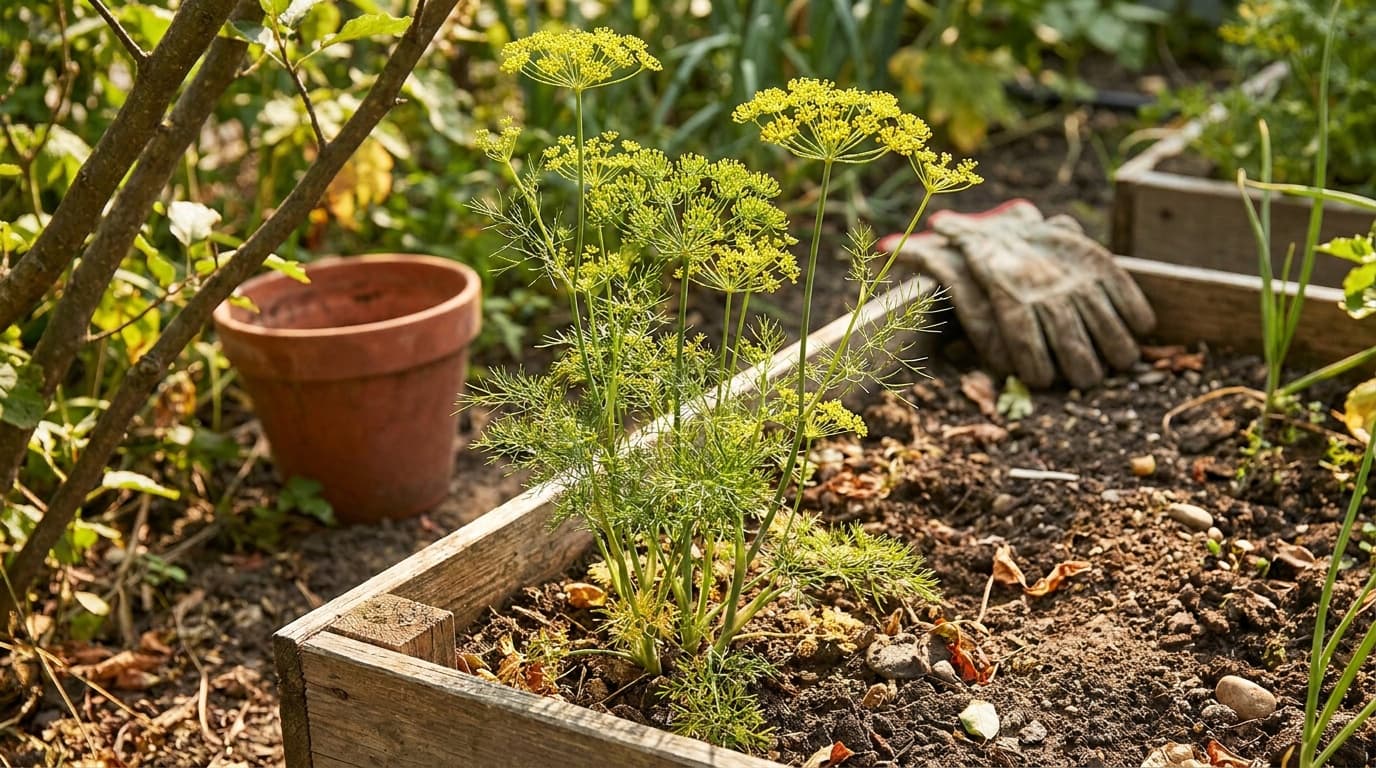
Dill is not one crop but several. Young foliage is dill weed. Green flower heads flavor pickles. Mature seed becomes a spice and the start of the next patch. Managing those stages intentionally prevents a bed full of seed heads but no fresh leaves.
See the dill plant profile for the local sowing window, seed depth, mature plant layout, sun requirement, and variety notes. The planting calendar and frost dates tools provide the local schedule.
Give the taproot a permanent home
Dill establishes best from seed where it will finish. Loosen the seedbed, remove perennial weeds, and follow the dill plant profile for seed depth and mature layout. Keep the surface moist through emergence without saturating it.
If transplanting is unavoidable, use a deep cell or soil block and move the plant while the root mass remains intact. Large nursery plants often stall because the taproot bends or breaks during planting.
Establish a dill patch
Choose a sheltered site
Direct sow into prepared soil
Mark each batch
Thin by snipping
Add support early
Use succession sowing for leaves
A dill plant naturally shifts from foliage to flowers. Pinching a new bud can delay the shift briefly, but it will not keep one plant leafy forever. Sow a small new batch every two to three weeks while the local calendar remains favorable.
Label batches by intended use. Harvest one heavily for foliage, reserve another for green flower heads, and let selected healthy plants mature seed. This gives the patch a purpose at every stage.
Protect tall stems from wind
Standard dill can become tall and top-heavy as flower heads expand. Shelter it from prevailing wind or place a stake beside the plant while it is young. Tie loosely in a figure-eight so the stem can move without rubbing against the support.
Compact cultivars such as Fernleaf are easier in containers and exposed gardens. The dill plant profile helps distinguish compact leaf-focused types from tall flowering forms.
Use a deep container with open drainage holes because the taproot needs room. A heavy pot is safer than a narrow lightweight one when the flower head catches wind.
Water and feed lightly
Keep the seedbed moist during establishment, then water when the root zone begins to dry. Dill dislikes saturation and usually needs less feeding than leafy vegetables. Compost is a sufficient starting point for most beds.
Too much fertilizer can produce weak, lush stems that lean and attract aphids. If growth remains pale, use a soil test before applying a general feed.
Harvest leaves, flower heads, and seed
Choose the dill harvest stage
Fresh foliage
Green flower heads
Dry seed
Seed for replanting
Dill weed loses aroma rapidly after cutting. Use it fresh, freeze chopped foliage, or dry only when convenience matters more than fresh flavor. Confirm that seed is completely dry before sealing it for storage.
Place dill thoughtfully
Flowering dill attracts small beneficial insects, including parasitoid wasps and hoverflies. It can be useful near brassicas or at the edge of a vegetable bed where the flower heads are easy to reach.
Keep tall dill from shading low crops, including carrots, and let evidence guide specific pairings rather than relying on folklore. The companion planting guide covers relationships that have support in the site's evidence graph.
Common problems
Aphids: Colonies gather on tender stems and flower heads. Natural predators often arrive quickly on flowering dill. See aphids.
Powdery mildew: White growth becomes more likely in humid, crowded foliage. Improve airflow and see powdery mildew.
Damping off: New seedlings collapse where soil stays wet and air is stagnant. Thin the stand, improve drainage, and review damping off in seedlings.
Wind damage: A bent stem may recover if supported, but a split hollow stem should be harvested before it collapses.
Why does dill decline after flowering?
Dill is an annual whose natural cycle ends after seed production. Maintain fresh foliage with successive small sowings and use older plants for flowers, seed, and beneficial insects.
Can dill seedlings be transplanted?
Very young seedlings can be moved with an intact soil block, but direct sowing is more reliable because the taproot is easily disturbed. Avoid separating mature roots by hand.
How do I keep dill producing leaves?
Harvest tender stems regularly, pinch the first flower buds if you need a brief extension, and keep a younger batch growing. Repeated sowings are more dependable than forcing one plant to stay leafy.
How do I harvest dill for pickling?
For a classic green head, cut after flowering begins to give way to soft green seed but before the head dries. For dill weed, harvest foliage before flowers open.
Will dill come back next year?
The original plant will not return from its roots, but mature seed can produce volunteers. Let selected heads drop seed where you want the patch, then thin the seedlings in place.
What to do next
Direct sow dill, protect its taproot, and assign each batch a harvest role. Successive young plants supply leaves while older ones provide flowers, seed, and the next generation of volunteers.