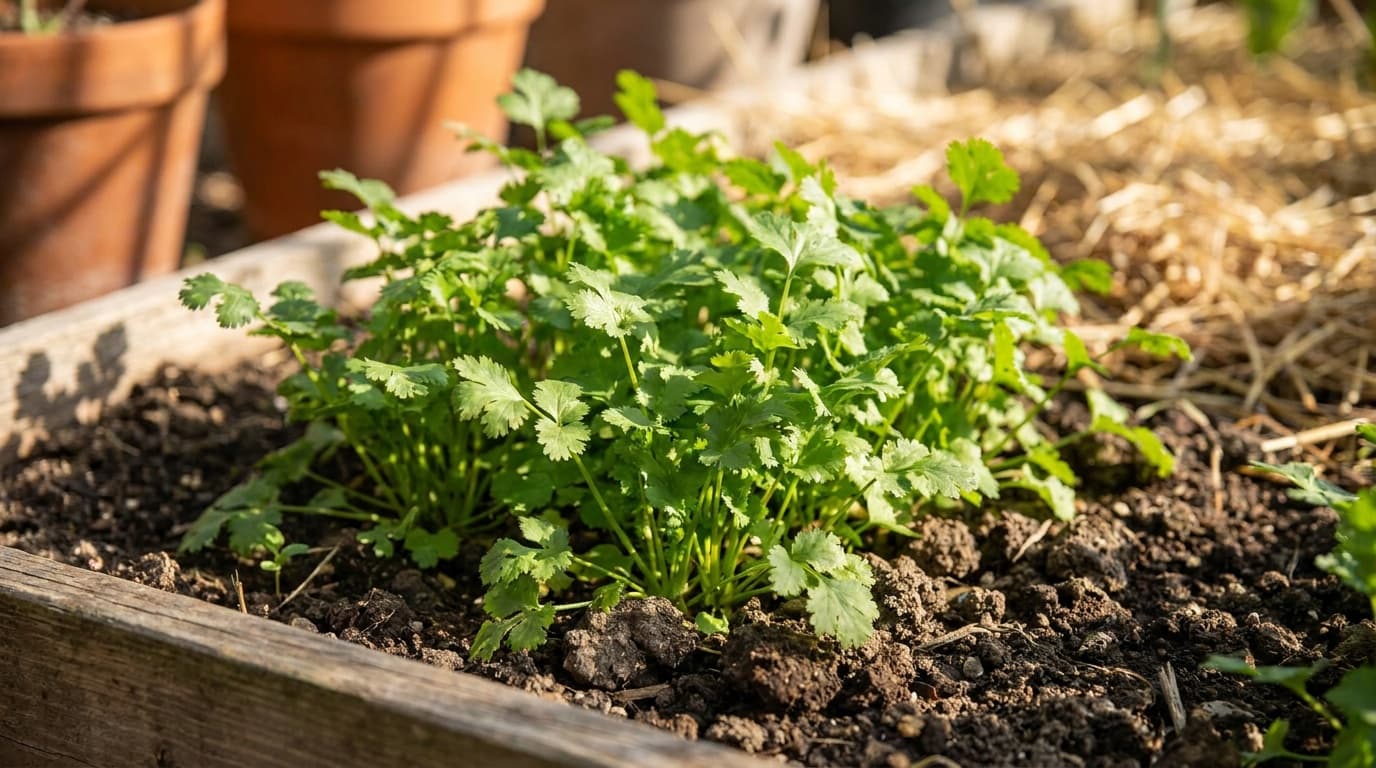
Cilantro's short leaf phase is normal. The plant's job is to make seed, and warming conditions accelerate that transition. Success comes from planning replacements instead of trying to hold one plant indefinitely.
See the cilantro plant profile for the local planting season, sun requirement, and variety notes. The planting calendar and frost dates tools turn that structured information into a local schedule.
Plan for more than one batch
One sowing produces a limited leaf harvest before flower stalks take over. Sow a small patch every three to four weeks while the local calendar remains favorable. Label each batch so you know which plants to cut heavily, which are newly establishing, and which can mature seed.
Later batches benefit from afternoon shade as weather warms. A movable container, the east side of a taller crop, or a shade cloth that blocks harsh late-day sun can slow stress. Shade does not reverse a fully bolting plant, so keep the next batch coming.
Direct sow to protect the taproot
Cilantro forms a taproot and usually establishes better where it will finish. Loosen the surface, remove weeds, and follow the cilantro plant profile and seed packet for the seedbed details. Keep the surface moist through emergence without saturating the soil.
The round coriander fruit can contain more than one seed. Gently rolling it between two firm surfaces can separate the halves, but this is optional. Fresh seed and even moisture matter more than forceful preparation.
Establish a cilantro batch
Choose a permanent spot
Mark the patch
Keep the surface even
Thin by snipping
Start the next label
Manage the site as weather changes
Cilantro needs drainage. A wet root zone can lead to root rot, while a dry seedbed causes uneven emergence and stressed plants. Water at the soil line when the upper root zone begins to dry.
Rich feeding is rarely necessary. Compost provides a reasonable base, and heavy nitrogen can create soft growth without extending the plant's useful leaf phase. Use a soil test when plants remain pale despite steady moisture.
Containers are useful because they can move between full exposure and afternoon protection. Choose a deep pot, provide open drainage holes, and check it often because container soil changes faster than a garden bed.
Harvest leaves without stripping the crown
Begin with the largest outer stems and cut them close to the base. Leave the inner growing point and enough foliage for regrowth. A whole-plant cut is useful when a batch is about to bolt and a younger patch is ready to replace it.
Use one planting two ways
Harvest outer stems
Watch the center
Choose leaf or seed
Collect dry seed heads
Store only fully dry seed
Coriander seed is ready after it changes from green to tan or brown and releases easily. Save seed from healthy plants and label the cultivar if you are growing more than one.
Diagnose common problems
Premature flower stalks: Heat and plant stress are the common pattern. Shift harvest to the next batch, add afternoon protection for future sowings, and review the local season in the profile.
Aphids: Soft insects gather on new growth and flower stems. See the aphids guide and preserve beneficial insects around flowering plants.
Powdery mildew: White growth on leaves is more likely in a crowded, humid patch. Improve airflow and see powdery mildew.
Damping off: Seedlings collapse at the soil line when conditions stay stagnant and wet. Use clean mix, gentle airflow, and careful watering. See damping off in seedlings.
Weak indoor growth: A window may not provide enough light. Use strong overhead lighting close to the canopy and keep air moving gently.
Why does cilantro bolt so quickly?
Warming conditions and stress push the plant toward flowering. Grow a sequence of small batches, give later plantings afternoon protection, and move leaf harvest to younger plants when an older batch sends up a flower stalk.
Can cilantro grow in a container?
Yes. A deep pot protects the taproot and can be moved into afternoon shade. Use a well-drained mix and sow replacement batches in separate sections or containers.
Does cilantro return after flowering?
The individual annual plant does not return from its roots, but mature coriander seed can self-sow. Leave selected seed heads in place or collect and resow them intentionally.
How do I harvest cilantro without killing the plant?
Cut the largest outer stems near the base and leave the central growing point intact. Once a thick flower stalk forms, decide between a final leaf harvest and coriander seed production.
Can cilantro grow indoors?
Yes, with strong overhead light, a deep container, drainage, and airflow. Indoor warmth can still accelerate flowering, so sow small replacement batches just as you would outside.
What to do next
Cilantro is a relay crop. Direct sow a small batch, harvest the outer stems, and have the next patch ready before the current one flowers. Use older plants for coriander seed instead of fighting their natural life cycle.