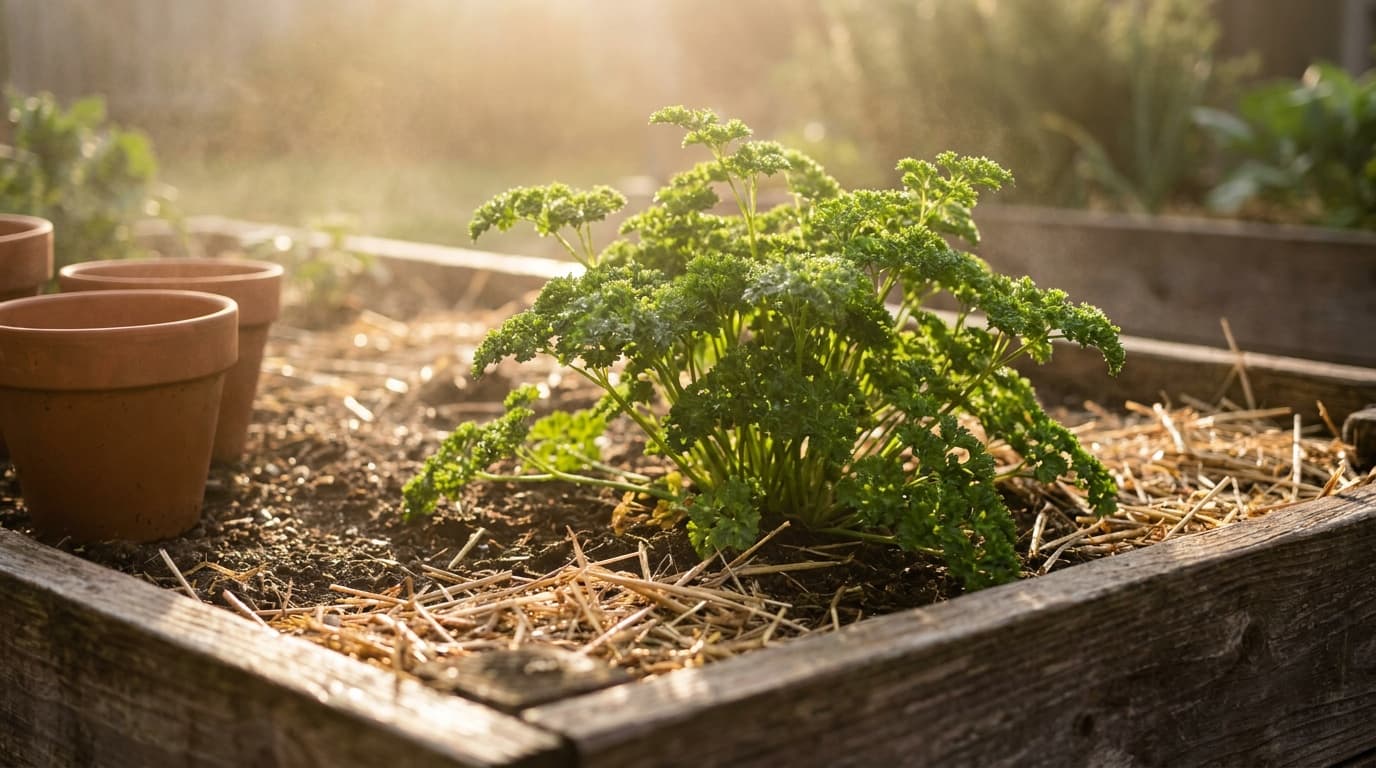
Most parsley failures happen before the first true leaves appear. The seed can sit long enough that gardeners assume it failed, let the surface dry, or sow another crop over it. A labeled row and steady moisture solve more than extra fertilizer or repeated digging.
See the parsley plant profile for the local sowing window, seed depth, mature plant layout, soil range, sun requirement, and type notes. The planting calendar and frost dates tools provide the local schedule.
Choose the parsley you want to use
Curly parsley forms a dense decorative clump and has a mild flavor. Italian flat-leaf parsley is more open, vigorous, and strongly flavored for cooking. Hamburg parsley is grown for its root as well as foliage and needs a bed prepared like a root crop.
The parsley plant profile compares the types and holds their shared growing requirements. Label varieties because young seedlings look similar but mature plants occupy and harvest differently.
Get slow seed to emerge reliably
Start with seed from the current season. Parsley seed loses vigor in storage, and weak seed makes an already slow process less predictable. Soak it in warm water overnight, drain it, and sow according to the profile's measured depth.
Keep parsley germination on track
Use fresh seed
Soak overnight
Mark the row
Protect surface moisture
Wait before disturbing
If you prefer to skip the wait, buy compact nursery transplants with healthy centers and no leaf spots. Avoid root-bound plants whose thick roots circle the pot tightly.
Establish plants without burying the crown
For transplants, water the pot before planting and loosen only circling outer roots. Set the crown level with the surrounding soil and follow the mature layout in the parsley plant profile. Water in and mulch lightly after plants recover.
Parsley appreciates compost-rich, well-drained soil. It can tolerate some light shade, which makes it useful in the conditions discussed in growing vegetables in shade. Persistent saturation can still cause root rot, so shade should not mean a wet low spot.
Water and feed established plants
Keep the root zone evenly moist, especially after transplanting and during active leaf production. Water at the soil line and check beneath mulch before irrigating. The exact benchmark is in the profile because weather and soil texture control frequency.
Compost is a good foundation. Feed container plants lightly when growth pales or slows, using the product label rather than a fixed calendar. In beds, test the soil before adding repeated fertilizer.
Harvest from the outside in
Do not shear only the leafy tips. That leaves bare stalks and reduces the plant's useful structure. Cut an entire outer stalk close to the base, then move around the clump so the younger center remains intact.
Harvest parsley for regrowth
Choose mature outer stalks
Cut close to the crown
Take from several sides
Chill promptly
Regular harvest encourages fresh leaves. If an older plant develops a thick central flower stalk, take a final leaf harvest or let it flower for beneficial insects and seed.
Understand the biennial cycle
Parsley naturally grows leaves first, survives a dormant period where conditions allow, then flowers and dies after setting seed. Gardeners usually replace it because second-season growth moves quickly toward flowering and the leaves become coarser.
An overwintered plant can still provide an early harvest. Keep a new sowing or transplant ready so the old plant's flower stalk does not leave a gap.
Grow parsley under lights
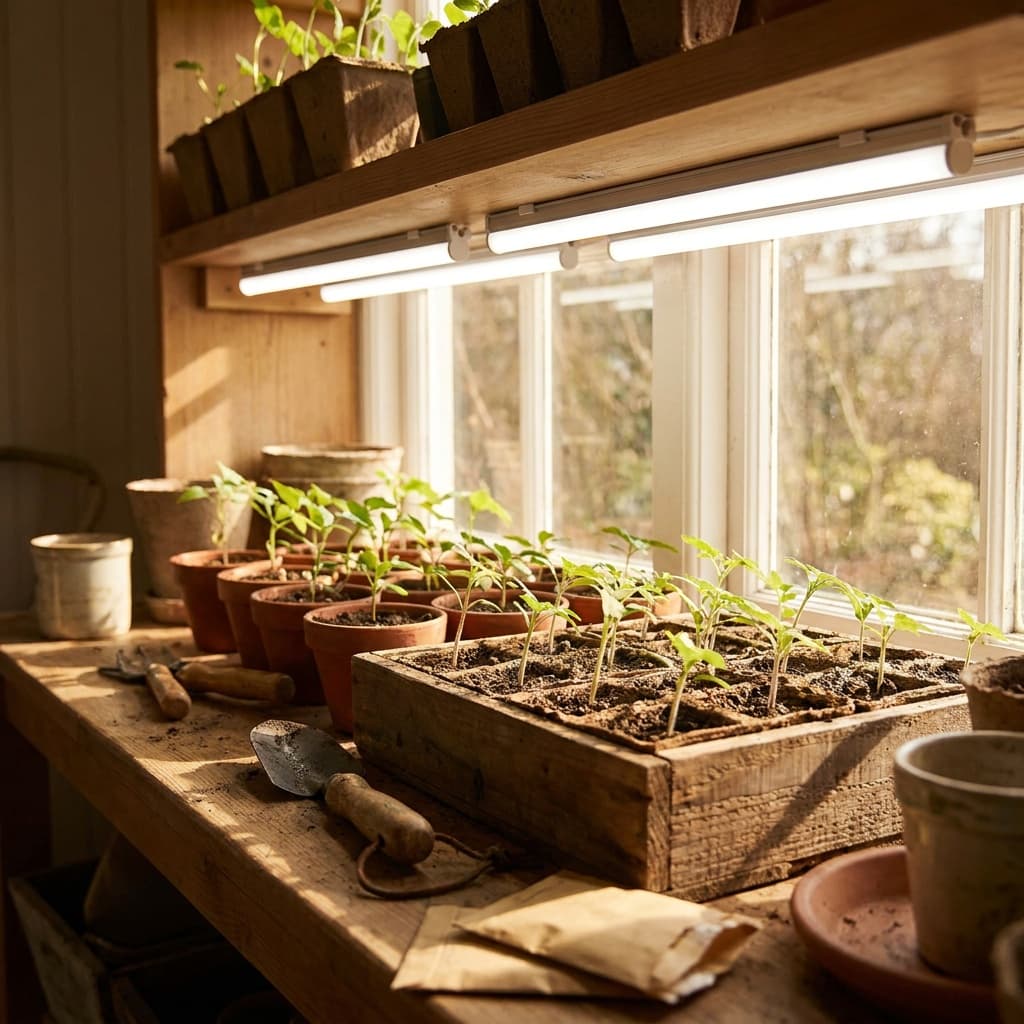
Parsley can grow indoors with a well-drained container and strong overhead light. Rotate the pot only if the light comes from one side; under a fixture, keep the canopy centered and raise the lamp as leaves grow.
Parsley can share a light shelf with basil and mint, though each herb should have its own pot because their moisture and root habits differ.
Some links on this page are affiliate links. As an Amazon Associate I earn from qualifying purchases.
For indoor herbs
Barrina T5 LED Grow Light (4FT, 20W, 6-Pack)
Best for: Lighting a multi-shelf seed-starting rack on a tight budget.
Keep in mind: Lightweight mounting hardware and connectors
Amazon price as of the checked date, subject to change. The price on Amazon at checkout applies.
Full research
- Type
- T5 LED integrated bar (linkable)
- Length
- 4 ft per bar
- Spectrum
- Warm white (3000K)
- Power
- 20W per bar (2200 lm)
Linkable LED strip lights that bolt under a shelf to light a full tray of seedlings evenly. The default choice for budget seed-starting rigs.
This catalog-wide research score is separate from this guide's use-case ranking. How we research
Strengths
- Even coverage across long shelves
- Daisy-chain up to many bars from one outlet
- Very low cost per square foot of canopy
Weaknesses
- Lightweight mounting hardware and connectors
- No dimming or built-in timer
Sprout Score breakdown
Best for
Lighting a multi-shelf seed-starting rack on a tight budget.
Owner rating snapshot
Amazon · 269 reviews · 4.6 stars
Common problems
Aphids: Colonies gather on new growth and leaf undersides. Small populations can be washed away. See aphids.
Leaf miners: Pale winding trails reveal larvae feeding inside leaves. Remove affected foliage and use row cover to block the adult flies. See leaf miners.
Damping off: Seedlings collapse at the soil line when the mix stays wet and stagnant. Improve drainage and airflow. See damping off in seedlings.
Yellow lower leaves: Check moisture and drainage before feeding. Constant wetness and root crowding can resemble a nutrient shortage.
Why is my parsley seed not emerging?
Old seed, a dry surface, and impatience are common causes. Use fresh seed, soak it overnight, keep the seedbed evenly moist, mark the row, and avoid digging to inspect it.
Is parsley a perennial?
Parsley is a biennial. It focuses on leaves first, then flowers and dies after seed production. Gardeners usually grow it as an annual because young plants provide the best foliage.
Can parsley grow in a container?
Yes. Use a deep pot with open drainage, harvest outer stalks, and feed lightly only when growth shows a need. Indoor plants also require strong overhead light.
What is the difference between curly and flat-leaf parsley?
Curly parsley forms a compact ruffled clump with mild flavor. Flat-leaf parsley is more open and strongly flavored for cooking. Hamburg parsley is selected for an edible root.
How do I harvest parsley without weakening it?
Cut mature outer stalks close to the base and leave the center intact. Avoid removing only the leaf tips, which leaves unproductive stalks behind.
What to do next
Parsley's reputation comes from the quiet seed stage. Use fresh soaked seed, keep the row labeled and moist, then harvest whole outer stalks once the plant establishes. After that patient start, the crop is dependable.