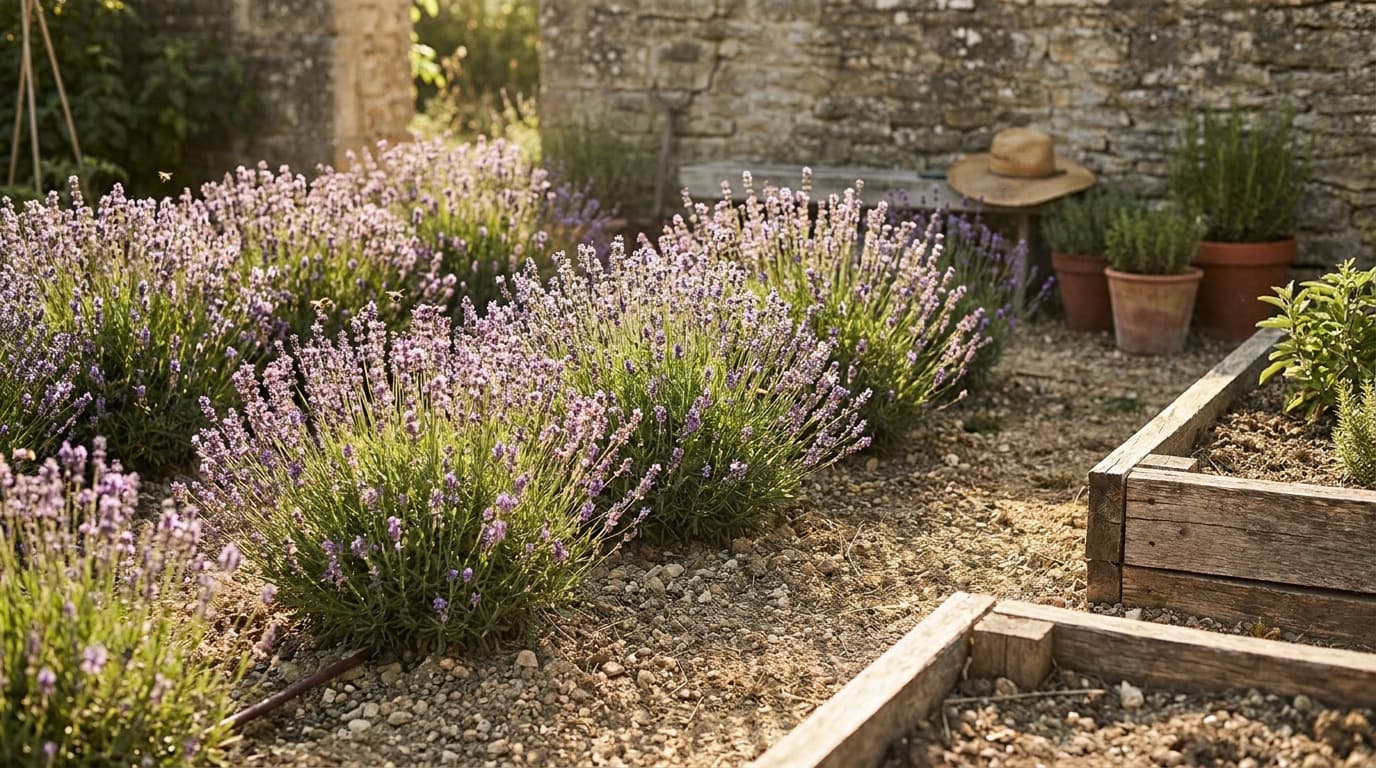
Lavender is not difficult because it needs constant attention. It is difficult because many garden routines are too generous. Rich soil, automatic irrigation, deep mulch against the crown, and hard pruning into bare wood all work against the plant's natural structure.
Confirm the plant identity
Buy a plant labeled with its botanical name and cultivar. Different plants are sold simply as lavender, but growth habit, fragrance, and climate performance vary. This paired guide and profile address English lavender; use the nursery label rather than assuming another species follows the same plan.
Choose a plant with compact gray-green foliage, firm stems, and no darkening at the crown. Avoid specimens standing in water or carrying soft black roots.
Design drainage before planting
Place lavender where water moves away from the crown. On heavy soil, use a raised or mounded root area and incorporate mineral structure rather than creating a rich moisture-holding pocket. Do not place a small amended hole inside dense clay, where it can behave like a basin.
In a container, use an airy mix and keep the drainage opening clear. A self-watering planter requires careful reservoir management because lavender should not sit over a constantly saturated root area.
The container gardening guide explains mix structure and drainage.
Build a dry crown and working root area
Watch water flow
Keep the crown visible
Use mineral mulch carefully
Check beneath the surface
Propagate from cuttings
Cuttings preserve the parent cultivar and are more predictable than seed. Take a healthy nonflowering stem, remove lower leaves, and place the bare section into a sterile, airy propagation mix. Keep it lightly moist, not wet, until new growth and gentle resistance show that roots are forming.
Pot up carefully and allow the root system to fill the new mix gradually. Do not move a weak cutting directly into rich garden soil or an oversized wet container.
Water and feed with restraint
Water a newly set plant deeply enough to settle the root area, then let the surface begin drying. Established lavender should not be kept continuously moist. If leaves droop while the root area is damp, investigate drainage and phytophthora root rot rather than assuming thirst.
Fertilizer is rarely the answer to weak flowering in an otherwise green plant. Rich nitrogen can produce soft growth with reduced fragrance and poorer structure. Refresh container mix when it physically breaks down, and feed only when a diagnosed need supports it.
Prune above live leaves
After the main flower flush, remove spent stems and shape the leafy outer growth. Keep green leaves below every cut. Avoid shearing deep into bare old wood, which may not produce replacement shoots.
Remove winter-damaged tips only after live growth makes the boundary clear. A gradual annual shaping is safer than trying to rebuild a neglected woody plant in one session.
For related woody herbs, compare rosemary, sage, and thyme. Their shared preference for drainage does not make their pruning response identical.
Harvest for fragrance and drying
Cut stems as the first flowers begin opening for a balance of color and fragrance. Harvest after surface moisture has dried, bundle stems loosely, and hang them in a dark airy location. When fully dry, strip flowers or leaves and store them away from heat and light.
Protect without trapping moisture
Cold-season protection should reduce wind exposure while preserving airflow and drainage. Avoid dense wet mulch over the crown. Containers can be moved to a sheltered location, but an enclosed warm space with weak light can create soft growth and pests.
The companion planting guide helps place lavender near plants with compatible irrigation needs.
Troubleshoot decline
- Phytophthora root rot causes crown and root decline in wet conditions.
- Root rot is a broader match for soft roots and collapse in undrained containers.
- Gray mold develops on damaged tissue where air is stagnant.
- Powdery mildew can coat crowded or stressed foliage.
- Grasshopper feeding and deer browsing can remove shoots; barriers are more reliable than repeated replacement.
Why is lavender wilting while the soil is still damp?
Damaged roots may be unable to move water. Stop irrigation, inspect drainage and the crown, and compare symptoms with phytophthora root rot. More water can worsen the cause.
How should I prune a woody lavender plant?
Shape the outer leafy growth after flowering and keep green leaves below every cut. Remove dead tips after live growth is visible. Avoid cutting the whole plant into bare old wood.
Can lavender grow in a container?
Yes. Use an airy mix, a clear drainage path, restrained feeding, and a watering routine based on root condition. Keep the crown above pooled water and protect the container without enclosing it in warm, stagnant air.
What is the best stage for cutting lavender to dry?
Cut stems as the first flowers begin opening, after surface moisture has dried. Bundle loosely and dry in a dark place with good airflow to preserve color and fragrance.