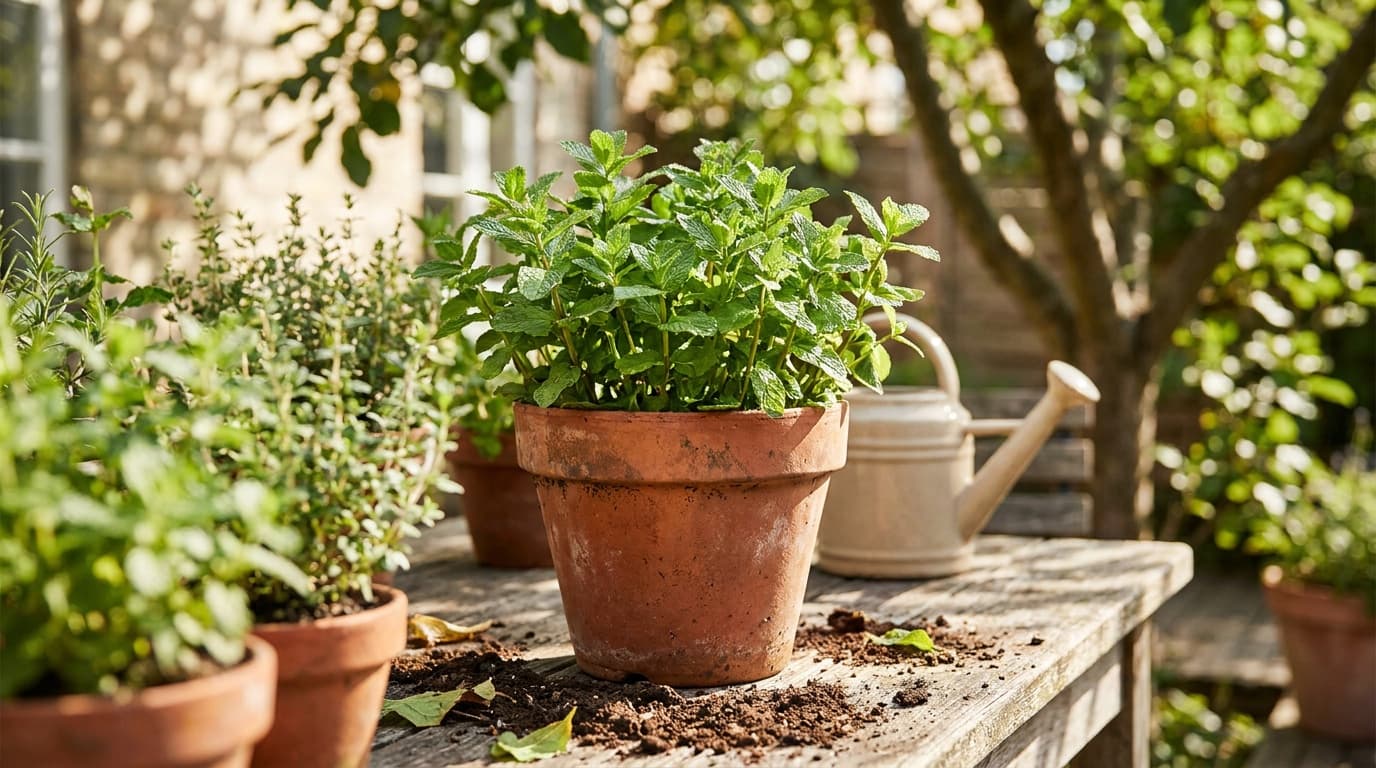
The main mint decision is not whether the plant will survive. It is where its runners are allowed to go. Mint spreads both across the surface and through the root area, so a casual patch beside perennial crops can become a long-term removal project.
Choose containment before planting
A freestanding container is the most reliable boundary because you can inspect every edge. Set it on a hard surface or pot feet so roots cannot enter soil through the drainage hole. If the pot sits on a bed, lift it regularly and cut any escaping roots.
Some links on this page are affiliate links. As an Amazon Associate I earn from qualifying purchases.
For mint containment
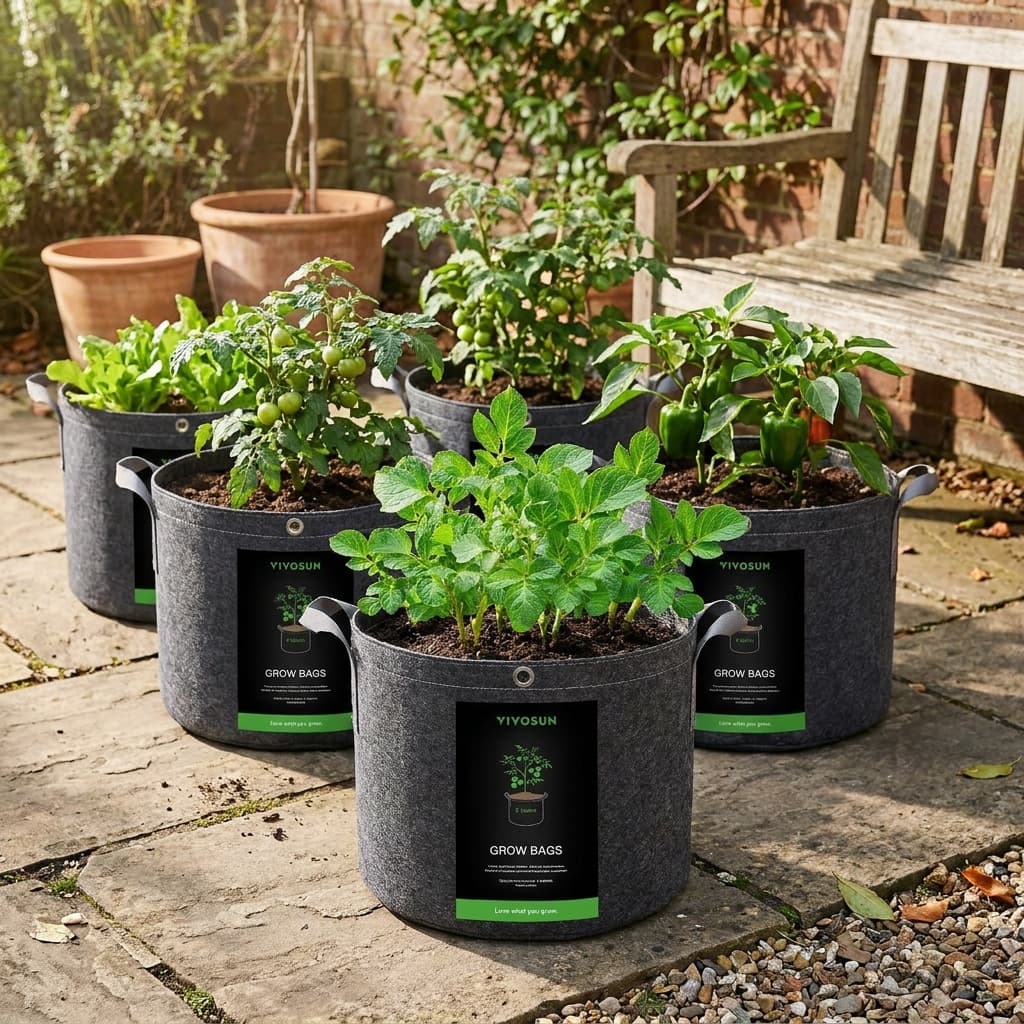
VIVOSUN 5-Gallon Fabric Grow Bags (5-Pack)
Best for: Container growers who want cheap, breathable bags for tomatoes, peppers, or potatoes.
Keep in mind: Dries out faster than rigid containers
Amazon price as of the checked date, subject to change. The price on Amazon at checkout applies.
Full research
- Material
- Nonwoven fabric
- Capacity
- 5 gal each
- Pack
- 5 bags
- Handles
- Reinforced carry handles
VIVOSUN's fabric grow bags are a hugely popular budget pick for container growing. The breathable fabric air-prunes roots, and a five-pack costs little, though the handles can loosen after heavy seasons.
This catalog-wide research score is separate from this guide's use-case ranking. How we research
Strengths
- Breathable fabric air-prunes roots
- Very low cost per bag in a multi-pack
- Fold flat for off-season storage
Weaknesses
- Dries out faster than rigid containers
- Handles can loosen over multiple seasons
Sprout Score breakdown
Best for
Container growers who want cheap, breathable bags for tomatoes, peppers, or potatoes.
A self-watering planter can reduce moisture swings, but keep the reservoir and overflow path clean. Do not treat the reservoir as permission to leave the root area saturated.
Low-maintenance container
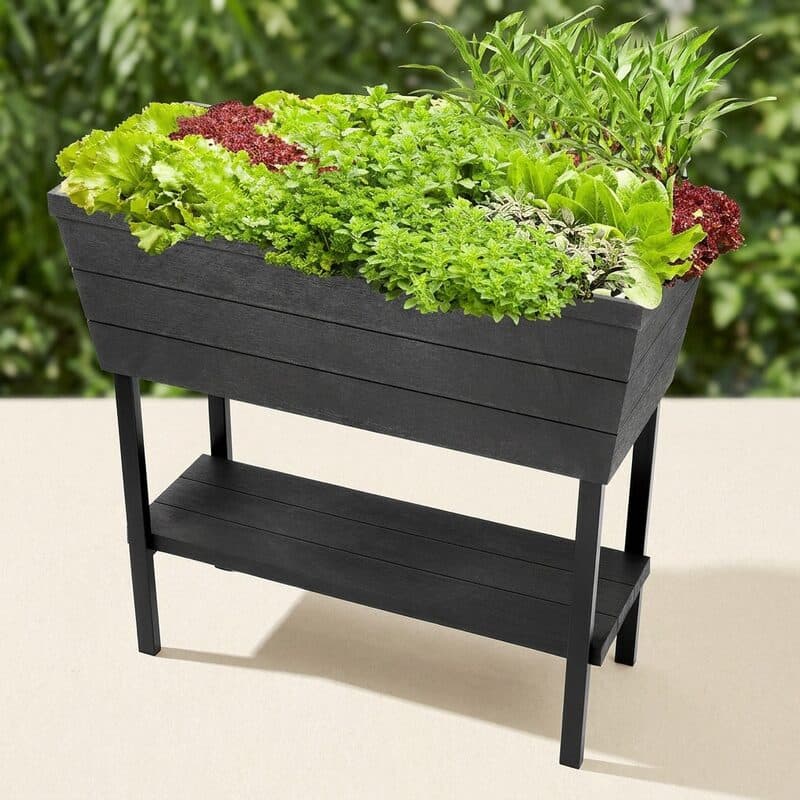
Keter Urban Bloomer Self-Watering Resin Planter
Best for: Patio gardeners who want a tidy, durable self-watering planter for herbs and flowers.
Keep in mind: Modest soil volume limits big crops
Amazon price as of the checked date, subject to change. The price on Amazon at checkout applies.
Full research
- Material
- Weather-resistant resin
- Watering
- Self-watering reservoir
- Finish
- Wood-look texture
- Capacity
- Around 12.7 gal soil
Keter's Urban Bloomer is a good-looking resin planter with a built-in self-watering reservoir and a wood-look finish that holds up outdoors. Soil volume is modest, so it suits herbs, flowers, and compact vegetables.
This catalog-wide research score is separate from this guide's use-case ranking. How we research
Strengths
- Durable weather-resistant resin
- Self-watering reservoir built in
- Attractive wood-look finish for patios
Weaknesses
- Modest soil volume limits big crops
- Less natural look than real wood
Sprout Score breakdown
Best for
Patio gardeners who want a tidy, durable self-watering planter for herbs and flowers.
Owner rating snapshot
Amazon · 3 reviews · 4.5 stars
Propagate by division or cuttings
Mint roots readily from stem cuttings and divided clumps. For a cutting, choose a healthy nonflowering tip, remove lower leaves, and root it in water or a clean propagation mix. Move it to potting mix once it has a small working root system.
To divide an established pot, slide out the root ball and cut away congested, dark, or woody sections. Replant a healthy outer piece into fresh mix and discard unwanted roots where they cannot establish. Do not add live mint roots to an open compost pile.
Reset an overgrown mint pot
Remove the root ball
Select healthy growth
Discard spent material
Replant in fresh mix
The indoor seed-starting guide covers propagation equipment, though division and cuttings preserve a named mint's flavor more reliably than seed.
Keep container moisture even
Mint prefers more consistent moisture than rosemary or sage, but roots still need air. Water thoroughly when the mix begins to dry, allow runoff to leave, and reduce watering when growth slows. A root-bound pot may appear thirsty soon after watering because little usable mix remains; divide it instead of watering more often indefinitely.
Use a modest balanced feed only when new leaves become pale or growth slows in exhausted mix. Excess fertilizer creates soft growth with weaker flavor and can worsen pest pressure.
Harvest to shape the plant
Cut stems just above a leaf pair, selecting the tender tips for fresh use. This leaves buds that can branch and keeps the plant from becoming a tangle of long, bare stems. Remove flower stems when leafy harvest is the priority, or let some bloom where pollinator value matters more than maximum leaf production.
For drying, harvest clean foliage, rinse only if needed, and dry it quickly with good airflow. Store whole dry leaves away from light and crush them when used.
Know what variety you are growing
Spearmint is the broad culinary default. Peppermint has a stronger menthol character and is common in tea and sweets. Flavored selections such as chocolate or apple mint vary in strength. Labels matter because cuttings preserve the parent plant while seed-grown mint can be variable.
For nearby herbs with different moisture needs, compare how to grow basil and how to grow parsley.
Troubleshoot dense growth
- Aphids cluster on tender tips; prune heavily infested stems and inspect fresh regrowth.
- Spider mites create stippling and webbing, especially on stressed indoor plants.
- Powdery mildew spreads through crowded foliage with weak airflow.
- Root rot is possible when a dense root ball stays saturated or the drainage path closes.
Thin old stems, remove fallen leaves from the crown, and divide a congested pot before treating symptoms with more water or fertilizer.
Will mint take over a garden bed?
It can. Mint spreads through rooting stems and underground rhizomes, and small root fragments can regrow. A freestanding container on a hard surface is the simplest boundary. Inspect the rim and drainage holes for escapees.
Why is my potted mint wilting so quickly?
The container may be root-bound, the drainage may be blocked, or the mix may have pulled away from the sides and stopped absorbing evenly. Inspect the root ball before assuming it only needs more frequent watering.
How do I make mint grow bushier?
Harvest the stem tips just above a leaf pair and repeat as new shoots extend. Removing flower stems also keeps more growth directed into leaves when culinary harvest is the goal.
Which mint is best for cooking or tea?
Spearmint is versatile in savory dishes and drinks; peppermint gives tea and sweets a stronger menthol character. Buy a labeled plant or propagate a cutting when a specific flavor matters.