Raspberry pruning becomes straightforward once you stop treating every cane as the same age. The roots and crown are perennial, but canes are replaced continually. Your job is to keep the productive class, remove the finished class, and prevent the patch from spreading beyond the row you can reach.
Identify the fruiting system
Floricane-fruiting raspberries grow new canes one season and fruit on those older canes the next. After harvest, those canes are finished and should be cut at the base.
Primocane-fruiting raspberries can fruit on the current season's growth. They can be managed for a simple single crop by removing all canes during dormancy, or for two crops by preserving the lower portion that has not yet fruited.
Read a raspberry cane before cutting
Look for spent laterals
Look for fresh color
Confirm the cultivar
Cut by purpose
Build support before canes lean
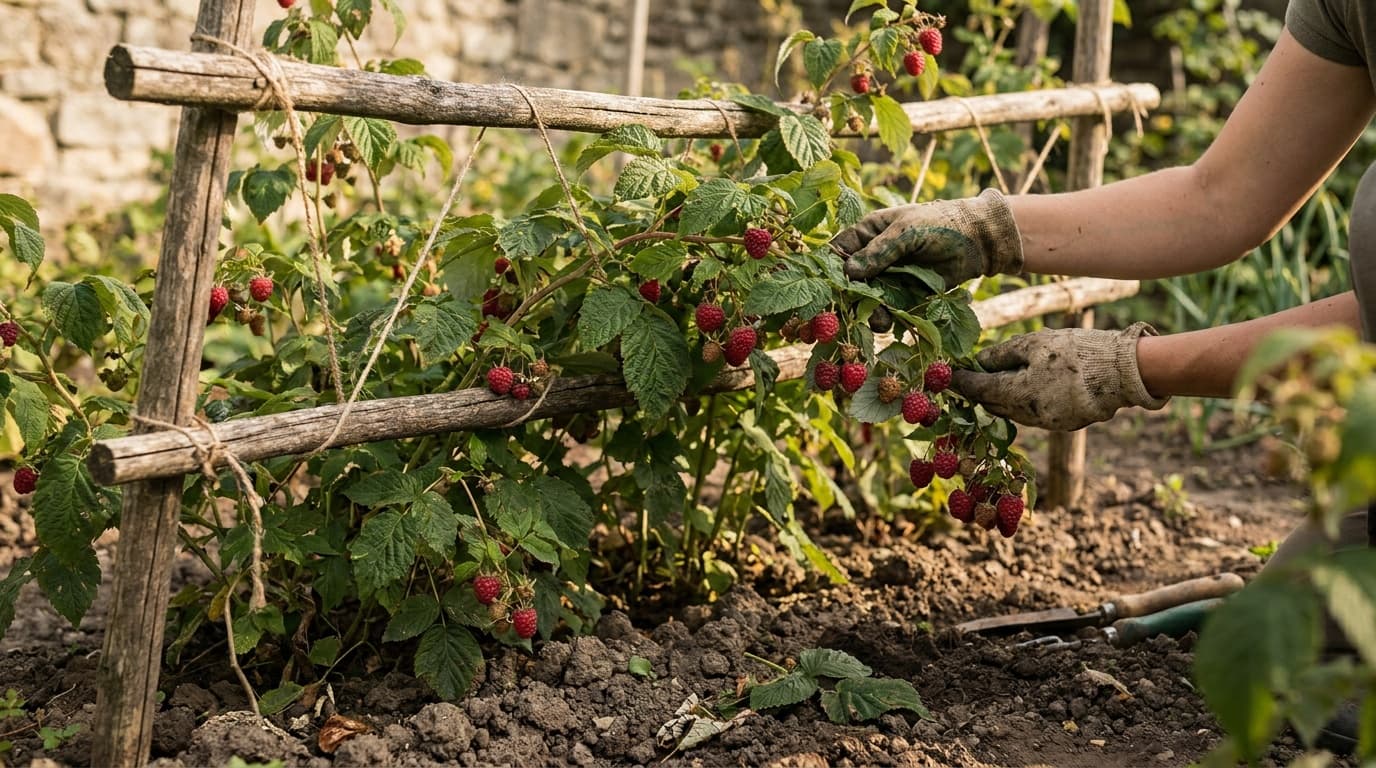
A trellis keeps fruit off the ground, opens the canopy, and creates a defined picking lane. Set sturdy end posts and run horizontal support wires or use rigid panels. Tie canes loosely or guide them between wires so wind cannot rub them against one another.
Some links on this page are affiliate links. As an Amazon Associate I earn from qualifying purchases.
Cane support
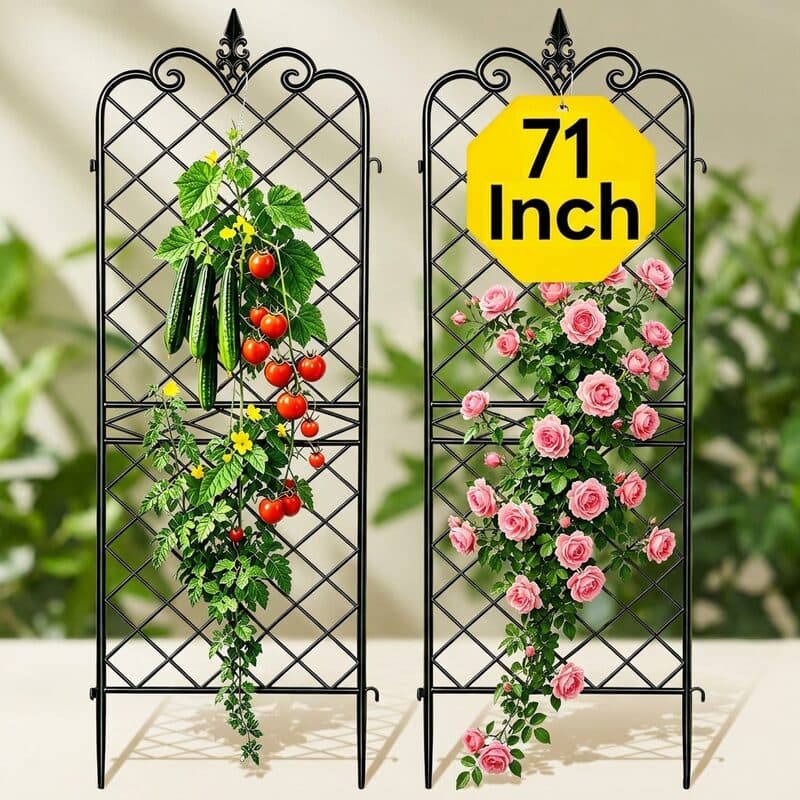
AMAGABELI Metal Garden Trellis for Climbing Plants (60 x 18 in, 4-Pack)
Best for: Gardeners who want sturdy, attractive metal panels to line a raised bed or pot with a support that outlasts netting.
Keep in mind: 18-inch width means multiple panels are needed to cover a longer row
Amazon price as of the checked date, subject to change. The price on Amazon at checkout applies.
Full research
- Dimensions
- 60 in x 18 in per panel
- Pack
- 4 panels
- Material
- Rust-proof powder-coated iron
- Finish
- Black
AMAGABELI's four-pack of 60 x 18 inch powder-coated black iron panels provides a clean, rust-resistant climbing lattice for cucumbers, beans, roses, and clematis in beds or pots.
This catalog-wide research score is separate from this guide's use-case ranking. How we research
Strengths
- Rust-proof powder-coated iron survives seasons of outdoor rain without flaking
- Four-panel pack covers a full raised bed row at a reasonable per-panel price
- Clean grid design works in both vegetable beds and ornamental borders
Weaknesses
- 18-inch width means multiple panels are needed to cover a longer row
- Upright panels need to be staked or tied to avoid leaning under a heavy loaded vine
Sprout Score breakdown
Best for
Gardeners who want sturdy, attractive metal panels to line a raised bed or pot with a support that outlasts netting.
Owner rating snapshot
Amazon · 82 reviews · 4.6 stars
For a longer bed, a T-shaped support allows fruiting canes to lean toward the picking sides while new canes rise through the center. Keep hardware where pruning tools and hands can move safely.
Establish a narrow, clean row
Spread roots naturally, keep the crown near the finished soil surface, and firm the soil without compacting it. Mulch lightly to suppress weeds while leaving cane bases visible for inspection.
Raspberries sucker beyond their intended row. Remove outlying shoots while young, or sever them with a sharp spade and transplant only healthy material. A maintained strip is easier to trellis, inspect, and harvest than a broad thicket.
The healthy garden soil guide covers structure and organic matter without repeating the profile's crop-specific values.
Water and feed according to growth stage
Keep the root area evenly moist while fruit is developing, but do not leave the crown in saturated soil. Water near the base and allow leaves and fruit to stay dry. Mulch can buffer drying, though dense wet mulch against canes can hide disease and pests.
Feed only after reading the planting. Pale new growth and weak canes in modest soil may justify a balanced amendment; long soft canes and a dense canopy argue against more nitrogen.
Prune cleanly and remove the evidence
Cut spent canes flush at the base instead of leaving stubs. Remove dead tips, damaged canes, and wood with suspicious lesions. Carry prunings out of the patch so disease does not remain beside new growth.
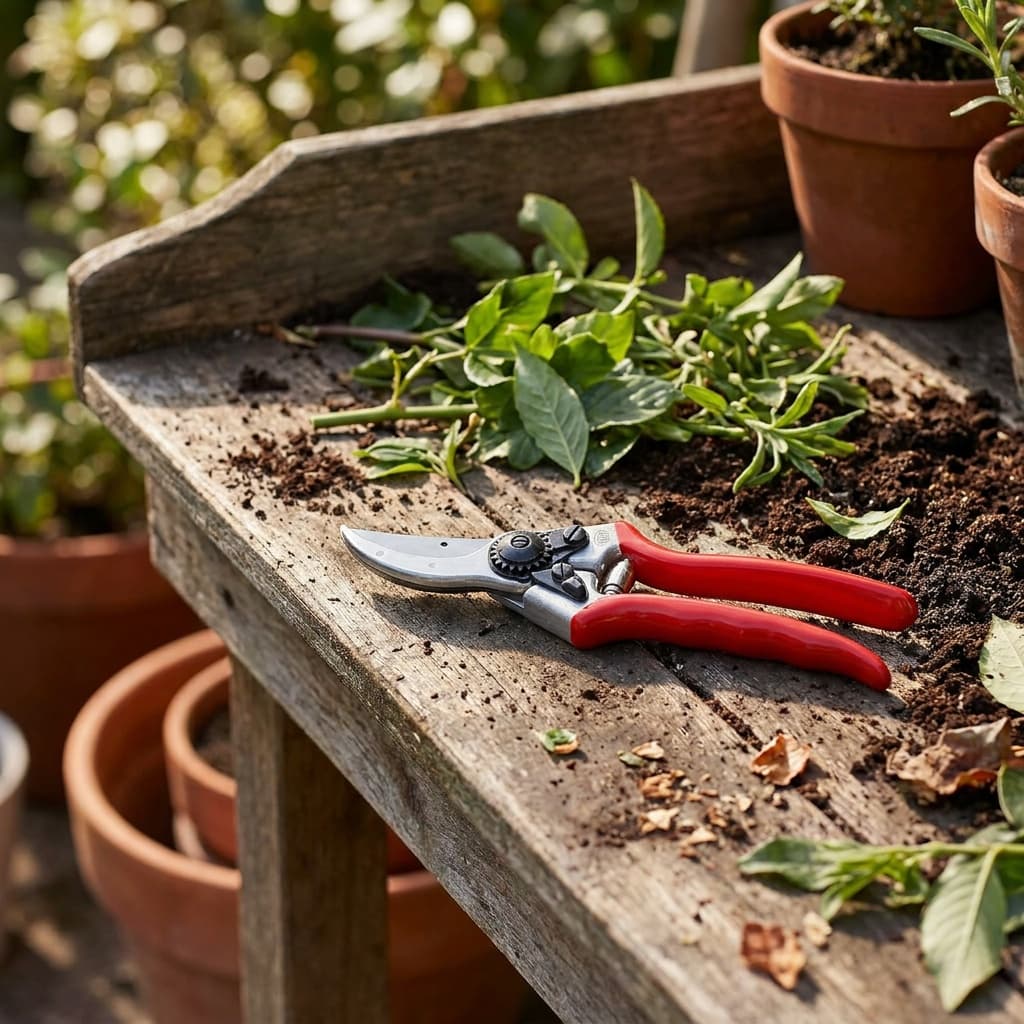
Bypass pruner
Felco F-2 Classic Bypass Pruner
Best for: Gardeners who want one pruner they can rebuild and keep for decades.
Keep in mind: One size fits average to larger hands; no compact body
Amazon price as of the checked date, subject to change. The price on Amazon at checkout applies.
Full research
- Type
- Bypass
- Cutting capacity
- Up to 1 in (25 mm)
- Handle
- Forged aluminum
- Blade
- Hardened steel, replaceable
The Felco F-2 is the long-standing reference bypass pruner, with forged handles and a fully replaceable parts system that keeps it cutting season after season.
This catalog-wide research score is separate from this guide's use-case ranking. How we research
Strengths
- Fully serviceable: blades, springs, and other parts are replaceable
- Precise bypass cut that protects living stems
- Backed by a long owner track record across decades of use
Weaknesses
- One size fits average to larger hands; no compact body
- Premium price relative to entry-level pruners
Sprout Score breakdown
Best for
Gardeners who want one pruner they can rebuild and keep for decades.
Owner rating snapshot
Amazon · 312 reviews · 4.8 stars
Disinfect tools after cutting diseased material. If a cane is questionable, mark it and watch new growth rather than making repeated cuts that obscure the original symptom.
Scout canes, leaves, and fruit separately
- Gray mold affects flowers and ripe fruit where the canopy stays damp.
- Anthracnose creates cane lesions and weak points. Remove affected wood rather than leaving it on the trellis.
- Japanese beetles skeletonize leaves and can be handpicked before populations build.
- Aphids cluster on tender growth and can distort cane tips.
- Spider mites create stippling during hot, dry stress.
- Persistent one-sided wilt can resemble verticillium wilt; isolate the pattern before replanting the same area.
Harvest at release
A ripe raspberry has full color and slips from its receptacle with almost no pull. If the berry resists, leave it. Pick into shallow containers, avoid stacking warm fruit deeply, and cool it promptly. Do not wash berries until just before use.
What is the difference between floricane and primocane raspberries?
Floricane-fruiting types crop on older canes and need those canes preserved until after harvest. Primocane-fruiting types can crop on current-season growth and may be managed for a simpler single crop by removing all canes during dormancy.
Does a raspberry row need a trellis?
Support is strongly useful for access, airflow, cleaner fruit, and wind protection. A rigid panel or wire system also defines the row and separates fruiting canes from new growth.
How do I prune raspberries without removing the crop?
Confirm the cultivar, identify canes that have already fruited, and remove those finished canes at the base. Preserve the cane class that carries the next crop. When uncertain, mark canes during harvest for later removal.
How do I stop raspberries from spreading into paths?
Maintain a defined strip and remove outlying suckers while they are young. Sever the connecting root with a sharp spade, then discard or transplant only healthy shoots. Repeated light maintenance is easier than reclaiming a thicket.