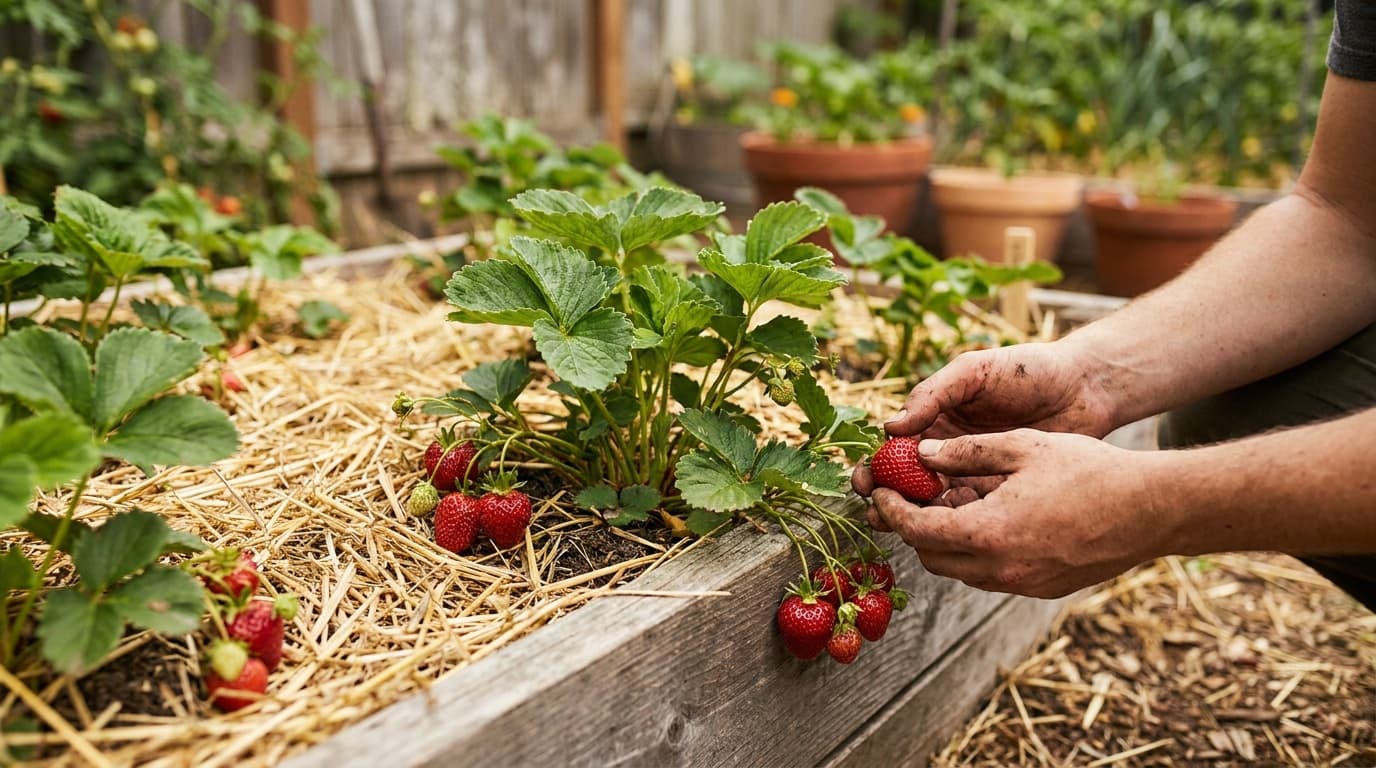
Strawberries are not one management system. A bed intended to renew itself through runners needs different handling from a compact day-neutral planting or a patio container. Choose the fruiting habit first, then decide whether runners are future plants or energy you want redirected into fruit.
Choose a fruiting habit
June-bearing plants make a concentrated crop and produce runners readily. They suit a renewable matted-row bed and gardeners who want a large preserving harvest.
Day-neutral plants flower and fruit repeatedly while conditions support growth. They suit containers and tidy rows where runners are removed so energy stays with the crowns.
Everbearing plants generally provide separated flushes rather than the continuous pattern implied by the name. Read the cultivar description because retailers sometimes use day-neutral and everbearing loosely.
Match the plant to the garden
Choose the harvest pattern
Choose the renewal method
Choose the work level
Set the crown at the soil line
Spread bare roots downward and outward rather than folding them into a tight hole. The crown, where leaves meet roots, should sit at the finished soil surface. A buried crown can rot; an exposed root system dries out.
Water the root area after planting and recheck the crown after the soil settles. Pull soil back if it has washed over the center, or tuck exposed roots under loose soil without covering the crown.
For containers, use a free-draining potting mix and a vessel with enough openings that water cannot pool around the crowns.
Some links on this page are affiliate links. As an Amazon Associate I earn from qualifying purchases.
Container growing
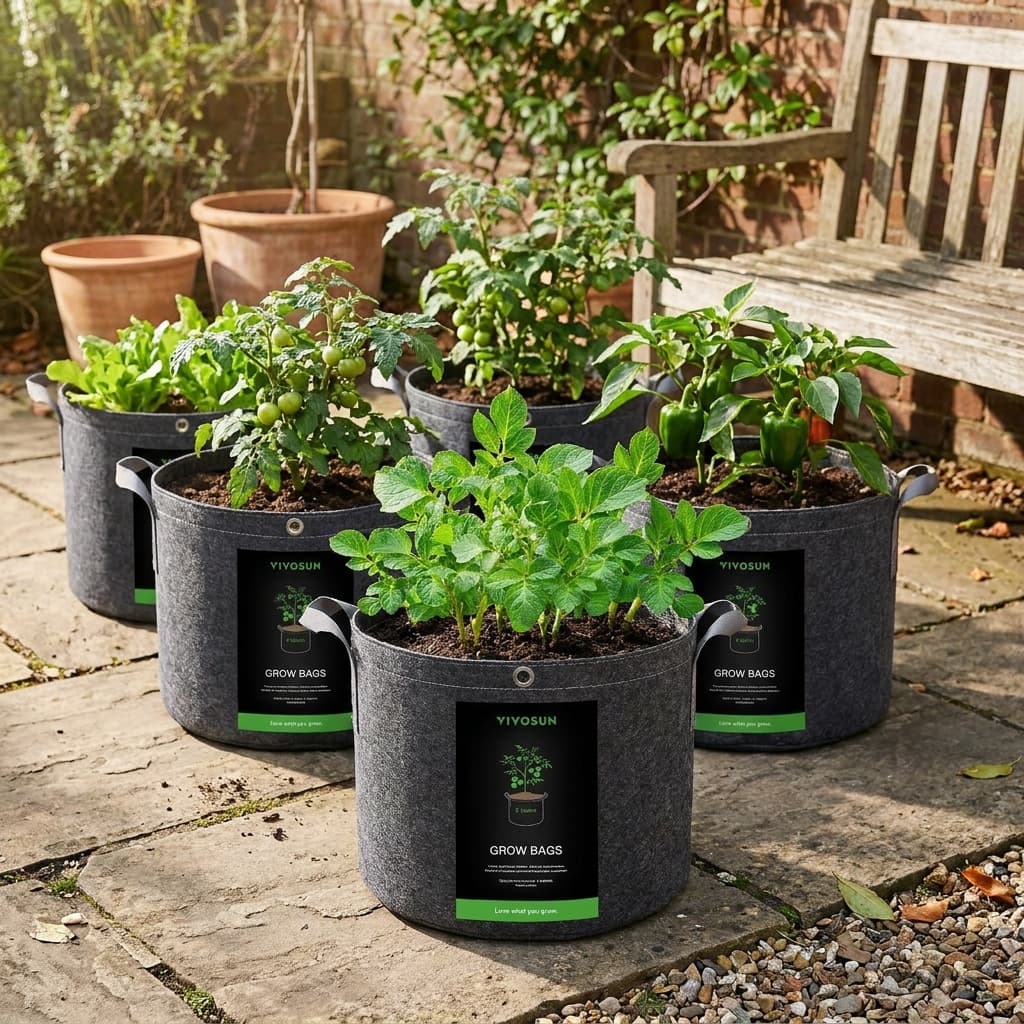
VIVOSUN 5-Gallon Fabric Grow Bags (5-Pack)
Best for: Container growers who want cheap, breathable bags for tomatoes, peppers, or potatoes.
Keep in mind: Dries out faster than rigid containers
Amazon price as of the checked date, subject to change. The price on Amazon at checkout applies.
Full research
- Material
- Nonwoven fabric
- Capacity
- 5 gal each
- Pack
- 5 bags
- Handles
- Reinforced carry handles
VIVOSUN's fabric grow bags are a hugely popular budget pick for container growing. The breathable fabric air-prunes roots, and a five-pack costs little, though the handles can loosen after heavy seasons.
This catalog-wide research score is separate from this guide's use-case ranking. How we research
Strengths
- Breathable fabric air-prunes roots
- Very low cost per bag in a multi-pack
- Fold flat for off-season storage
Weaknesses
- Dries out faster than rigid containers
- Handles can loosen over multiple seasons
Sprout Score breakdown
Best for
Container growers who want cheap, breathable bags for tomatoes, peppers, or potatoes.
The container gardening guide covers pot and mix selection.
Decide what every runner should do
Runners are horizontal stems that form daughter plants. In a renewing bed, guide selected daughters into open soil and remove extras that create dense layers. In a container or compact row, cut runners close to the mother plant so its energy remains in fruit and crown growth.
Mulch without smothering crowns
Clean mulch keeps fruit away from mud, reduces splash, and slows moisture loss. Tuck it under developing clusters while keeping the crown exposed. Remove decaying fruit and old leaves so wet organic matter does not collect at the plant center.
See the mulching guide for material and application choices.
Check moisture below the mulch and water the root area rather than the leaves. Dense foliage that stays wet favors gray mold and other leaf and fruit diseases.
Renovate instead of accepting a thicket
After a June-bearing crop, remove diseased foliage, thin weak crowns, guide the best daughters into open spaces, and restore a narrow, reachable row. Renovation keeps light and air moving through the patch and replaces declining plants without letting runners occupy every path.
Day-neutral and everbearing plantings need lighter cleanup. Remove spent leaves, unwanted runners, and damaged crowns rather than cutting the entire canopy.
Protect and pick ripe fruit
Check beneath leaves frequently because berries can color out of sight. Pick when the fruit has developed full variety color and releases with a gentle pull. Keep the cap attached, handle the berry by the stem or shoulders, and place it directly into a shallow container.
Cool harvested berries promptly. Store them unwashed and rinse only before eating, since extra surface moisture accelerates decay.
Troubleshoot the patch
- Gray mold coats flowers or fruit with fuzzy growth. Remove affected material and help foliage dry quickly.
- Slugs chew ripe fruit near the soil. Keep mulch clean, remove hiding places, and harvest promptly.
- Anthracnose can damage crowns, runners, and fruit. Remove infected plants and avoid moving their runners elsewhere.
- Aphids distort young growth and can spread plant viruses.
- Spider mites cause pale stippling during hot, dry stress.
For a cane fruit with a different renewal system, see raspberry. Avoid using nearby pepper plants as a care model; fruiting habit and crown management are fundamentally different.
What is the difference between June-bearing and day-neutral strawberries?
June-bearing plants concentrate their crop and readily renew a matted row through runners. Day-neutral plants fruit repeatedly and are usually managed as individual crowns with runners removed. Everbearing labels vary, so read the cultivar description.
Should I remove strawberry runners?
Remove them from containers and compact fruiting rows. In a renewable June-bearing bed, keep selected daughters and direct them into open positions, then remove the extras before the patch becomes dense.
Why are strawberries small or misshapen?
Possible causes include incomplete pollination, crowded crowns, moisture stress, weak foliage, or pest injury. Check the whole cluster and plant before adding fertilizer. Dense beds often improve after thinning and renovation.
Can strawberries grow well in containers?
Yes. Containers make runner control and fruit access easier, but they require attentive moisture checks and clear drainage. Keep crowns at the surface and refresh congested plants rather than allowing roots and runners to fill every opening.