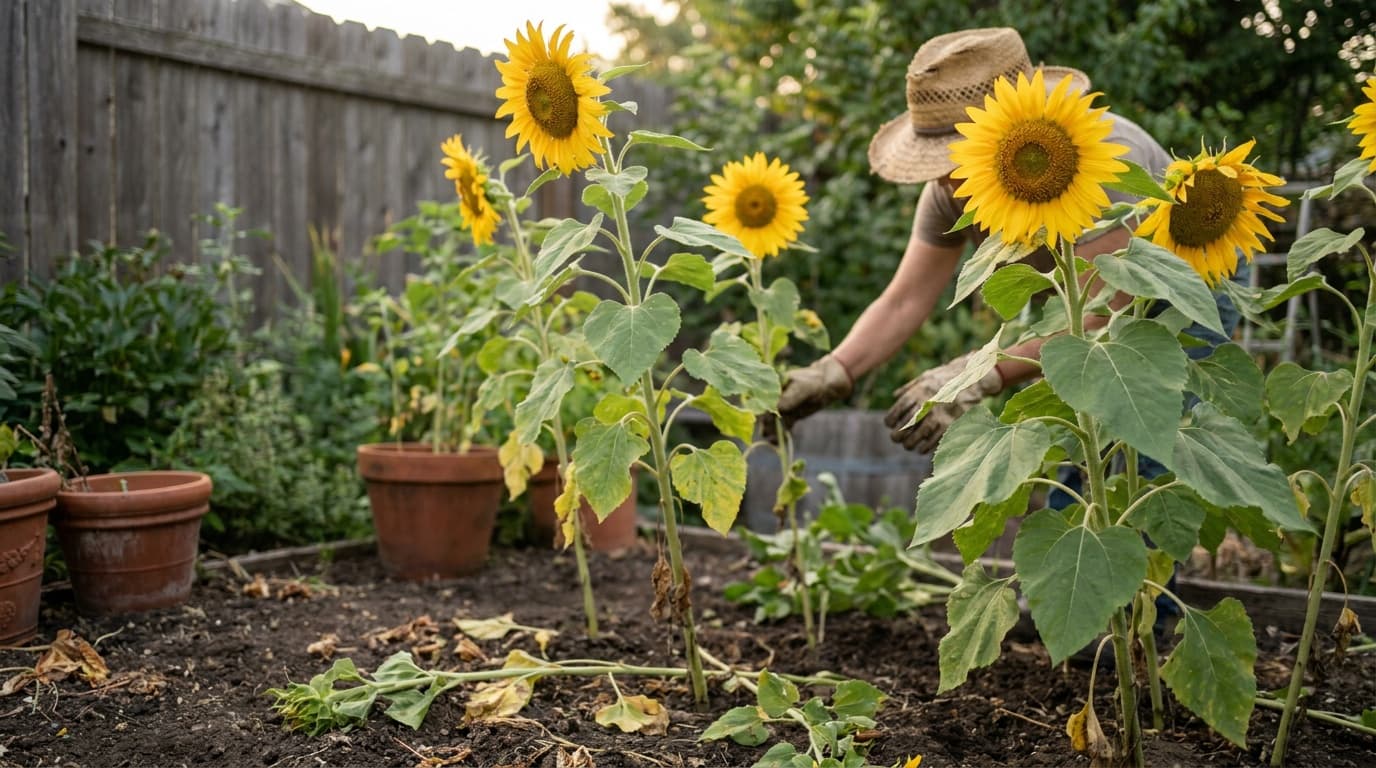
Sunflowers are simple only after the cultivar matches the goal. A giant seed head, a pollenless florist stem, and a branching border plant need different support and harvest decisions. Read the packet for growth habit before deciding where the crop belongs.
Choose the plant architecture
Single-stem cultivars direct their energy into one main flower. They are useful for uniform cutting and dramatic individual heads, but the plant's display ends after that head is removed.
Branching cultivars produce side shoots and repeated flowers. They take more lateral room and benefit from cutting that encourages additional stems.
Seed cultivars are selected for large heads and filled seeds. Pollenless florist types may not be the right choice when feeding birds or saving seed is the goal.
Match sunflower type to purpose
Cut flowers
Garden display
Seed harvest
Pollinator support
Sow without disturbing the taproot
Sunflowers form a strong taproot and generally establish best where they will grow. Prepare loose soil, sow according to the packet, firm gently, and protect the area until shoots are clearly established.
If you must start plants indoors, use an individual degradable pot and transplant before roots circle. The indoor seed-starting guide covers light and hardening technique.
Birds and rodents can remove seeds or clip seedlings. A light cover held above the soil can protect emergence; remove it before plants press against it.
Support tall stems before they lean
Tall cultivars in exposed sites may need a stake. Install support while the plant is small and tie the stem loosely at more than one point. One tight tie can create a hinge that snaps in wind.
Avoid rich, fast nitrogen feeding, which can create lush leaves and weaker stems. If soil is poor, use a measured slow-release amendment and follow the label.
Some links on this page are affiliate links. As an Amazon Associate I earn from qualifying purchases.

Gentle, slow-release feed
Down to Earth All Purpose Mix 4-6-2
Best for: Organic gardeners who want a balanced, plastic-free all-purpose feed.
Keep in mind: Sometimes harder to find in big-box stores
Amazon price as of the checked date, subject to change. The price on Amazon at checkout applies.
Full research
- NPK
- 4-6-2
- Type
- Granular organic blend
- Use
- All-purpose: vegetables, flowers, herbs
- Packaging
- Compostable cardboard box
A balanced 4-6-2 all-purpose organic fertilizer blended from quality natural inputs and sold in a compostable box. A versatile feed for vegetable gardens, flower beds, and herbs.
This catalog-wide research score is separate from this guide's use-case ranking. How we research
Strengths
- Balanced all-purpose organic formulation
- Compostable, plastic-free packaging
- No synthetic additives or fillers
Weaknesses
- Sometimes harder to find in big-box stores
- Organic granules release slowly
Sprout Score breakdown
Best for
Organic gardeners who want a balanced, plastic-free all-purpose feed.
Water the root area thoroughly during dry periods, especially as buds and flowers develop, then allow the surface to begin drying. Overhead irrigation can damage blooms and leave foliage wet.
Pinch only branching cultivars
Pinching the main tip of a young branching cultivar can produce more side stems and smaller flowers. Do not pinch a single-stem or giant-head cultivar unless you intentionally want to remove its primary flower.
The packet's habit description is more important than a universal pruning rule.
Cut flowers at the right opening stage
For a vase, cut when petals are beginning to lift from the disk but before the flower is fully open. Use clean pruners, remove leaves that would sit below water, and place the stem into clean water promptly.
A bypass pruner makes a clean cut without crushing the stem.
On branching plants, cut just above a healthy side shoot so the remaining structure can continue flowering.
Harvest seed without losing the head
Let the back of the head turn from green toward yellow-brown and allow the seeds to become firm. If birds begin feeding early, cover the head with a breathable paper or mesh bag. Avoid sealed plastic, which traps moisture and encourages mold.
Cut the mature head with a section of stem and finish drying it in a protected, airy place. Rub out fully dry seeds and remove chaff before storage. Keep food seed dry and discard any with mold or off odor.
Troubleshoot leaves and heads
- Birds and deer can remove seedlings or damage mature heads; barriers work better than repeated replacement.
- Stink bugs feed on developing tissue and seeds.
- Aphids gather on tender stems and the backs of heads.
- Spider mites cause stippling during hot, dry stress.
- Japanese beetles can skeletonize leaves and damage flowers.
Should sunflowers be pinched?
Pinch only branching cultivars when you want more side stems and smaller flowers. Leave single-stem and giant-head cultivars intact because removing the main tip removes their intended bloom.
Why is a sunflower leaning or snapping?
Wind exposure, a top-heavy cultivar, saturated soil, and soft growth from excess nitrogen can all contribute. Stake early, tie loosely at several points, and avoid rich feeding that weakens stems.
How do I cut sunflowers for a vase?
Cut as the petals begin lifting from the center, remove leaves below the water line, and place stems in clean water promptly. On branching plants, cut above a useful side shoot.
How can I protect sunflower seeds from birds?
Cover the maturing head with a breathable paper or mesh bag once birds begin feeding. Let air circulate, then finish drying the cut head under cover before rubbing out the seeds.