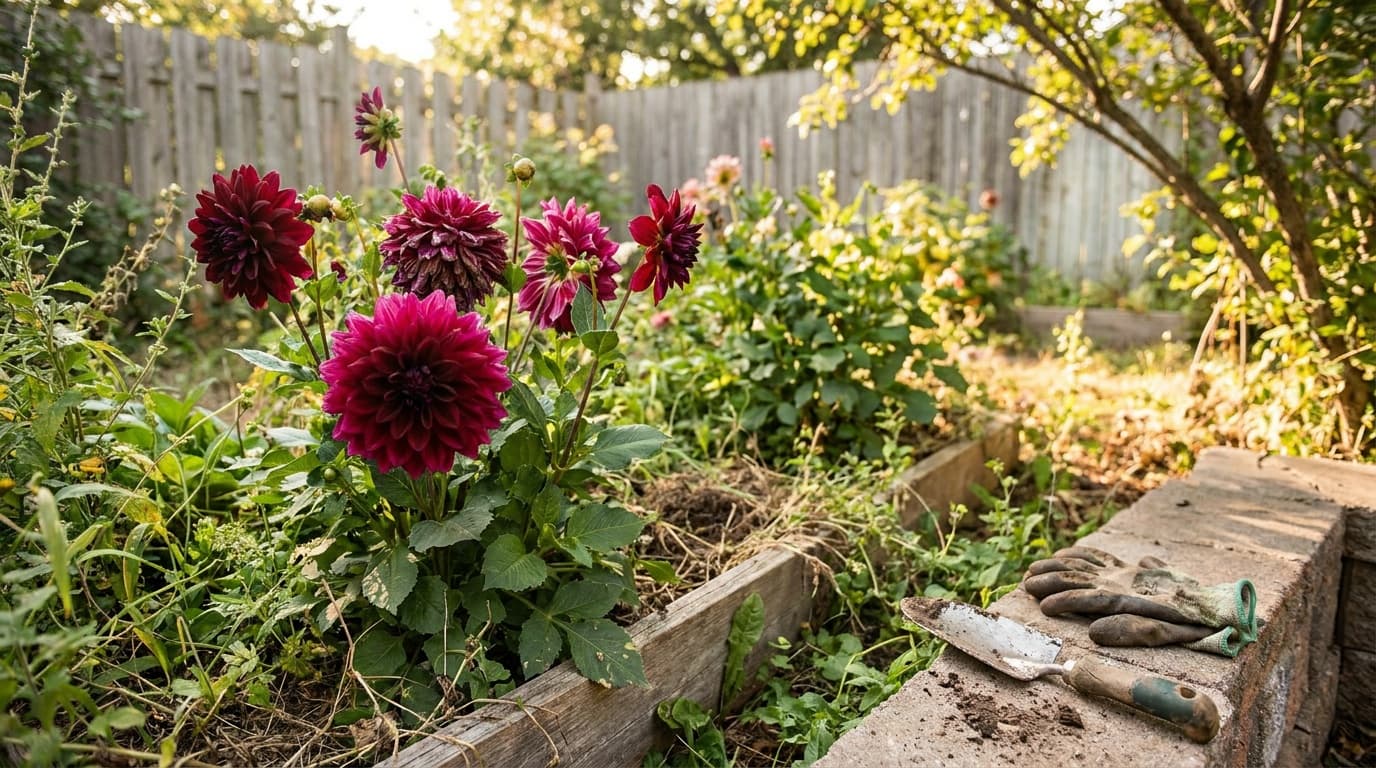
Dahlias are managed as both flowers and storage organs. The summer plant needs branching, support, and regular cutting; the tuber clump needs protection from rot and physical damage. Decisions at either end affect the next cycle.
Inspect tubers before planting
A viable division needs a firm tuber body, an intact neck, and an eye on the crown tissue. The tuber alone cannot grow if its neck is broken away from the crown. Discard soft, moldy, shriveled, or foul-smelling pieces.
Eyes can be subtle before growth begins. Look near the previous stem base for a small raised point or swelling. When uncertain, keep the clump intact rather than cutting away the only viable eye.
Read a dahlia tuber clump
Find the old stem
Trace the neck
Press for soundness
Divide conservatively
Plant without creating a rot pocket
Prepare loose, draining soil and set the tuber horizontally with the eye facing upward. Backfill gently without compacting the area. If the soil is already moist, wait for active shoots before beginning regular irrigation; a dormant tuber in cold wet soil is vulnerable to rot.
The dahlia plant profile provides the placement value and local planting plan rather than duplicating them here.
Install support before the canopy is heavy
Drive a sturdy stake beside the tuber at planting so the location is known and roots are not speared later. As stems grow, tie them loosely with soft material. Add ties as the plant gains height rather than forcing the entire load onto one point.
In a row, a corral of posts and twine can support several plants while preserving access for cutting.
Pinch and disbud by purpose
Pinching the central shoot of a vigorous young plant above a healthy node encourages more branches and cutting stems. Skip pinching on a weak or damaged plant until it has rebuilt enough leaf area.
For fewer, larger blooms, remove selected side buds while they are small. For a fuller garden display and more stems, leave more buds and accept smaller individual flowers. Neither method is universally better.
Water and feed after growth begins
Once shoots are active, water the root area deeply and let the surface begin drying. Avoid soaking foliage late in the day. Mulch can buffer moisture and reduce splash, but leave the stem base open; see mulching the garden.
Use restrained fertilizer. Excess nitrogen produces tall soft stems and delays useful flowers. Feed according to plant response and the product label.
Cut flowers to create another branch
Harvest in the cool part of the day when flowers are nearly open, because dahlia buds do not open reliably after cutting. Follow the stem down to a strong side branch and cut above that junction. A deep cut may remove small buds, but it improves the structure of the next stems.
Place stems into clean water immediately and strip leaves below the water line.
Some links on this page are affiliate links. As an Amazon Associate I earn from qualifying purchases.
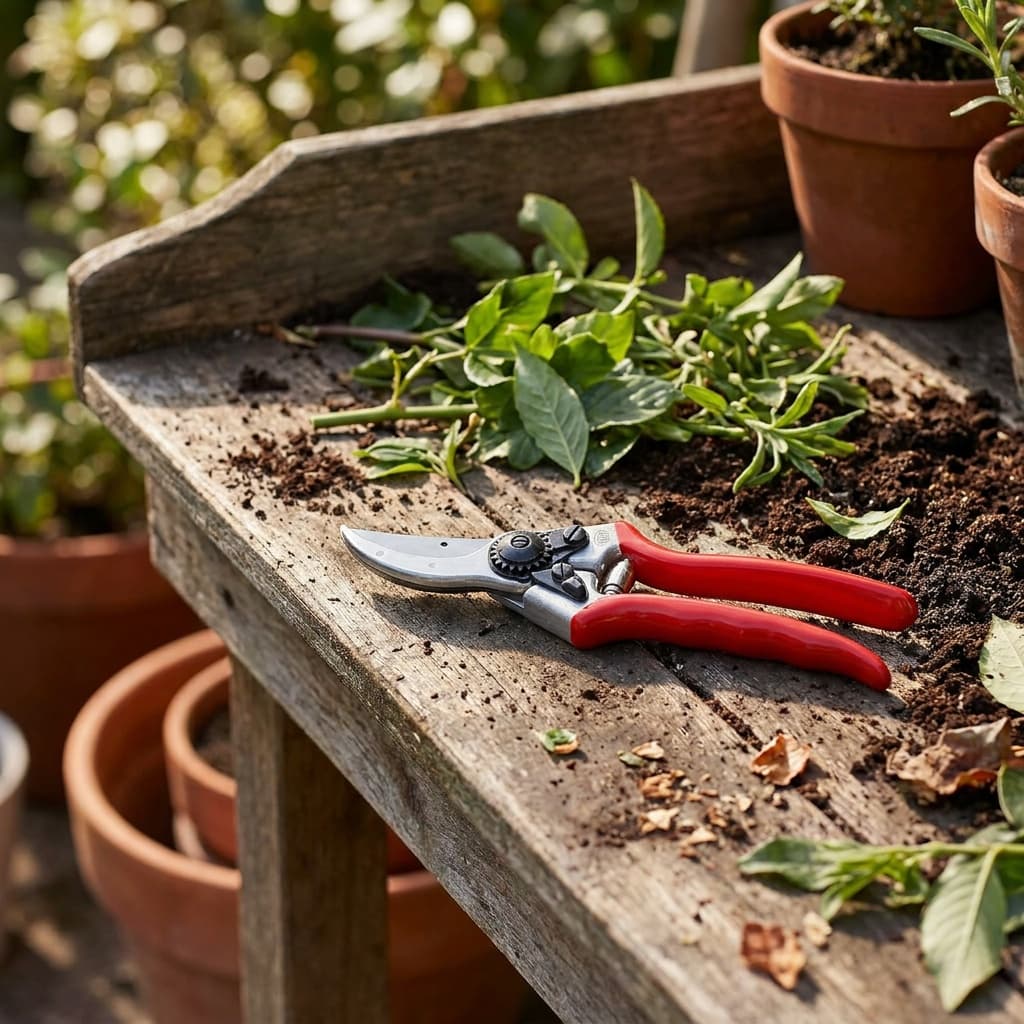
Precise stem cutting
Felco F-2 Classic Bypass Pruner
Best for: Gardeners who want one pruner they can rebuild and keep for decades.
Keep in mind: One size fits average to larger hands; no compact body
Amazon price as of the checked date, subject to change. The price on Amazon at checkout applies.
Full research
- Type
- Bypass
- Cutting capacity
- Up to 1 in (25 mm)
- Handle
- Forged aluminum
- Blade
- Hardened steel, replaceable
The Felco F-2 is the long-standing reference bypass pruner, with forged handles and a fully replaceable parts system that keeps it cutting season after season.
This catalog-wide research score is separate from this guide's use-case ranking. How we research
Strengths
- Fully serviceable: blades, springs, and other parts are replaceable
- Precise bypass cut that protects living stems
- Backed by a long owner track record across decades of use
Weaknesses
- One size fits average to larger hands; no compact body
- Premium price relative to entry-level pruners
Sprout Score breakdown
Best for
Gardeners who want one pruner they can rebuild and keep for decades.
Owner rating snapshot
Amazon · 312 reviews · 4.8 stars
Lift and store sound clumps
After top growth dies, cut back stems and label the clump before lifting. Loosen soil from outside the root mass and raise it without spearing the tubers. Let surface moisture dry, brush away loose soil, and inspect for damage.
Store clumps in a cool, dark place where they will not freeze, shrivel completely, or sit wet. Check them periodically. Remove rot promptly and adjust packing moisture if clumps are collapsing or developing mold.
Troubleshoot stems and storage
- Aphids cluster on buds and tender tips.
- Spider mites cause stippling and webbing in hot, dry conditions.
- Thrips scar petals and hide inside flowers.
- Powdery mildew coats crowded foliage.
- Gray mold develops on damaged flowers and wet tissue.
- Soft storage tissue indicates rot; isolate affected clumps before it spreads.
How can I tell whether a dahlia tuber has a viable eye?
Look on the crown near the old stem for a raised point or swelling. The tuber must remain attached through an intact neck. When the eye is unclear, keep the clump together rather than making speculative divisions.
Should dahlias be pinched?
Pinch a vigorous young plant when you want more branches and cutting stems. Delay or skip the step on a weak plant. The cut should leave healthy nodes below it to produce side shoots.
Why is a dahlia tall and leafy with few flowers?
Excess nitrogen, shade, and lack of branching can all contribute. Stop rich feeding, confirm the plant is not being shaded, and shape future growth according to whether you want more stems or larger individual blooms.
How do I prevent dahlia tubers from rotting in storage?
Store only sound, surface-dry clumps in a cool dark place. Keep them from freezing or sitting wet, inspect periodically, and remove any soft or moldy tissue before it spreads.