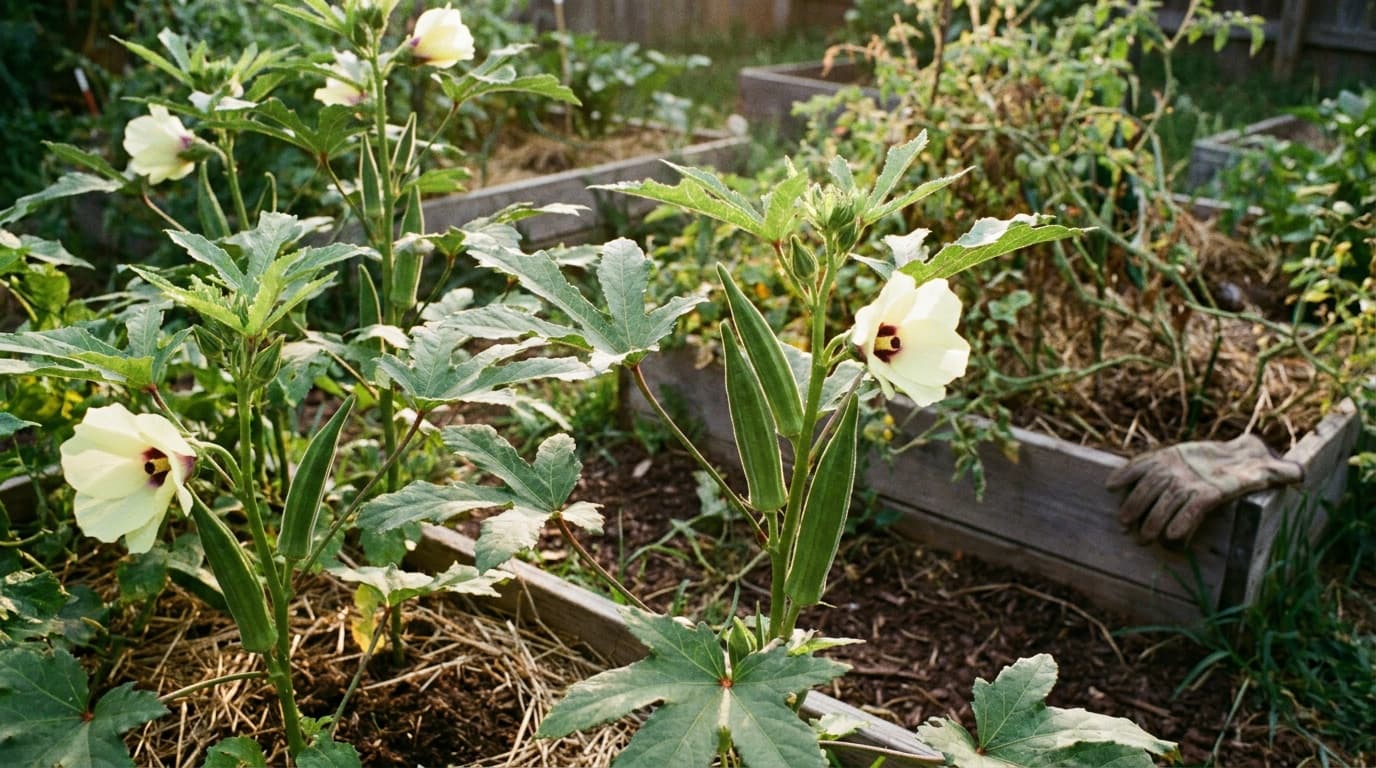
Okra starts slowly in cool weather and becomes highly productive once summer heat arrives. Its tall stems and hibiscus-like flowers are ornamental as well as useful. Harvest the fast-forming pods often, before they turn fibrous.
Because okra establishes poorly in cool soil, a soil thermometer is useful for confirming that the bed is thoroughly warm rather than relying on one hot afternoon.
Some links on this page are affiliate links. As an Amazon Associate I earn from qualifying purchases.
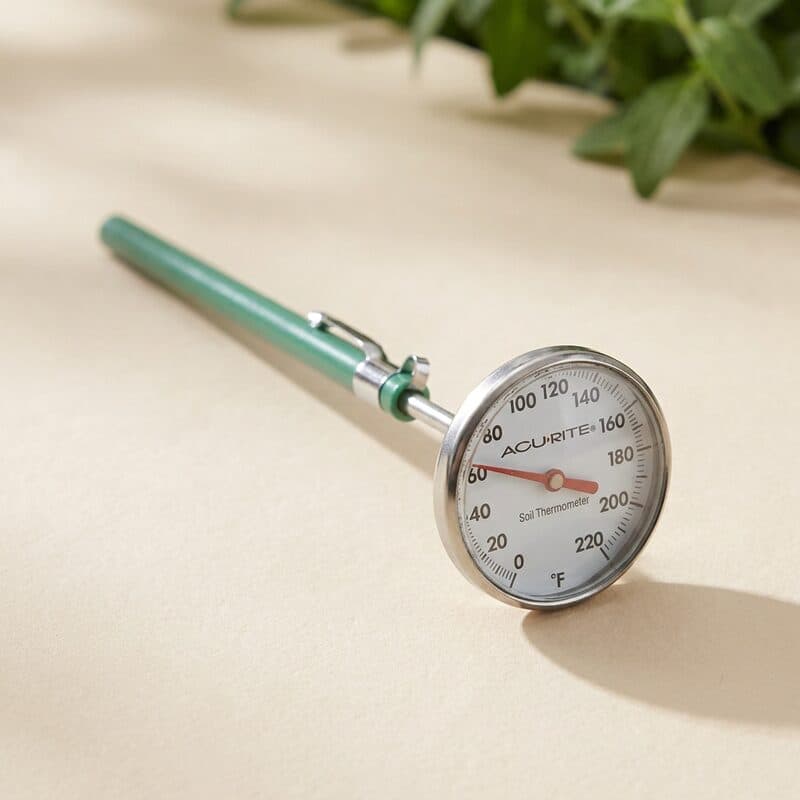
AcuRite
AcuRite Stainless Steel Soil Thermometer (00661)
Best for: Gardeners who want to check soil temperature before planting or sowing and need a simple, affordable, long-lasting tool.
Keep in mind: Analog dial is less precise than a digital display
Amazon price as of the checked date, subject to change. The price on Amazon at checkout applies.
Full research
- Probe length
- 7 in (18 cm) stainless steel
- Range
- 0 to 220 degrees F
- Type
- Analog dial thermometer
- Protective sheath
- Included with pocket clip
The AcuRite 00661 is a 7-inch stainless steel analog soil thermometer that reads 0 to 220 degrees F, the simplest and most durable way to know whether your soil is warm enough to plant.
This catalog-wide research score is separate from this guide's use-case ranking. How we research
Strengths
- Low price for an all-stainless, durable soil probe
- 7-inch probe reaches the root zone for transplant readings
- Protective sheath keeps needle accurate between uses
Weaknesses
- Analog dial is less precise than a digital display
- No memory or logging, single reading at a time
Sprout Score breakdown
Best for
Gardeners who want to check soil temperature before planting or sowing and need a simple, affordable, long-lasting tool.
Owner rating snapshot
Amazon · 596 reviews · 4.4 stars
An indoor start can help where summers are short. Use individual cells, keep seedlings compact, and move the root ball intact because okra dislikes root disturbance.
Prepare a durable bed
Choose the brightest practical site and work mature compost through well-drained soil. Okra grows tall and can shade shorter crops, so place it where its eventual canopy will not block a neighboring bed. The okra profile carries the exact light and soil targets.
Planting
Follow the seed depth and bed layout on the okra plant profile. Sow a few extras, then thin by cutting weaker seedlings at soil level so the strongest roots stay undisturbed.
From seed to transplant
Prep the soil
Scarify and soak
Sow from the profile
Thin without pulling
Pinch for branching
Watering and feeding
Okra is moderately drought-tolerant once established, but seedlings and flowering plants still benefit from consistent root-zone moisture during dry stretches. Use the watering baseline on the okra profile, then adjust for rainfall and soil texture.
Fertilizer matters more than water with okra. It needs a continuous nitrogen supply for sustained pod production. Side-dress with a balanced organic fertilizer once pods begin to form, and again a few weeks later if plants are slowing down. A granular organic vegetable feed works well here since it releases steadily rather than in one flush.
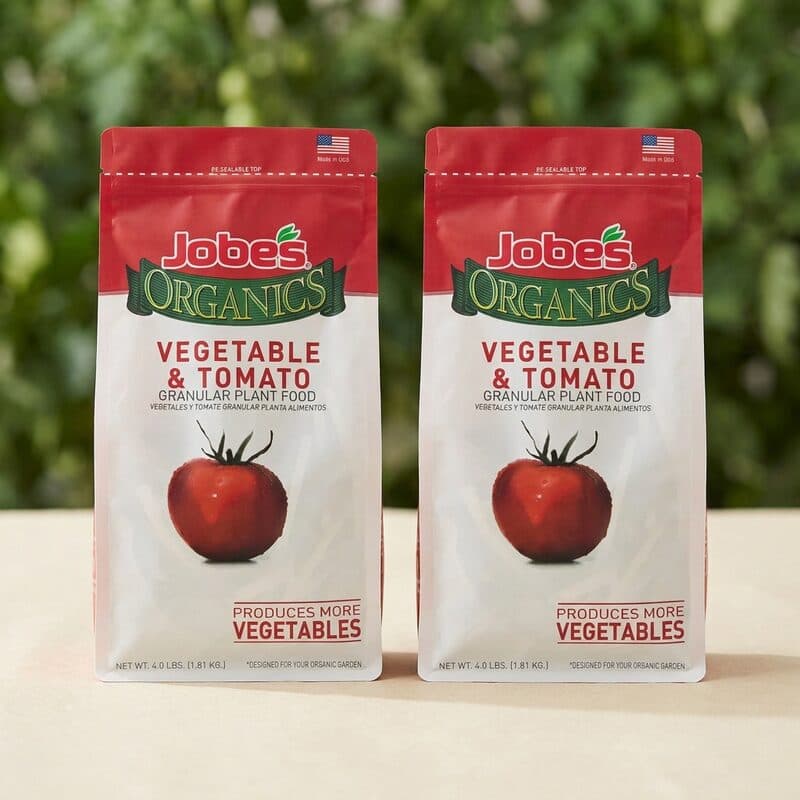
Jobe's Organics
Jobe's Organics Vegetable & Tomato Granular Fertilizer
Best for: Budget-minded growers feeding tomatoes and vegetable beds organically.
Keep in mind: Strong odor that can attract animals
Amazon price as of the checked date, subject to change. The price on Amazon at checkout applies.
Full research
- NPK
- 2-5-3
- Type
- Granular organic
- Microbes
- Biozome beneficial microbe package
- Use
- Vegetables, tomatoes, and fruiting crops
An affordable certified-organic granular fertilizer formulated for vegetables and tomatoes, with a higher phosphorus ratio to support fruiting and the brand's Biozome microbe package.
This catalog-wide research score is separate from this guide's use-case ranking. How we research
Strengths
- Phosphorus-forward profile suits fruiting crops
- Very affordable certified-organic option
- Biozome microbes aid nutrient breakdown
Weaknesses
- Strong odor that can attract animals
- Best as a targeted feed rather than all-purpose
Sprout Score breakdown
Best for
Budget-minded growers feeding tomatoes and vegetable beds organically.
Owner rating snapshot
Amazon · 68 reviews · 4.6 stars
Common problems
Okra is relatively trouble-free in hot weather, but a few pests are worth knowing. Aphids cluster on the undersides of leaves and growing tips; flea beetles chew small holes in young leaves (row cover helps early). Stink bugs will feed on pods and leave blemished, distorted harvest. In soils with a history of root issues, root-knot nematodes can stunt plants severely; rotating out of the nightshade-okra family every few years is the best defense.
Harvesting
This is where most first-time okra growers lose the game. Pods go from tender to woody in 1 to 3 days after the flower drops. Harvest pods when they are 2 to 4 inches long, which is roughly 1 to 3 days after each flower opens. Use clippers or a knife (not your hands, most varieties are spiny), and wear gloves.
Harvest every 2 to 3 days throughout the season. If you find an overgrown pod you missed, cut it off and compost it. Maturing pods signal the plant to stop producing new ones, so letting any pod go to seed dramatically slows the harvest. A well-tended plant in a hot summer will yield 10 to 15 pounds per 10-foot row.
Related guides
Okra pairs well in the garden with basil and peppers as a hot-weather companion. If you are starting from seed, see how to start seeds indoors and how to harden off seedlings. For companion planting strategy, see the companion planting guide.
How can I improve okra germination?
Scratch the hard seed coat lightly and soak seeds before sowing. Keep the bed evenly moist but not saturated, and avoid disturbing seedlings once they emerge. A soil thermometer can confirm that the bed has warmed through rather than merely heating at the surface.
Why are my okra pods tough and stringy?
They were harvested too late. Okra pods need to come off the plant at 2 to 4 inches, just 1 to 3 days after the flower opens. Miss that window and cell walls lignify rapidly. The fix is to harvest every other day or even daily in peak summer heat, when pods can pass through their entire tender window in 24 hours.
Can I grow okra in a raised bed?
Yes, and a raised bed works particularly well because it drains fast and warms up earlier in spring than in-ground soil, which gets you to that 65-degree threshold sooner. Keep in mind that mature plants can hit 6 to 8 feet, so position them where they will not shade other beds.
How often should I harvest okra?
Every 2 to 3 days during peak production. In very hot weather, even every day. Missing any pod and letting it mature signals the plant to stop producing, so consistent picking is what keeps the harvest going from midsummer to frost.
Why is my okra tall but producing few pods?
Check for excessive nitrogen, poor pollination during rough weather, or pods that were left to mature on the plant. Keep harvesting, avoid heavy late feeding, and make sure nearby growth is not shading the flowers.