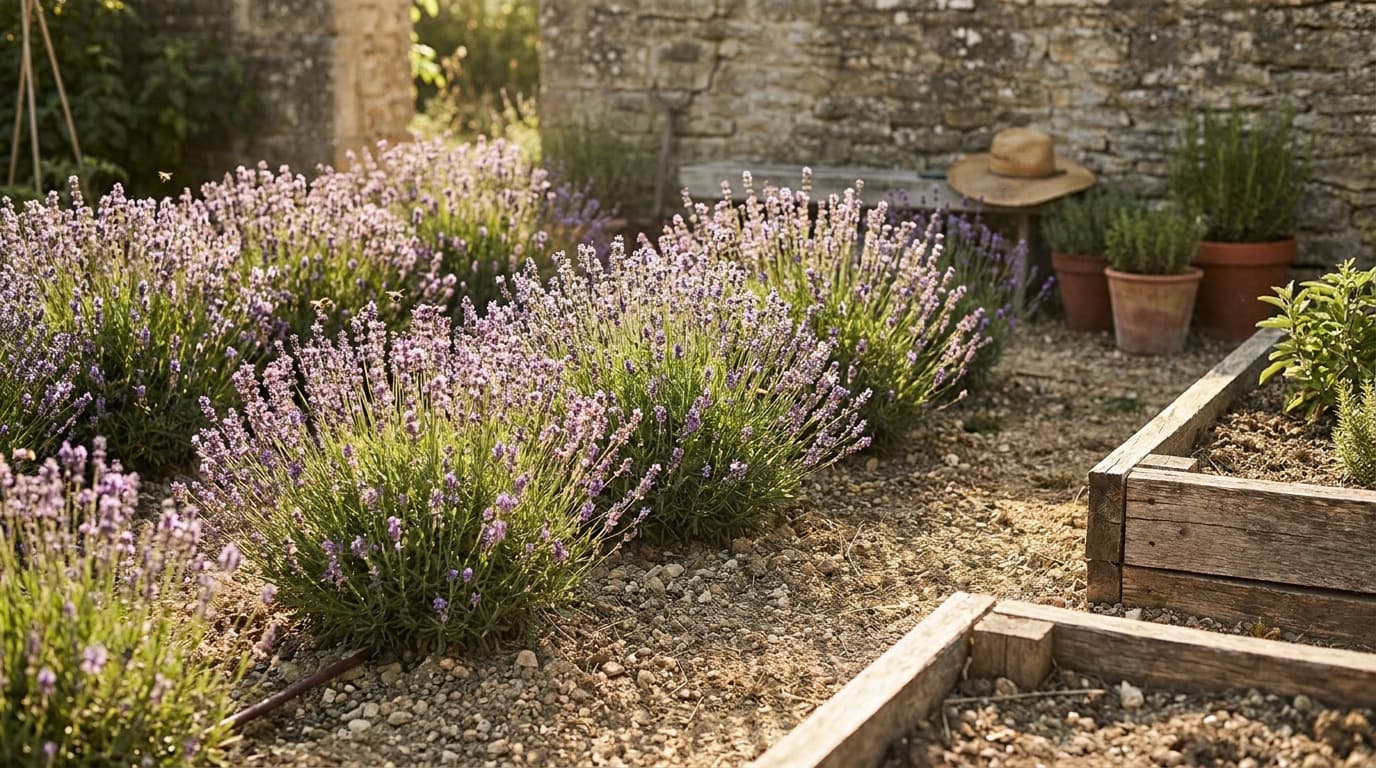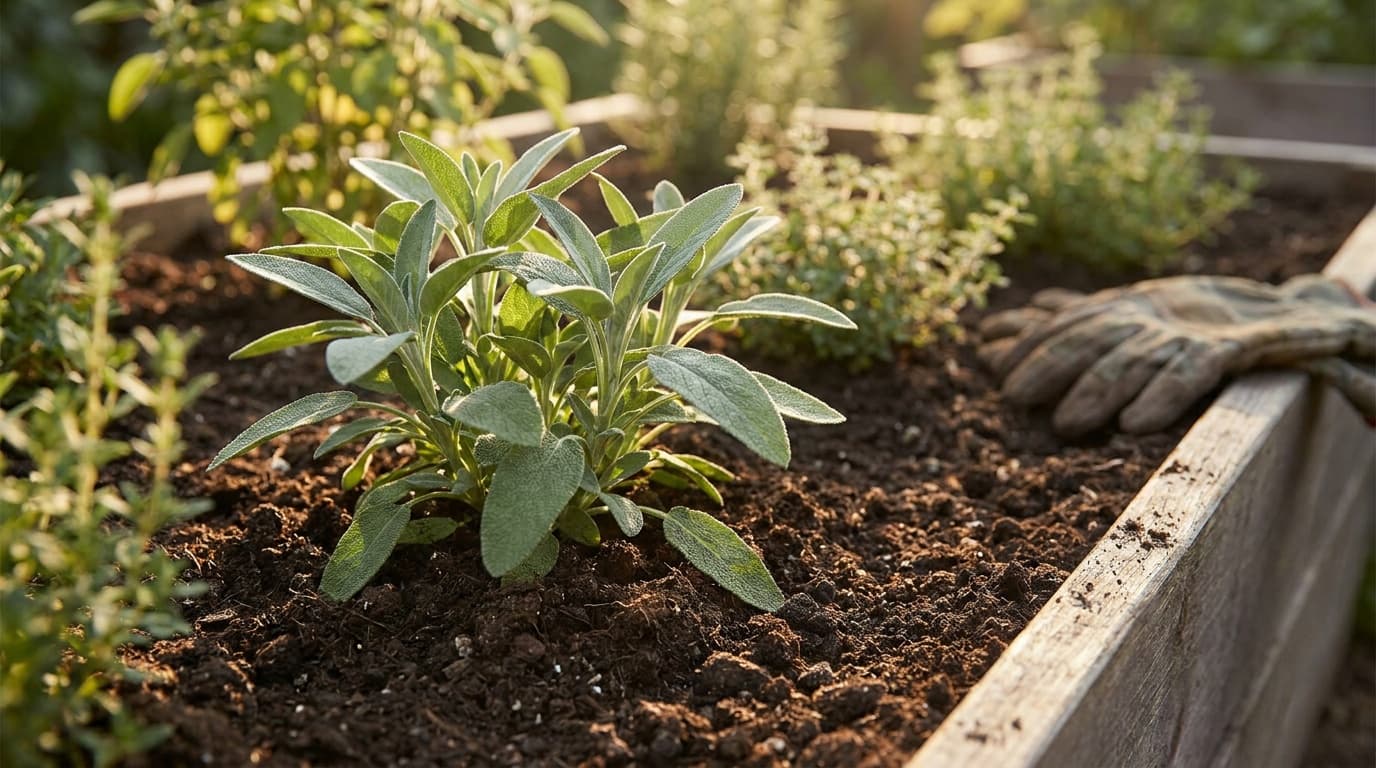
Garden sage (Salvia officinalis) is a Mediterranean perennial with a range of cultivars offering leaf colors from the classic gray-green to purple, gold, and variegated forms. All share the same care requirements and the same robust, camphor-forward fragrance that defines the herb's culinary and medicinal use. Like its close Mediterranean companions rosemary, thyme, and lavender, sage evolved in lean, sun-exposed conditions and will decline if grown too rich, too wet, or in too little light.
Where sage grows: zones, sun, and soil
Garden sage is reliably perennial in USDA zones 5 through 8. In zone 4, established plants can survive with a protective mulch applied after the ground freezes, though survival is not guaranteed. In zones 9 and 10, the intense summer heat is the bigger challenge; in those climates sage often performs best in fall through spring and struggles through midsummer.
Full sun is important for both plant health and culinary quality. Sage in partial shade grows more weakly and the essential oil concentration, which determines flavor and fragrance, is noticeably lower.
Soil adaptability is one of sage's strengths: it tolerates a wide pH range and both sandy and loamy textures. The non-negotiable is drainage. Like all Mediterranean herbs, sage will not tolerate soggy roots and is particularly vulnerable to wet conditions over winter.
Check your hardiness zone on the sage plant profile and use frost dates to anchor your planting timing.
Planting: transplants are standard, seed is an option
Sage can be started from seed, but germination is slow (2-3 weeks) and seedlings take considerable time to reach transplant size. Most gardeners start with nursery transplants, which gives a 4-6 week head start.
Planting sage in the garden
Time the transplant
In zones 5-7, plant after your last spring frost. In zones 8+, early spring or early fall are both suitable. Use the [planting calendar](/tools/planting-calendar) for your ZIP code.
Prepare the bed
Loosen soil 12 inches deep. If drainage is poor, incorporate coarse sand or build a raised bed. Sage does not need or benefit from heavy compost amendment.
Plant at the same depth
Set the transplant no deeper than it was in its nursery pot. Plant too deep and the base of the stem can rot.
Space 2 feet apart
Sage reaches 18-24 inches in both directions at maturity. Adequate spacing promotes airflow and reduces disease.
Water in and step back
Water well at planting to settle the roots. Then let the soil dry before watering again.
Propagation from cuttings is also reliable. Take 3-4 inch tip cuttings from non-flowering stems in late spring, remove the lower leaves, insert in a perlite-heavy mix, and keep lightly moist. Roots develop in 3-4 weeks.
Watering and feeding: lean and dry
Once established after its first season, sage is genuinely drought-tolerant. Water deeply and infrequently, allowing the soil to dry out between waterings. In typical summer conditions, once-a-week watering or less is usually sufficient for established in-ground plants. Container plants will need more frequent monitoring.
Over-watering is the main threat to sage. Consistently moist soil, especially in combination with heat and humidity, invites root rot, powdery mildew, and fungal problems. When in doubt, skip the watering.
Sage growing in decent garden soil needs very little fertilizer. A single light application of balanced organic fertilizer in early spring is appropriate if plants look pale or sluggish. High-nitrogen fertilizers should be avoided: they produce lush, soft growth that is more prone to disease, less flavorful, and less cold-hardy.
Pruning: the key to preventing woodiness
Without pruning, sage develops a woody, open base with foliage concentrated at the stem tips, which reduces productivity and makes the plant look untidy. Annual pruning prevents or delays this progression.
The most important pruning is in early spring, just as new growth begins to emerge. Cut back the previous year's growth by about one-third, trimming into green wood. This encourages fresh branching from the base.
A second, light shaping after the plant flowers in summer keeps growth dense. As with all woody Mediterranean herbs, do not cut into the thick, mature woody stems near the base; these rarely produce new shoots. Always leave green growth on any stem you cut.
Harvesting sage
Sage leaves can be harvested throughout the growing season whenever the plant is actively growing. The flavor is most concentrated just before or at the time of flowering.
A critical rule for new plantings: harvest lightly in the first year. A young plant establishing its root system cannot afford to lose too much foliage at once. Pick individual leaves or small sprigs and leave the bulk of the plant intact. From the second year onward, you can harvest more generously, up to one-third of the plant's total growth at a time.
For drying, cut stems in the morning after dew dries. Tie small bunches and hang in a warm, airy spot out of direct sun, or spread leaves on a screen. Dried sage retains good flavor for 6-12 months in a sealed container away from light.
Overwintering sage
In zones 5-8, garden sage is reliably winter-hardy in the ground. It does not need special protection in most winters. In zone 5 with hard, snowless winters, a layer of straw or shredded leaves applied after the ground freezes can help, but keep mulch away from the crown itself to avoid encouraging rot.
In zones 4 and below, or where drainage is poor and winters are wet, container growing is the safer approach. Bring containers indoors or into a cold garage before hard frost. Sage goes semi-dormant and needs minimal watering indoors.
For cold-zone gardeners who want to bring sage indoors to overwinter on a windowsill, the same principles apply as for rosemary: maximum available light, lean gritty mix, infrequent watering. A supplemental grow light helps greatly in northern winters.
Common problems
- Root rot: the most common serious problem, caused by wet, poorly drained soil. Wilting that does not respond to water is the key symptom. Prevention through drainage is the only reliable fix. See root rot.
- Powdery mildew: white coating on leaves, more common in humid summers. Improve spacing and airflow; avoid wetting foliage. See powdery mildew.
- Gray mold (Botrytis): grayish fuzz on stems or foliage in cool, damp weather. Remove affected material; improve air circulation. See gray mold.
- Spider mites: more common on indoor plants or during dry heat. Rinse with water and increase humidity slightly. See spider mites.
- Aphids: occasional on new growth. A strong spray of water clears most infestations. See aphids.
Sage as a companion plant
Sage is one of the traditional companion herbs of the vegetable garden. It is commonly planted near basil, rosemary, and thyme as a compatible Mediterranean herb grouping. In the vegetable garden, it is often paired with brassicas including cabbage, broccoli, and kale, where its strong volatile oils are said to deter common pest insects. See the companion planting guide for specific pairings and the evidence behind them.
Is sage a perennial or does it die back in winter?
Garden sage (Salvia officinalis) is a perennial subshrub in zones 5-8. It does not die back to the ground in winter the way herbaceous perennials do; rather, it retains its woody structure and may hold some leaves through mild winters. In zones 4 and below, it may die back or be killed entirely and is best grown in a container that can come indoors.
How long does a sage plant live?
With good care and annual pruning, a sage plant can remain productive for 5 or more years. Without pruning, plants become increasingly woody and open, typically losing productivity after 3-4 years. Replacing plants or propagating new ones from cuttings every few years keeps the herb garden productive.
Why is my sage dying?
The most common causes are overwatering combined with poor drainage (root rot), insufficient sun, or root damage from being planted too deep. Check that the soil drains freely and that the plant is receiving at least 6-8 hours of direct sun per day. If the base of the plant looks dark, mushy, or has a foul odor, root rot is likely the culprit.
When is the best time to harvest sage?
Harvest any time the plant is actively growing, from spring through fall. The highest essential oil concentration, and therefore the strongest flavor, occurs just before or during flowering. Harvest in the morning after dew dries. In the first year, harvest lightly: take only small amounts while the plant is establishing. From year two onward, you can take up to one-third of the plant per harvest.
Can sage grow in a container?
Yes, and it does well in containers, which is the right approach for cold zones where bringing it indoors for winter is necessary. Use a well-draining potting mix with added perlite, a container with generous drainage holes, and a minimum pot size of 12 inches in diameter. Water less frequently than you would for most container plants. The spacing calculator can help size a container for multiple herbs.
The bottom line
Sage is a rewarding, long-lived herb when grown in full sun with lean, well-drained soil and minimal water. Its Mediterranean origins make it more tolerant of drought and poor fertility than of wet conditions. Prune each spring to keep it from going woody, harvest lightly in year one, and sage will anchor your herb garden for years.