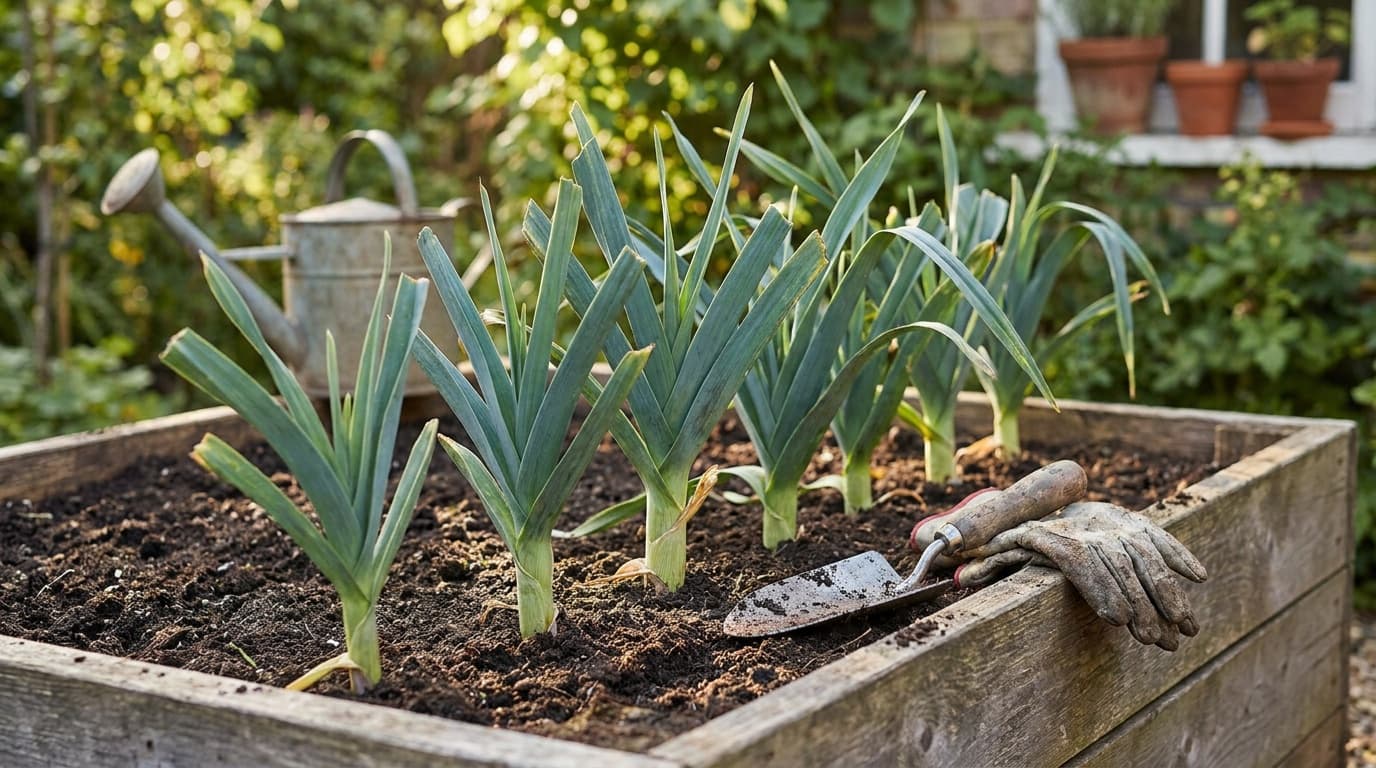
The edible white portion of a leek is not a separate bulb. It is leaf tissue kept pale and tender because soil or another opaque material excludes light. That makes blanching the central technique: the better you manage soil around the shaft without burying the leaves, the longer and cleaner the usable portion becomes.
Use the leek plant profile for the local planting season, seed depth, mature plant layout, sun requirement, and harvest estimate. The planting calendar and frost dates tools provide the location-specific schedule.
Raise sturdy leek transplants
Leeks begin as fine, grasslike seedlings and stay that way for a while. Sow in a clean seed-starting mix, keep the surface evenly moist, and provide strong overhead light as soon as seedlings emerge. Follow the profile for seed depth and the calendar for the local start date.
Thin each cell or cluster so roots do not become a tangled mat. If seedlings outgrow a shallow tray, move the intact root mass into a deeper container rather than pulling individual roots apart repeatedly. Light airflow helps strengthen the leaves and reduces surface mold.
Before transplanting, expose seedlings gradually to outdoor sun and wind. The hardening off guide explains the progression. The goal is a plant that stays upright and hydrated outside, not one that has merely spent a night on the porch.
Leeks use the same basic indoor equipment as onions, and the starting seeds indoors guide covers the shared setup.
Prepare the bed for blanching
Loosen the bed deeply and work in mature compost. Leeks have shallow active roots but benefit from a deep, workable bed because the soil will be moved around the shafts throughout the season. Remove stones and clumps that make hilling uneven.
Choose the blanching system before transplant day:
Choose a leek blanching method
Furrow method
Hilling method
Planting-hole method
Cardboard collars
Transplant without stalling growth
Water the tray before lifting plants. Separate roots gently, discard weak or damaged seedlings, and set the strongest plants according to the mature layout in the leek plant profile. Firm soil around the roots without compressing the shaft.
Water immediately, then mulch between rows after the plants recover. Mulch reduces weed competition and slows moisture loss without being pulled into the leaf fans.
Manage moisture, weeds, and feeding
Leek roots occupy the upper soil and do not compete well with weeds. Hand-weed while invaders are small, using shallow strokes that do not cut crop roots. Mulch makes this easier but should stay clear of the leaf junctions.
Keep moisture consistent. Dry soil slows shaft development; saturated soil encourages decay. Water at the soil line and use the exact benchmark from the plant profile as the starting point, adjusting for rain, mulch, and soil texture.
Leeks respond to fertile soil while actively producing leaves. Start with compost and use a soil test before choosing fertilizer. Side-dress beside the row rather than against the stems, scratch it in lightly, and water afterward.
Keep shafts clean and tender
Add soil gradually. A large mound placed all at once can bury leaves, compact the root zone, or push plants over. Several light passes let the plant continue growing while the pale shaft lengthens.
Stop hilling if water begins collecting around the crown. In heavy soil, finished compost or an opaque collar can blanch more safely than dense clay. After heavy rain, inspect furrows for erosion and exposed shafts.
Common problems
Onion maggot larvae feed below ground and can cause yellowing, wilting, and rotting shafts. Rotate leeks with unrelated crops and remove all infested plant material.
Thrips shelter deep in the folded leaves, leaving silvery scars. Open the leaf fan gently when scouting and direct any water spray where the insects hide.
Leaf miners leave pale trails through leaf tissue. Remove badly damaged leaves and prevent the adult flies from reaching young plants.
Wireworms can bore into the base in beds that recently held turf. Confirm the pest before reworking the garden plan, then use the management steps in wireworms.
Leeks share problems with other alliums. Move onions, garlic, scallions, and leeks as one rotation group rather than shifting them within the same bed.
Harvest and clean leeks
Judge the crop by shaft firmness and usable size for your kitchen rather than waiting for every plant to match. Harvest larger leeks first and let smaller plants continue only while conditions remain favorable.
Lift and clean leeks
Loosen beside the plant
Pull from loosened soil
Trim the roots and tired leaves
Split before washing
Leeks fit naturally into a fall vegetable garden plan and pair well with the techniques in how to grow onions.
Do leeks need to be blanched?
No, the green portion is edible, but excluding light from the lower shaft creates the mild, tender white section most cooks expect. Use a furrow, gradual hilling, or an opaque collar without burying the leaf fan.
Why is soil trapped inside my leeks?
Soil was probably mounded above the lowest leaf junction or washed into the fan during irrigation. Keep future hilling below that point and direct water at the soil, not into the leaves.
What causes leeks to form a flower stalk?
Stress and the plant's natural biennial response can trigger a firm central stalk. Harvest affected plants promptly because the shaft becomes tougher as flowering advances.
Why are my leek shafts short and mostly green?
The plants may be healthy but received little blanching. Add loose soil gradually around future crops, or use the furrow method so the lower shaft develops without light exposure.
Can I harvest leeks one at a time?
Yes. Lift the largest firm shafts first and leave smaller plants undisturbed. A fork makes selective harvest easier because neighboring roots stay in place.
What to do next
Start with strong transplants and choose a blanching method before they enter the bed. Build the mound gradually, and keep soil and water out of the leaf fan. This produces cleaner, longer, more tender shafts.