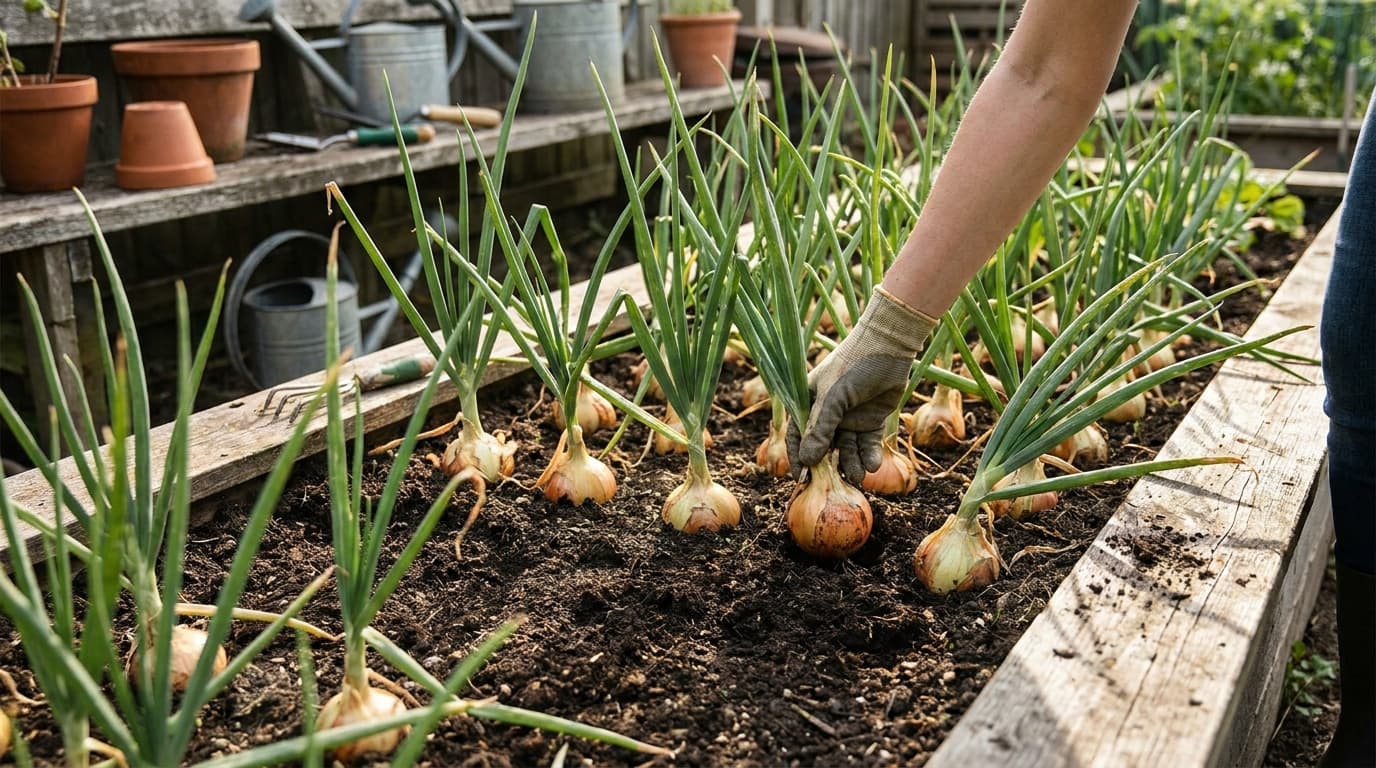
An onion bulb stores energy produced by the leaves. Steady early growth, a variety matched to local day length, and a dry cure matter more than late fertilizer. Extra nitrogen near harvest will not correct a weak leaf canopy.
Use the onion plant profile for the local planting season, seed depth, mature plant layout, water benchmark, soil range, sun requirement, and harvest estimate. The planting calendar and frost dates tools turn that structured data into a local plan.
Choose a day type before buying seed
Bulb onions respond to day length. If the variety starts bulbing before it has built enough leaves, the final bulb stays small. If it never receives the signal it expects, it may not form a useful bulb at all.
Match the onion to your region
Long-day onions
Short-day onions
Intermediate-day onions
Read the variety description
Decide between seeds, sets, and transplants
Seeds offer the widest variety choice and make it easiest to select an exact day type. They require a good indoor seed-starting setup and patient early care. The starting seeds indoors guide covers light, airflow, and potting mix.
Sets are small dormant bulbs. They are quick to handle and widely available, but larger sets are more prone to bolting. Choose small, firm sets without mold or soft spots.
Transplants balance convenience and choice. They arrive with roots and leaves already established, but dry bundles decline quickly. Plant them promptly or hold the roots briefly in a cool, damp condition.
Prepare and plant the bed
Onions have shallow roots and compete poorly with weeds. Prepare a loose, well-drained bed and remove perennial weeds before planting. Compost can improve structure, but avoid leaving undecomposed material where it interferes with roots.
A raised bed makes weeding and drainage easier. Set seeds, sets, or transplants according to the measured requirements in the plant profile. Keep the crown and emerging leaves above the soil, firm the root zone gently, and water in without washing plants over.
Mark the row clearly. Onion seedlings resemble grass, and an enthusiastic first weeding can erase a planting. Hand-weed while invaders are small, using shallow motions that do not cut the crop's roots.
Build leaves, then let bulbs finish
Early in the crop, consistent moisture and adequate nitrogen help build the leaves that later fill the bulb. Start with compost and use a soil test to decide whether supplemental feeding is needed. If it is, make the main feeding while plants are actively producing leaves.
Some links on this page are affiliate links. As an Amazon Associate I earn from qualifying purchases.
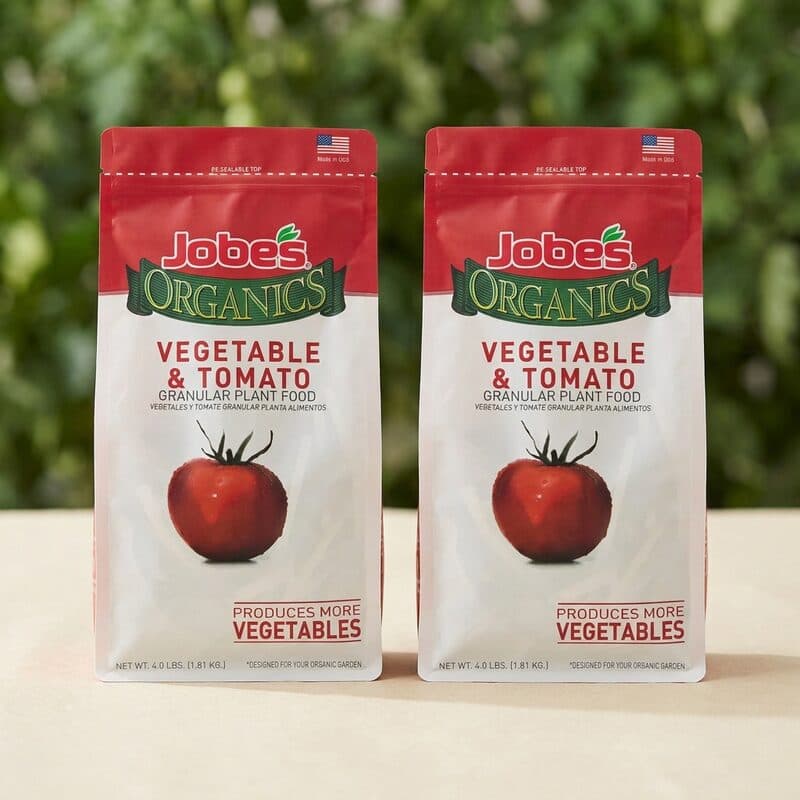
Nitrogen-forward organic feed
Jobe's Organics Vegetable & Tomato Granular Fertilizer
Best for: Budget-minded growers feeding tomatoes and vegetable beds organically.
Keep in mind: Strong odor that can attract animals
Amazon price as of the checked date, subject to change. The price on Amazon at checkout applies.
Full research
- NPK
- 2-5-3
- Type
- Granular organic
- Microbes
- Biozome beneficial microbe package
- Use
- Vegetables, tomatoes, and fruiting crops
An affordable certified-organic granular fertilizer formulated for vegetables and tomatoes, with a higher phosphorus ratio to support fruiting and the brand's Biozome microbe package.
This catalog-wide research score is separate from this guide's use-case ranking. How we research
Strengths
- Phosphorus-forward profile suits fruiting crops
- Very affordable certified-organic option
- Biozome microbes aid nutrient breakdown
Weaknesses
- Strong odor that can attract animals
- Best as a targeted feed rather than all-purpose
Sprout Score breakdown
Best for
Budget-minded growers feeding tomatoes and vegetable beds organically.
Owner rating snapshot
Amazon · 68 reviews · 4.6 stars
Once bulbing is underway, additional nitrogen encourages soft late growth and can reduce storage quality. Stop feeding and avoid bending tops manually. Natural top fall is a maturity signal, while forced bending can damage the neck and invite decay.
Water slowly at the soil line. The watering vegetable gardens guide explains how to judge the root zone instead of wetting only the surface. As tops soften and fall, taper irrigation so the neck and outer layers can dry before lifting.
Prevent pests and storage diseases
Onion maggot larvae tunnel through roots and bulbs, leaving plants wilted and bulbs unfit for storage. Rotate alliums, remove cull bulbs, and keep adult flies away from young plants.
Thrips scrape leaves and leave silvery streaks. Check the folded inner leaves where they hide. Water stress makes their damage more severe.
Downy mildew develops under cool, wet conditions. Improve airflow, water at the soil line, and remove infected residue after harvest.
Bolting is more common in sets and in plants stressed by a cold interruption after growth begins. A flower stalk means that bulb will not store well. Harvest and use it first.
Maggot fly barrier
Agribon AG-19 Floating Row Cover
Best for: Gardeners who want cheap frost protection and pest exclusion in one fabric.
Keep in mind: Lightweight fabric tears and wears over seasons
Amazon price as of the checked date, subject to change. The price on Amazon at checkout applies.
Full research
- Weight
- 0.55 oz per sq yd
- Frost protection
- Down to roughly 28F
- Light transmission
- About 85%
- Material
- Spun-bonded polypropylene
A lightweight spun-bonded row cover that drapes over crops to add a few degrees of frost protection while still letting in light and water. It doubles as a physical barrier against many insect pests.
This catalog-wide research score is separate from this guide's use-case ranking. How we research
Strengths
- Extends the growing season at both ends
- Excludes many pests without chemicals
- Passes most light and water so it can stay on
Weaknesses
- Lightweight fabric tears and wears over seasons
- Needs hoops or pins to stay put in wind
Sprout Score breakdown
Best for
Gardeners who want cheap frost protection and pest exclusion in one fabric.
Harvest and cure for storage
Begin harvest when at least half the tops have fallen naturally and the necks feel soft. Loosen the soil beside the bulbs, lift without bruising, and separate damaged or bolted onions for immediate use.
Cure onions for storage
Start dry
Give every bulb airflow
Cure for two to four weeks
Trim and sort
Store cool and ventilated
Sweet onions generally store for less time than pungent storage types. Label varieties during curing and use the short-keeping bulbs first.
Rotate the allium bed
Onions share soil-borne problems with garlic and leeks. Move the group to a different bed in the next cycle rather than treating each allium as unrelated. Carrots and lettuce can fit the same garden plan, but companion folklore does not replace rotation. See the companion planting guide and crop rotation guide for practical layouts.
Are sets or transplants better for onions?
Transplants usually offer better variety labeling and a lower bolting risk. Sets are faster to handle but should be small and firm. Seeds offer the widest choice if you have a reliable indoor setup.
Why did my onions send up flower stalks?
Bolting often follows plant maturity combined with stress, especially in larger sets. Remove the flower stalk and use that bulb fresh because a bolted onion rarely stores well.
Why are my onion bulbs small?
Check the variety's day type first. Then review early leaf health, weeds, crowding, and whether growth was interrupted by drought or nutrient stress. Late fertilizer cannot replace leaves the plant failed to build earlier.
How do I know onions are fully cured?
The outer skins should be papery, roots dry, and necks completely closed and dry. Any bulb with a soft neck, wound, or damp area should be used promptly rather than placed in long-term storage.
Why are stored onions rotting at the neck?
Common causes are harvesting before the neck closed, curing without enough airflow, storing damaged bulbs, or irrigating heavily as the crop finished. Sort the remaining onions and improve ventilation immediately.
What to do next
Choose the correct day type, protect early leaf growth, keep weeds from the shallow roots, and let the crop finish naturally. A careful cure turns a successful garden harvest into onions that remain useful well beyond harvest day.