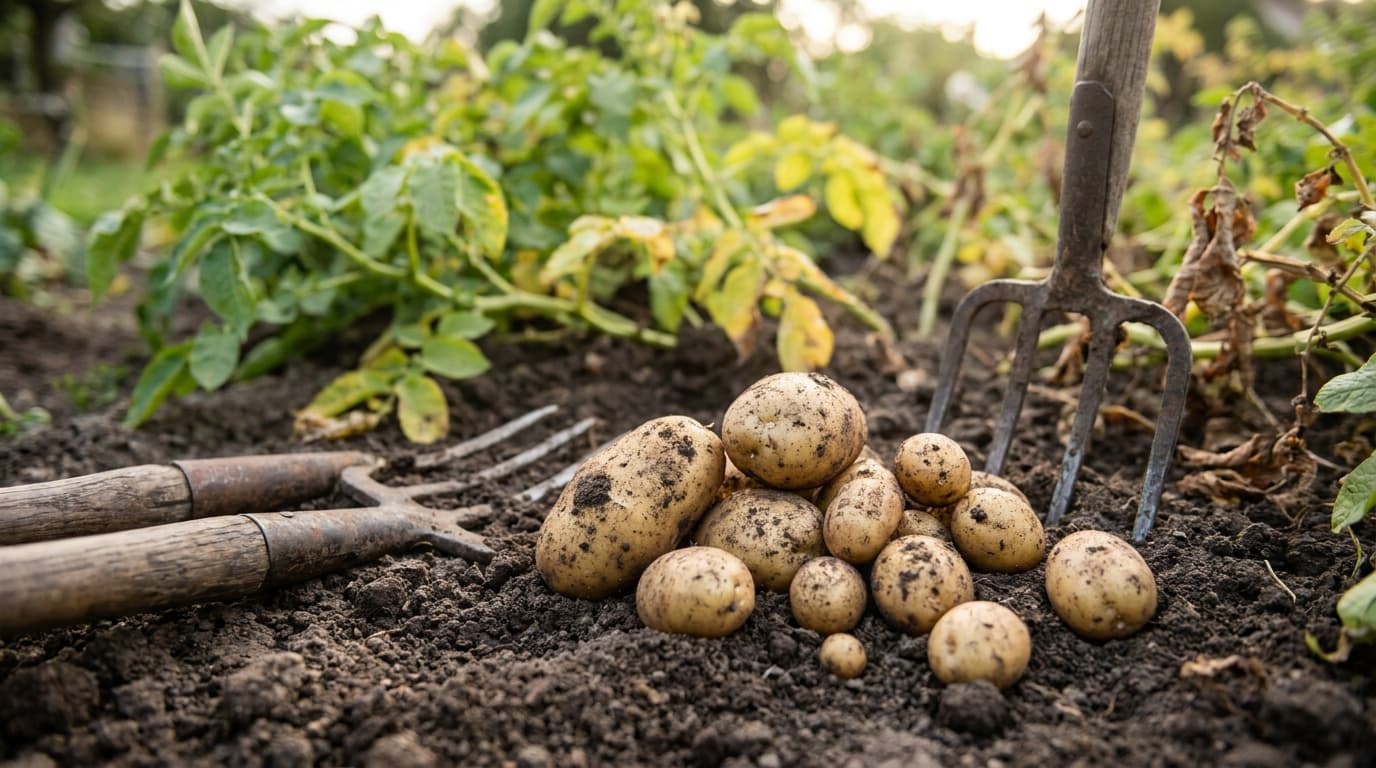
Potatoes turn a modest bed into a surprisingly generous harvest, and seed catalogs offer waxy, floury, early, and storage varieties rarely found in stores. They ask one crop-specific habit in return: hilling. Keep developing tubers covered and they stay usable; expose them to light and they green, become bitter, and should not be eaten.
Soil and site
Potatoes need the bright, well-drained site described on the potato profile. Heavy clay holds too much moisture around tubers and invites disease, while loose soil gives tubers room to form without distortion.
Work mature compost through the bed before planting to improve texture. Avoid fresh manure, which can promote potato scab, and break up clods that would force tubers into irregular shapes.
Some links on this page are affiliate links. As an Amazon Associate I earn from qualifying purchases.
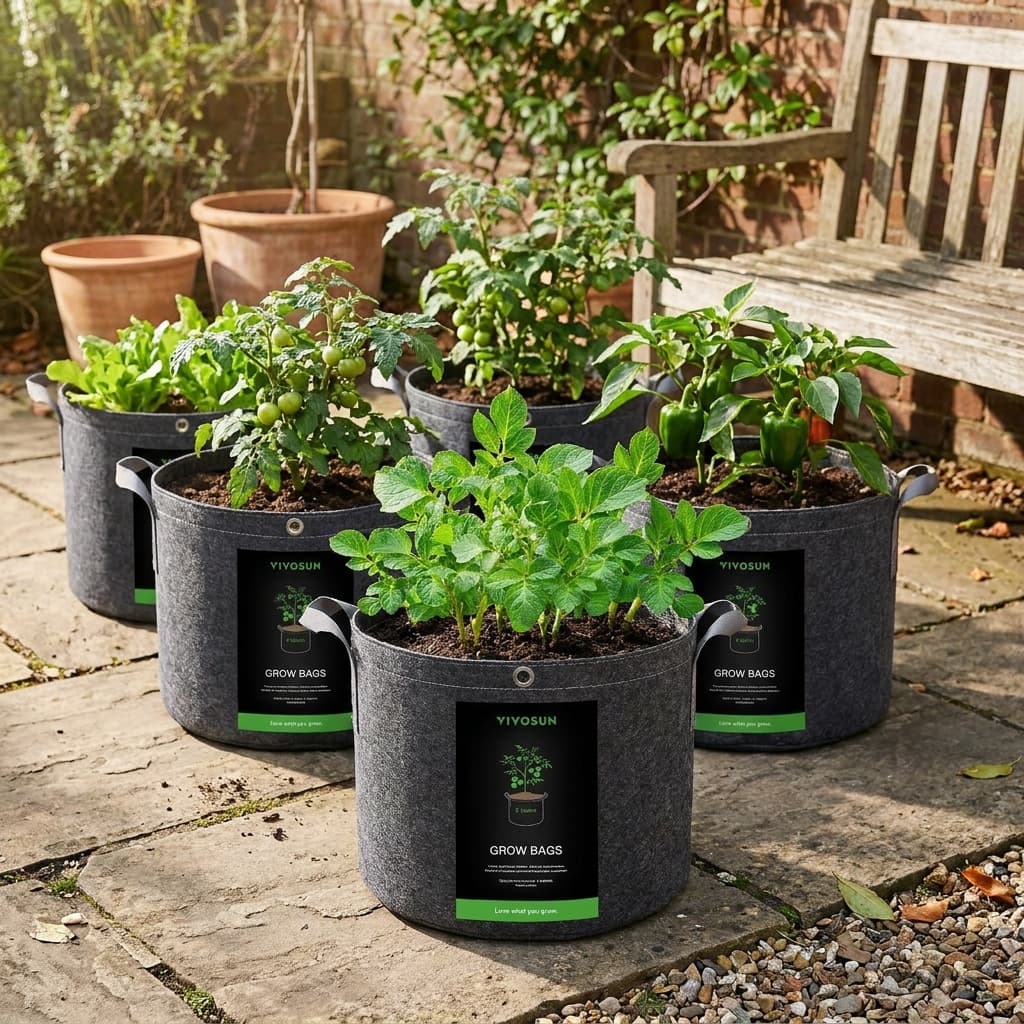
Great for container potatoes
VIVOSUN 5-Gallon Fabric Grow Bags (5-Pack)
Best for: Container growers who want cheap, breathable bags for tomatoes, peppers, or potatoes.
Keep in mind: Dries out faster than rigid containers
Amazon price as of the checked date, subject to change. The price on Amazon at checkout applies.
Full research
- Material
- Nonwoven fabric
- Capacity
- 5 gal each
- Pack
- 5 bags
- Handles
- Reinforced carry handles
VIVOSUN's fabric grow bags are a hugely popular budget pick for container growing. The breathable fabric air-prunes roots, and a five-pack costs little, though the handles can loosen after heavy seasons.
This catalog-wide research score is separate from this guide's use-case ranking. How we research
Strengths
- Breathable fabric air-prunes roots
- Very low cost per bag in a multi-pack
- Fold flat for off-season storage
Weaknesses
- Dries out faster than rigid containers
- Handles can loosen over multiple seasons
Sprout Score breakdown
Best for
Container growers who want cheap, breathable bags for tomatoes, peppers, or potatoes.
Seed potatoes: what to buy and how to prep
Always start with certified disease-free seed potatoes from a reputable seed supplier or garden center, never grocery store potatoes (which may be treated to prevent sprouting and can carry disease). Certified seed stock is inspected and free from common viral and bacterial pathogens.
Preparing your seed pieces
Choose your variety
Cut large tubers
Cure cut pieces
Planting
Set seed pieces cut side down using the planting depth and bed layout on the potato plant profile. Keep the rows accessible from both sides because repeated hilling and regular beetle scouting require room to work.
In a raised bed or container, leave enough empty depth above the seed pieces for repeated hilling and enough access to harvest without cutting tubers.
Cover seed pieces with soil, firm gently, and water in. Shoots should emerge in 2 to 3 weeks depending on soil temperature.
Hilling: the non-negotiable step
Hilling is the practice of mounding soil up along the stems as plants grow. It matters for two reasons: it keeps developing tubers covered so they do not turn green (green potato flesh contains solanine and is mildly toxic), and it gives tubers more loose soil to expand into, which often improves yield.
How and when to hill
First hilling
Second hilling
Total goal
Watering and feeding
Potatoes need consistent moisture while tubers form. Dry soil followed by saturation can produce knobby, misshapen, or cracked tubers. A soaker hose delivering slow moisture at the root zone is ideal. Use the weekly baseline on the potato profile, then adjust for rainfall and soil texture.
Back off water significantly once the vines begin to yellow and die back. Wet soil at harvest leads to disease and poor storage. Stop all water about 10 to 14 days before you plan to dig.
For feeding, potatoes respond well to a balanced organic fertilizer worked into the soil at planting. Once plants are a few inches tall, a side-dress of a vegetable fertilizer supports the long growing season without pushing excessive leaf growth at the expense of tubers.
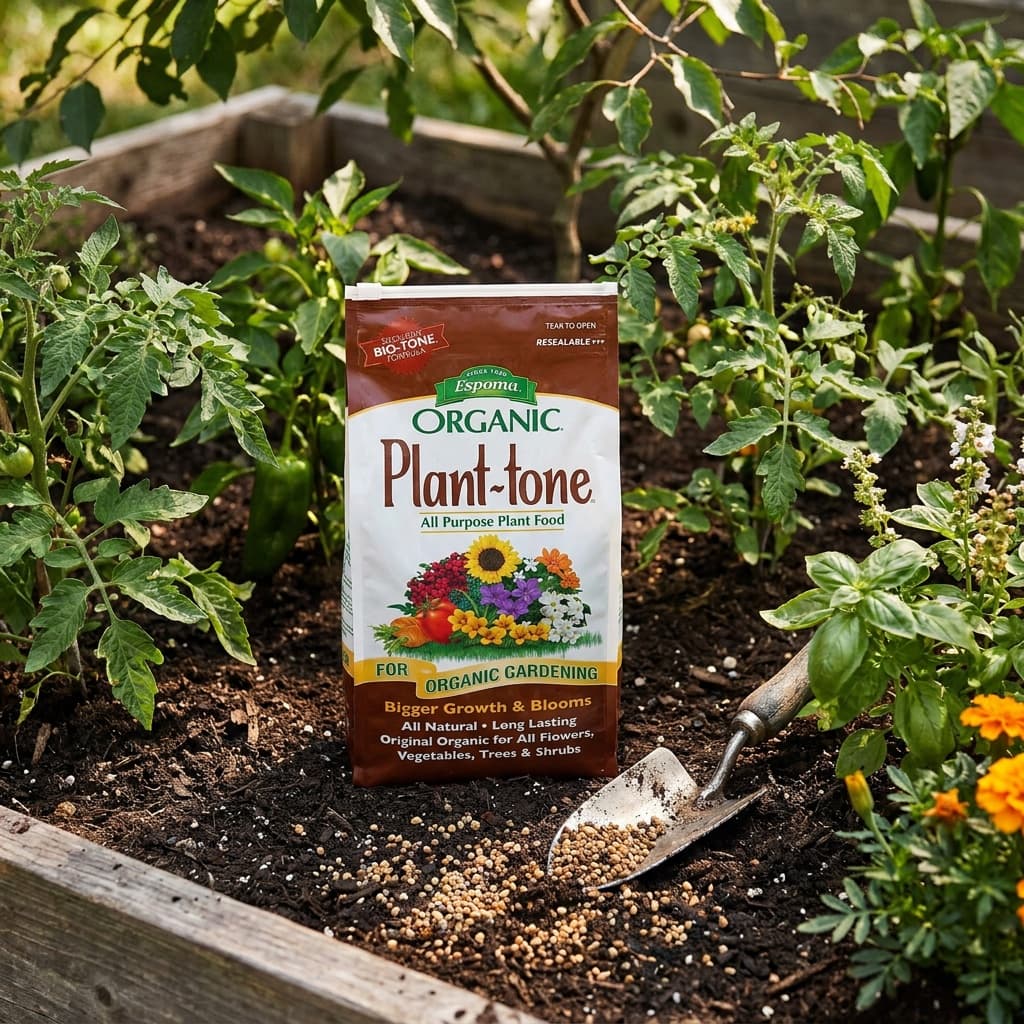
Balanced organic feed
Espoma Plant-tone Organic All-Purpose Fertilizer
Best for: Gardeners who want one safe, all-purpose organic feed for the whole garden.
Keep in mind: Granular organics have a noticeable earthy smell
Amazon price as of the checked date, subject to change. The price on Amazon at checkout applies.
Full research
- NPK
- 5-3-3
- Type
- Granular slow-release organic
- Microbes
- Bio-tone beneficial microbe blend
- Use
- All-purpose: vegetables, flowers, trees, shrubs
A slow-release granular organic fertilizer with a 5-3-3 NPK and the brand's Bio-tone microbe blend. An all-purpose feed for vegetables, flowers, trees, and shrubs that releases gradually over the season.
This catalog-wide research score is separate from this guide's use-case ranking. How we research
Strengths
- Gentle slow-release feeding that resists burning
- Bio-tone microbes support soil biology
- Truly all-purpose across the garden
Weaknesses
- Granular organics have a noticeable earthy smell
- Slower visible response than synthetic feeds
Sprout Score breakdown
Best for
Gardeners who want one safe, all-purpose organic feed for the whole garden.
Owner rating snapshot
Amazon · 15 reviews · 4.7 stars
Common problems to watch
Colorado potato beetles are the most consistent pest: large yellow-and-black-striped beetles and their reddish larvae devour foliage fast. Scout every few days and pick off egg masses (orange clusters on leaf undersides) before larvae hatch. Flea beetles riddle new foliage with small holes and are most damaging on young plants. Wireworms damage tubers underground and are hard to manage once present; rotate away from grass-preceded beds.
On disease: early blight shows up as dark lesions with concentric rings on lower leaves; late blight causes water-soaked lesions that spread rapidly in cool, wet weather. Both are managed with rotation, good airflow, and prompt removal of infected material. Potato scab roughens the skin and is reduced by following the profile's soil target and keeping moisture even during tuber set.
Harvesting and curing
New potatoes are small, thin-skinned tubers eaten soon after digging. Once plants flower, carefully open the side of one hill and check a few tubers without uprooting the main plant.
Full-size storage potatoes are ready when the tops have fully yellowed and died back. Wait 10 to 14 days after dieback before digging; this waiting period thickens the skins for better storage.
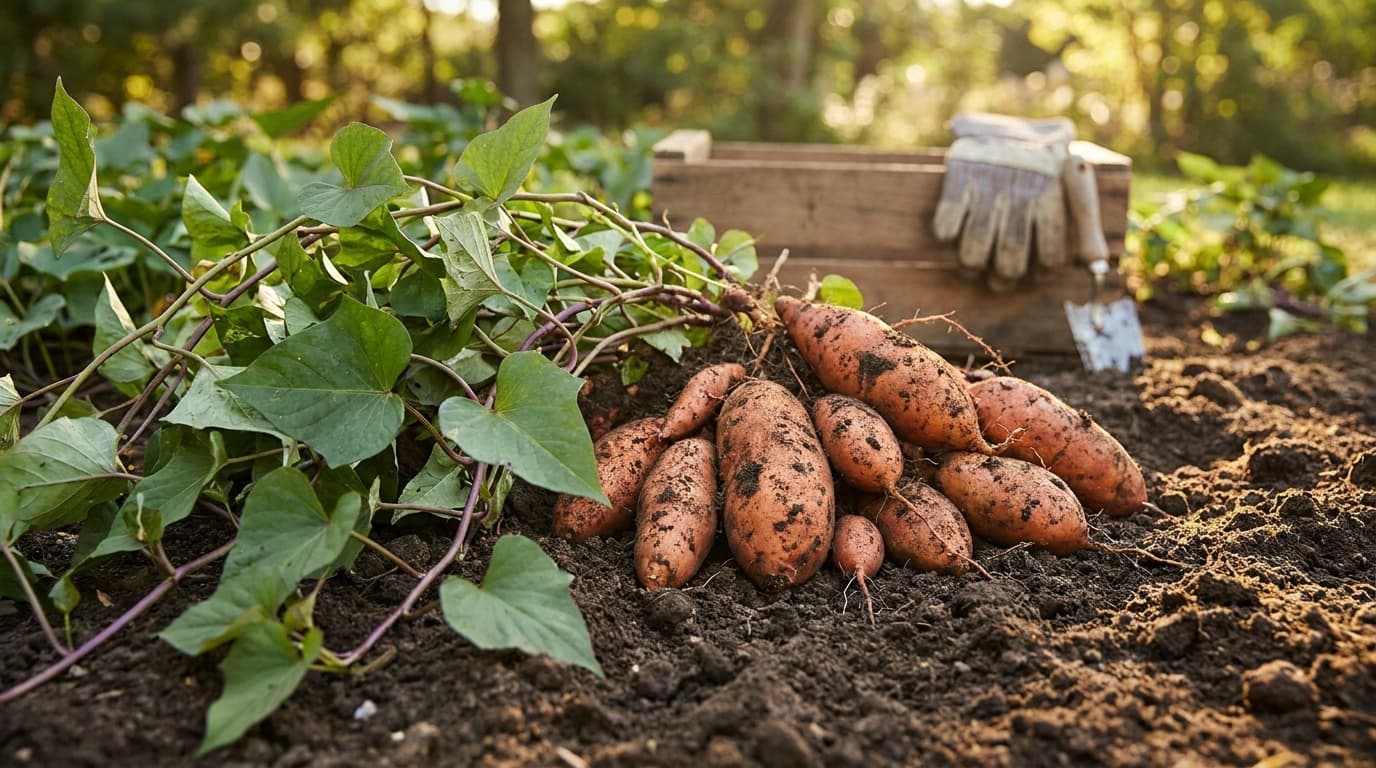
Dig carefully with a garden fork, inserting it at the outer edge of the hill to avoid spearing tubers. Lift, brush off loose soil, and spread in a single layer in a cool, dry, shaded spot (not the sun) for 1 to 2 weeks to cure. Cured potatoes store for months in a cool (38 to 40 degrees F), dark, humid space.
Potatoes in the rotation
Potatoes are heavy brassica-rotation partners in the sense that they share important rotation rules: never follow themselves or other nightshades (tomatoes, peppers) in the same bed for at least 3 years. Both early and late blight, plus soil-borne pathogens, build up quickly without rotation. See the crop rotation guide for a practical rotation schedule.
Should I cut seed potatoes before planting?
Cut large seed potatoes into sturdy pieces with at least one healthy eye each, then leave the cut surfaces exposed to air until they feel dry and callused. Small seed potatoes can go in whole. Discard any piece that becomes soft, moldy, or foul-smelling before planting.
Do I have to hill potatoes?
Yes, if you want clean, edible tubers. Hilling keeps developing potatoes covered with soil so they do not turn green. Green potato flesh contains solanine and should not be eaten. Start hilling when stems reach about 6 inches tall and repeat until you have 6 to 8 inches of soil mounded around the base.
Can I grow potatoes from grocery store potatoes?
It is strongly discouraged. Grocery store potatoes are often treated with a sprout inhibitor and may carry virus or bacterial diseases that spread to your soil. Certified seed potatoes from a garden center or seed supplier are inspected, disease-free, and reliably viable. The difference in germination rate and plant health is significant.
How do I know when potatoes are ready to harvest?
For storage potatoes, wait until the vines have fully yellowed and died back, then wait another 10 to 14 days before digging. That waiting period allows skins to set, which dramatically improves how long potatoes keep. For new potatoes, you can harvest small tubers carefully as early as 6 to 8 weeks after planting once plants have flowered.
Why are my potatoes small or knobby?
Irregular moisture during tuber set is a common cause. Drought followed by heavy rain can restart growth unevenly and produce cracks or knobs. Compacted soil, excess nitrogen, and a variety poorly matched to the season can also limit usable tubers.