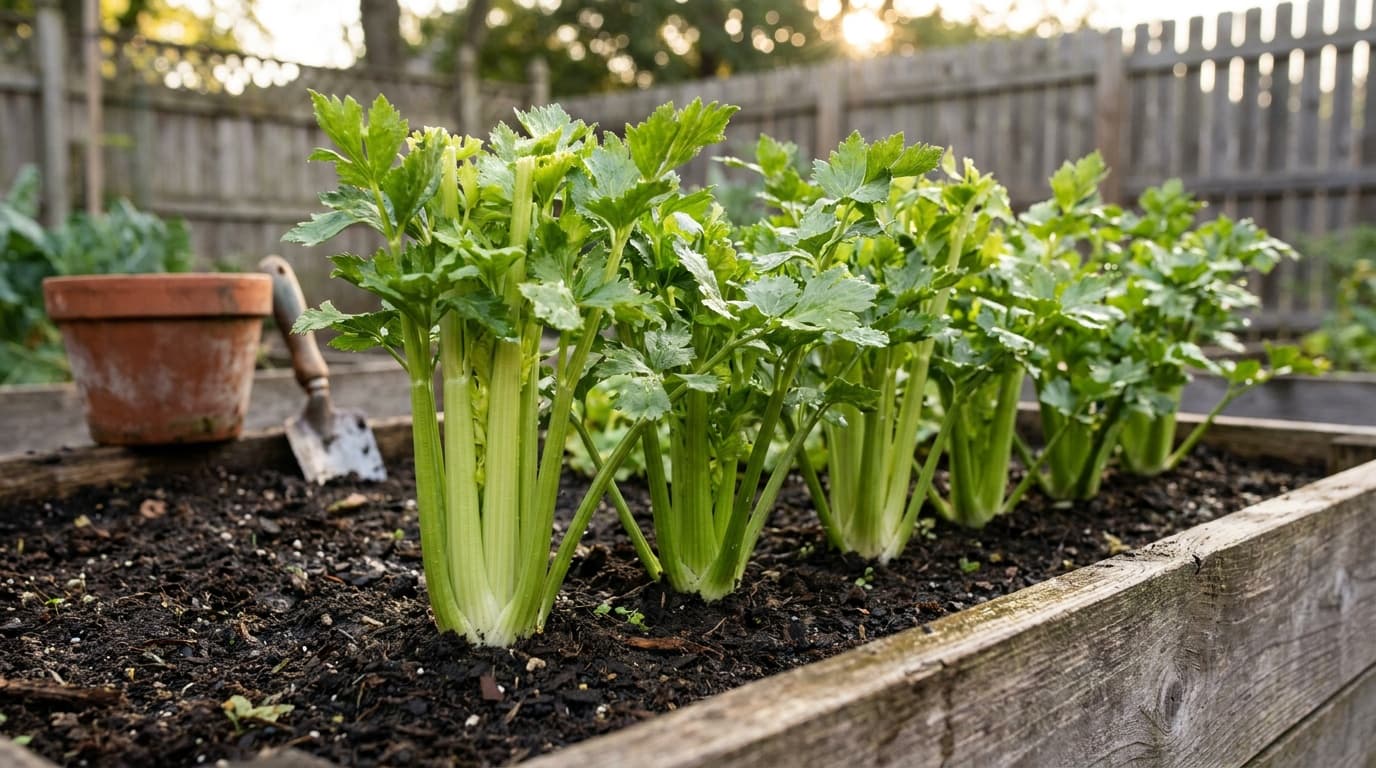
Celery is worth growing when you enjoy managing seedlings and irrigation. It has shallow roots, a long indoor phase, and little tolerance for a dry interval. In return, the garden crop has strong flavor, tender inner stalks, and leaves that are useful as an herb.
Use the celery plant profile for the local planting season, mature plant layout, water benchmark, sun requirement, and harvest estimate. The planting calendar and frost dates tools provide the local schedule without duplicating it here.
Decide whether celery fits your garden
Celery needs a bed that can hold moisture while still draining, a reliable way to irrigate at soil level, and enough attention to feed a shallow root system. A site that dries rapidly or floods after rain will require substantial correction.
First-year gardeners who want a forgiving cool-season crop may prefer lettuce, spinach, or leeks. Celery is a reasonable next challenge once transplant hardening and root-zone irrigation feel familiar.
Start fine seed without burying it
Celery seed is tiny and slow to emerge. Use a fine, sterile seed-starting mix and press seed onto the surface according to the packet. Keep the tray evenly moist with a cover or bottom watering, but remove the cover after emergence so stagnant air does not encourage disease.
Strong overhead light prevents weak, leaning seedlings. Thin congested cells by snipping extras, then move plants into larger cells if roots fill the original tray before the local transplant window arrives.
Some links on this page are affiliate links. As an Amazon Associate I earn from qualifying purchases.
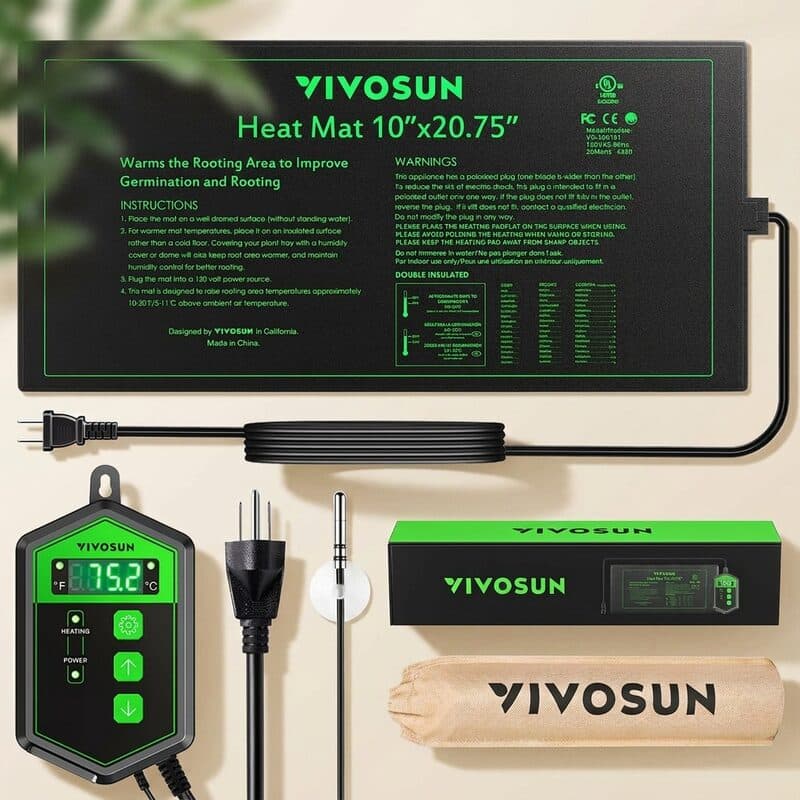
Even germination
VIVOSUN Seedling Heat Mat (10 x 20.75 in)
Best for: Speeding germination of warm-season seeds like tomatoes and peppers.
Keep in mind: No thermostat included (pair with one)
Amazon price as of the checked date, subject to change. The price on Amazon at checkout applies.
Full research
- Size
- 10 x 20.75 in (fits a 1020 tray)
- Power
- 18W
- Construction
- Waterproof, MET-certified
- Warmth
- Raises root-zone temp ~10-20 F above ambient
A waterproof germination mat sized to fit a standard 1020 tray, warming the root zone to speed and improve seed germination. A cheap, high-impact upgrade.
This catalog-wide research score is separate from this guide's use-case ranking. How we research
Strengths
- Fits a standard 1020 tray exactly
- Noticeably faster, more even germination
- Inexpensive and waterproof
Weaknesses
- No thermostat included (pair with one)
- Long-term durability varies between units
Sprout Score breakdown
Best for
Speeding germination of warm-season seeds like tomatoes and peppers.
Owner rating snapshot
Amazon · 14 reviews · 4.5 stars
Harden without shocking the transplants
Celery can respond to prolonged cold stress by bolting later. Harden plants gradually through protected outdoor exposure, increasing light and wind while avoiding a sharp temperature drop. The hardening off seedlings guide covers the progression.
Water the tray before transplanting so each root ball stays intact. Handle plants by a leaf rather than squeezing the crown, and set them at the same soil level they occupied in the cell.
Build a moisture-retentive bed
Work mature compost into the bed to improve water holding and nutrient supply. The soil must still drain after a heavy rain; celery roots need air as well as steady moisture. In fast-draining raised beds, a drip line and surface mulch become especially important.
Set celery transplants up for steady growth
Prepare the irrigation line
Follow the profile layout
Keep the crown exposed
Water in immediately
Mulch after recovery
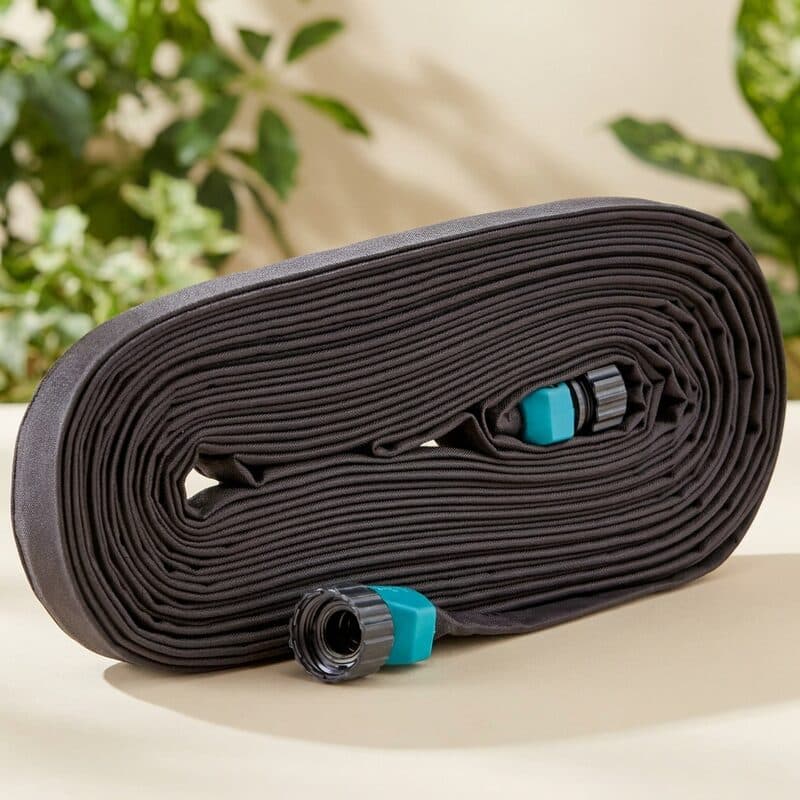
Consistent moisture
Gilmour Flat Weeper Soaker Hose
Best for: Row and border gardeners who want low-waste, root-zone watering on a budget.
Keep in mind: Even output drops over very long runs and on slopes
Amazon price as of the checked date, subject to change. The price on Amazon at checkout applies.
Full research
- Type
- Flat weeper soaker hose
- Lengths
- Available in multiple lengths
- Delivery
- Seeps along the full length
- Connection
- Standard hose faucet
Gilmour's flat weeper soaker hose seeps water along its length to deliver moisture at the root zone, lying flat along rows and borders.
This catalog-wide research score is separate from this guide's use-case ranking. How we research
Strengths
- Delivers water directly to the root zone with little waste
- Flat profile lies neatly along rows and borders
- Inexpensive and easy to route through a bed
Weaknesses
- Even output drops over very long runs and on slopes
- Should be drained and stored to avoid winter damage
Sprout Score breakdown
Best for
Row and border gardeners who want low-waste, root-zone watering on a budget.
Owner rating snapshot
Amazon · 49 reviews · 4.2 stars
Maintain water and nutrition
Check celery more often than deeper-rooted vegetables. Water before the root zone dries completely, but do not keep the bed saturated. A timer can make delivery consistent, while hand checks keep the timer from running after rain.
Feed based on soil condition and plant response. Celery uses nutrients steadily, so one heavy application is less useful than a prepared bed followed by modest side-dressing when growth pales or slows. Keep granular fertilizer away from the crown and shallow roots, scratch it into the surface gently, and water afterward.
Prevent stringy stalks and black heart
Stringy or hollow stalks commonly follow interrupted growth. Drought, heat, root damage, and nutrient stress can all contribute. The correction is consistent care, not a late surge of water or fertilizer.
Black heart begins in the tender center as brown or black tissue. It is associated with calcium failing to reach fast-growing leaves, often because moisture has fluctuated or roots are impaired. Remove affected tissue, restore even moisture, and use a soil test before adding lime, gypsum, or another calcium source.
Do not blanch ordinary green celery by piling soil against the crown. If you want paler stalks, select a self-blanching cultivar or wrap the stalk bundle loosely with breathable material while keeping the center dry and open.
Common problems
Aphids hide among the inner stalks. Inspect the crown before colonies are large enough to contaminate the harvest.
Leaf miners create pale trails through leaves. Remove badly damaged foliage and protect young plants from adult flies.
Slugs shelter beneath mulch and feed inside the crown. Pull mulch back temporarily if damage increases and remove nearby hiding places.
Early blight and other leaf spots spread more readily when foliage stays wet. Water at the soil line, avoid handling wet leaves, and remove infected residue.
Aster yellows causes distorted yellow growth and has no cure. Remove affected plants promptly so leafhoppers do not move the pathogen to healthy crops.
Harvest for the kitchen
Harvest can be selective or whole-plant. For repeated use, remove firm outer stalks at the base while leaving the central growing point intact. For a full head, cut cleanly at soil level or lift the root ball and trim it away.
Harvest celery cleanly
Choose firm stalks
Cut at the base
Keep the center intact
Cool immediately
Leaves have concentrated celery flavor. Use healthy leaves fresh, dry them, or freeze them for soups and stocks rather than discarding them.
Why is celery considered difficult to grow?
Its roots are shallow and it reacts strongly to drought, saturation, cold stress, and interrupted feeding. A reliable irrigation setup and well-managed transplants remove much of that difficulty.
What causes black heart in celery?
The center fails when calcium does not reach fast-growing tissue, often because moisture fluctuates or roots are unhealthy. Restore consistent root-zone conditions and test the soil before adding any calcium amendment.
Why are my celery stalks stringy or hollow?
Interrupted growth is the common pattern. Review moisture, root health, heat stress, and nutrition, then correct the ongoing condition instead of applying a large one-time dose of water or fertilizer.
Can I harvest celery one stalk at a time?
Yes. Cut firm outer stalks at the base and leave the center intact. This works best on a healthy plant that continues receiving steady moisture and nutrition.
Can celery grow in a raised bed?
Yes, especially when the bed contains compost-rich soil and a dependable drip or soaker line. Raised beds can dry quickly, so mulch and frequent soil checks matter more than the bed itself.
What to do next
Celery is an exercise in continuity. Raise compact transplants, avoid cold shock, protect the crown, and keep water and nutrition steady. If growth never stalls, stalk quality improves dramatically.