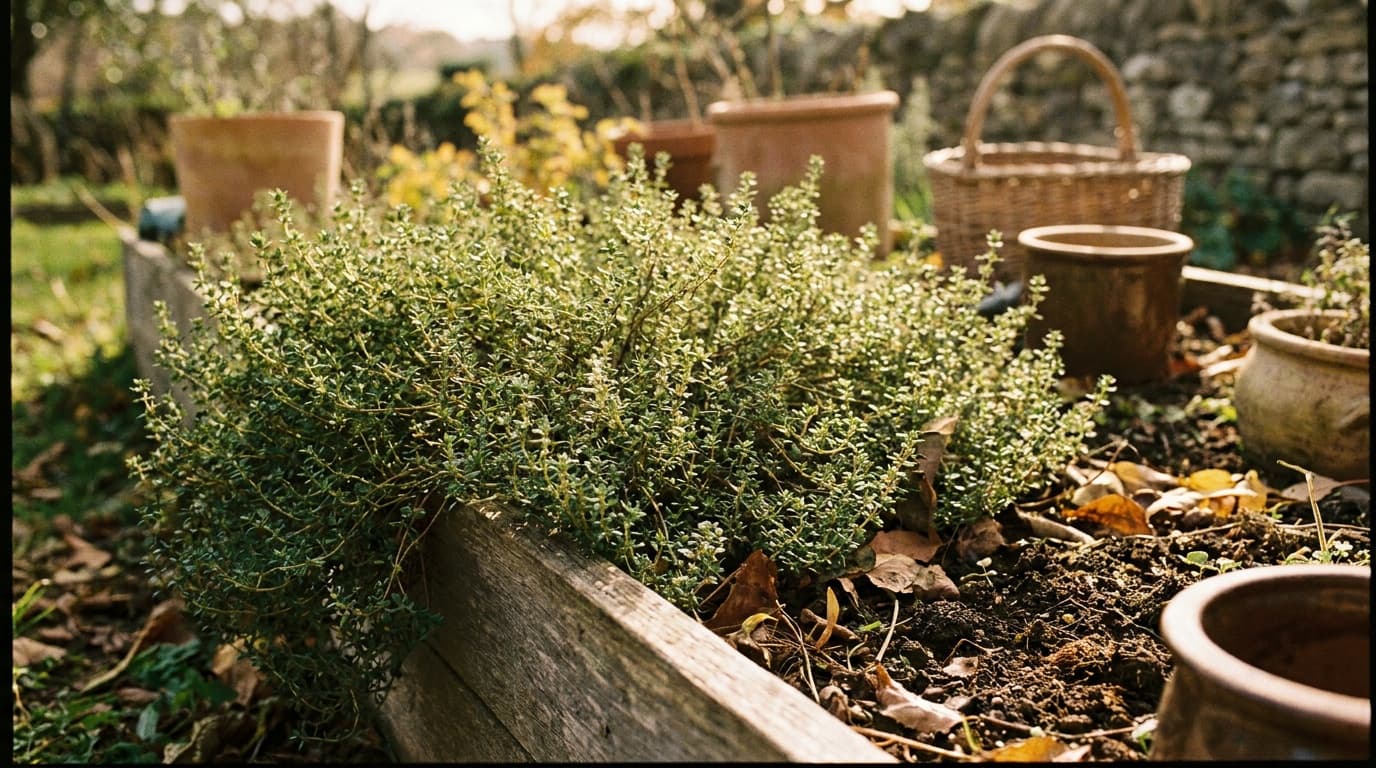
Common thyme (Thymus vulgaris) is a low woody subshrub, not a leafy annual herb. Its structure explains the care routine: green tips branch after pruning, old bare stems may not, and a constantly wet crown declines even when the leaves look drought-stressed.
The thyme plant profile holds the local planting season, sun requirement, and other measured growing facts. Use it with the planting calendar and frost dates tools for a location-specific plan.
Start with a plant, cutting, or division
Seed-grown thyme can be variable and slow. A nursery plant gives immediate structure, while a cutting or division preserves the exact flavor and habit of a parent plant.
Inspect a purchased plant at the crown. Choose green growth emerging from several points, roots that hold the mix together without forming a hard coil, and foliage free of gray mold or white powder.
Propagate thyme from cuttings
Choose a green non-flowering tip
Strip the lower leaves
Use a fast-draining medium
Hold gentle moisture
Pot after resistance develops
Division is useful when the outer edge of an older clump remains vigorous. Lift the plant, separate rooted green sections from the tired woody center, and replant only the strongest pieces.
Make drainage the first site decision
Thyme needs a root zone that drains quickly after rain. Heavy clay, a low spot, or a saucer beneath a container can hold enough water to damage roots. Improve a slow bed with mineral grit and elevation, or use a raised bed or container instead.
Follow the thyme plant profile for sun and mature layout. Place it near herbs that prefer the same dry conditions rather than beside a crop that needs frequent irrigation.
Set the plant with the crown level with the soil surface. Burying woody stems traps moisture against them. Water once to settle roots, then let the upper root zone begin drying before irrigating again.
Water and feed with restraint
Check the soil rather than following a fixed schedule. Push a finger into the root zone; if it is still moist, wait. Container thyme changes faster than in-ground thyme but still should not remain wet.
Routine fertilizer is unnecessary in a reasonable garden soil. Heavy feeding creates soft, sprawling growth with weaker flavor. If a container plant pales after long use, apply a dilute feed and watch the response before repeating it.
Prune without cutting into dead wood
Frequent harvest keeps green tips branching, but the main shaping cut comes after flowering. Reduce the plant by about one-third, cutting only where green leaves remain below the blade.
Prune a woody thyme plant safely
Find the live framework
Cut above green growth
Open the center lightly
Stop at bare wood
Root replacements early
If the center is mostly bare and the outer ring carries all useful foliage, division or replacement is a better choice than severe pruning.
Harvest and dry thyme
Snip tender stem tips throughout active growth. For a large harvest, cut around flowering when aroma is strong, while still leaving enough green structure for recovery.
Bundle only a few stems together or spread them in a single layer with good airflow. Once leaves are crisp, strip them from the stems and store them in a sealed jar away from light. Properly dried thyme keeps its flavor better than many leafy herbs.
Protect the plant through wet weather
Cold alone is not the only winter risk. Repeated saturation, freeze-thaw heaving, and mulch packed against the crown can damage roots and stems. Keep drainage paths open, remove wet leaf litter from the crown, and use a light airy mulch only where local conditions call for it.
Container thyme can move to a sheltered outdoor position or an unheated protected space. Keep it cool and bright enough for dormancy, and water sparingly so the root ball does not stay saturated.
Common problems
Root rot: A plant wilts while the root zone remains wet, and stems may darken at the crown. Improve drainage and review root rot.
Powdery mildew: White growth appears on crowded foliage. Open the canopy and improve airflow. See powdery mildew.
Gray mold: Damaged stems develop fuzzy gray growth in damp weather. Remove affected tissue and keep foliage dry. See gray mold.
Aphids: Small colonies gather on soft new tips. A firm water spray often removes them. See aphids.
Place thyme with compatible plants
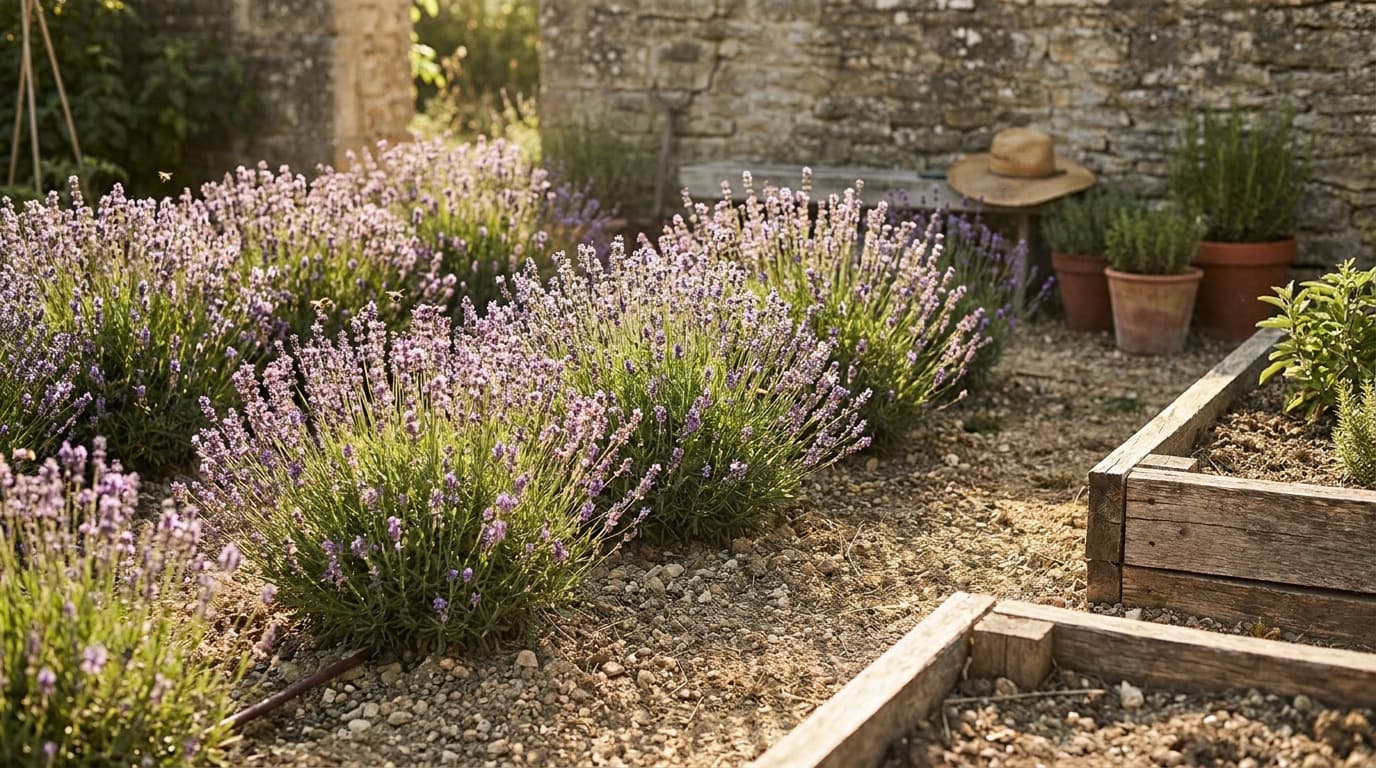
Thyme fits naturally with rosemary, sage, and lavender because they share a preference for drainage and restrained irrigation. Keep basil on a separate watering pattern even when the herbs grow nearby. The companion planting guide separates evidence-connected relationships from garden folklore.
The broader guides to rosemary, lavender, and sage explain how those neighboring herbs differ in pruning and winter care.
Why is my thyme becoming woody in the center?
That is a normal aging pattern, made worse by missed pruning. Keep cuts within green growth, divide vigorous outer sections, and root replacement cuttings before the center declines completely.
Can thyme grow in a container?
Yes. Use a free-draining mix, generous drainage holes, and no standing saucer water. Check the soil before irrigating and divide or replace the plant when the center becomes woody.
How should I prune thyme after flowering?
Reduce green growth by about one-third, leaving leafy buds below each cut. Remove dead stems separately and stop before reaching bare old wood.
Why does thyme wilt even though the soil is wet?
Roots damaged by saturation cannot supply the leaves. Stop watering, inspect drainage and the crown, remove decayed tissue, and move a salvageable plant into a faster-draining medium.
What is the difference between common thyme and lemon thyme?
Common thyme has the familiar savory flavor used in many cooked dishes. Lemon thyme adds a citrus aroma. Their drainage and pruning needs are similar, but the flavor and growth habit vary by cultivar.
What to do next
Thyme needs good drainage, modest fertility, and pruning that stays within green growth. When a clump ages, renew it from vigorous outer stems instead of cutting hard into bare wood.