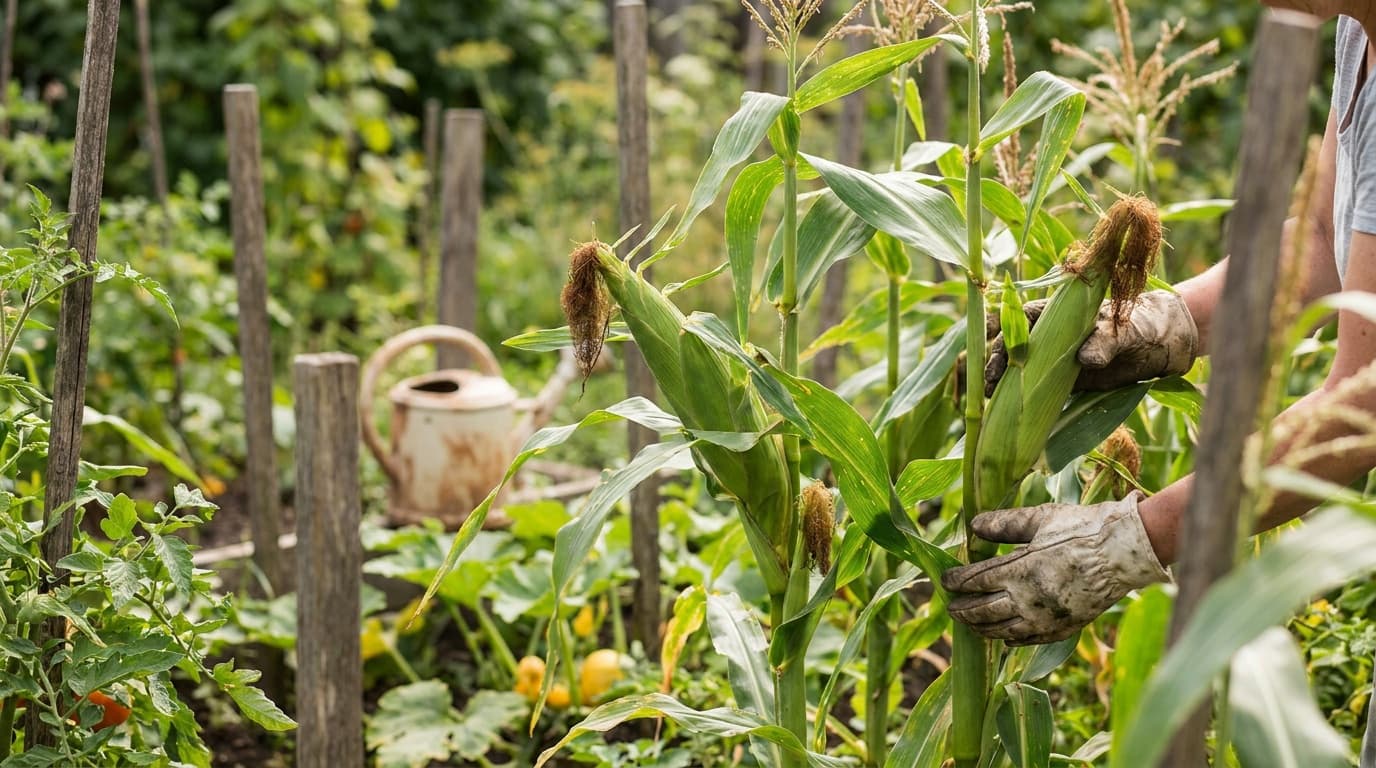
Sweet corn succeeds or fails largely on planting arrangement, fertility, moisture, and pollination. A healthy stand in a compact block is easier for wind to pollinate and easier for the gardener to water and feed evenly.
For a continuous harvest, sow successive plantings every 2 to 3 weeks, or plant early, mid-season, and late varieties at the same time. The succession planting guide walks through the math.
Site and soil
Sweet corn is a tall, dense crop that can shade nearby plants, so place the block where its canopy will not cover shorter crops. The sweet corn profile carries the exact light and soil targets.
Soil should be well drained, moderately fertile to start, and worked deeply enough for strong anchoring roots. Amend heavy clay or thin sandy soil with mature compost before planting.
Corn is the heaviest nitrogen feeder in most vegetable gardens. Plan for a starter fertilizer at planting and at least one sidedress application of nitrogen when plants are knee-high (more on this below).
Planting: blocks, not rows
This is the rule that surprises most first-time corn growers. Corn is pollinated by wind: pollen falls from the tassels at the top of each stalk onto the silks below. If you plant one long row, pollen blows sideways and most silks go unvisited, which means you get ears with missing or scattered kernels. Poor pollination is the most common reason for patchy ears.
The fix is a block planting: multiple short rows side by side so pollen falls into the silks of neighboring plants. A minimum of 4 rows is the standard recommendation from extension sources; more is better if you have space.
How to plant corn in blocks
Prepare a wide bed
Lay out from the profile
Plant in a minimum of 4 rows
Keep varieties isolated
Watering
Corn is moderately drought-tolerant once established but has two critical windows where moisture shortage causes immediate and irreversible damage:
- Tasseling and silking. This is when pollination happens. Drought stress during the one to two weeks when silks emerge cuts kernel set hard. Water deeply and consistently during this window.
- Ear fill. Kernels need water to develop. A dry spell after pollination reduces yield even if silking went well.
Outside those windows, deep, infrequent watering encourages strong rooting. Use the weekly baseline on the sweet corn profile, then adjust for rainfall, wind, and soil texture.
A soaker hose delivers water to the root zone without wetting the foliage, which also reduces the risk of fungal issues.
Some links on this page are affiliate links. As an Amazon Associate I earn from qualifying purchases.
Deep root watering
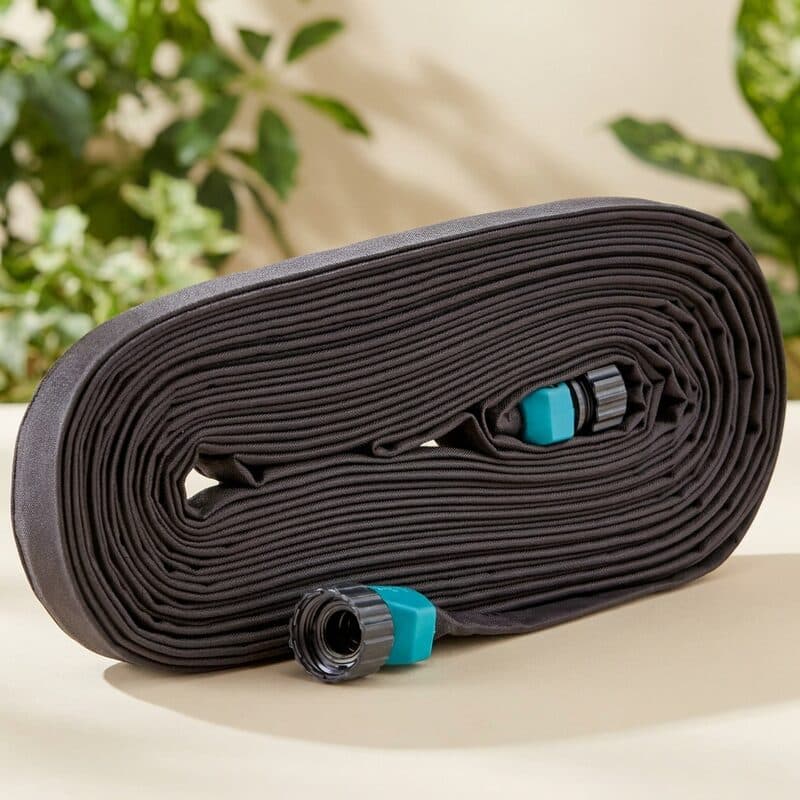
Gilmour Flat Weeper Soaker Hose
Best for: Row and border gardeners who want low-waste, root-zone watering on a budget.
Keep in mind: Even output drops over very long runs and on slopes
Amazon price as of the checked date, subject to change. The price on Amazon at checkout applies.
Full research
- Type
- Flat weeper soaker hose
- Lengths
- Available in multiple lengths
- Delivery
- Seeps along the full length
- Connection
- Standard hose faucet
Gilmour's flat weeper soaker hose seeps water along its length to deliver moisture at the root zone, lying flat along rows and borders.
This catalog-wide research score is separate from this guide's use-case ranking. How we research
Strengths
- Delivers water directly to the root zone with little waste
- Flat profile lies neatly along rows and borders
- Inexpensive and easy to route through a bed
Weaknesses
- Even output drops over very long runs and on slopes
- Should be drained and stored to avoid winter damage
Sprout Score breakdown
Best for
Row and border gardeners who want low-waste, root-zone watering on a budget.
Owner rating snapshot
Amazon · 49 reviews · 4.2 stars
Feeding: corn is a heavy nitrogen feeder
Sweet corn needs more nitrogen than almost any other vegetable garden crop. A three-stage fertility plan is what extension recommendations consistently call for:
Corn fertilizer timing
At planting
Sidedress at knee-high
Optional second sidedress

Balanced vegetable feed
Down to Earth All Purpose Mix 4-6-2
Best for: Organic gardeners who want a balanced, plastic-free all-purpose feed.
Keep in mind: Sometimes harder to find in big-box stores
Amazon price as of the checked date, subject to change. The price on Amazon at checkout applies.
Full research
- NPK
- 4-6-2
- Type
- Granular organic blend
- Use
- All-purpose: vegetables, flowers, herbs
- Packaging
- Compostable cardboard box
A balanced 4-6-2 all-purpose organic fertilizer blended from quality natural inputs and sold in a compostable box. A versatile feed for vegetable gardens, flower beds, and herbs.
This catalog-wide research score is separate from this guide's use-case ranking. How we research
Strengths
- Balanced all-purpose organic formulation
- Compostable, plastic-free packaging
- No synthetic additives or fillers
Weaknesses
- Sometimes harder to find in big-box stores
- Organic granules release slowly
Sprout Score breakdown
Best for
Organic gardeners who want a balanced, plastic-free all-purpose feed.
Avoid excess nitrogen after tasseling; late, heavy nitrogen feeding pushes foliage growth at the expense of kernel fill.
Pollination: understanding tassels and silks
Each corn plant produces both male (tassel) and female (silk) flowers. When the tassel sheds pollen and it lands on the silks, each fertilized silk produces one kernel on the ear. An ear of corn with 400 kernels needed 400 successful pollinations.
Silks are receptive for about 5 to 10 days after they emerge. Block planting maximizes the chance that pollen from surrounding plants reaches every silk. Hot, dry weather shortens silk viability, which is another reason to water consistently during silking.
If you have a very small block and notice silks turning brown quickly without pollen reaching them, you can hand-pollinate by shaking tassels into a bag and dusting the silks directly.
Common problems
- Corn earworm: the most widespread pest. Larvae enter at the silk tip. Applying mineral oil or Bt to the silk right after pollination is complete is the standard organic management approach.
- Cutworms: cut young plants off at soil level. Protective collars around transplants or parasitic nematode soil drenches reduce damage.
- Flea beetles: small, jumping beetles that pit leaves. Worst on young seedlings; plants often outgrow damage once established.
- Aphids: cluster on tassels and young leaves; often managed by beneficial insects but can reduce yield in heavy infestations.
- Japanese beetle: feeds on silks, which disrupts pollination. Hand pick or use kaolin clay during silking.
Row cover can protect seedlings from early flea beetle and cutworm pressure, but it must be removed before tasseling so wind pollination can occur.
Harvesting
Sweet corn has a narrow picking window, roughly 3 weeks from silking to ideal eating quality at summer temperatures, with the best eating window measured in days rather than weeks.
Signs of harvest readiness:
- Silks are brown and dry at the tip but still slightly moist near the husk
- The ear feels full and firm along its length
- A thumbnail pressed into a kernel releases milky (not watery, not doughy) juice
- The husk is deep green and tight against the ear
Pull ears downward and twist to snap from the stalk. Sugar converts to starch rapidly after harvest. If you aren't eating it the same day, refrigerate immediately.
Why does my sweet corn have missing or scattered kernels?
Incomplete pollination is almost always the reason. Corn pollinates by wind, and pollen must fall from the tassels onto the silks for each kernel to develop. A single long row gives poor pollen distribution. The fix is block planting: at least 4 rows wide so pollen moves between plants. Hot, dry weather during silking and short silk viability windows can also cut kernel set.
Why should sweet corn grow in a block?
Corn relies on wind to move pollen from tassels to silks. A compact block puts neighboring plants around each ear, while one long row lets much of the pollen blow past. Use the plant layout in the sweet corn profile, but keep the overall stand broad rather than narrow.
How do I know when sweet corn is ready to pick?
Check the silks (brown and dry at the tip), feel the ear (full and firm along its length), and do the thumbnail test: pierce a kernel with your nail. Milky juice means prime eating quality. Watery juice means too early; doughy or starchy means past peak.
Do I need to plant sweet corn away from other types of corn?
Yes, if you are growing multiple varieties or have neighbors growing field corn nearby. Different varieties cross-pollinate and the result affects this season's eating quality directly. Isolate them by substantial distance or stagger planting dates so they tassel about 2 weeks apart.
How much nitrogen does sweet corn need?
More than most vegetables. A starter fertilizer at planting, a nitrogen sidedress at knee height, and possibly a second at tasseling is the standard extension recommendation. Sandy soils and wet seasons that leach nitrogen may need additional feeding. Yellowing from the bottom leaves upward is the classic sign of nitrogen deficiency mid-season.
See also: how to grow zucchini, how to grow pumpkins, watering vegetable gardens, sweet corn plant profile.