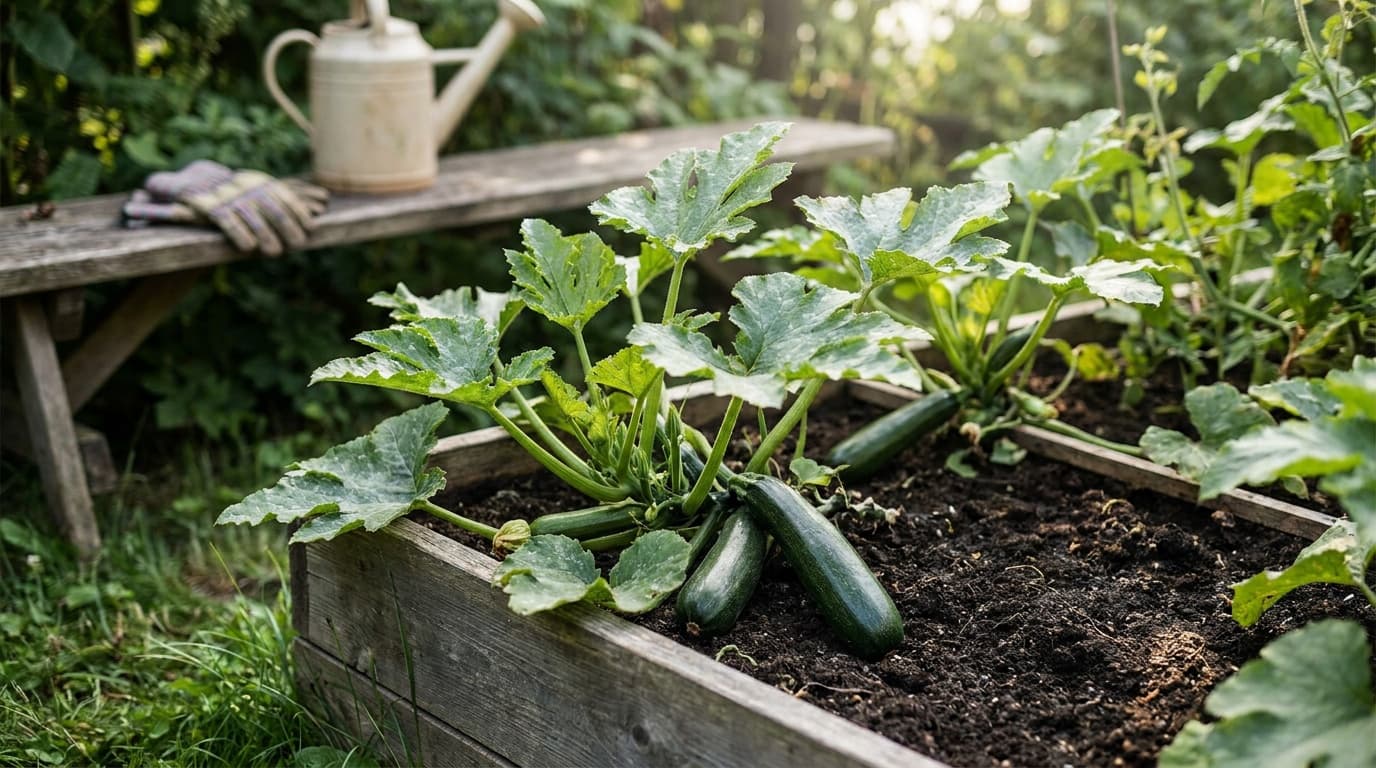
Zucchini is famously productive. The real skill is keeping each plant healthy through its productive window and noticing squash vine borer or squash bug activity before damage becomes severe.
Protect the crown and root zone
Choose a bright, open bed with good air movement. The zucchini profile carries exact light and soil requirements.
Work mature compost through loose, well-draining soil before planting. A raised bed can improve drainage in heavy clay or compacted native soil.
Good soil structure also matters for drainage. Zucchini roots sitting in waterlogged soil develop crown rot quickly. If drainage is poor, mound soil slightly before planting or use a raised bed.
Choose a compact or trailing habit
Check the seed packet before assigning bed space. Bush zucchini stays centered around one crown, while trailing types need a clear direction to run. Use the bed layout in the zucchini plant profile, then thin extra seedlings by cutting them at soil level so the remaining roots stay undisturbed.
Watering and feeding
Water deeply at the root zone rather than sprinkling the foliage and crown. Wet leaves in warm weather favor powdery mildew, and a constantly wet crown can rot. Use the weekly baseline on the zucchini profile, then adjust for rain and soil moisture.
A drip line or soaker hose delivering water at the base of each plant is ideal. Mulching around the base (leaving a few inches clear of the crown itself) retains soil moisture and reduces the wet-dry fluctuation that stresses plants.
See our watering guide for vegetable gardens and mulching guide for more on both.
Feeding: Work compost and a granular vegetable fertilizer into the soil before planting. Once plants are established and beginning to flower, side-dress with a balanced fertilizer every 3 to 4 weeks. Zucchini are heavy feeders and respond visibly to adequate fertility over the course of a long season.
Some links on this page are affiliate links. As an Amazon Associate I earn from qualifying purchases.

Balanced all-season feed
Down to Earth All Purpose Mix 4-6-2
Best for: Organic gardeners who want a balanced, plastic-free all-purpose feed.
Keep in mind: Sometimes harder to find in big-box stores
Amazon price as of the checked date, subject to change. The price on Amazon at checkout applies.
Full research
- NPK
- 4-6-2
- Type
- Granular organic blend
- Use
- All-purpose: vegetables, flowers, herbs
- Packaging
- Compostable cardboard box
A balanced 4-6-2 all-purpose organic fertilizer blended from quality natural inputs and sold in a compostable box. A versatile feed for vegetable gardens, flower beds, and herbs.
This catalog-wide research score is separate from this guide's use-case ranking. How we research
Strengths
- Balanced all-purpose organic formulation
- Compostable, plastic-free packaging
- No synthetic additives or fillers
Weaknesses
- Sometimes harder to find in big-box stores
- Organic granules release slowly
Sprout Score breakdown
Best for
Organic gardeners who want a balanced, plastic-free all-purpose feed.
Pollination
Zucchini (like all cucurbits) produces separate male and female flowers on the same plant. Male flowers open first, typically a week or more before female flowers appear. Female flowers have a tiny embryonic zucchini at the base; male flowers do not.
Bees, especially bumblebees and native squash bees, transfer pollen from male to female flowers. Flowers are only open for a few hours in the morning. Poor weather, low bee activity, or anything blocking bee access (including row cover left on too long) can cause fruit to fail to set.
Diagnosing poor fruit set
Female flowers with no small zucchini at the base
Small zucchini starts then shrivels and falls off
No flowers at all
If you see no bees visiting your flowers in the morning, hand-pollinate using a small paintbrush to transfer pollen from a male flower to the center of an open female flower. This is often the solution to sporadic fruit set during cloudy weather or heat waves. For full guidance, see our poor pollination guide.
Common problems to watch for
Zucchini faces a specific set of threats that are different from tomatoes and peppers. The two pest problems below are worth treating seriously.
Pests:
- Squash vine borer: The larvae of a moth burrow into the base of the main stem, disrupt water and nutrient flow, and can collapse a plant suddenly. Signs include sawdust-like frass at the stem base. Protect young stems, inspect for egg masses, and act before larvae enter the stem. In some regions, a second planting can avoid the main egg-laying period.
- Squash bug: Flat, brownish-gray bugs that cluster on the undersides of leaves and at the base of the plant. They suck sap and inject a toxin that causes leaves to wilt and turn black. Clusters of bronze-colored eggs are laid on leaf undersides. Remove egg masses and young nymphs by hand; they are much harder to manage once they reach adult stage. Check the base of the plant and undersides of lower leaves regularly from midsummer onward.
Diseases:
- Powdery mildew: White powdery coating on leaves, almost universal on zucchini by late summer. It rarely kills plants but reduces vigor and yield. Improve airflow, water at the base, remove heavily affected leaves, and choose mildew-resistant varieties if it is a chronic problem in your garden.
Harvesting zucchini
Harvest at 6 to 8 inches long. At this size the skin is thin, the flesh is tender, the seeds are small, and the flavor is best. A zucchini left on the plant grows astonishingly fast; a 6-inch fruit can double in size in 48 hours in warm weather.
Check plants every 2 to 3 days throughout the season. Once a zucchini is missed and grows large, it signals the plant to slow or stop new fruit production. If you find an overlooked giant, remove it promptly to restart the plant's production cycle.
Cut the stem with pruners or scissors rather than pulling. Leave about an inch of stem attached to the fruit.
Growing zucchini in containers
Zucchini can be grown in large containers but requires a pot of at least 15 gallons to accommodate the root system. Choose a compact bush variety. Place in full sun and water daily in hot weather since large container plants dry out quickly.
See our container gardening guide for soil and sizing details.
For related crops, cucumbers share zucchini's warmth requirements and pollination needs. Pumpkins are in the same cucurbit family and face the same pest threats.
Should I start zucchini indoors?
Direct sowing is usually simpler because zucchini grows quickly and dislikes root disturbance. An indoor start can help where the season is tight, but use individual containers, keep the start compact, harden it carefully, and transplant without breaking the root ball.
Can zucchini grow vertically?
Some compact varieties can be trained upright by tying the main stem to a strong stake as it grows. This improves access and airflow but does not make the root system or leaves small. Remove only old leaves that block access or show disease, and support the stem without pinching it.
Why are my zucchini flowers falling off without producing fruit?
The most common cause is incomplete pollination. Bees must transfer pollen from male flowers to female flowers, and this happens only in the morning when flowers are open. Low bee activity, cloudy weather, or row cover blocking access all reduce pollination. Try hand-pollinating in the morning and see our poor pollination guide for more.
What is the white powder on my zucchini leaves?
That is powdery mildew, a fungal disease that is nearly universal on zucchini by late summer. It rarely kills the plant quickly but does reduce vigor. Improve airflow by not crowding plants, water at the base rather than overhead, and remove heavily affected leaves. Mildew-resistant varieties help if it is a recurring problem.
How do I stop squash vine borer from killing my zucchini?
Prevention is the only reliable strategy. The moth lays eggs at the base of the stem; once larvae burrow inside, management options are limited. Wrap the stem base with row cover or aluminum foil early in the season, inspect stems weekly for frass (sawdust-like material) or eggs, and remove eggs by hand. See our full squash vine borer guide for timing, identification, and management options.