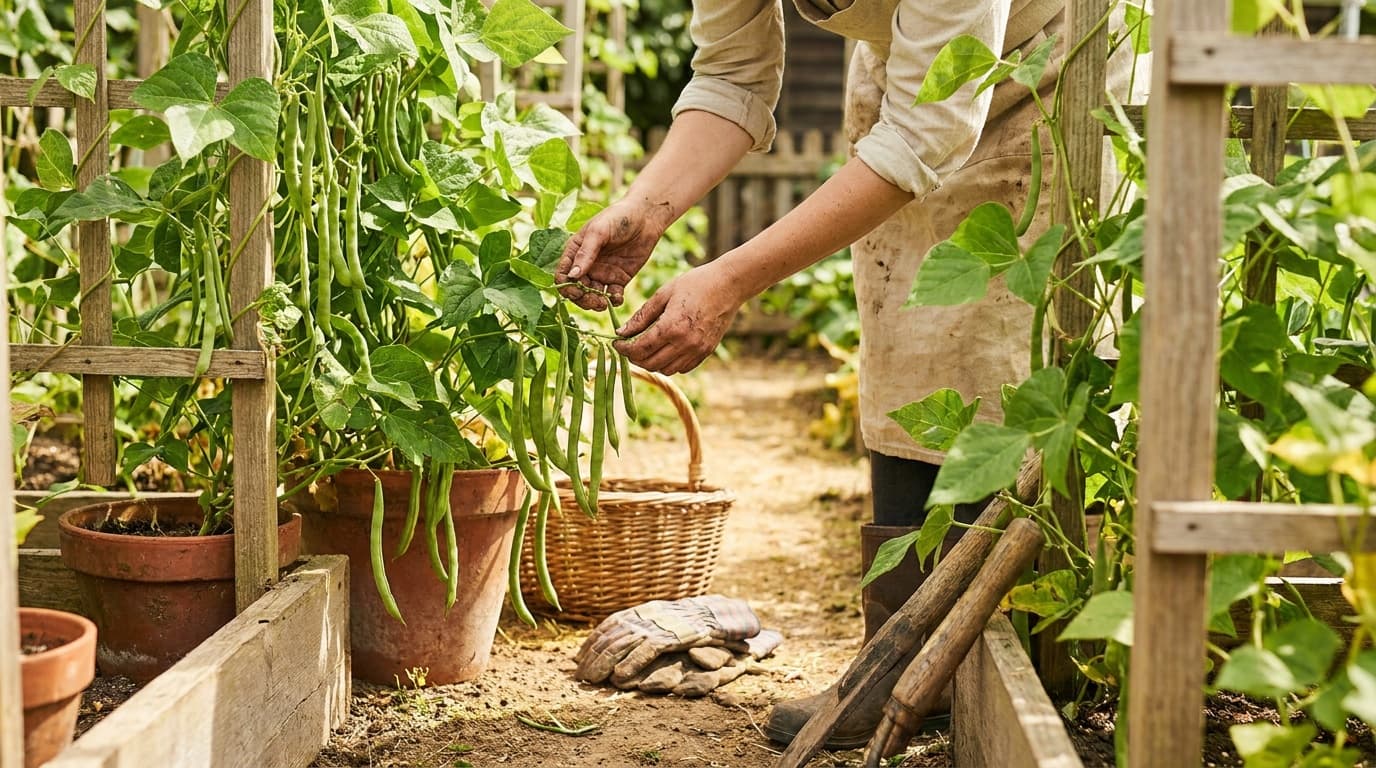
Green beans are simple once the garden matches the plant's growth habit. Bush beans suit quick batches and preserving. Pole beans use vertical space and keep producing when picked often. The main avoidable failures are sowing into unsuitable soil, installing a trellis too late, overfeeding nitrogen, and leaving mature pods on the plant.
Use the green bean plant profile for the local sowing window, seed depth, mature plant layout, sun requirement, and harvest estimate. The planting calendar and frost dates tools provide the location-specific schedule. After selecting a bed style, the spacing calculator can estimate planting capacity from the profile data.
Choose bush or pole beans
Bush beans grow as self-supporting plants and tend to produce a concentrated flush. They work well when you want a manageable bed, plan to freeze or can a batch, or prefer not to build a support.
Pole beans climb and keep flowering as long as the plant remains healthy and mature pods are removed. They use less ground area for a long harvest, but they need a trellis sturdy enough to carry wet foliage and a full crop.
For a vertical garden, see vertical gardening vegetables. In a container, bush types are simpler. Choose a deep, wide pot with enough soil volume for a compact planting, while pole beans need a larger, heavier container that will not tip with the trellis. The container gardening guide covers drainage and potting mix.
Prepare the bed and support
Beans need drainage more than rich soil. Loosen compacted areas, remove weeds, and add finished compost if the soil lacks organic matter. Avoid fresh manure or a heavy nitrogen application because lush vines can replace flowers and pods.
Install support before sowing pole beans. Driving stakes through an established root zone damages plants and is harder once vines begin searching for something to climb.
Build support before sowing
Choose a stable frame
Give vines height
Add close climbing points
Test the anchors
Direct sow without damaging seed
Beans establish best where they will finish. Follow the green bean plant profile for seed depth and bed layout, then follow the packet when a specific cultivar differs. Firm the soil gently and water without saturating it.
Handle swollen or cracked seed carefully. Damaged seed is more likely to decay before emergence. Do not soak seed unless the supplier specifically directs it, because prolonged soaking can split the seed coat.
For bush beans, sowing a new small block every two weeks can extend the harvest. See succession planting for a simple labeling and bed-turnover system. Pole beans generally need one well-supported planting because regular harvest keeps them flowering.
Water and feed with restraint
Water at the soil line and keep moisture steady during flowering and pod development. The exact benchmark is in the plant profile, while the watering vegetable gardens guide explains how soil texture and weather change irrigation frequency.
Avoid working among wet plants. Hands, clothing, and tools can move bacterial and fungal pathogens from leaf to leaf. Mulch after the stand is established to reduce soil splash and conserve moisture.
Beans usually need less nitrogen than leafy crops because compatible soil bacteria can supply it through root nodules. Pale growth can also come from cold, waterlogged soil or root disease, so diagnose the bed before feeding.
Troubleshoot flowers, leaves, and roots
Read the bean plant
Flowers drop without pods
Leaves show sticky colonies
Pods develop dark sunken lesions
Leaves develop white powder
Spots look water-soaked with halos
Leaves become mottled and distorted
Row cover can protect seedlings from aphids and spider mites during establishment. Remove it as flowering begins so the canopy has airflow and is easy to inspect.
Pick pods to keep plants producing
Snap beans are ready while pods are crisp and the seeds inside are still inconspicuous. A visible row of bulges means texture is moving from tender pod toward mature seed.
Harvest green beans well
Check every few days
Hold the stem
Remove overlooked pods
Cool the crop promptly
Morning harvest produces firm, hydrated pods. Bush plantings often finish in a concentrated window, while pole vines continue if you keep them picked.
Do bush beans need a trellis?
Usually not. Bush varieties support themselves, though a low line of twine can keep a heavy row from leaning into a path. Pole varieties require a strong climbing structure installed before sowing.
How can I extend a bush bean harvest?
Sow several small blocks about two weeks apart and label them. Each block can be removed after its main flush, while the next is beginning to produce. Pole beans are extended by frequent picking instead.
Why are my bean plants flowering without making pods?
Heat and moisture stress are common causes. Keep the root zone consistent, avoid a heavy nitrogen application, and wait for weather to moderate before assuming pollination has failed.
Why are my green beans tough and stringy?
They stayed on the plant too long or the crop was stressed while pods developed. Pick while pods are crisp and before the seeds make obvious bulges, then check the plants more frequently.
Can green beans grow in containers?
Bush beans are the easier choice. Use a stable container with enough soil volume and drainage, then check moisture often. Pole beans need both a much larger container and a support that cannot tip.
Green beans fit naturally beside tomatoes, cucumbers, and zucchini in a summer plan, provided each crop keeps enough airflow and root room.
What to do next
Match the bean habit to the garden, install support first, keep nitrogen modest, and pick before seeds swell. Those choices do more for yield and quality than constant intervention.