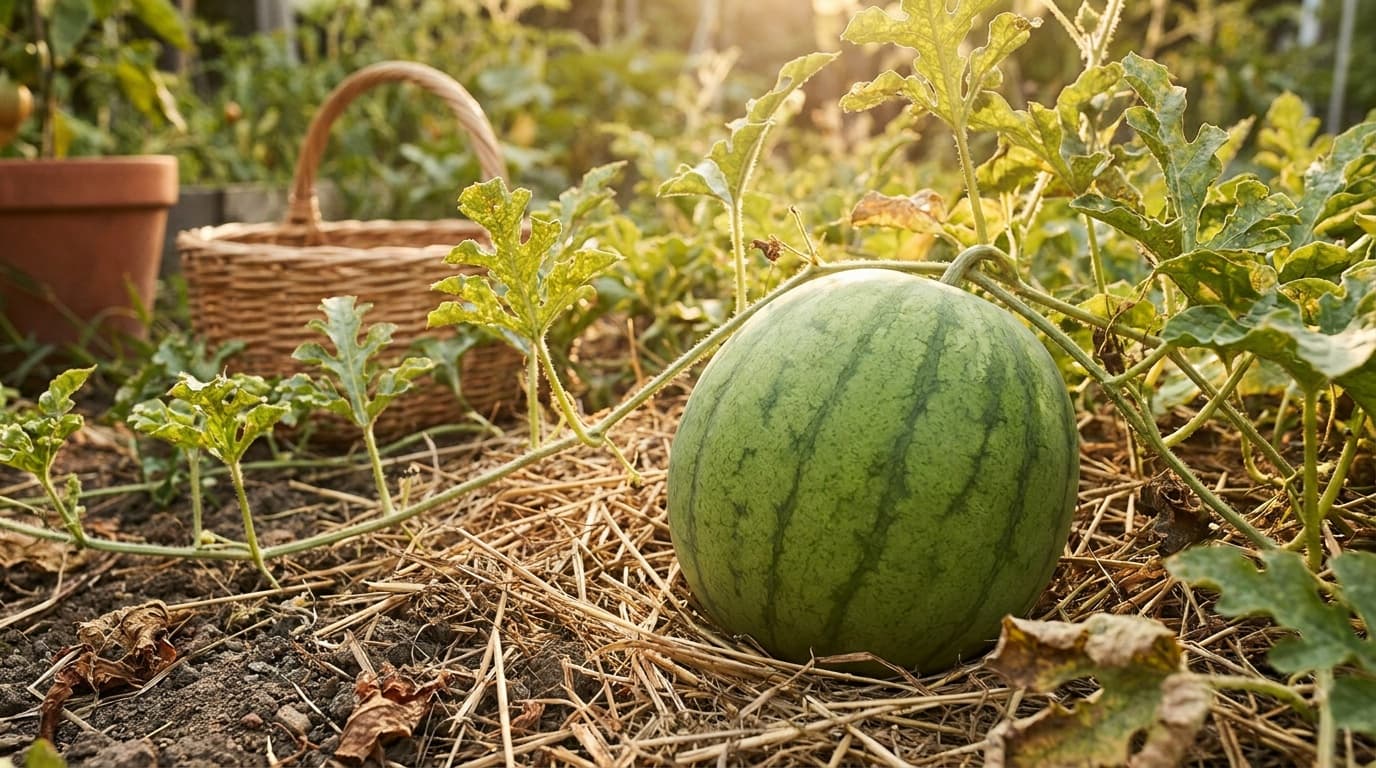
Watermelons need a long warm season, open ground, and active pollinators. Once the vines establish, keep root-zone moisture even, avoid excess nitrogen, protect the foliage, and watch for several signs of ripeness before picking.
Site and soil
Choose the brightest open site available and direct vines where they will not shade shorter crops. The watermelon profile carries the exact light and bed-layout requirements.
Soil should be loose and well drained so the root system can spread without sitting in water. Heavy clay benefits from mature compost and, where practical, a raised planting area.
Some links on this page are affiliate links. As an Amazon Associate I earn from qualifying purchases.

Well-drained growing bed
Birdies 8-in-1 Tall Metal Raised Garden Bed
Best for: Gardeners who want a buy-once metal bed with a long track record and will pay for it.
Keep in mind: One of the most expensive beds in the category
Amazon price as of the checked date, subject to change. The price on Amazon at checkout applies.
Full research
- Material
- Aluzinc steel
- Height
- Tall (around 30 in)
- Configuration
- 8-in-1 modular panels
- Origin
- Australian-designed
Birdies is the original modular Aluzinc raised bed that defined the category, with a reputation for lasting well over a decade. It commands a premium, but multi-season owners consistently report no rust-through.
This catalog-wide research score is separate from this guide's use-case ranking. How we research
Strengths
- Proven decade-plus longevity from long-term owners
- Thick Aluzinc steel resists corrosion
- Configurable into several footprint shapes
Weaknesses
- One of the most expensive beds in the category
- Taller height needs a lot of fill soil
Sprout Score breakdown
Best for
Gardeners who want a buy-once metal bed with a long track record and will pay for it.
Starting transplants indoors
If you are starting indoors, use individual pots rather than open trays. Watermelon roots resent disturbance, and a broken root ball can erase the advantage of an indoor start.
Starting watermelon transplants
Sow on the profile schedule
Use bottom heat
Thin to one strong seedling
Harden off before transplanting
Transplant without disturbing roots
See how to start seeds indoors for the full indoor setup.
Direct the vines before they run
Watermelons are among the largest-vined crops in the garden. Plan each vine's direction while it is still flexible, keep paths to the crown open, and avoid repeatedly flipping or dragging established runners.
Use the layout on the watermelon profile. A raised bed paired with a sturdy trellis can work for compact varieties if every fruit receives a sling, but standard-sized watermelons are safer on the ground.
Watering
Watermelons have two distinct water needs depending on growth stage:
Vine and foliage development: Consistent moisture supports strong vine growth and a healthy root system. Use the watering approach in our vegetable-garden guide and check the soil beneath the mulch before irrigating again.
After fruit set: once fruits are developing, consistent moisture is critical for cell expansion, but excess water as fruits approach ripeness can dilute sweetness and cause cracking. Taper watering in the final 1 to 2 weeks before harvest.
Avoid wetting the foliage, especially in the evening: wet leaves sitting overnight are the primary driver of powdery mildew and downy mildew. Drip irrigation or soaker hoses deliver water directly to the root zone.
Feeding
Watermelons are moderate to heavy feeders, especially for potassium during fruit development. A standard approach:
- At planting: work a balanced vegetable fertilizer into the planting hole
- At vine run (when vines start to spread): sidedress with a balanced fertilizer to support vigorous growth
- At fruit set: switch to a lower-nitrogen, higher-potassium fertilizer to support fruit development rather than more foliage
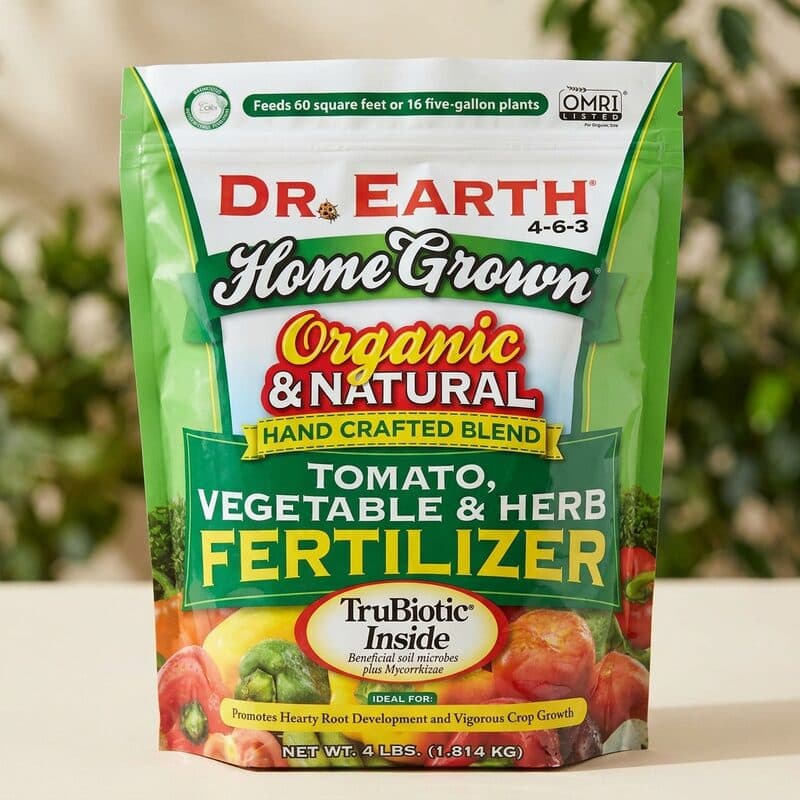
Low-n fruit feed
Dr. Earth Home Grown Tomato, Vegetable & Herb Fertilizer
Best for: Organic growers feeding tomatoes, vegetables, and herbs through the season.
Keep in mind: Earthy organic smell on application
Amazon price as of the checked date, subject to change. The price on Amazon at checkout applies.
Full research
- NPK
- 4-6-3
- Type
- Granular organic
- Microbes
- Probiotic soil microbes + mycorrhizae
- Use
- Tomatoes, vegetables, and herbs
A hand-crafted organic fertilizer for tomatoes, vegetables, and herbs, fortified with probiotic soil microbes and mycorrhizae to support root and soil health on edible crops.
This catalog-wide research score is separate from this guide's use-case ranking. How we research
Strengths
- Probiotic microbes and mycorrhizae support soil life
- Balanced profile tuned for edible crops
- Non-GMO, OMRI-listed inputs
Weaknesses
- Earthy organic smell on application
- Granular feeds act more slowly than synthetics
Sprout Score breakdown
Best for
Organic growers feeding tomatoes, vegetables, and herbs through the season.
Owner rating snapshot
Amazon · 82 reviews · 4.6 stars
Pollination: bees do the work
Watermelon plants produce separate male and female flowers on the same vine. Female flowers are identifiable by the tiny, immature fruit (ovary) at the base of the flower. Male flowers open first, usually a week or more before female flowers appear.
Bees, primarily bumble bees and honey bees, transfer pollen from male to female flowers. A watermelon flower must receive multiple pollen visits for a well-formed fruit; inadequate pollination produces misshapen or undersized fruit.
Poor pollination is a common cause of fruit failure. To support pollinators:
- Avoid applying pesticides during flowering, especially in the morning when bees are most active
- Grow flowers nearby to attract and support bee populations
- If you use floating row cover to protect young plants from striped cucumber beetle or squash bugs, remove it completely when the first flowers open
Common problems
- Striped cucumber beetle and spotted cucumber beetle: the most damaging pests. They spread bacterial wilt, which is fatal to plants. Protect transplants with row cover (remove at flowering), use kaolin clay as a deterrent, and remove infected plants immediately.
- Bacterial wilt: no treatment once infected. Prevention through cucumber beetle control is the only approach.
- Powdery mildew: white coating on leaves late in season. Provide good air circulation and avoid overhead watering.
- Downy mildew: yellow angular patches on upper leaf surface. Favored by wet, humid weather.
- Anthracnose: dark, sunken lesions on fruit and leaves. Rotate crops and use disease-resistant varieties.
- Aphids: cluster on new growth; often controlled by beneficial insects, but monitor for virus transmission.
Harvesting: knowing when watermelon is ripe
Harvesting too early is the most common watermelon mistake. An underripe watermelon will not ripen after picking. Use multiple cues together, not just one:
Watermelon ripeness checklist
Check the tendril
Look at the ground spot
Feel the surface
Knock test
Confirm with several cues
Can watermelon vines be redirected?
Yes, while the growing tips are young and flexible. Move them gradually into open ground and avoid twisting the stem near the crown. Once a vine has rooted at nodes or set fruit, leave that section in place to prevent tears and interrupted water flow.
Why are my watermelon flowers dropping without setting fruit?
Early male flowers drop naturally because female flowers haven't opened yet. If female flowers (identified by a tiny fruit at the base) are dropping, the problem is usually inadequate bee pollination. Ensure pollinators have access by removing any row cover at flowering, avoiding daytime pesticide applications, and growing nearby flowering plants to attract bees.
Can I grow watermelon in a raised bed?
Yes, especially for compact varieties. Plan for vines to trail over the sides into a clear mulched area. If you train a vine upward, use a very sturdy trellis and support every developing fruit in a broad sling made from mesh or fabric.
Why is my watermelon cracking or splitting?
Cracking usually results from irregular watering, especially a dry spell followed by heavy rain or irrigation near ripeness. As the fruit matures, taper watering slightly and keep moisture levels consistent. Picking at the right stage also helps; overripe fruit is prone to internal cracking even without water stress.
How do I tell a watermelon from a cantaloupe in the garden?
Watermelon leaves are deeply lobed and the fruit has a smooth, striped or solid green skin. Cantaloupe leaves are shallower-lobed and the fruit develops a rough, netted skin with a distinctive sweet fragrance when ripe. Both grow as sprawling vines and need similar care, though cantaloupe matures slightly earlier. See how to grow cantaloupe for side-by-side details.
See also: how to grow cantaloupe, how to grow zucchini, how to grow cucumbers, companion planting guide, watermelon plant profile.